Artwork
Ornament with Siren and Triton
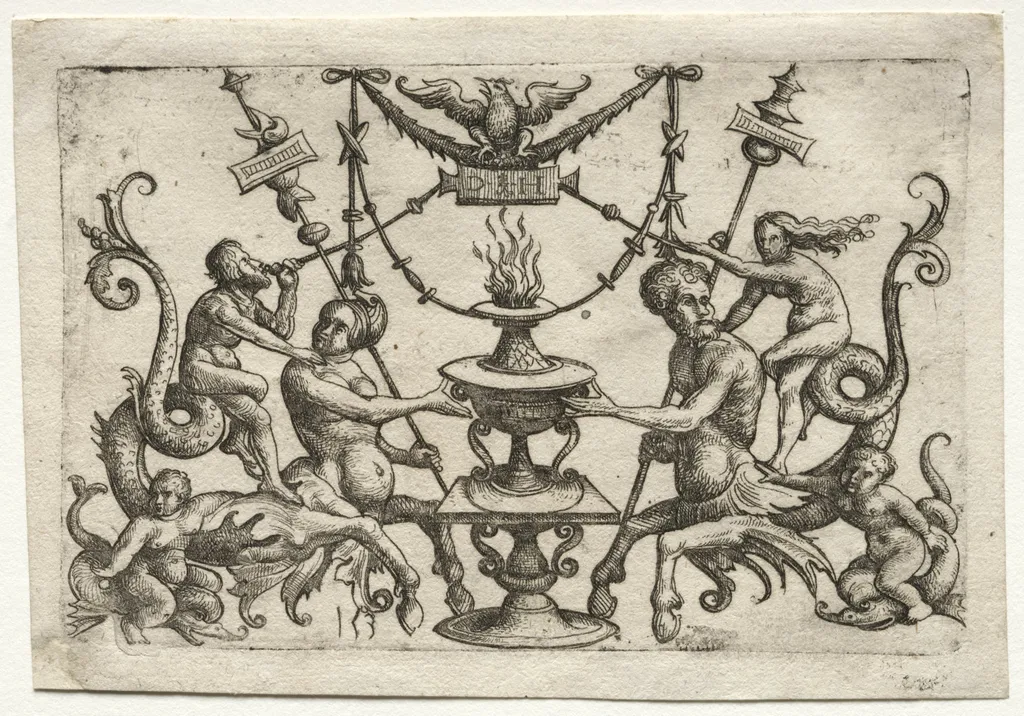
Ornament with Siren and Triton is a print by Daniel Hopfer. It dates from 1513 and is held in the collection of the Cleveland Museum of Art. Created circa 1513, this etched print depicts a fantastical tableau of a siren and a triton entwined around a towering candlestick.
About this work
Overview
Created circa 1513, this etched print depicts a fantastical tableau of a siren and a triton entwined around a towering candlestick. The figures, half‑human and half‑fish, clutch a trumpet and a spear while surrounded by intricate vines and diminutive creatures. The composition is rendered on an iron plate, a material Hopfer employed before copper became standard for etching.
Subject & Meaning
The central motifs—a mermaid and a merman—draw on maritime folklore in which such beings tempt or threaten sailors. Their interaction with the candleholder and musical instrument suggests a blend of allure and warning, echoing the dual nature of mythic sea spirits as both seductive and perilous.
Technique & Style
Daniel Hopfer, a German printmaker active at the turn of the 16th century, is recognized for pioneering the use of acid‑etched iron plates. The work’s fine line work, dense ornamental borders, and lively figures illustrate his skill in combining etching with the decorative vigor typical of early Northern Renaissance prints.
History & Provenance
The print is part of the Cleveland Museum of Art’s collection. It represents an early example of Hopfer’s metal‑plate etchings, produced during a period when he was experimenting with iron as a substrate before the widespread adoption of copper in later decades.
Artist & collection

Artist
Daniel Hopfer (c. 1470 – 1536) was a German artist who is widely believed to have been the first to use etching in printmaking, at the end of the 15th century. He also worked in woodcut. Although his etchings were…

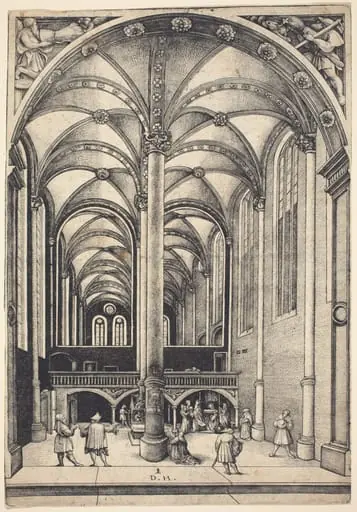 Interior of the Church of Saint Maria Magdalena with the Parable of the Offering of the Widow
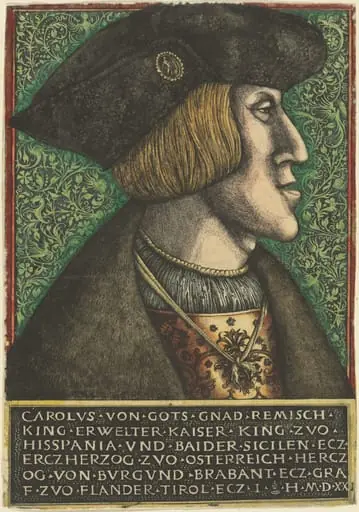 Emperor Charles V
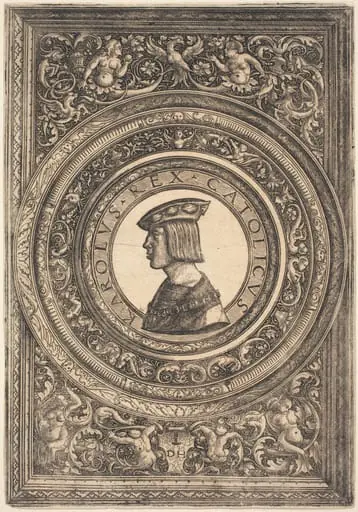 Emperor Charles V
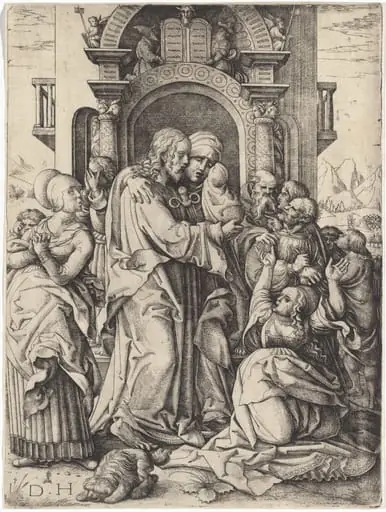 The Virgin Mary Taking Leave of Christ
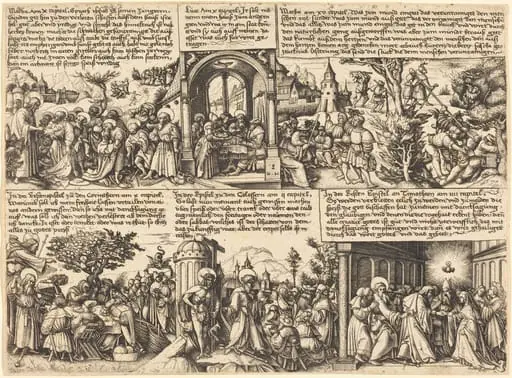 Jesus Christ Giving the Mission to the Apostles and Other New Testament Scenes
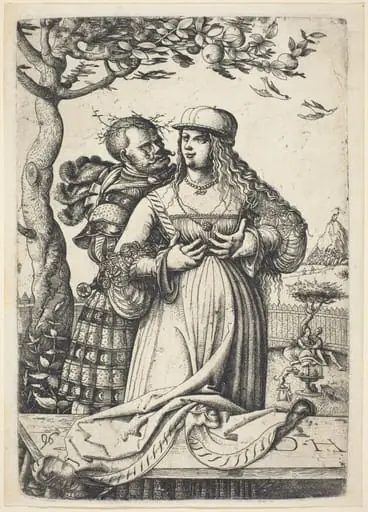 Soldier Embracing a Woman
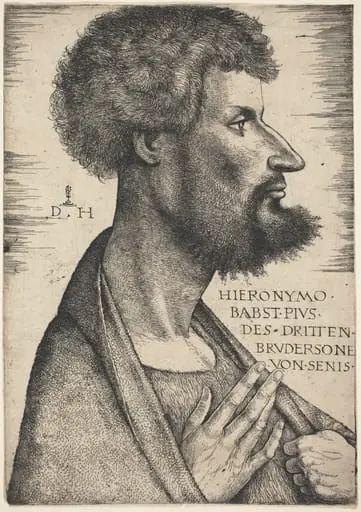 Girolamo da Siena
 The Virgin and Child with Saint Anne by a Portal
 Ornament with Mask
 Ornament Fillet with Candelabre-Ornament
 Ornament Panel: Victoria Augusta
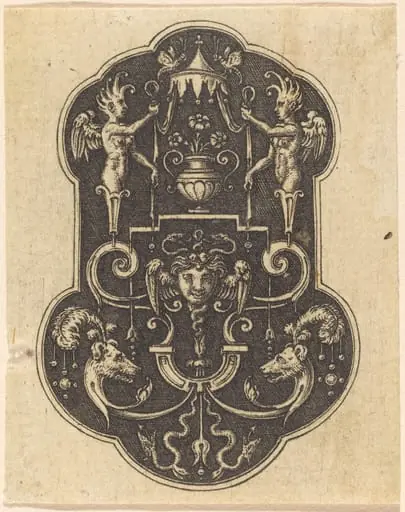 Head of Medusa
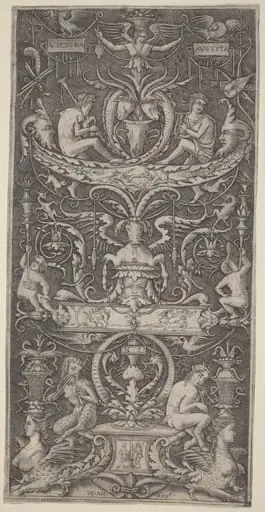 Ornamental Panel Inscribed "Victoria Augusta"
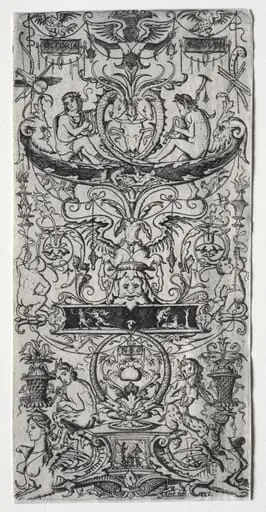 Ornament Panel Inscribed Victoria Augusta
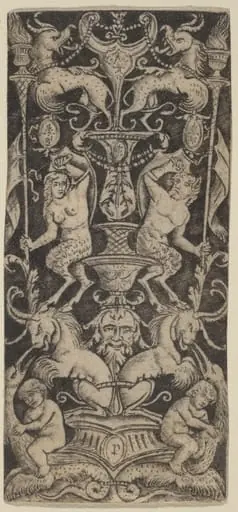 Panel of Ornament with Two Naked Children on Monstrous Beasts
 Emblem with Hope, Tribulation, Envy, and Tolerance
 Design for a Pendant with a Sea-Monster Carrying Neptune Flanked by Two Nereids
 Diana Standing