Artwork
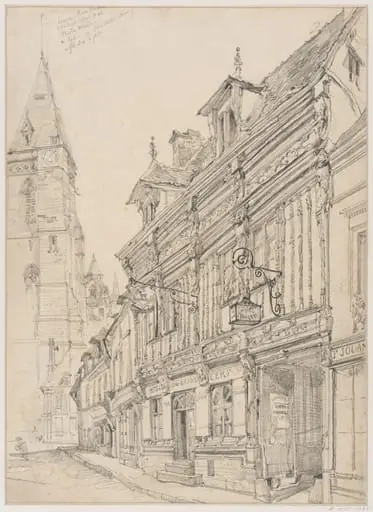
Angers-Maison duc D'Anjou
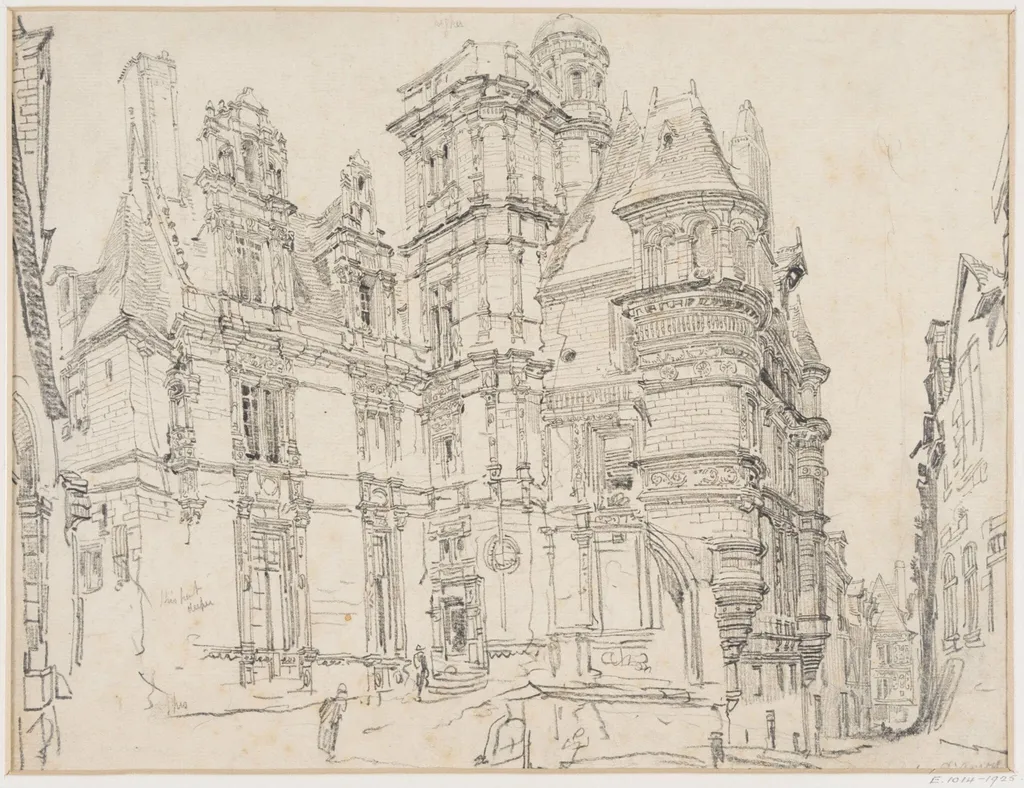
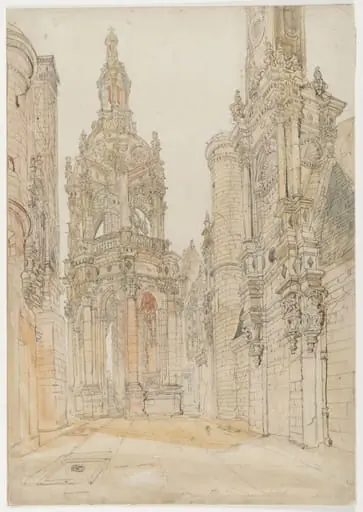
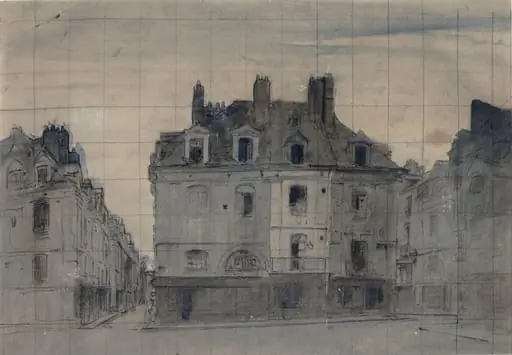
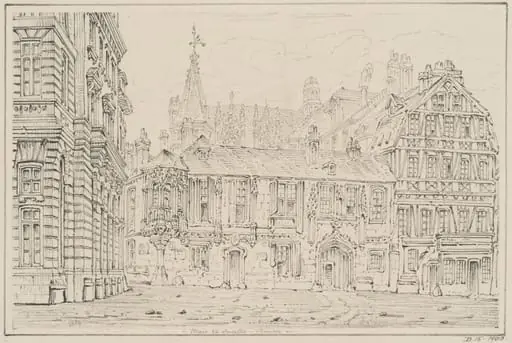
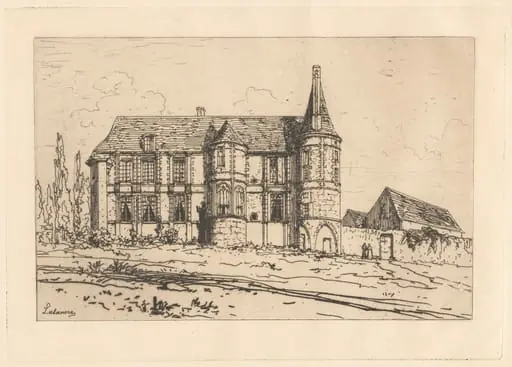
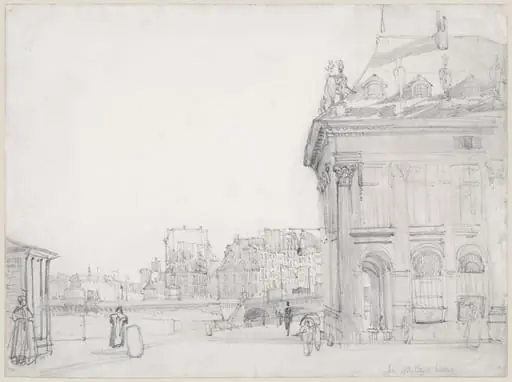
Angers-Maison duc D'Anjou is a drawing by the Romanticist artist John Junior Burgess. It dates from 1833 and is held in the collection of the Victoria and Albert Museum. This ink drawing captures the Château d'Angers, a fortified residence built by the medieval Counts of Anjou.
About this work
Overview
This ink drawing captures the Château d'Angers, a fortified residence built by the medieval Counts of Anjou. Rendered in fine black lines with subtle shading, it emphasizes architectural form over color. The sketch conveys the castle’s verticality and complexity through precise, rapid strokes, suggesting an on-site study rather than a polished final work.
Subject & Meaning
The subject is the Château d'Angers, a seat of regional power since the 9th century. Its depiction focuses on structural integrity and ornamental detail, reflecting its role as both a defensive stronghold and a symbol of noble authority. The inclusion of specific features like the clock face hints at the castle’s civic function alongside its military presence.
Technique & Style
The artist employed fine, controlled pen lines to define edges and textures, using cross-hatching to suggest shadow and stone depth. Shading is minimal but deliberate, avoiding washes or color. The sketch’s immediacy suggests direct observation, with attention to towers, arches, and decorative masonry rendered with observational clarity rather than idealization.
History & Provenance
The drawing is associated with the ducal household of Anjou, likely created during the 15th century when the castle was a center of political activity. Its survival indicates it was preserved as a record of the residence, possibly for administrative, architectural, or commemorative purposes within the ducal court.
Context
In the late Middle Ages, drawings of castles served practical and symbolic roles—used by builders, documented for inheritance, or displayed to assert territorial control. This sketch aligns with a tradition of architectural documentation in French noble circles, where precision in representation carried weight beyond mere aesthetics.
Legacy
As a surviving example of medieval architectural drawing, it offers insight into how structures were observed and recorded before the advent of standardized blueprints. Its focus on form over ornamentation reflects a functional approach to representation, influencing later practices in topographical and military cartography.
Artist & collection
Artist
John Junior Burgess drew the architectural bones of 19th-century Europe—church facades, grand hotels, ducal homes, and concert halls—all in precise line.