Artwork
Hôtel du Grand Cerf, Les Andelys
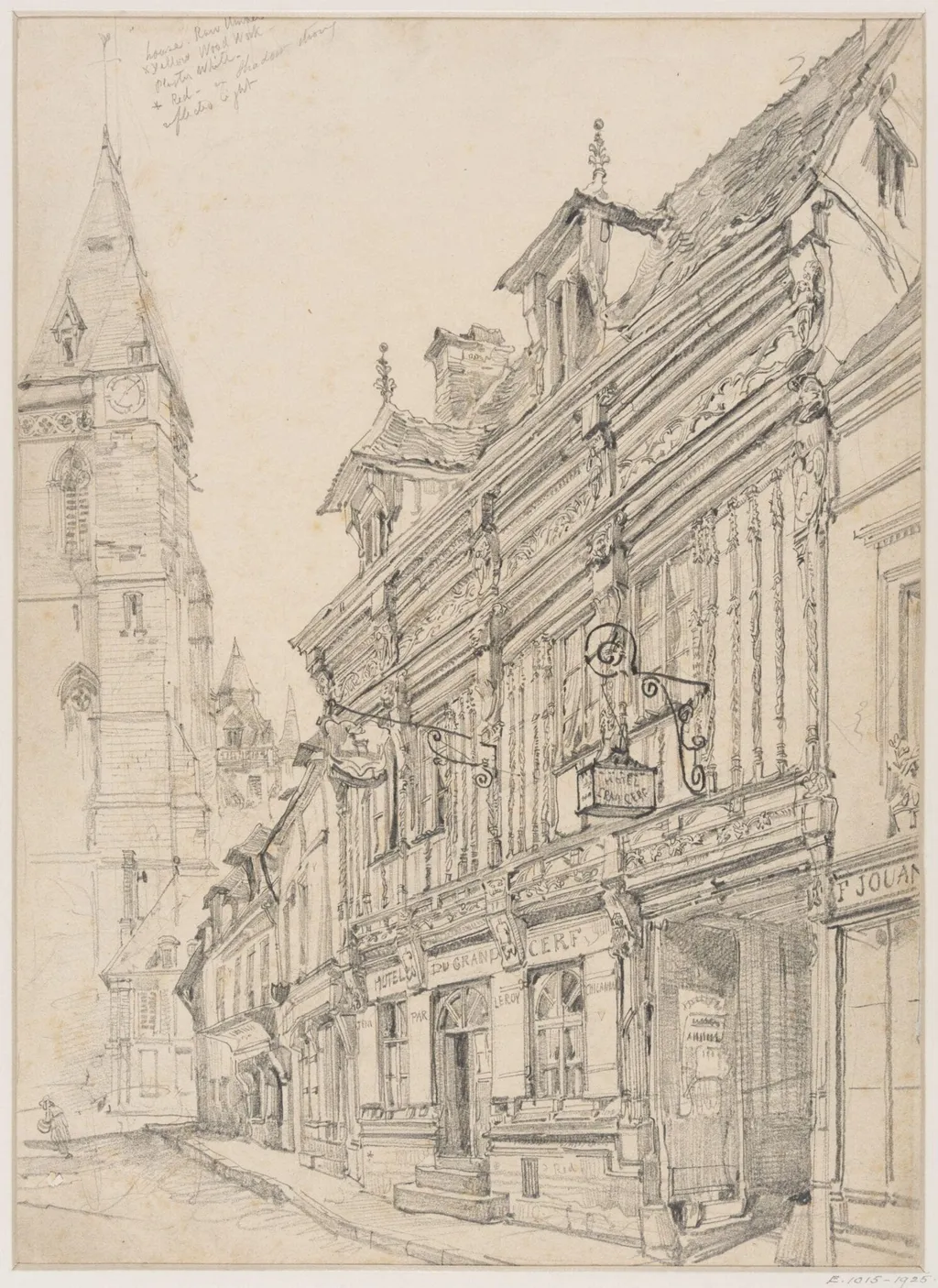
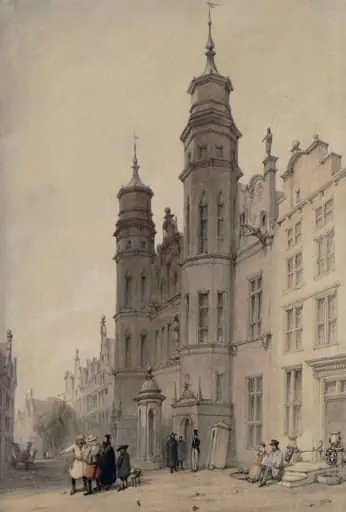
Hôtel du Grand Cerf, Les Andelys is a drawing by the Romanticist artist John Junior Burgess. It dates from 1833 and is held in the collection of the Victoria and Albert Museum. This pencil drawing captures the Hôtel du Grand Cerf, a 16th-century townhouse in Les Andelys, France.
About this work
Overview
This pencil drawing captures the Hôtel du Grand Cerf, a 16th-century townhouse in Les Andelys, France. Rendered with meticulous line work, it presents the building alongside neighboring structures, emphasizing architectural detail and urban context. The composition is grounded in direct observation, suggesting the artist worked on-site, recording the building’s form with precision and care.
Subject & Meaning
The Hôtel du Grand Cerf, identified by its sign and clock above the entrance, was a merchant’s residence typical of Norman towns. The inclusion of adjacent buildings and a distant church tower situates it within a lived environment, not as an isolated monument. The drawing functions as a documentary record, preserving the visual character of a specific place at a particular moment in time.
Technique & Style
The artist employed fine, controlled lines to model surfaces and suggest depth. Cross-hatching and parallel strokes define shadows on stone facades, window frames, and roof tiles, while delicate contours outline decorative carvings. The absence of wash or tone keeps the focus on linear precision, reflecting a method rooted in architectural study rather than expressive interpretation.
History & Provenance
It likely remained in private hands until entering institutional collections, where its value lies in its evidentiary quality rather than artistic fame.
The drawing’s origin is undocumented, but its subject and technique align with 17th- or early 18th-century French topographical sketches. Such works were often made by surveyors, architects, or travelers interested in regional building traditions. It likely remained in private hands until entering institutional collections, where its value lies in its evidentiary quality rather than artistic fame.
Context
Les Andelys, a historic town on the Seine, was known for its medieval and Renaissance architecture. The Hôtel du Grand Cerf reflects the prosperity of local merchants during the late Middle Ages, when ornate townhouses featured carved stonework and prominent signage. The drawing captures this urban fabric before modernization altered its appearance.
Legacy
As a record of vernacular architecture, the drawing contributes to the understanding of pre-industrial French towns. It exemplifies how careful observation was used to preserve architectural heritage before photography. Its value endures not as art for art’s sake, but as a witness to the built environment of its time.
Artist & collection
Artist
John Junior Burgess drew the architectural bones of 19th-century Europe—church facades, grand hotels, ducal homes, and concert halls—all in precise line.

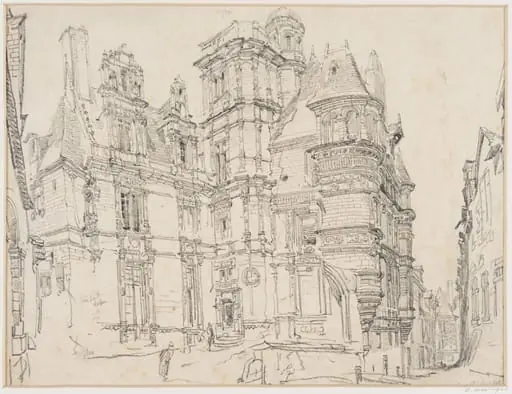
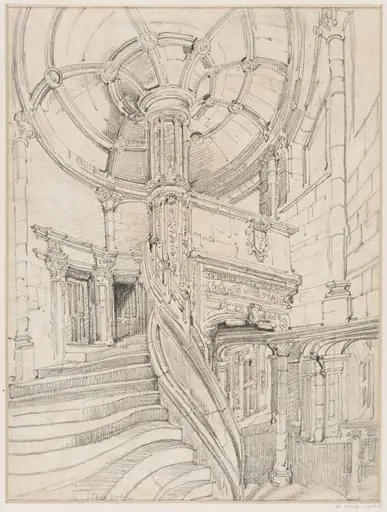
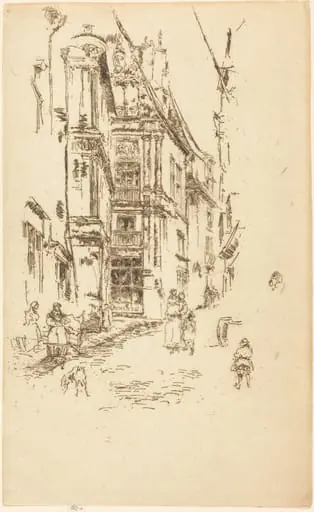 Chancellerie, Loches
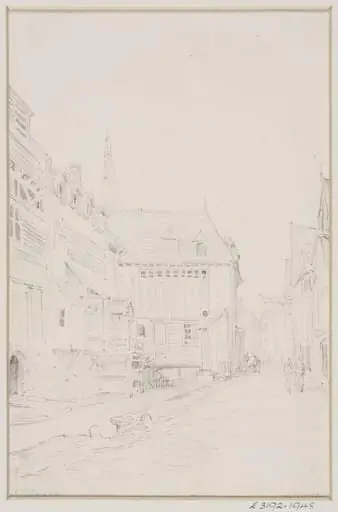 Topographical drawings
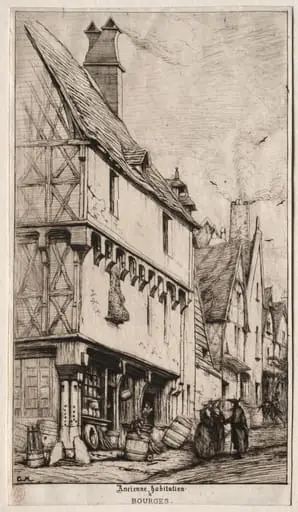 An Old House at Bourges, sometimes called the Musician's House
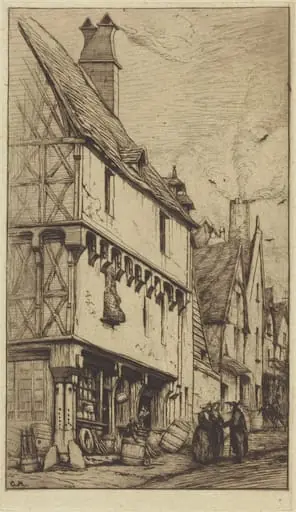 Ancienne habitation à Bourges, dite "La Maison du Musicien" (An Old House at Bourges, Sometimes Called the "Musician's House")
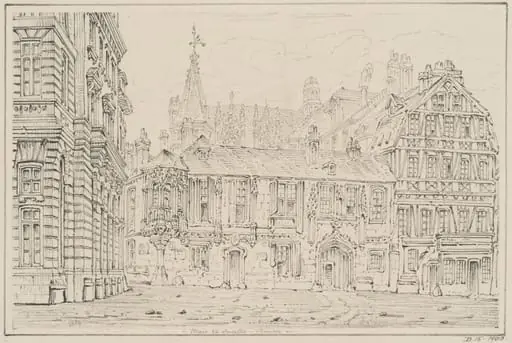 Place de la Pucelle in Rouen
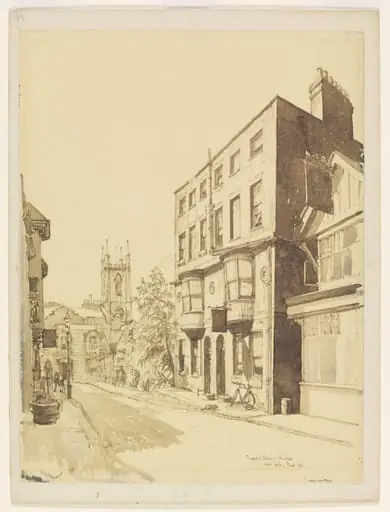 Church Street, (west side) Windsor
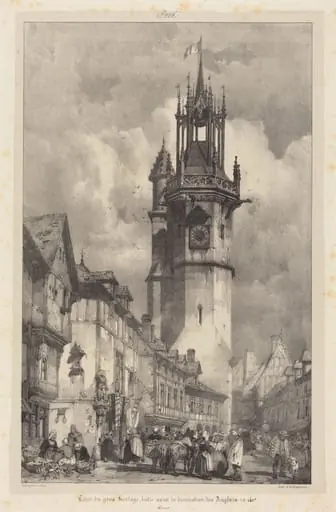 Tour du gros-horloge, Evreux
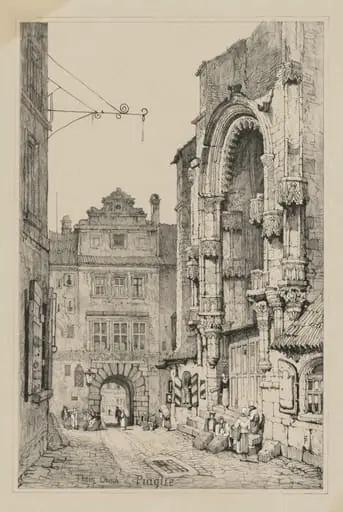 Facisimilies of Sketches made in Flanders and Germany: Thein Church, Prague
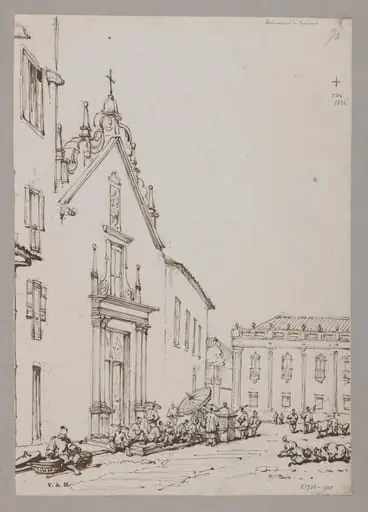 The Misericordia Church and part of the Senate House, Macao
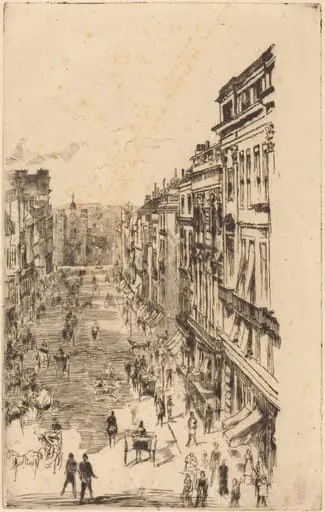 St James's Street
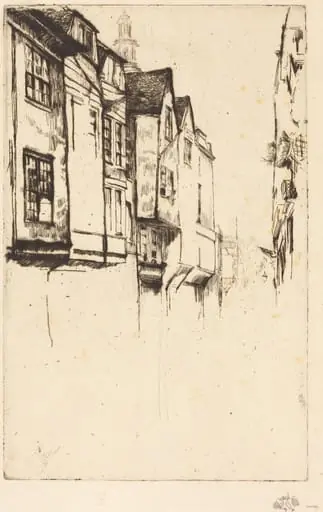 Wych Street
 The Zeughaus, Danzig