Artwork
Untitled
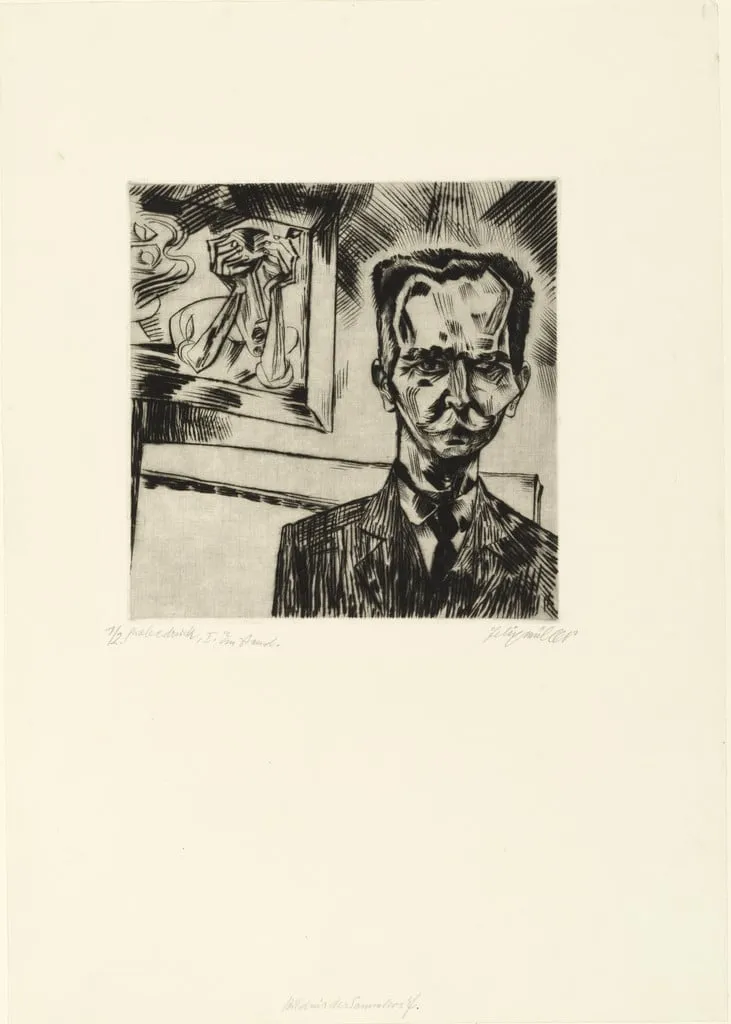
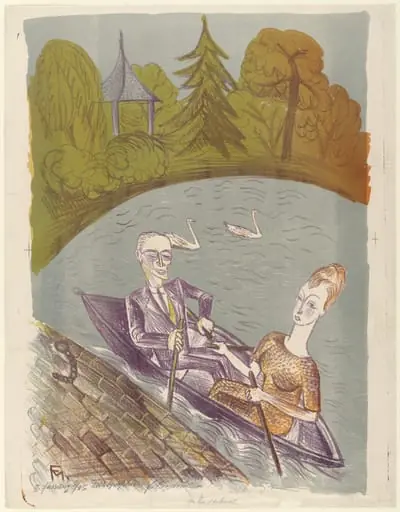
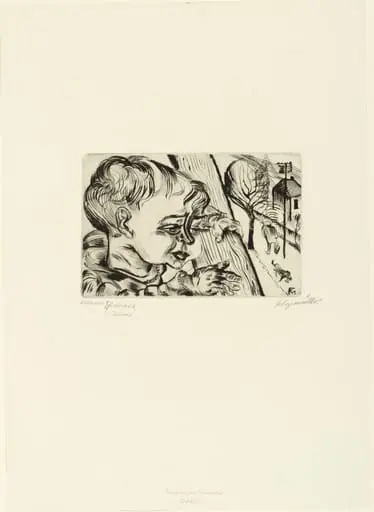
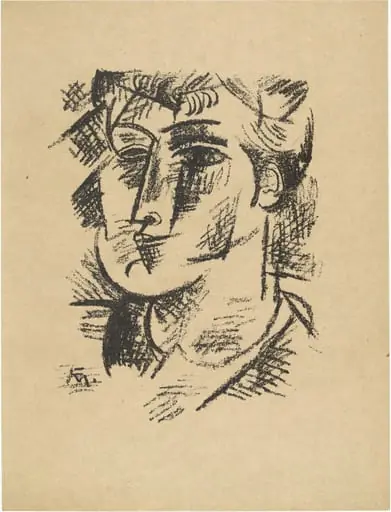
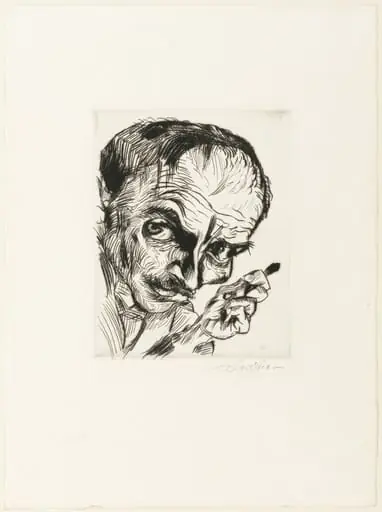
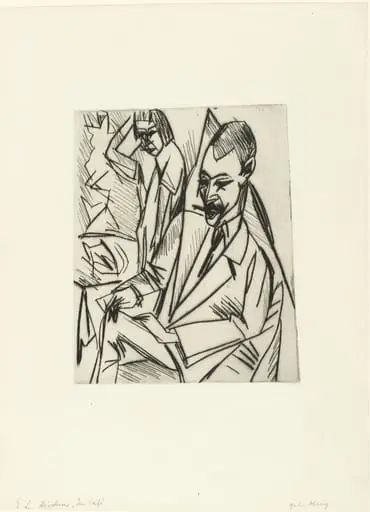
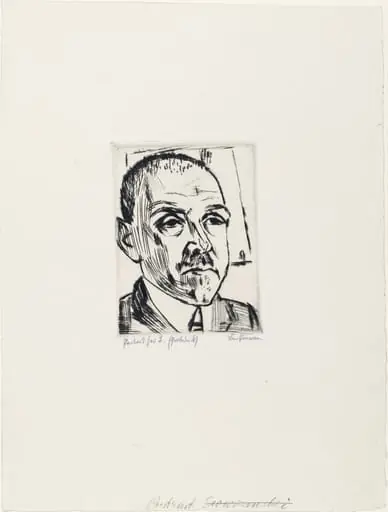
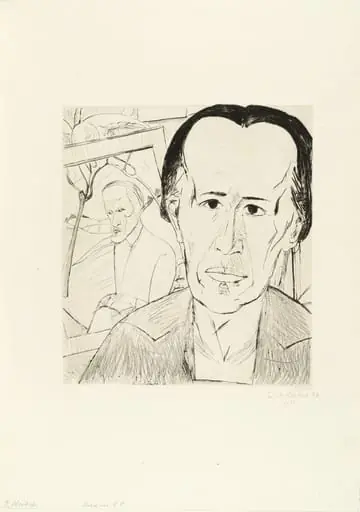
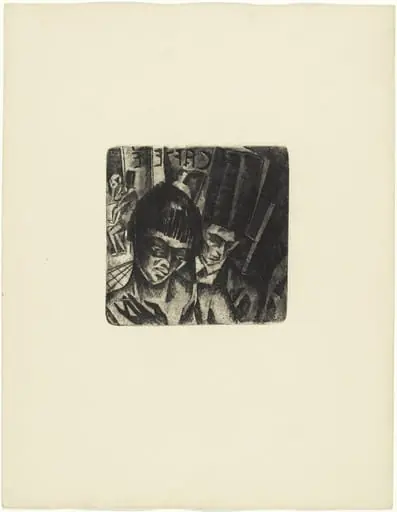
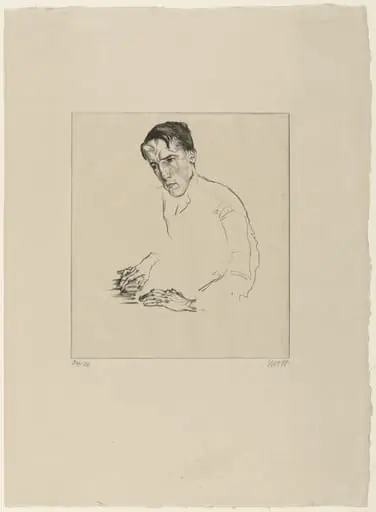
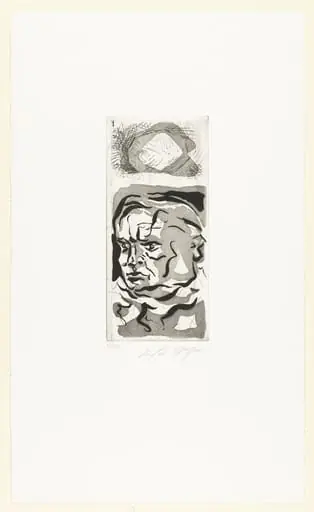
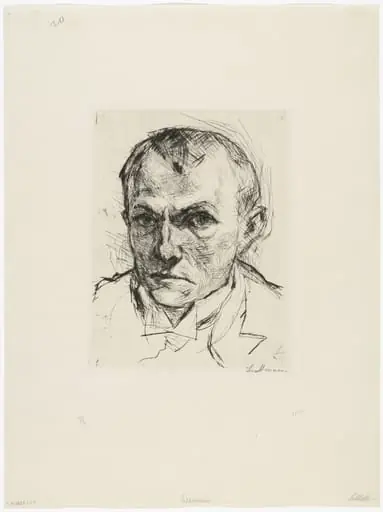
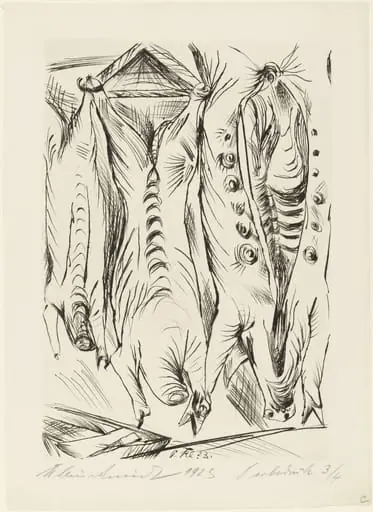
Untitled is an ink print by Conrad Felixmüller. It dates from 1922 and is held in the collection of the Museum of Modern Art.
About this work
Overview
The work is unframed and unsigned, consistent with the artist’s practice of producing intimate, unadorned prints.
Created in 1922, this drypoint print by Conrad Felixmüller is part of The Museum of Modern Art’s collection. The work is unframed and unsigned, consistent with the artist’s practice of producing intimate, unadorned prints. Its small scale and direct technique reflect a focus on immediacy rather than formal presentation, aligning with the expressive priorities of early 20th-century German printmaking.
Subject & Meaning
A solitary man in a dark suit and tie stands centered, his face rendered with soft blurring that suggests introspection or emotional distance. Behind him, two faint sketches—a dancer and a figure with raised arms—hint at memory, aspiration, or suppressed movement. The contrast between the rigid figure and the loose, ghostly drawings implies tension between societal conformity and inner life.
Technique & Style
Felixmüller employed drypoint, scratching lines directly into a metal plate with a sharp tool, creating a burr that holds ink and produces rich, fuzzy edges. The resulting texture is coarse and tactile, with lines that appear hastily drawn yet deliberate. This method enhances the sense of psychological unease, as if the image were being scraped from the surface of consciousness rather than cleanly composed.
History & Provenance
The print entered The Museum of Modern Art’s collection in the mid-20th century, likely through acquisitions focused on German Expressionist works. Its provenance prior to the museum is undocumented, but its condition suggests it was preserved as a personal study or small edition, not a commercial print. No other known impressions of this exact composition have been recorded.
Context
Made during the Weimar Republic’s turbulent early years, the work reflects the era’s preoccupation with alienation and identity. Felixmüller, associated with the New Objectivity movement, often depicted urban figures under psychological strain. The sketches on the wall may reference contemporary performance or political gestures, grounding the image in the cultural anxieties of postwar Germany.
Legacy
Though not among Felixmüller’s most widely reproduced works, this print exemplifies his commitment to raw, unembellished expression through printmaking. Its emphasis on texture and psychological nuance influenced later artists exploring emotional states through direct mark-making. It remains a quiet but potent example of how drypoint could convey inner turmoil with minimal means.
Artist & collection

Artist
Conrad Felixmüller was a German expressionist painter and printmaker. Born in Dresden as Conrad Felix Müller, he chose Felixmüller as his nom d'artiste.