Artwork
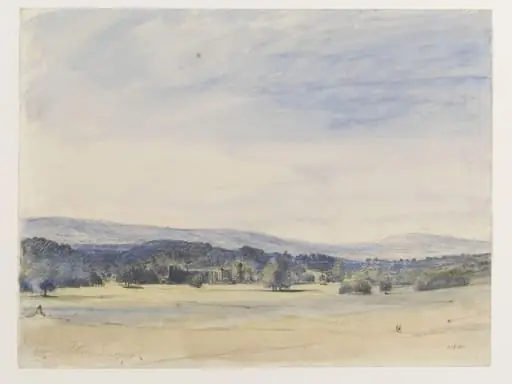
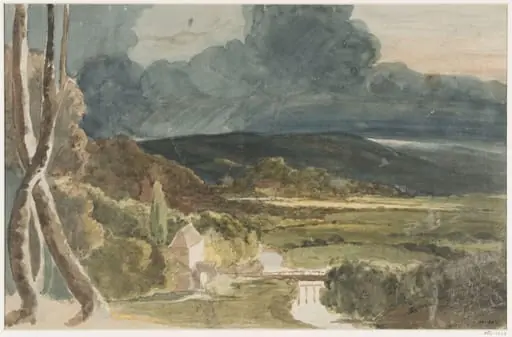
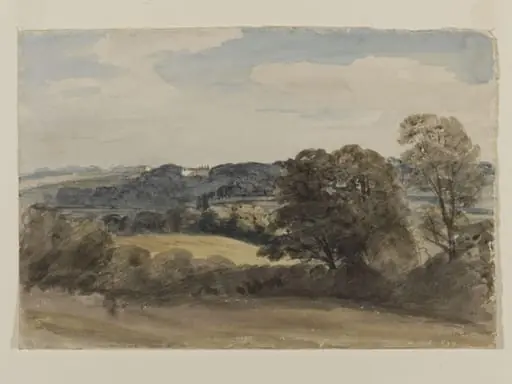
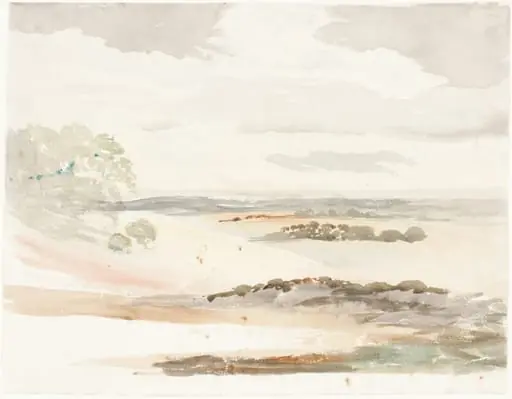
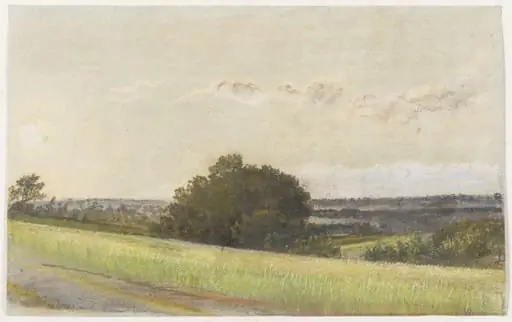
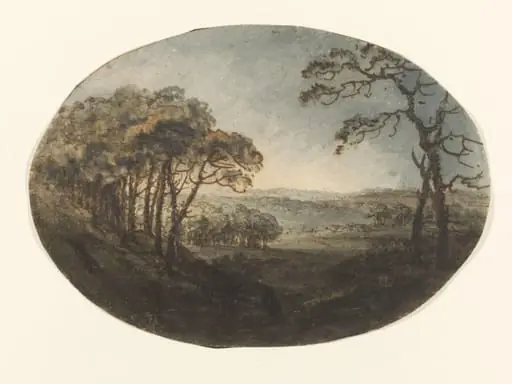
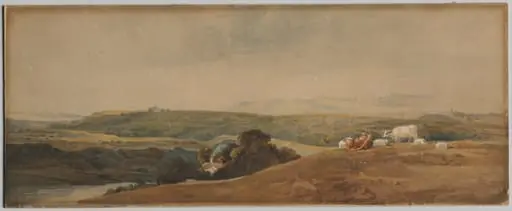
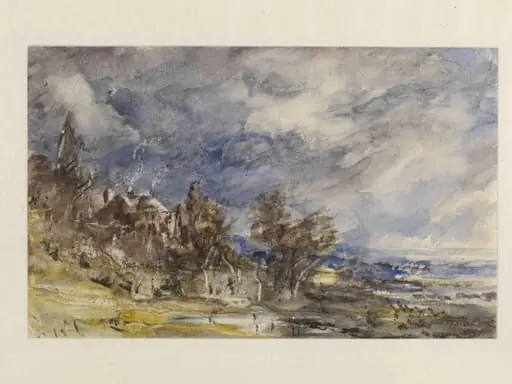
Dedham Vale, from East Bergholt: sunset.
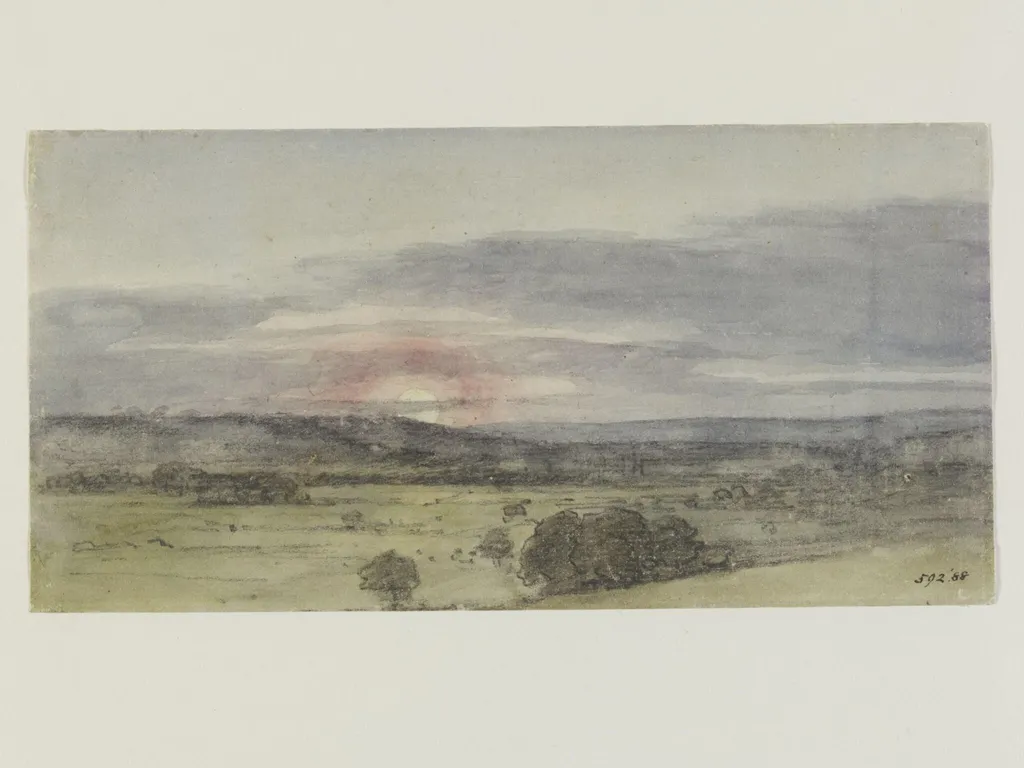
Dedham Vale, from East Bergholt: sunset. is a watercolor work on paper by the Romanticist artist John Constable. It dates from 1802 and is held in the collection of the Victoria and Albert Museum.
About this work
Overview
The work predates his more famous oil paintings and reveals his initial experiments with capturing transient atmospheric effects in a portable medium.
Painted in 1802, this watercolour by John Constable captures the quiet landscape of Dedham Vale as seen from East Bergholt at twilight. Executed in delicate washes, it reflects his early engagement with the Suffolk countryside, a region he would return to throughout his career. The work predates his more famous oil paintings and reveals his initial experiments with capturing transient atmospheric effects in a portable medium.
Subject & Meaning
The scene presents a serene, unpopulated stretch of farmland under the fading light of dusk. No human figures or structures dominate the view; instead, the focus lies in the subtle shift of hues across sky and earth. The composition conveys a sense of stillness and impermanence, aligning with Constable’s emerging interest in nature’s quiet rhythms rather than dramatic or idealized scenery.
Technique & Style
Constable employed loose, fluid brushwork and thin layers of watercolour to suggest the soft diffusion of twilight. The sky transitions from pale pink near the horizon to cooler tones above, while the land remains subdued in muted greens and browns. Details are minimized—trees and bushes are suggested rather than defined—emphasizing mood over topographical precision.
History & Provenance
This work belongs to Constable’s formative period, shortly before his first exhibited landscape at the Royal Academy in 1805. Though no direct record confirms its ownership prior to institutional acquisition, it is associated with his early commissions, including a possible altarpiece for Brantham Church. Its survival offers insight into his development before he fully committed to oil painting.
Context
In the early 1800s, British landscape art was shifting from idealized classical views toward direct observation of the natural world. Constable’s watercolours, like this one, contributed to that change by prioritizing local scenery and fleeting light over theatrical composition. His focus on Suffolk’s rural vistas set him apart from contemporaries who favored more exotic or dramatic subjects.
Legacy
Though lesser known than his large-scale oils, this watercolour exemplifies Constable’s foundational approach to landscape: attentive to light, unembellished in subject, and rooted in personal experience. It anticipates his lifelong commitment to recording the English countryside with honesty, influencing later generations of artists who valued observation over convention.
Artist & collection
Artist
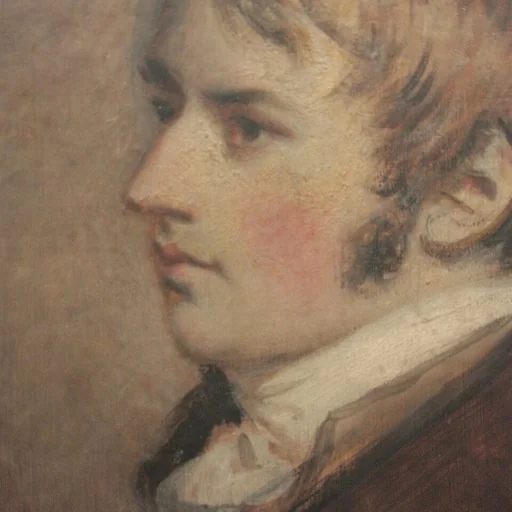
John Constable (; 11 June 1776 – 31 March 1837) was an English landscape painter in the Romantic tradition.