Artwork
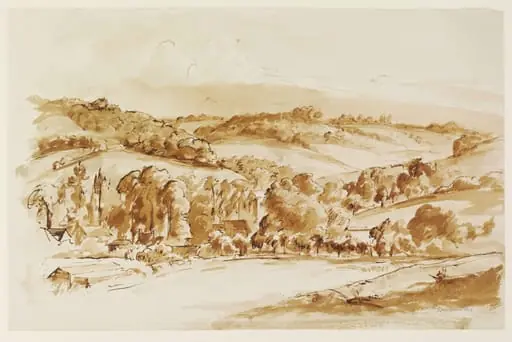
Nineveh from the North-East
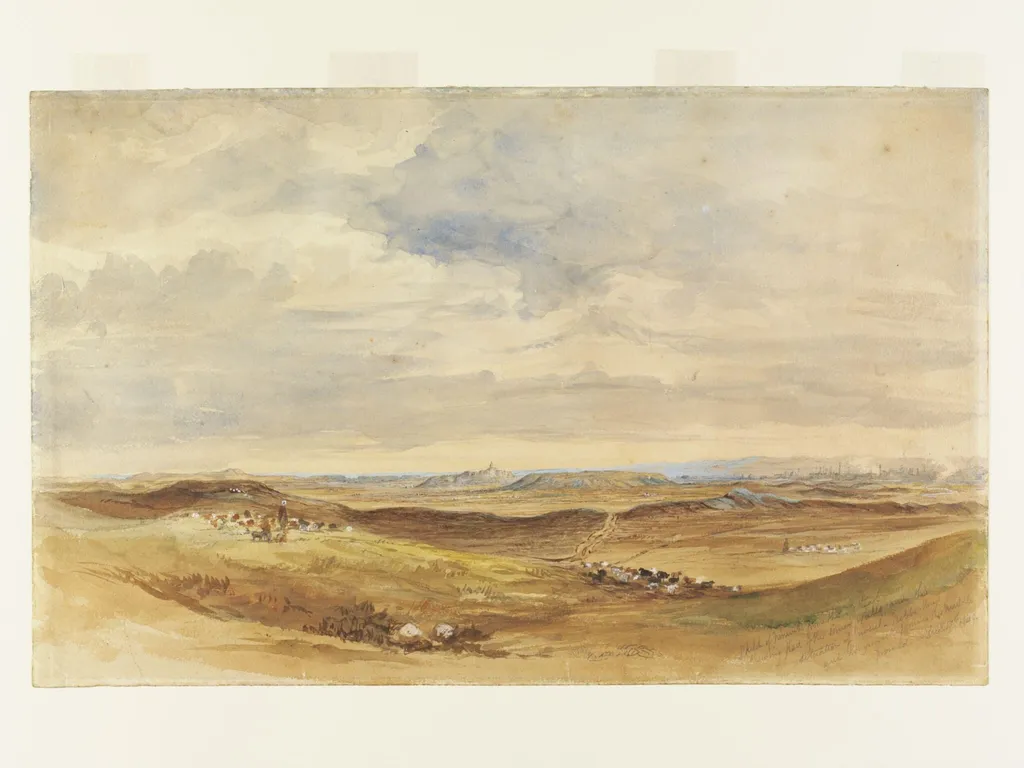
Nineveh from the North-East is a watercolor work on paper by the British Romanticist artist Frederick Charles Cooper. It dates from 1849 and is held in the collection of the Victoria and Albert Museum.
About this work
Overview
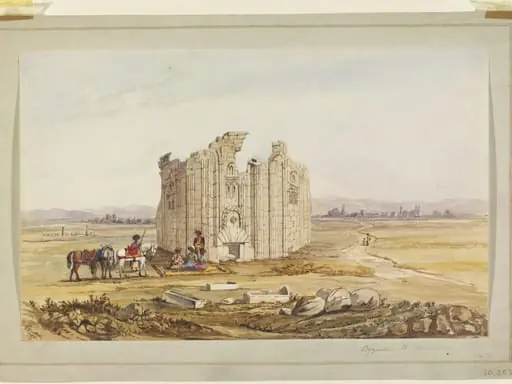
Nineveh from the North-East is a watercolour drawing by Frederick Charles Cooper, created during his involvement in Austen Henry Layard's excavation of the ancient Assyrian city of Nineveh between 1849 and 1851.
Subject & Meaning
The drawing depicts a landscape with Nineveh in the distance, set against rolling hills and mountains, with a group of people gathered near a structure in the foreground, capturing a moment from the archaeological site.
Technique & Style
Cooper's use of colour creates depth and atmosphere, with cool blues and greens in the distance contrasting with warm tones in the foreground, evoking a sense of intimacy and recalling the works of Romanticism-associated artists.
History & Provenance
The drawing was exhibited in 1860 as 'The plains of Nineveh from the Tanner's Ferry near Mosul' and is linked to Layard's published records, including a 1853 lithograph of a similar view.
Own this work as a print
Artist & collection
Artist
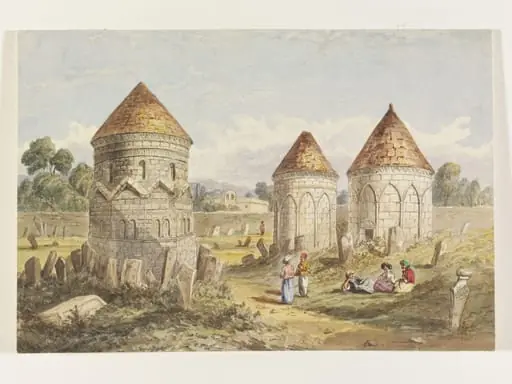
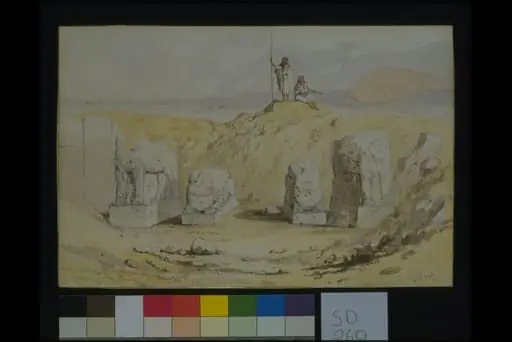
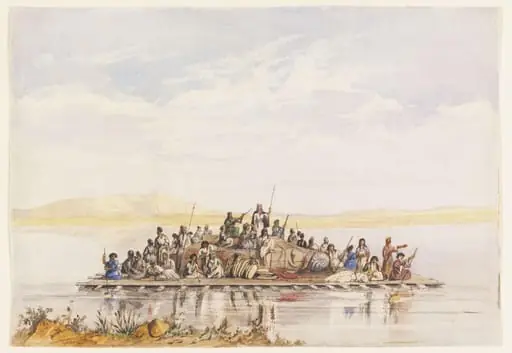
Frederick Charles Cooper painted watercolours of Ottoman-era landmarks he saw in 1849.

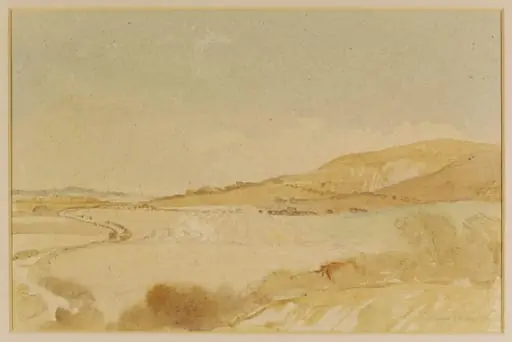 The Southdown, Underhill Road; Clayton to Westmeston
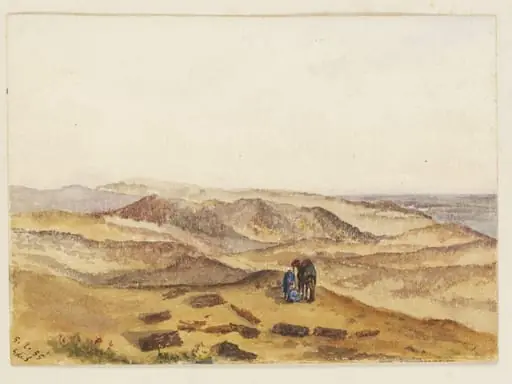 `Petrified Forest Desert near Cairo'
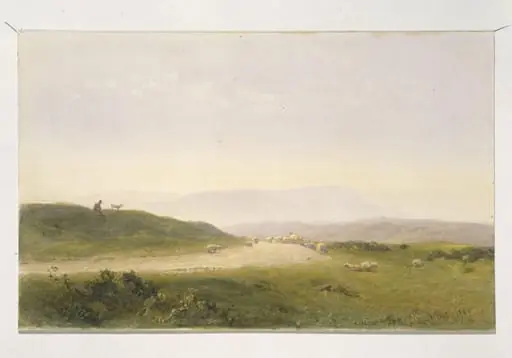 South Downs
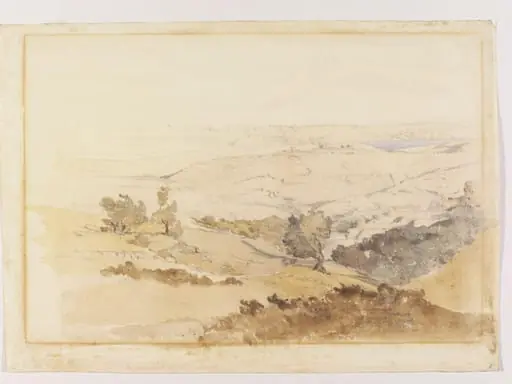 The Sea of Galilee from the heights of Safad
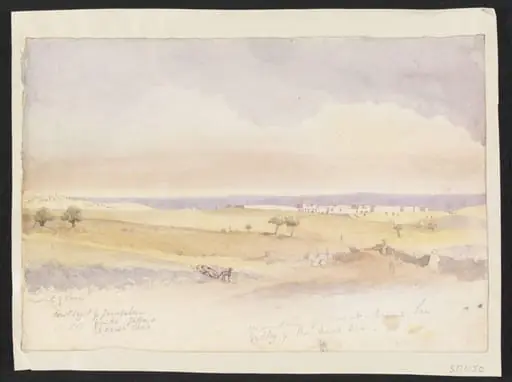 First sight of Jerusalem from the Jaffa & El Arish road
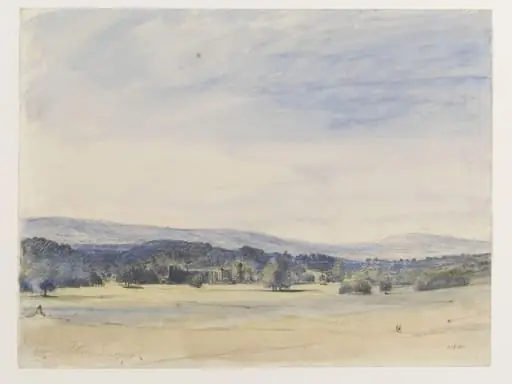 The ruins of a Cowdray House
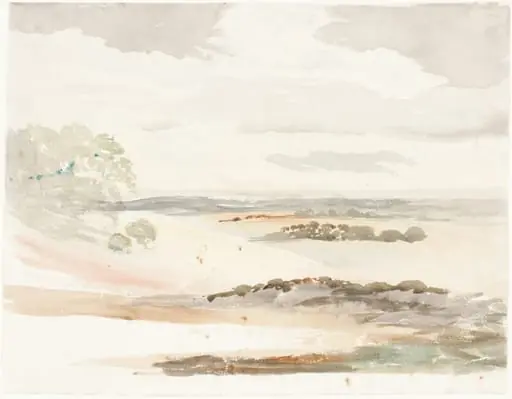 An Extensive View in Shropshire
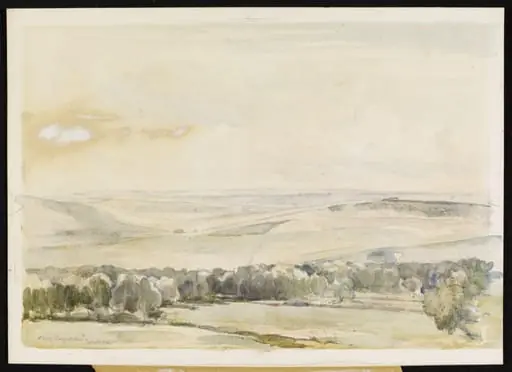 The Downs from Friston
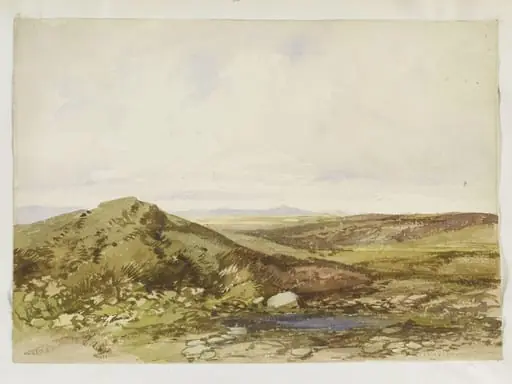 Watercolour in album of 51 drawings and watercolours by James Duffield Harding
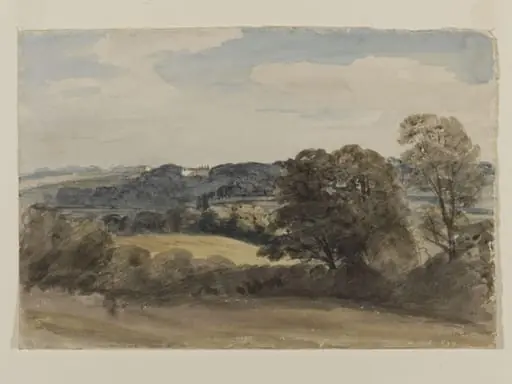 Landscape with buildings in the distance
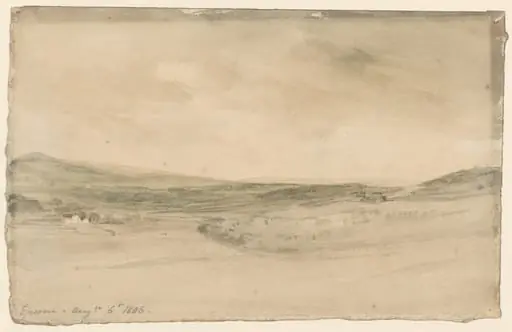 Epsom Heath
 View over Fingest