Artwork
Epsom Heath
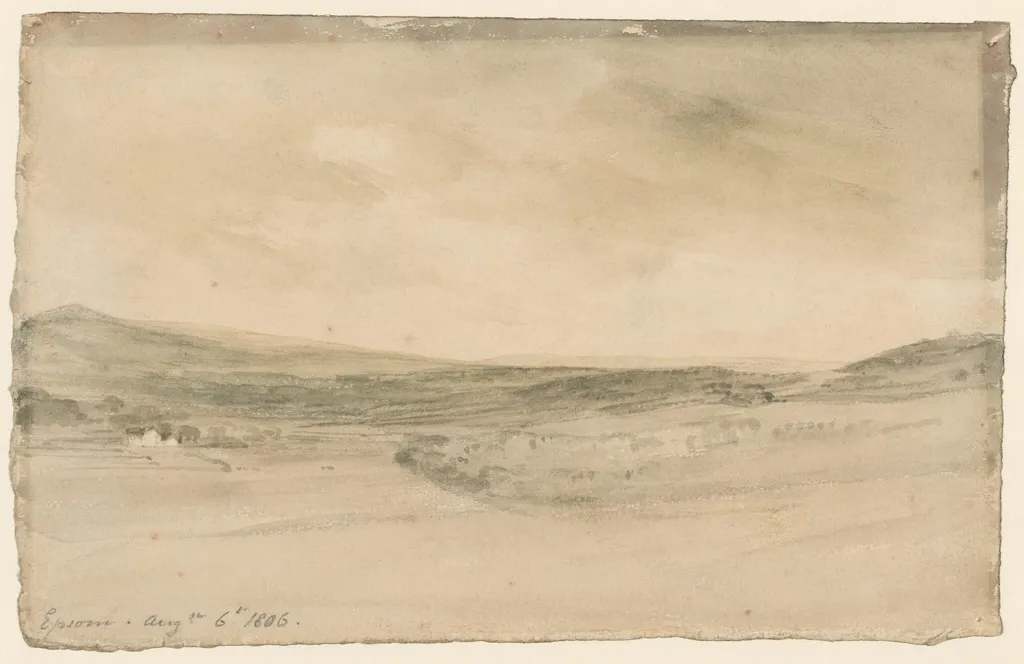
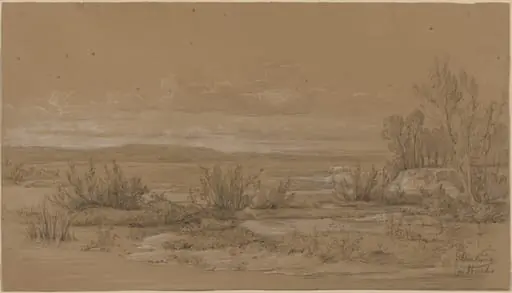
Epsom Heath is a watercolor drawing by the Romanticist artist John Constable. It dates from 1806 and is held in the collection of the National Gallery of Art.
About this work
The colors are mostly soft browns and pale greens, and the whole thing looks a little faded, like it’s been around for a while.
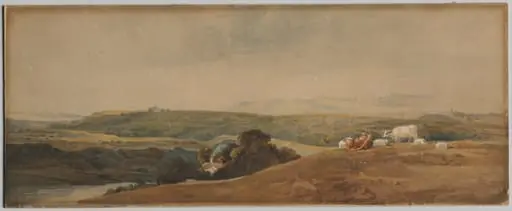
This sketch shows a quiet countryside scene. Rolling hills stretch into the distance, with a few small buildings and trees scattered near the bottom. The colors are mostly soft browns and pale greens, and the whole thing looks a little faded, like it’s been around for a while.
The artist wrote "Epsom... Aug 6 1806" in the corner, so this was painted over 200 years ago. The loose, sketchy lines suggest they were working fast, maybe outside.
If you like this style, check out watercolor, glazing next.
Overview
Created in August 1806, *Epsom Heath* is a watercolor drawing on wove paper, executed in muted browns, grays, and greens over a graphite underdrawing. It captures a quiet rural landscape near Epsom in Surrey, reflecting John Constable’s habit of sketching directly from nature. The work’s delicate tonal range and loose handling suggest it was made outdoors, likely as a rapid observational study rather than a finished piece.
Subject & Meaning
The scene depicts undulating heathland with scattered trees and modest structures, offering no dramatic narrative but a quiet record of place. Constable’s focus on ordinary, unidealized terrain reveals his commitment to truthful representation. The absence of human figures and the subdued palette convey a sense of stillness, aligning with his belief that landscape could express emotional resonance through its inherent character.
Technique & Style
Constable applied watercolor in thin, layered washes over a light graphite outline, allowing the paper’s texture to contribute to the atmospheric effect. The brushwork is swift and unrefined, typical of plein air sketching, with soft transitions between tones suggesting distance and light. The fading of pigments over time has softened the hues further, enhancing the work’s quiet, ephemeral quality.
History & Provenance
Dated by the artist’s inscription 'Epsom... Aug 6 1806,' the drawing was likely made during one of Constable’s trips outside his native Suffolk. It remained in his personal collection until his death and later entered institutional holdings, preserved as part of his broader archive of observational studies. Its survival reflects its value as a record of his working method rather than a public exhibition piece.
Context
In 1806, Constable was developing his distinctive approach to landscape, moving away from idealized compositions toward direct observation. While his major oil paintings of Dedham Vale would later define his reputation, works like *Epsom Heath* reveal his early commitment to capturing the subtle variations of light and terrain in everyday English countryside, a practice that would influence later generations of realist painters.
Legacy
Though not widely exhibited in his lifetime, *Epsom Heath* exemplifies Constable’s foundational practice of sketching from nature. Its informal quality and attention to atmospheric nuance helped shift landscape art toward authenticity over ornamentation. Today, it stands as a testament to his belief that the ordinary land, faithfully rendered, holds intrinsic artistic value.
Artist & collection
Artist
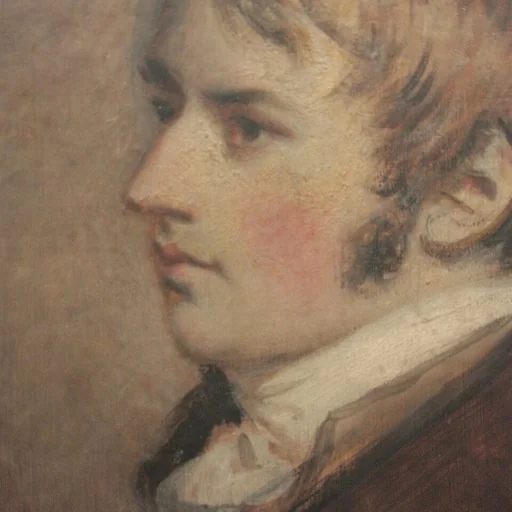
John Constable (; 11 June 1776 – 31 March 1837) was an English landscape painter in the Romantic tradition.

 Landskab (fra Brandsø?) med kæmpehøje
 Mountains and Cattle
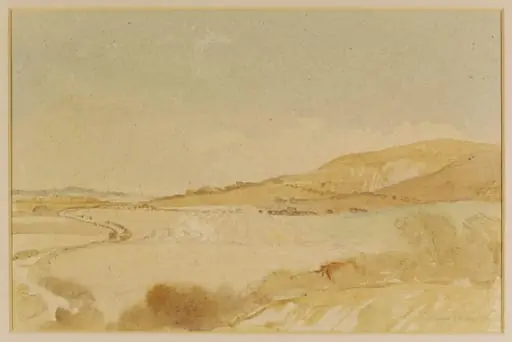 The Southdown, Underhill Road; Clayton to Westmeston
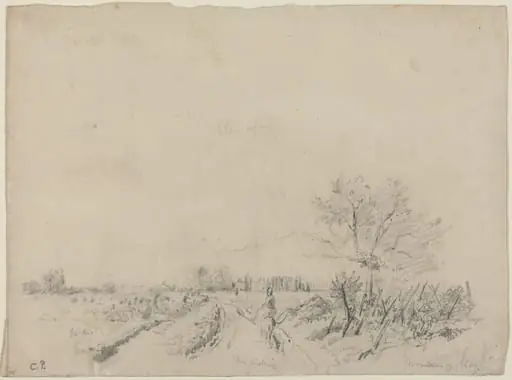 Montmorency Road
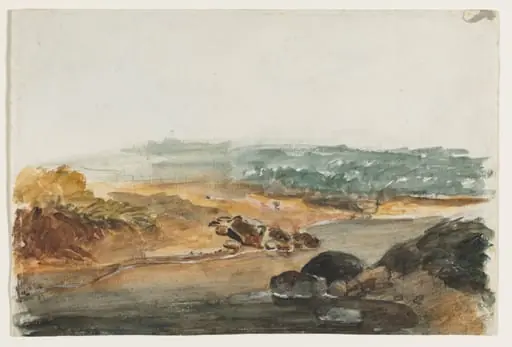 Landscape (recto)
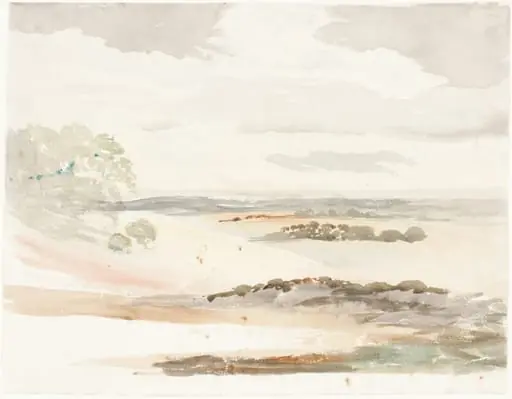 An Extensive View in Shropshire
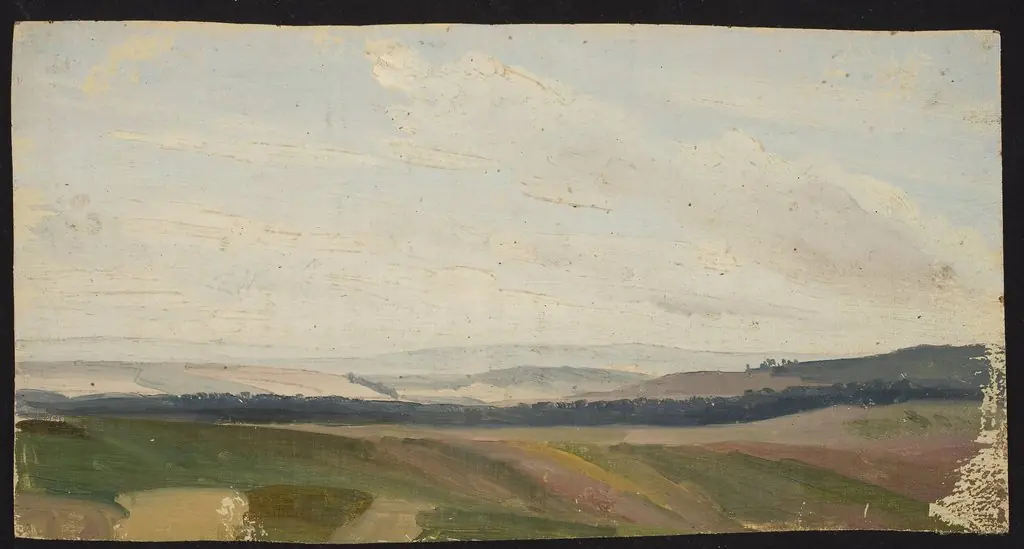 Lowland landscape, sketch
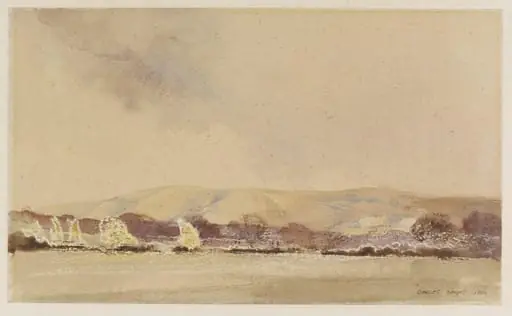 Fields and Woods South of Ditchling
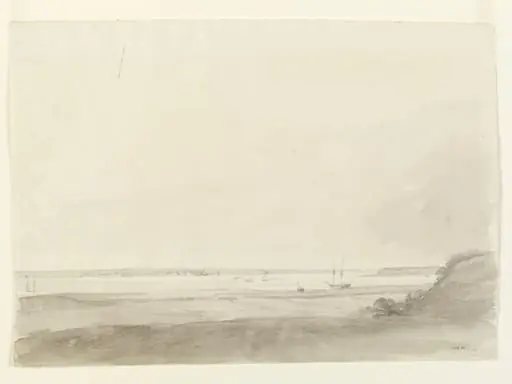 View from the shore over the Thames or the Medway
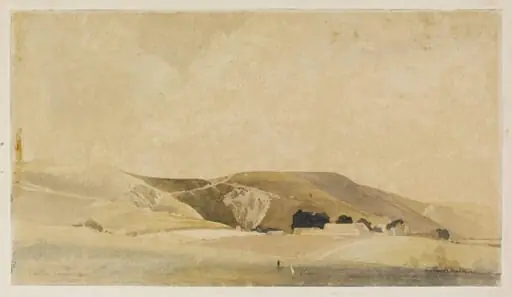 The Southdown, Underhill Road: Porching Farm from Fulking
 Landscape near Vourlis
 Nineveh from the North-East