Artwork
Old Mill, Clynne Valley, Gower, Glamorganshire
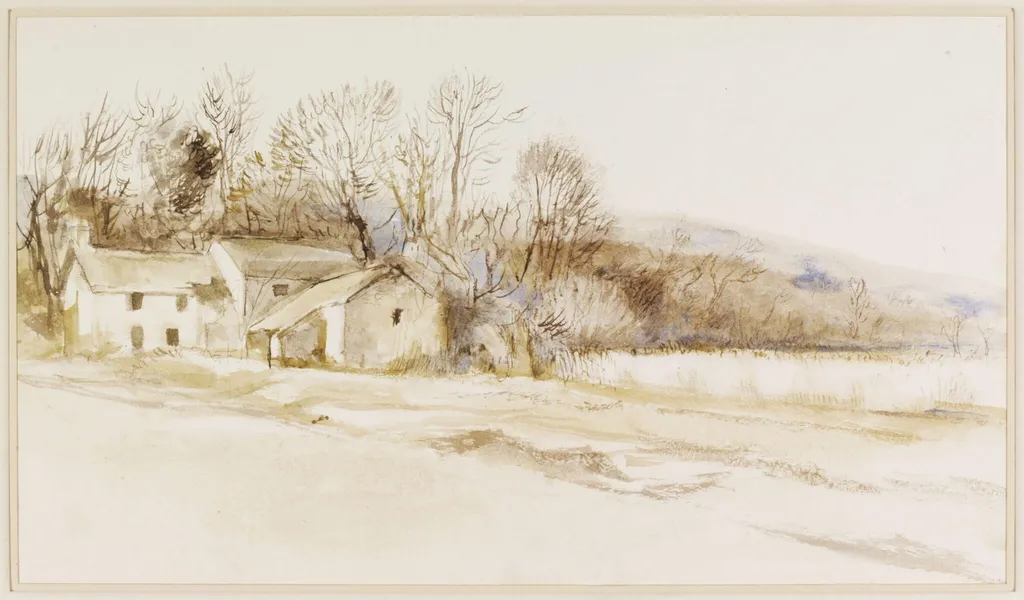
Old Mill, Clynne Valley, Gower, Glamorganshire is a watercolor work on paper by the Impressionist artist Mona Moore. It dates from 1940 and is held in the collection of the Victoria and Albert Museum.
About this work
Overview
The work captures a modest mill structure in the Clynne Valley, Gower, one of only four Welsh counties represented in the collection.
Created in 1940, this watercolour by Mona Moore is part of the Recording Britain initiative, a wartime project to visually archive rural landscapes at risk of disappearance. The work captures a modest mill structure in the Clynne Valley, Gower, one of only four Welsh counties represented in the collection. Over 1,500 such works were produced by 97 artists under the Pilgrim Trust’s sponsorship, guided by Sir Kenneth Clark’s vision to sustain traditional British topographical art during a time of national upheaval.
Subject & Meaning
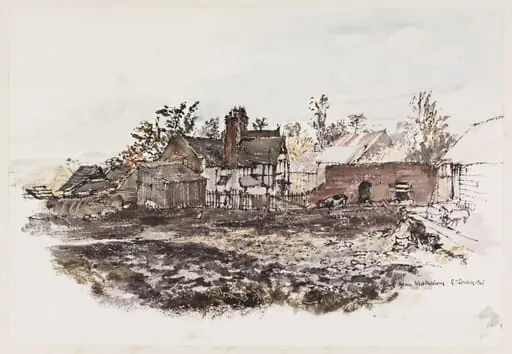
The scene portrays a quiet, unassuming rural structure nestled in a quiet valley, surrounded by sparse vegetation and a winding path. The mill, no longer active, stands as a quiet relic of earlier agricultural life. Its isolation and weathered state suggest the slow erosion of traditional industries. The composition avoids drama, instead offering a contemplative record of a place likely to be altered or lost amid wartime transformation and modernization.
Technique & Style
Moore employed loose, fluid brushwork to suggest form rather than define it, using diluted washes of soft browns, greys, and faint blues to evoke atmosphere. Edges are blurred, details subdued, and light appears diffused, creating a sense of quiet decay. The technique prioritizes mood over precision, aligning with the project’s goal of capturing the emotional texture of place rather than architectural accuracy. The effect is intimate, like a fleeting impression from a solitary walk.
History & Provenance
The watercolour was produced as part of the Recording Britain collection, commissioned during the Second World War to preserve visual records of vulnerable landscapes. It entered the Victoria and Albert Museum’s holdings alongside other works from the project, which were acquired to safeguard Britain’s artistic and cultural heritage. The piece remains in the museum’s permanent collection, preserved as a document of both place and purpose during a time of national uncertainty.
Context
The Recording Britain project emerged amid fears that wartime destruction and rapid change would erase the nation’s rural character. Artists were sent to remote areas to record scenes deemed at risk—from mills to cottages to hedgerows. Wales, with its distinct landscape and industrial history, was underrepresented; Moore’s work contributes a rare Welsh perspective. The initiative reflected a broader cultural effort to affirm continuity through art during a period of disruption.
Legacy
Mona Moore’s watercolour endures as one of hundreds of quiet testimonies to Britain’s vanishing rural fabric. It exemplifies the Recording Britain project’s success in elevating modest, everyday scenes to historical significance. Today, it serves as both an artistic record and a reminder of how war and progress reshape landscapes. Its presence in the V&A ensures continued access for scholars and the public, anchoring memory in material form.
Artist & collection
Artist
Mona Moore painted quiet watercolours of Welsh villages and coastline in the 1940s.

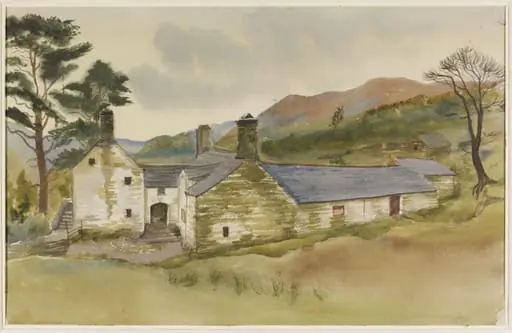 Ddu-Allt, Tan-y-Bwlch, Merionethshire
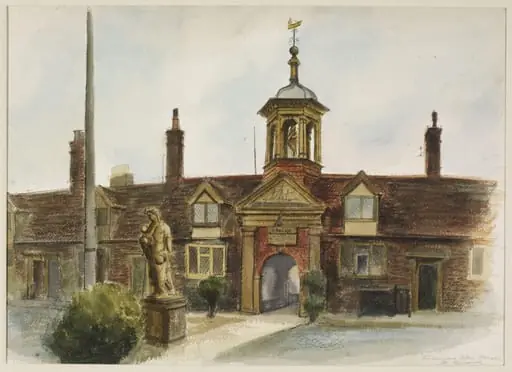 Fishermen's Almshouses, Great Yarmouth
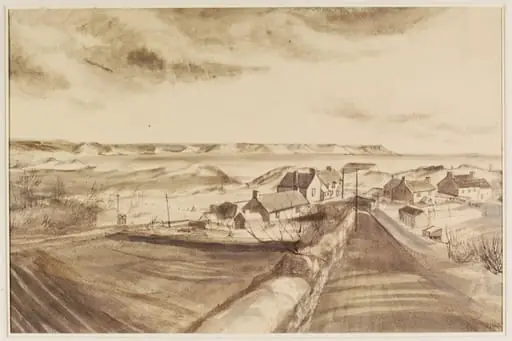 Oxwich Bay and Village, Gower, Glamorganshire
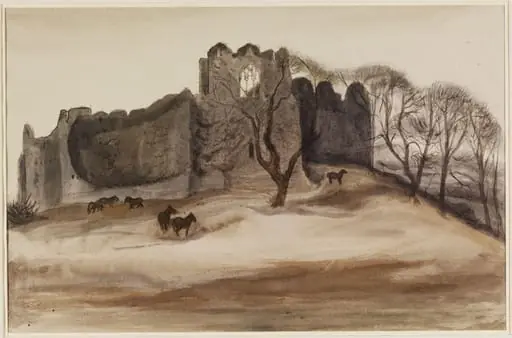 Oystermouth Castle, Gower, Glamorganshire
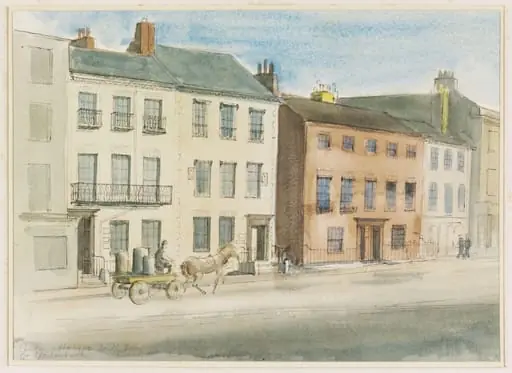 18th Century Houses, South Quay, Great Yarmouth
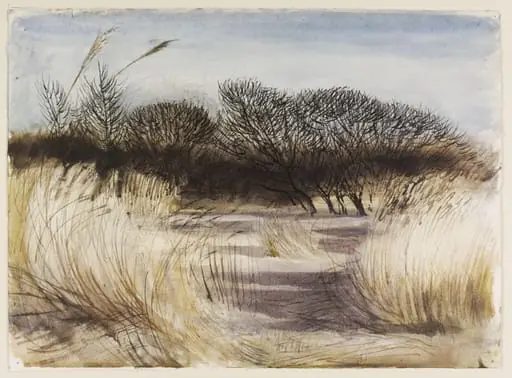 Oxwich, Gower, Glamorganshire
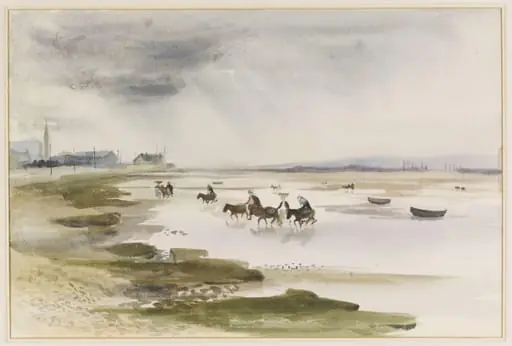 Penclawdd, Gower, Glamorganshire
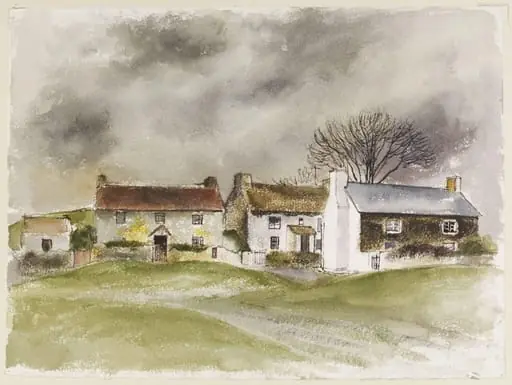 Penrice Village, Gower, Glamorganshire
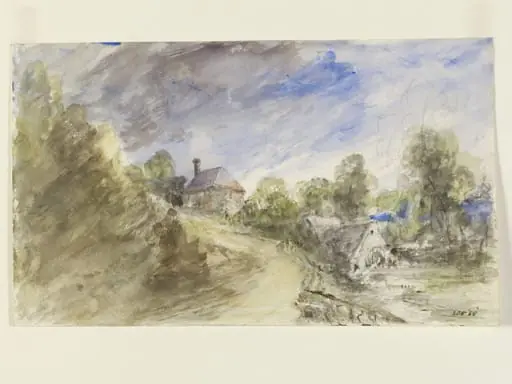 A cottage and water-mill at Bignor
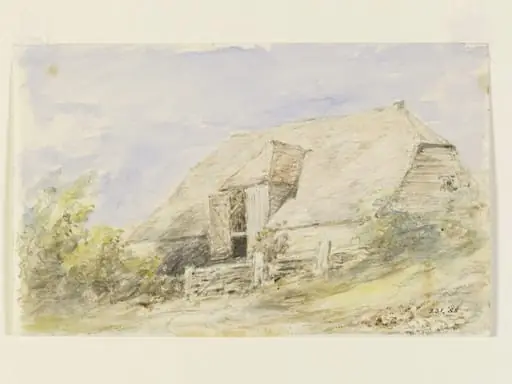 A barn.
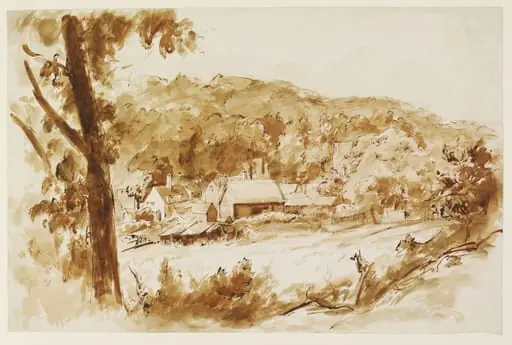 Turville Village
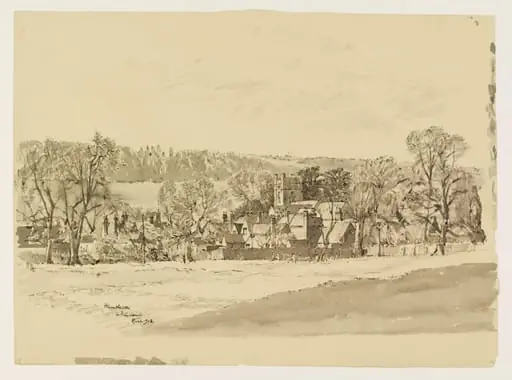 Hambledon
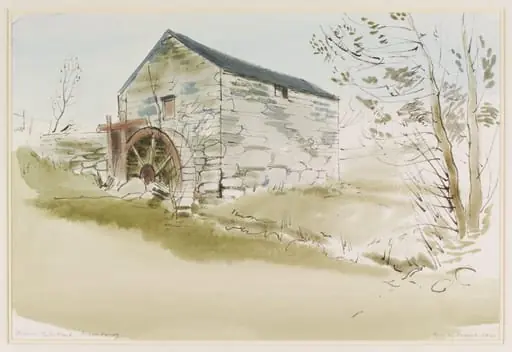 Melin Ty’n-Nant, Maentwrog, Merionethshire
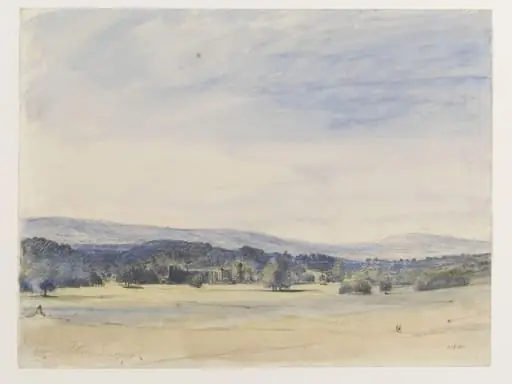 The ruins of a Cowdray House
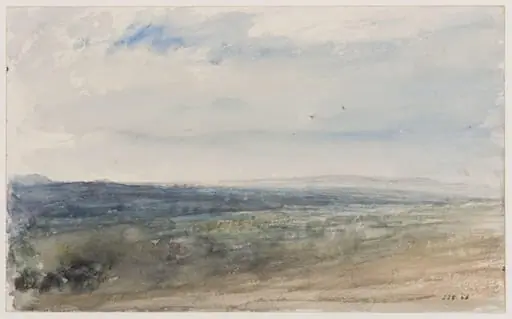 A view of downland country
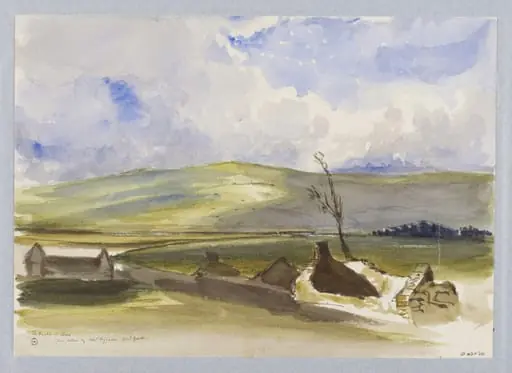 Sketches made during the Campaign of 1854-55 in the Crimea, Circassia and Constantinople
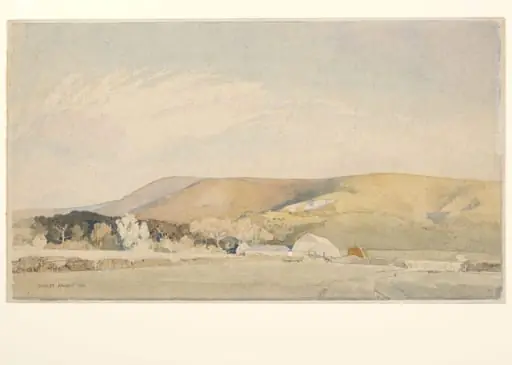 Lodge Barn, near Ditchling
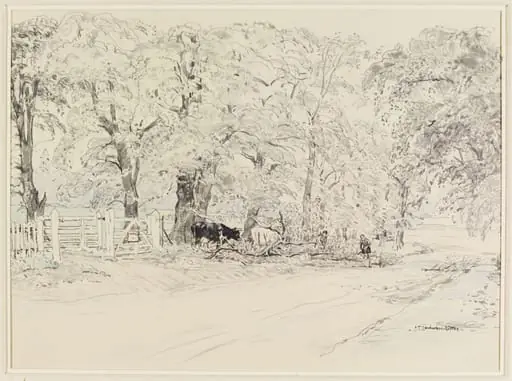 Ham Street - the river end
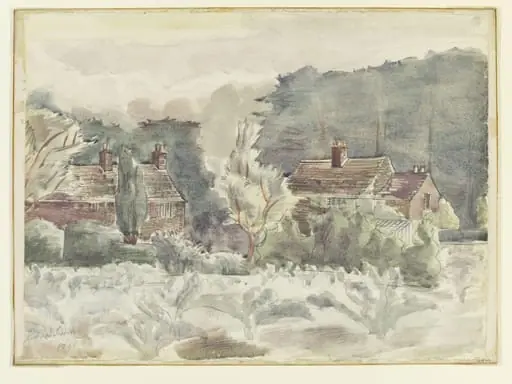 Cottages at Norton, No.5
 Park Farm, West Malvern