Artwork
Stoke Poges Church, Buckinghamshire. Illustration to Gray's 'Elegy'
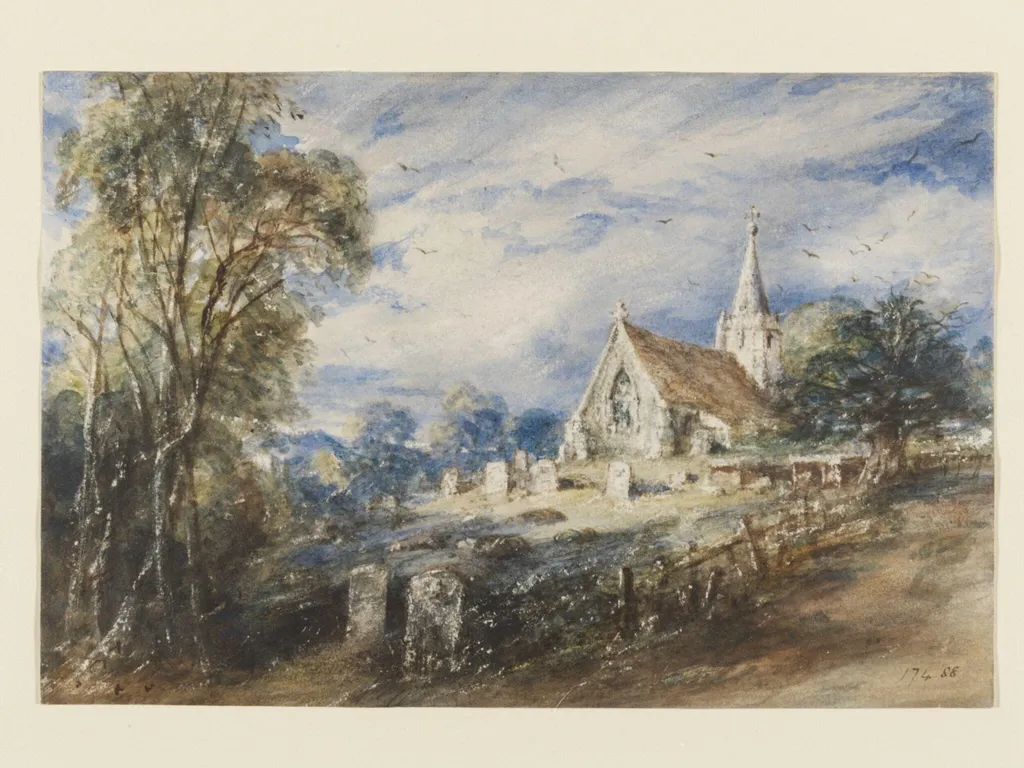
Stoke Poges Church, Buckinghamshire. Illustration to Gray's 'Elegy' is a watercolor work on paper by the Romanticist artist John Constable. It dates from 1833 and is held in the collection of the Victoria and Albert Museum.
About this work
Overview
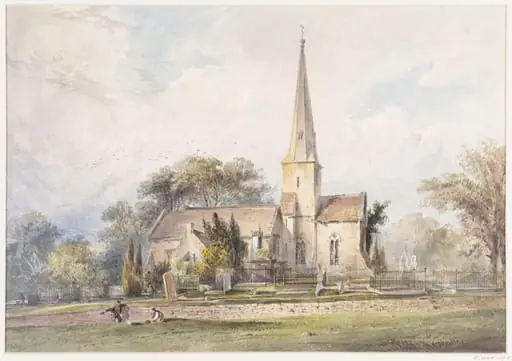
Stoke Poges Church, Buckinghamshire, is the subject of a serene watercolour illustration created by John Constable in 1833, originally designed to accompany Thomas Gray's 'Elegy'. The composition centres on the church, set amidst a tranquil landscape.
Subject & Meaning
The painting depicts Stoke Poges Church within its rural setting, emphasizing a peaceful atmosphere. The inclusion of a cemetery, trees, birds in flight, and a winding path suggests a contemplative scene, aligning with the melancholic yet serene themes of Gray's 'Elegy'.
Technique & Style
Executed in watercolour, the work features soft, gentle colours and delicate brushstrokes, imparting a dreamy quality. These characteristics are reminiscent of the Romanticism movement, which often emphasized emotional and serene natural landscapes.
History & Provenance
Originally intended as an illustration for Thomas Gray's 'Elegy', this watercolour was part of a larger exhibition at the Royal Academy in 1833, where Constable showcased four oil paintings and three drawings.
Own this work as a print
Artist & collection
Artist
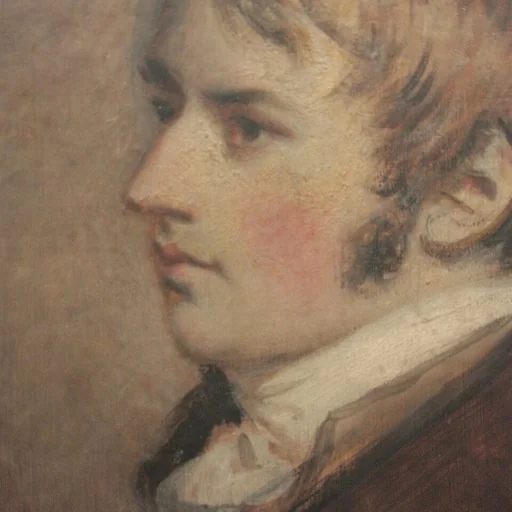
John Constable (; 11 June 1776 – 31 March 1837) was an English landscape painter in the Romantic tradition.

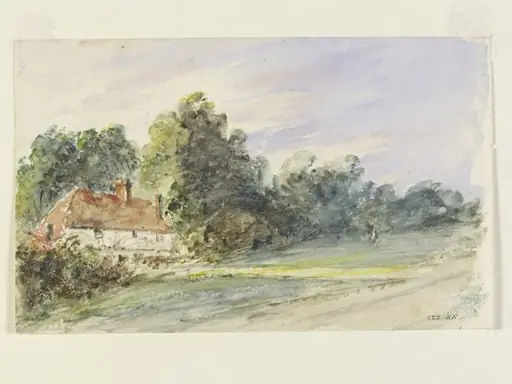 A cottage with a red-tiled roof, by a wood
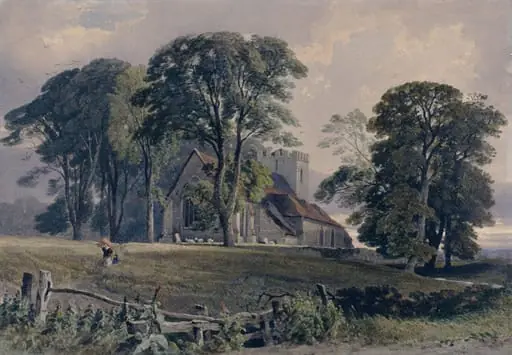 A Country Church
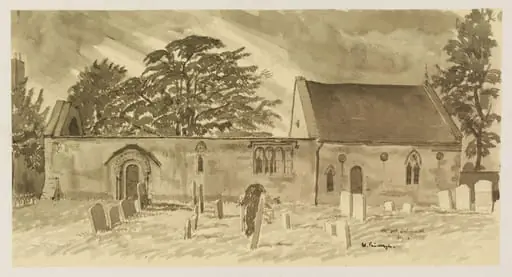 St.George's Church, Hatford
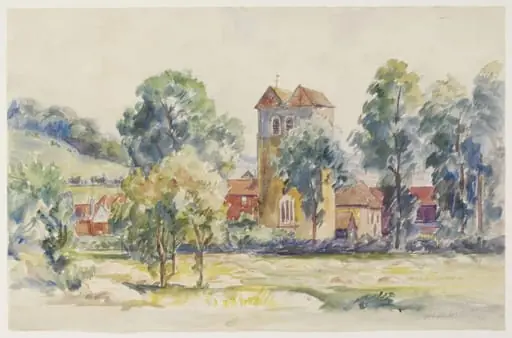 St. Bartholomew's Church, Fingest
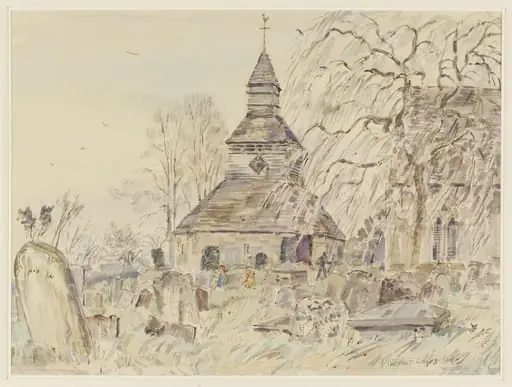 The Detached Belfrey, Pembridge
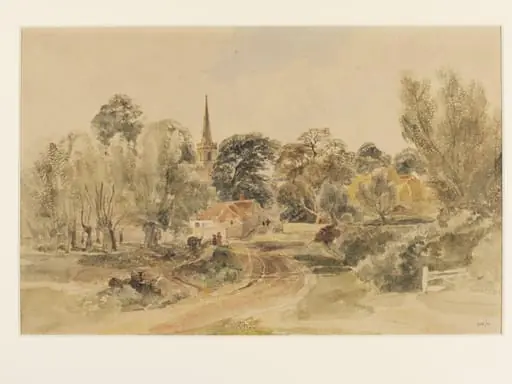 Wilsford, Lincolnshire
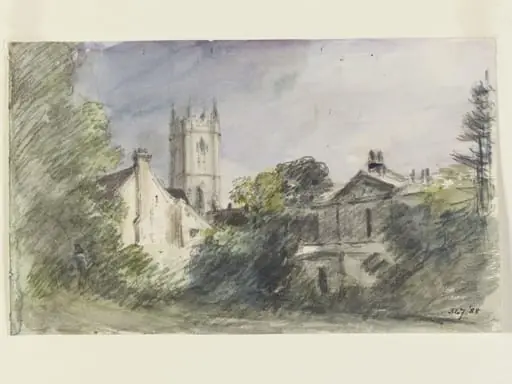 Houses in Dedham, with the church tower
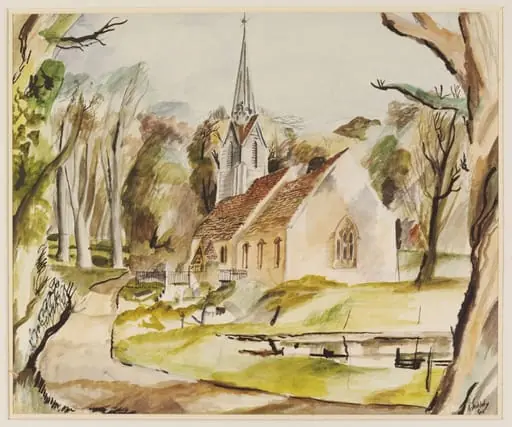 Middleton Church
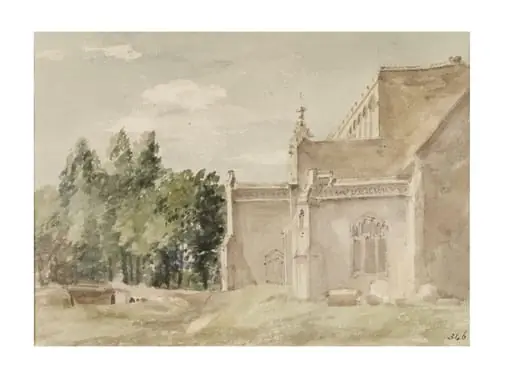 East Bergholt Church: view from the east
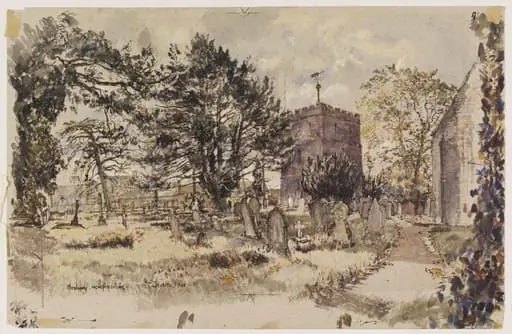 Bosbury Church
 Dalham
 Church and churchyard