Artwork
Woman in a Blue Dress (recto); War Encampment Scene (verso)
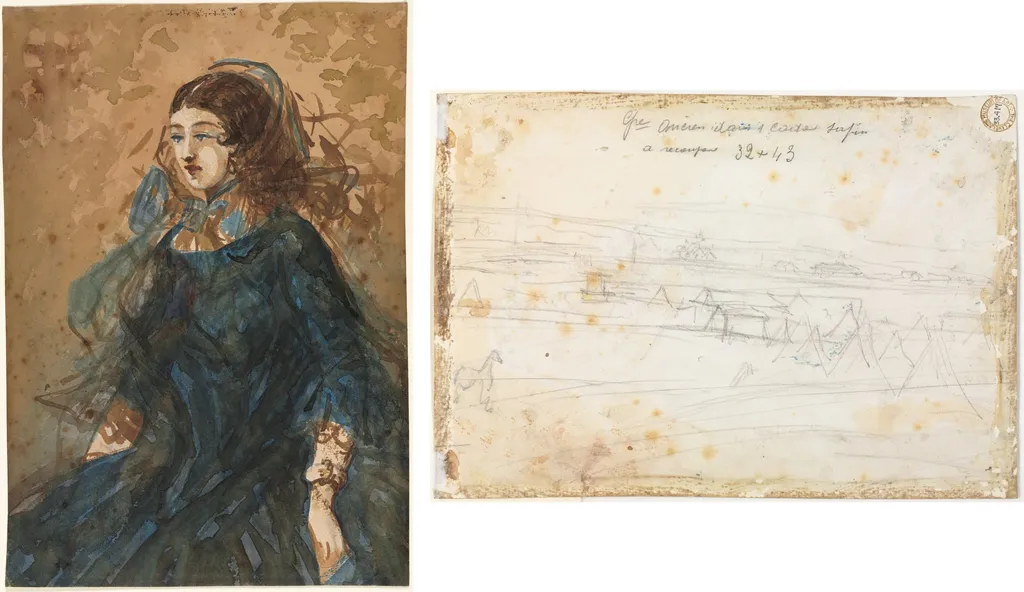
Woman in a Blue Dress (recto); War Encampment Scene (verso) is a drawing by the Impressionist artist Constantin Guys. It dates from 1858 and is held in the collection of the Cleveland Museum of Art.
About this work
Overview
Created in 1858 by French illustrator Constantin Guys, this double-sided drawing pairs a portrait of a woman with a military encampment scene.
Created in 1858 by French illustrator Constantin Guys, this double-sided drawing pairs a portrait of a woman with a military encampment scene. Executed in watercolor and ink, it reflects Guys’ dual focus on civilian and wartime life. The work was likely produced for journalistic illustration, showcasing his practice of capturing fleeting moments from daily and military existence during the mid-nineteenth century.
Subject & Meaning
The recto portrays a woman in a blue dress, her posture calm and introspective, face turned slightly away, suggesting quiet solitude. The verso presents a sparse, atmospheric depiction of soldiers in a temporary encampment. Together, the two sides contrast private stillness with public turmoil, offering a dual commentary on the civilian and military spheres coexisting in wartime France.
Technique & Style
Guys employed loose, fluid brushwork and muted yet vivid washes to suggest form without rigid definition. The woman’s dress and shawl are rendered with economical strokes, while the background’s warm gold tone adds depth without detail. The encampment scene uses minimal lines to imply tents and figures, emphasizing atmosphere over precision. This approach anticipates later Impressionist concerns with light and movement, though grounded in journalistic observation.
History & Provenance
The drawing originated from Guys’ work as a correspondent for French and British periodicals during the Crimean War. It was likely produced for publication, though its dual-sided composition suggests personal or preparatory use. The piece entered institutional collections in the twentieth century, valued for its rare combination of intimate portraiture and wartime documentation from a single hand.
Context
In the 1850s, illustrated newspapers like L’Illustration and The Illustrated London News demanded rapid, evocative imagery of current events. Guys, among the first to embed with troops, captured scenes with immediacy rather than idealization. His drawings bridged art and journalism, offering the public unvarnished glimpses of war and everyday life, distinct from academic history painting’s grand narratives.
Legacy
Guys’ work influenced later artists drawn to spontaneous observation, including Degas and Toulouse-Lautrec. His ability to convey character and mood with minimal means helped shift artistic priorities toward the ephemeral and the real. Though not widely celebrated in his lifetime, his drawings are now recognized as pivotal in the transition from documentary illustration to modern visual storytelling.
Artist & collection
Artist
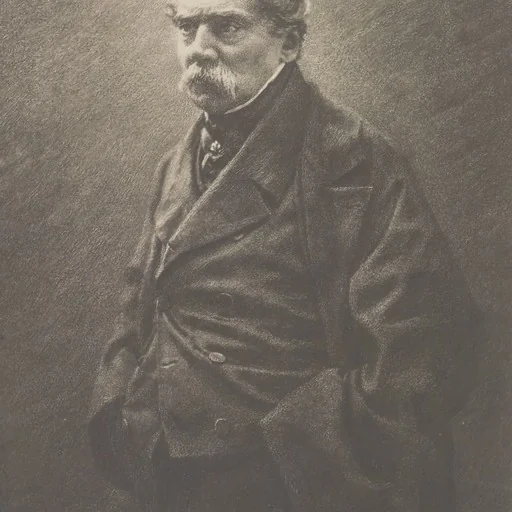
Constantin Guys (born Ernest-Adolphe Guys de Saint-Hélène, December 3, 1802 – December 13, 1892) was a French Crimean War correspondent, water color painter and illustrator for British and French newspapers.

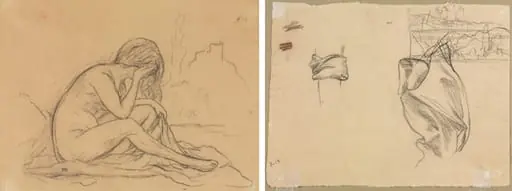 Study of a Female Nude (possibly for an unrealized allegorical painting) (recto); Studies of Drapery and Study of a Landscape (verso)
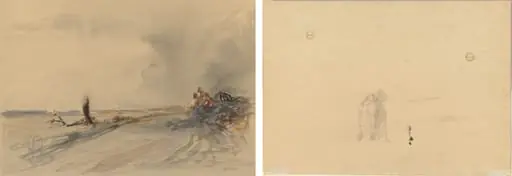 Devastated Land (recto); Figures in a Landscape (verso)
![Sketch of a Couple Seated with Cloud Studies [verso], by Walter Crane](https://artifactworldgallery.com/img/walter-crane--sketch-of-a-couple-seated-with-cloud-studies-verso--bd0c5f7cb1d389b6-w320.webp) Sketch of a Couple Seated with Cloud Studies [verso]
Sketch of a Couple Seated with Cloud Studies [verso]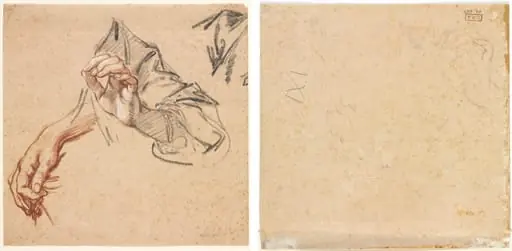 Study of Hands (recto); Sketch of a Hand (verso)
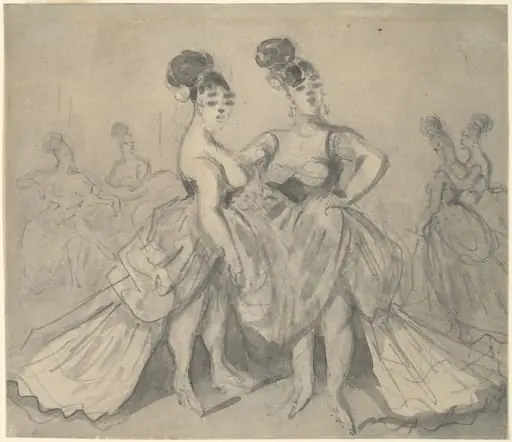
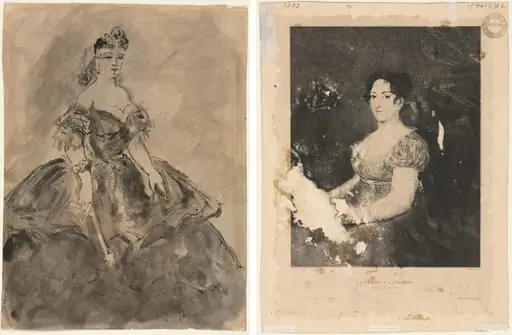 At the Ball (recto); La femme à l'éventail, after Goya (verso)
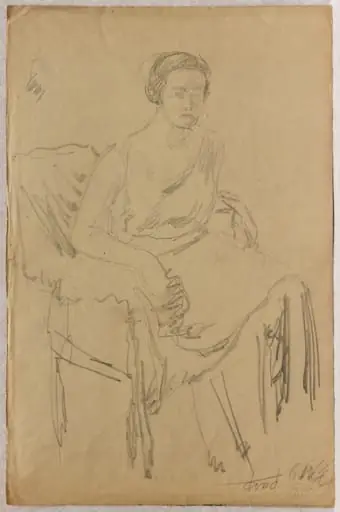 Verso: Femeie șezând
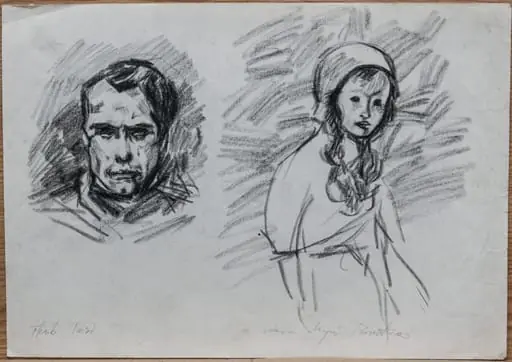 Desen după Tonitza
![A Grazing Cow; Head of a Woman with Her Hand on Her Cheek, and Head of a Man with His Hand on His Ear [verso], by Paul Gauguin](https://artifactworldgallery.com/img/paul-gauguin--a-grazing-cow-head-of-a-woman-with-her-hand-on-her-cheek-and--634600a51135ea0b-w320.webp) A Grazing Cow; Head of a Woman with Her Hand on Her Cheek, and Head of a Man with His Hand on His Ear [verso]
A Grazing Cow; Head of a Woman with Her Hand on Her Cheek, and Head of a Man with His Hand on His Ear [verso] Two women dancing