Artwork
Study of a Female Nude (possibly for an unrealized allegorical painting) (recto); Studies of Drapery and Study of a Landscape (verso)
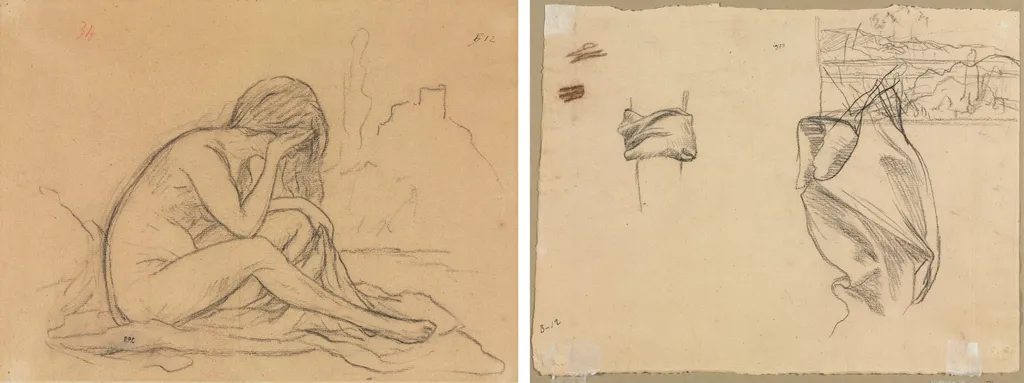
Study of a Female Nude (possibly for an unrealized allegorical painting) (recto); Studies of Drapery and Study of a Landscape (verso) is a drawing by the Romanticist artist Pierre Puvis de Chavannes. It dates from 1804 and is held in the collection of the Cleveland Museum of Art.
About this work
Overview
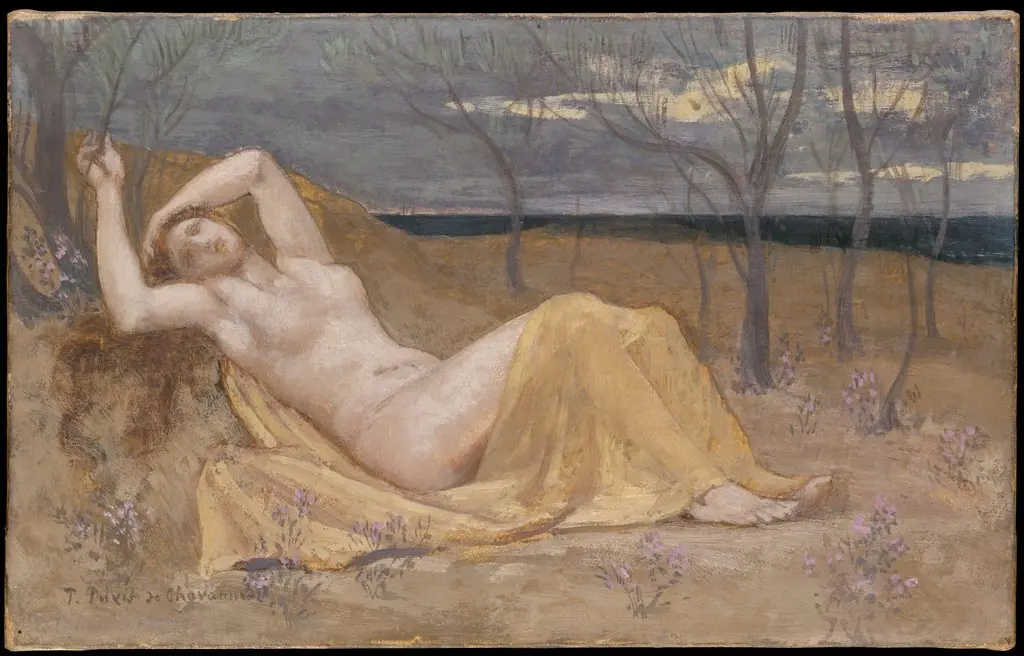
Pierre Puvis de Chavannes’ drawing, titled *Study of a Female Nude (possibly for an unrealized allegorical painting)*, is a preparatory work executed in the mid‑1880s. Rendered in charcoal or graphite on paper, the piece shows a seated nude figure, her posture collapsed as she cradles her head, set against a muted brown ground. The reverse side contains quick sketches of drapery and a landscape, illustrating the artist’s habit of working out multiple compositional elements on a single sheet.
Subject & Meaning
The central figure appears to embody a moment of introspection or melancholy, her nude form rendered with a restrained line that emphasizes gesture over detail. While the drawing was likely intended as a study for a larger allegorical composition that never materialised, the pose suggests themes of vulnerability and contemplation that recur in Puiss’s later mural narratives.
Technique & Style
Puvis employs a loose, gestural hand on both sides of the sheet. The front view uses broad, tonal shading to suggest volume, whereas the verso sketches are executed in rapid, economical strokes that capture the flow of fabric and the outline of a landscape. This dual approach reflects his systematic preparation process, balancing detailed figure study with broader compositional experiments.
History & Provenance
The work entered the collection of the Cleveland Museum of Art in the early 20th century, where it has been catalogued as a key example of the artist’s preparatory drawings. Puvis de Chavannes, a prominent muralist associated with the early Third Republic, later helped found the Société Nationale des Beaux‑Arts, cementing his influence on French academic circles.
Context
Created during a period when Puvis was consolidating his reputation for large‑scale allegorical murals, the study reflects his interest in harmonising rational composition with emotive content—a balance praised by contemporary critic Émile Zola. The drawing’s methodical approach to figure and landscape studies informed later artists, notably the Russian‑born painter Robert Genin, who cited Puvis’s compositional clarity as an inspiration.
Artist & collection
Artist
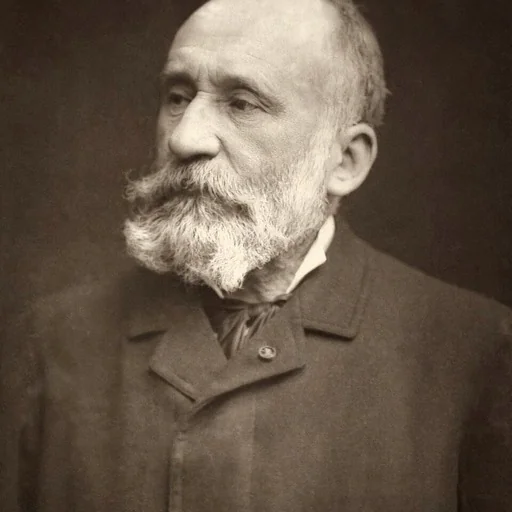
Pierre Puvis de Chavannes (French pronunciation: ; 14 December 1824 – 24 October 1898) was a French painter known for his mural painting, who came to be known as "the painter for France".


 Soldier in a Trench (recto) Reclining Woman (verso)
![Figure Seated on the Ground [recto], by Paul Gauguin](https://artifactworldgallery.com/img/paul-gauguin--figure-seated-on-the-ground-recto--ce49e9c311169db0-w320.webp) Figure Seated on the Ground [recto]
Figure Seated on the Ground [recto]![Eye and Part of Face; A Breton Woman and Two Men [recto], by Paul Gauguin](https://artifactworldgallery.com/img/paul-gauguin--eye-and-part-of-face-a-breton-woman-and-two-men-recto--81c9125f35b9b9e6-w320.webp) Eye and Part of Face; A Breton Woman and Two Men [recto]
Eye and Part of Face; A Breton Woman and Two Men [recto] Study of Hands (recto); Sketch of a Hand (verso)
 A cow, and a group of figures beneath a parasol
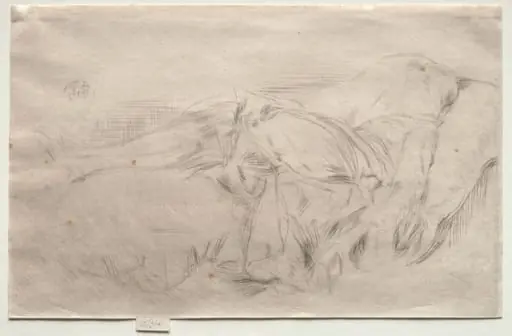 A Child on a Couch, No. 2
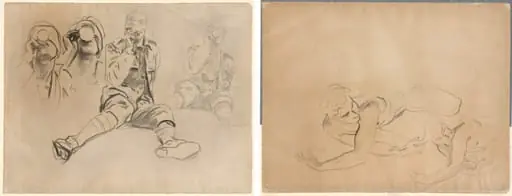 Studies of a Soldier Drinking, for Gassed (recto); Studies of a Male Nude (verso)
![Figure Studies [verso], by George Romney](https://artifactworldgallery.com/img/george-romney--figure-studies-verso--19708132818b32a0-w320.webp) Figure Studies [verso]
Figure Studies [verso]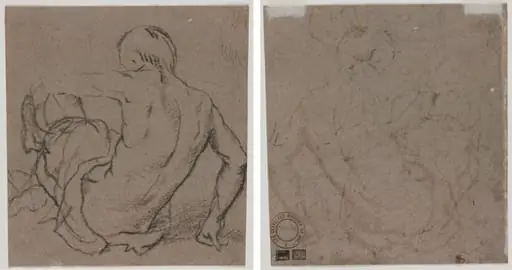 Man Seated on the Ground, Seen from Behind (recto); Sketch (verso)
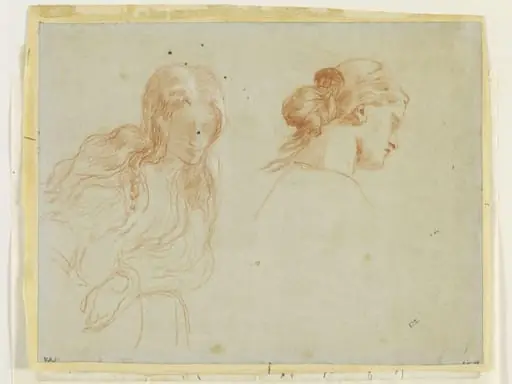 Untitled