Artwork
Muncitorii forestieri
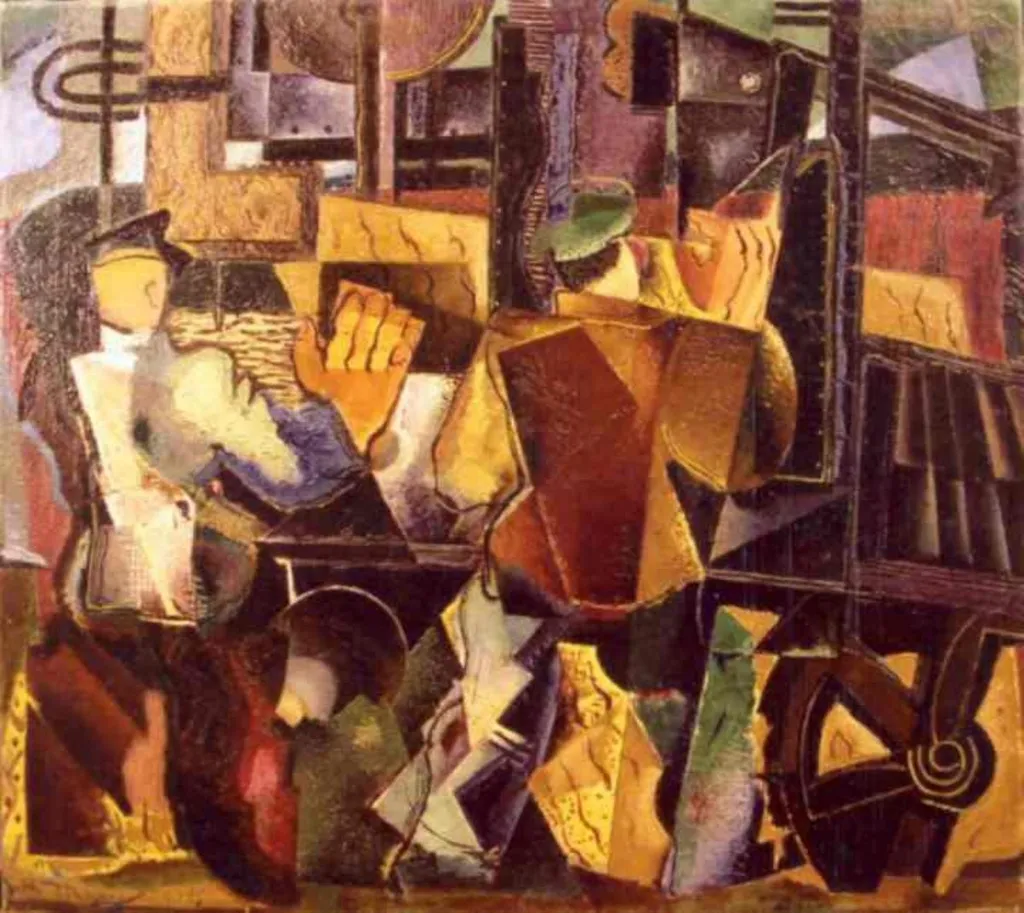
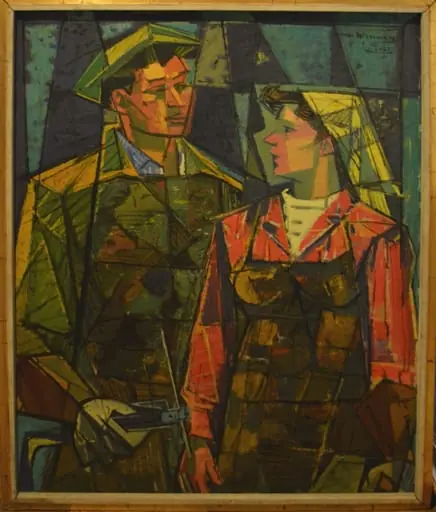
Muncitorii forestieri is an unspecified painting by Max Hermann Maxy. It dates from 1926 and is held in the collection of the National Museum of Art of Romania.
About this work
Overview
The work conveys a sense of physical labor and environmental tension through its unrefined surface and fragmented structure.
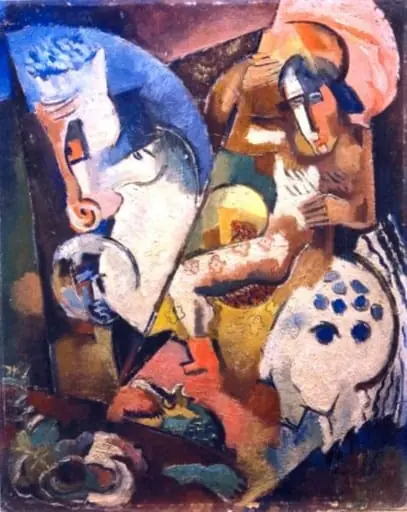
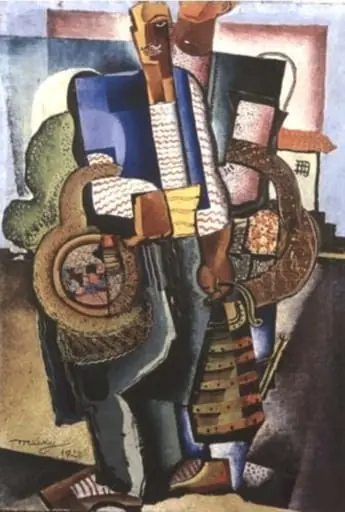
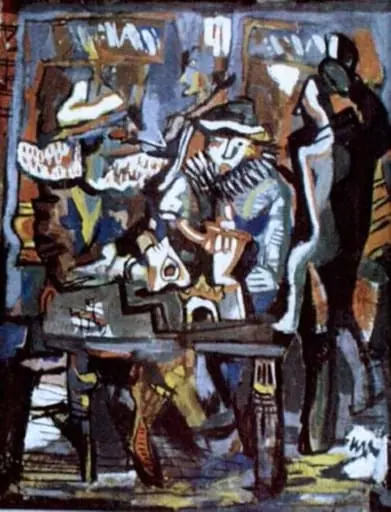
Painted in 1926 by Max Hermann Maxy, Muncitorii forestieri depicts two forest workers seated side by side. The composition is dominated by a dense, agitated background filled with angular forms and conflicting hues. The figures are rendered with minimal facial detail, their identities obscured by the surrounding visual noise. The work conveys a sense of physical labor and environmental tension through its unrefined surface and fragmented structure.
Subject & Meaning
The two figures, likely forestry laborers, are presented without individualizing features, emphasizing their roles over their personalities. Their placement within a chaotic, non-naturalistic space suggests an environment shaped by human toil and industrial intrusion. The lack of emotional expression on their faces invites interpretation of alienation or exhaustion, reflecting broader themes of labor and modernity in interwar Eastern Europe.
Technique & Style
Maxy employed thick, textured impasto to build the painting’s surface, applying paint in irregular, forceful strokes that resist blending. Colors—predominantly yellows, browns, and greens—juxtapose sharply without transitional gradients. The brushwork is deliberately crude, creating a tactile, almost sculptural quality. This approach rejects traditional modeling, favoring expressive distortion over realistic representation.
History & Provenance
Created during Maxy’s active period in Romania, the work emerged from a milieu influenced by Expressionism and avant-garde experimentation. It was likely produced in Bucharest, where Maxy was engaged with modernist circles. The painting’s early reception remains undocumented, but it has since been included in Romanian modernist collections, preserving its place in the nation’s 20th-century art history.
Context
In the mid-1920s, Romanian artists were redefining national identity through modernist lenses, often addressing rural labor and industrial change. Maxy’s work diverged from romanticized depictions of peasants, instead portraying workers as embedded in dissonant, mechanized landscapes. This painting aligns with broader European trends that questioned harmony in favor of emotional and formal disruption.
Legacy
Muncitorii forestieri stands as an early example of Romanian Expressionism’s engagement with social themes through radical technique. Its raw aesthetic influenced later generations of artists seeking to break from academic norms. Though not widely exhibited internationally, it remains a key reference in studies of interwar Romanian modernism for its unflinching visual language.
Artist & collection

Artist
Max Hermann Maxy was a Romanian painter, art professor, scenographer, and professor of German-Jewish descent.