Artwork
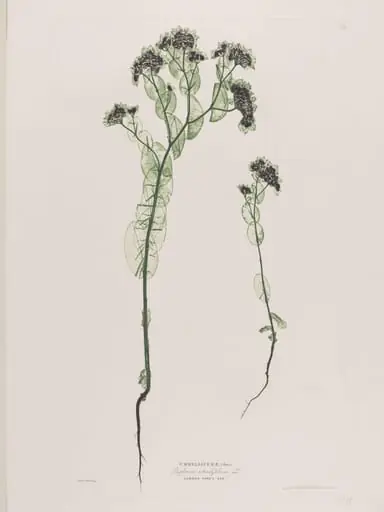
Chaerophyllum hirsistum
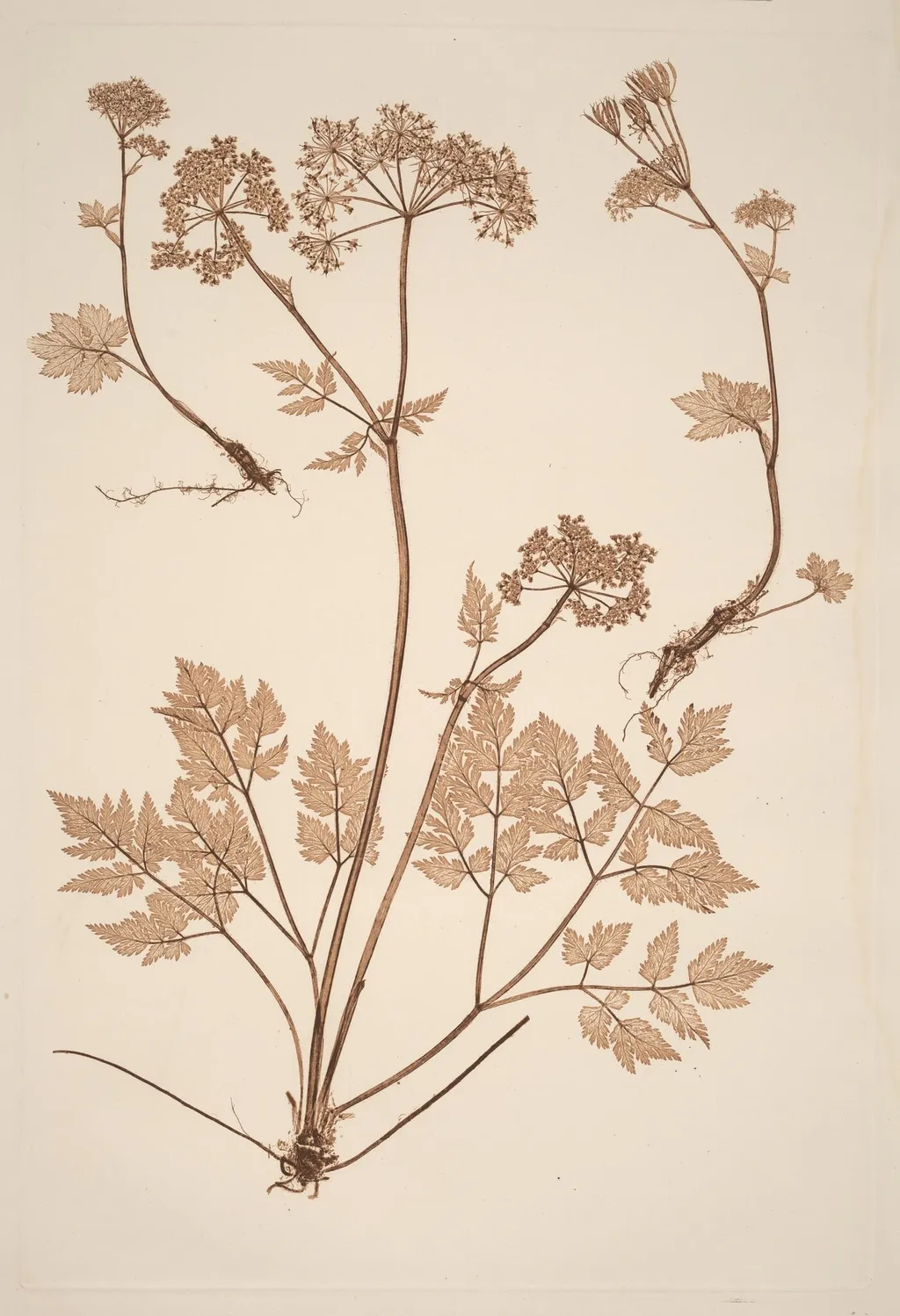
Chaerophyllum hirsistum is an ink print by the Impressionist artist Constetin von Ettinghausen. It dates from 1856 and is held in the collection of the National Gallery of Art.
About this work
Overview
The specimen was pressed between copper and lead plates, then electroplated to capture its surface details before being printed in brown ink on wove paper.
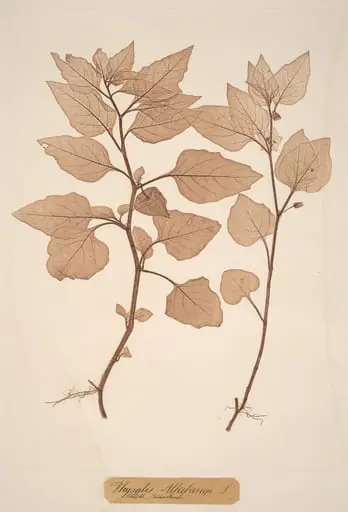
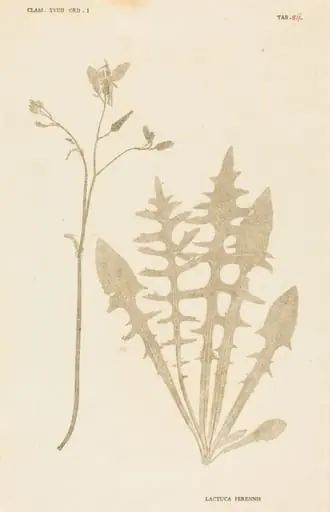
Created in 1856 by Constantin von Ettinghausen, this print depicts Chaerophyllum hirsutum, a wild plant species, rendered through a specialized nature printing technique. The specimen was pressed between copper and lead plates, then electroplated to capture its surface details before being printed in brown ink on wove paper. The result is a precise, tonal impression that preserves the plant’s natural form without manual drawing.
Subject & Meaning
The subject is a dried specimen of Chaerophyllum hirsutum, a herbaceous plant with slender stems, finely divided leaves, and clustered flowers. Its presentation emphasizes botanical accuracy over aesthetic embellishment, reflecting 19th-century scientific efforts to document flora with fidelity. The muted brown tones evoke the plant’s desiccated state, reinforcing its role as a preserved specimen rather than an idealized image.
Technique & Style
The print was made using nature printing, a rare method in which the plant itself served as the printing matrix. Pressed between metal plates, its texture transferred directly to the lead surface, which was then electroplated to create a durable intaglio plate. Ink was applied to the recessed lines and pulled onto paper, producing sharp, naturalistic contours. The absence of hand-drawn lines gives the image an unmediated, almost mechanical realism.
History & Provenance
This print originates from Constantin von Ettinghausen’s work in botanical illustration during the mid-19th century, a period when scientific institutions sought accurate visual records of plant species. The technique, developed earlier by Alois Auer, was adopted by a small circle of naturalists. Ettinghausen’s use of it here aligns with institutional projects documenting European flora, likely for academic or herbarium use.
Context
In the 1850s, botanical science increasingly relied on visual documentation to support taxonomy and classification. Traditional engravings were time-consuming and prone to artistic interpretation; nature printing offered a more objective alternative. This print reflects a broader shift toward empirical representation in natural history, where the specimen’s physical form was trusted over human interpretation.
Legacy
Though nature printing never replaced conventional illustration, it influenced later scientific imaging by demonstrating the value of direct physical transfer in documentation. Ettinghausen’s work remains a technical artifact of 19th-century botanical practice, valued today for its fidelity and the rarity of its method. It stands as a quiet testament to the era’s pursuit of precision in natural science.
Artist & collection