Artwork
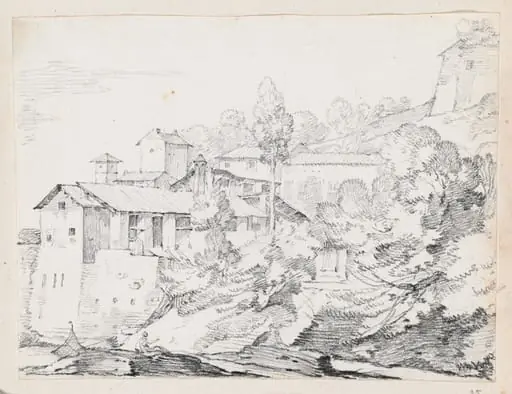
A View of Savelli near Albano
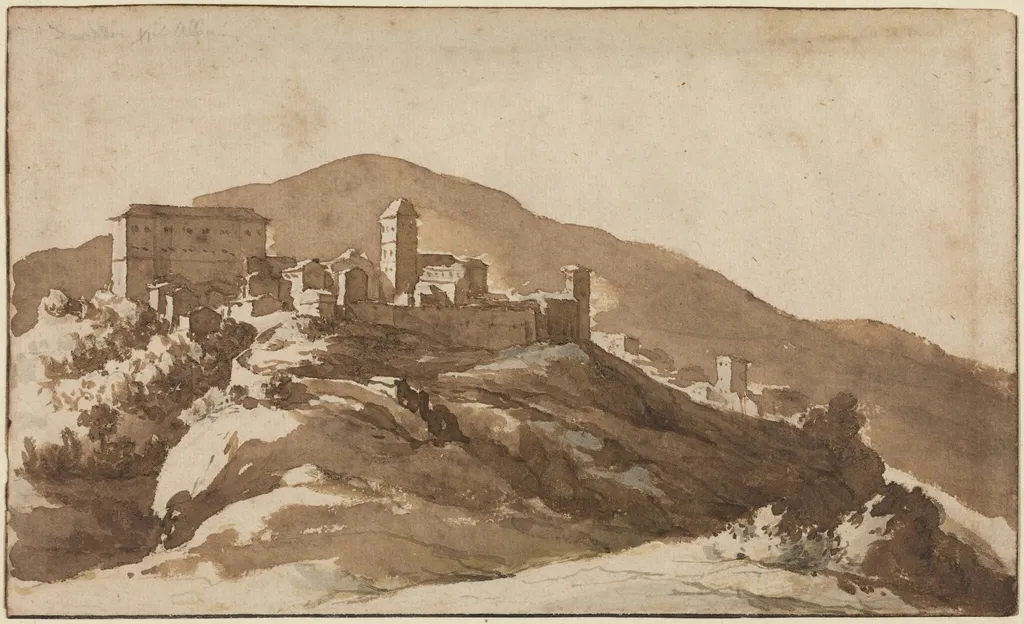
A View of Savelli near Albano is an ink drawing by the Baroque artist Jan de Bisschop. It dates from 1650 and is held in the collection of the National Gallery of Art.
About this work
Overview
Executed in brush and brown ink with subtle gray and yellow washes, it reflects the artist’s shift from law to visual art.
Created in 1650 by Jan de Bisschop, this drawing captures a quiet hillside village near Albano, Italy. Executed in brush and brown ink with subtle gray and yellow washes, it reflects the artist’s shift from law to visual art. The work belongs to the tradition of topographical landscape drawing, emphasizing natural topography over narrative. Its restrained palette and delicate tonal gradations convey a sense of calm observation rather than dramatic spectacle.
Subject & Meaning
The scene depicts Savelli, a small settlement perched on a slope overlooking the Alban Hills. Buildings are rendered with minimal detail, suggesting their integration into the landscape rather than their architectural significance. The absence of human figures and overt symbolism points to a contemplative interest in place itself. The composition invites quiet reflection on rural Italian terrain as seen through the eyes of a Northern European traveler.
Technique & Style
De Bisschop employed a brush to apply fluid brown ink, building form through layered washes of gray and sparing touches of yellow. The foreground’s textured slopes are suggested with loose, directional strokes, while the distant village is defined by clean, linear contours. The yellow wash adds a soft luminosity, evoking sunlight without direct illumination. This method balances precision with spontaneity, characteristic of Dutch artists working abroad during the mid-seventeenth century.
History & Provenance
Jan de Bisschop, originally trained in law, turned to art after traveling to Italy in the 1640s. He produced numerous drawings during his time in Rome and its surroundings, often recording views of lesser-known sites like Savelli. This work likely originated from his personal sketchbook, intended as study or memory rather than public sale. Its survival suggests it was valued within his circle or later collected by connoisseurs of Italianate drawings.
Context
Produced during the Baroque era, the drawing diverges from the period’s grandeur, instead aligning with a quieter trend among Northern artists in Italy: recording landscape as observed truth. While Italian painters emphasized monumental architecture and theatrical light, de Bisschop focused on subtle atmospheric effects and topographical accuracy. His approach reflects the growing interest in empirical observation and the picturesque among Dutch and Flemish travelers.
Legacy
Though not widely exhibited during his lifetime, de Bisschop’s drawings contributed to the development of topographical art in the Netherlands. His work influenced later generations of Dutch landscape draftsmen who sought to document foreign scenery with restraint and sensitivity. This piece remains a quiet example of how Northern European artists reinterpreted Italian landscapes through a lens of understated observation rather than idealization.
Artist & collection
Artist
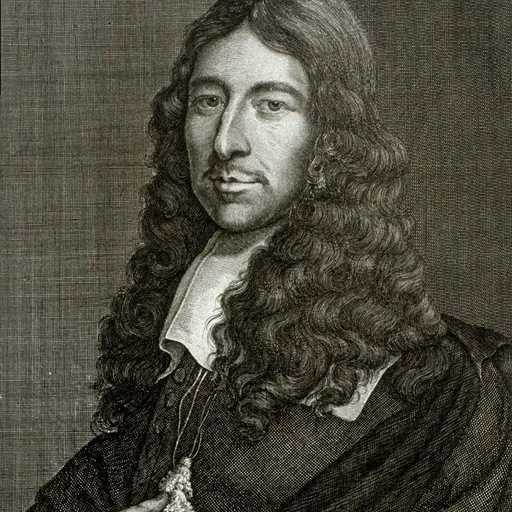
Jan de Bisschop, also known as Johannes Episcopius (1628–1671), was a lawyer, who became a Dutch Golden Age painter and engraver.

![The Fantastic Rocks and Castle at Bomarzo [recto], by Bartholomeus Breenbergh](https://artifactworldgallery.com/img/bartholomeus-breenbergh--the-fantastic-rocks-and-castle-at-bomarzo-recto--e05f03da6f1f9c0a-w320.webp) The Fantastic Rocks and Castle at Bomarzo [recto]
The Fantastic Rocks and Castle at Bomarzo [recto]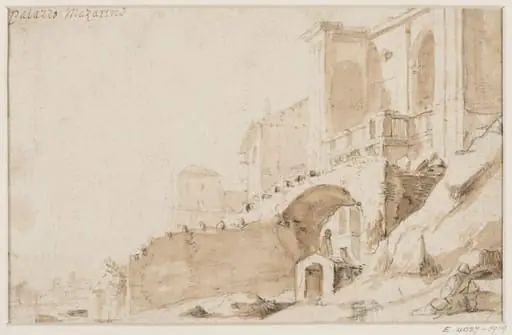 Palazzo Mazzarini, Rome
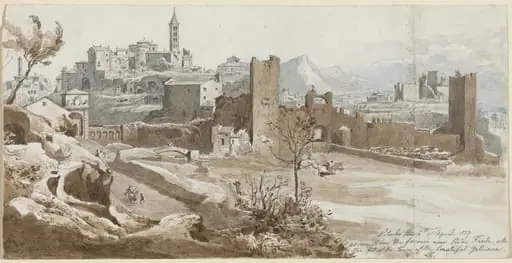 Viterbo
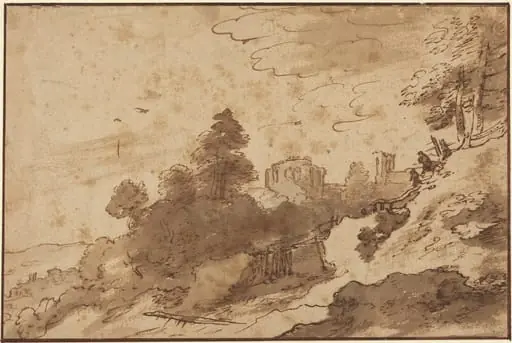 Landscape with Bridge and Ruins in Background
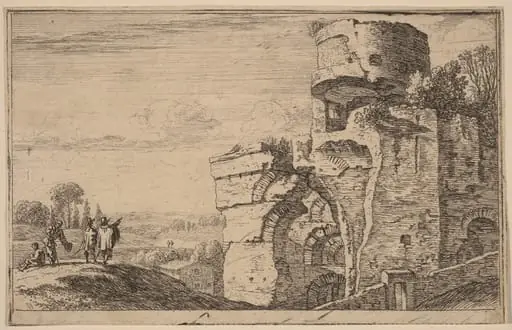 Ruins on the Palatine Hill
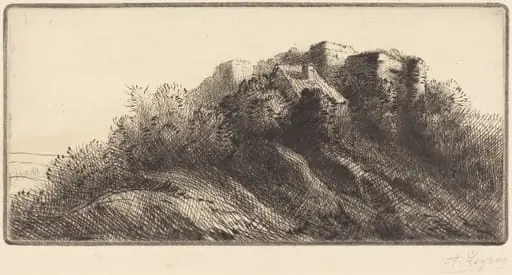 Landscape (Paysage)
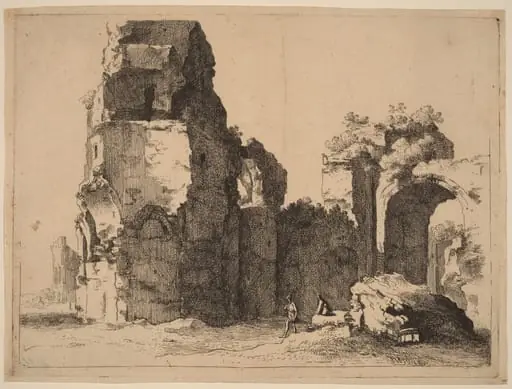 Ruins
Ruins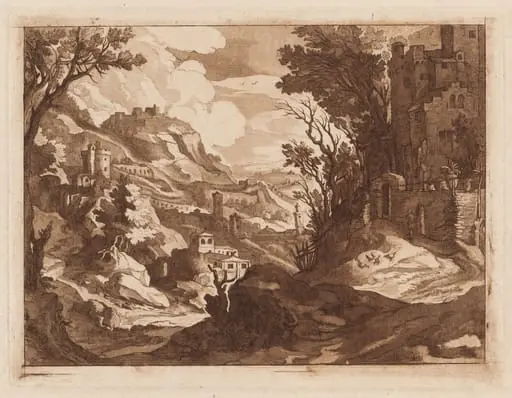 Alpine Landscape
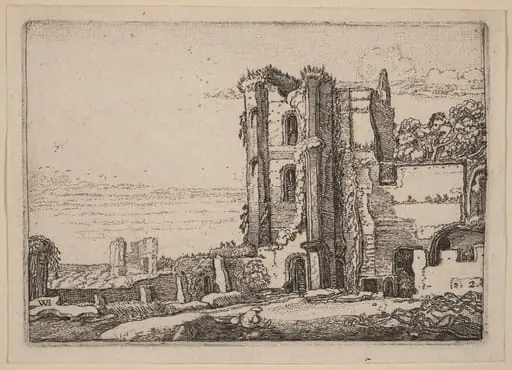 Ruined Tower Right of Center
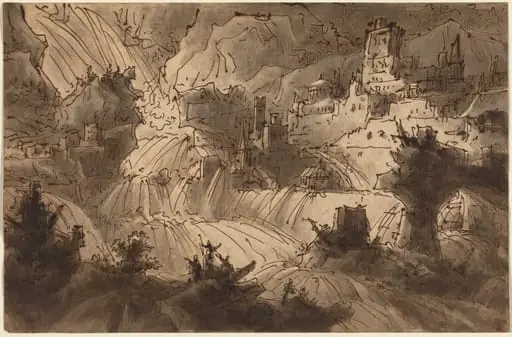 Mountain Torrents Flooding a City
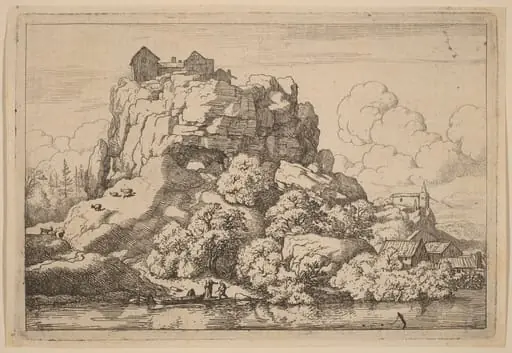 River at the Foot of a High Rock
 Italian Buildings on a Hillside