Artwork
Viterbo
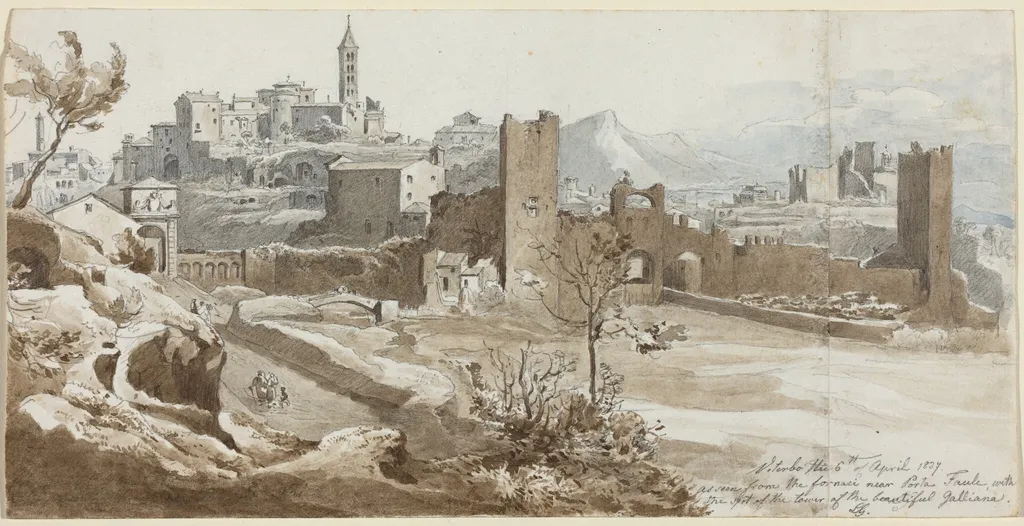
Viterbo is a graphite drawing by the Romanticist artist Wilhelm Heinrich Ludwig Gruner. It dates from 1837 and is held in the collection of the National Gallery of Art.
About this work
Overview
Wilhelm Heinrich Ludwig Gruner’s drawing titled Viterbo, executed in 1837, presents a compact town set within a stark, rocky valley. Rendered on two sheets of wove paper, the work combines graphite underdrawing with washes of brown and blue, giving the scene a muted, atmospheric palette.
Subject & Meaning
The composition depicts a cluster of modest structures clinging to a hillside, interspersed with crumbling walls and ruins that suggest a long‑standing settlement. A prominent tower and church rise behind the town, while a narrow path and a small bridge guide the eye through the landscape, emphasizing the relationship between human habitation and the surrounding terrain.
Technique & Style
Gruner employed a quick, gestural approach, laying down graphite lines before applying brown and blue washes that accentuate the shadows and sky. The limited color range and rough handling of the medium convey a sense of immediacy, characteristic of on‑the‑road sketches made by artists traveling through picturesque locales.
History & Provenance
The drawing bears the artist’s own inscription of the date and a brief note indicating the specific viewpoint from which the scene was observed near Viterbo. This personal annotation confirms that the work was produced directly from observation during Gruner’s travels in the Italian region.
Context
Created during the early nineteenth century, the piece aligns with the Romantic fascination with rugged landscapes and historic towns. Its emphasis on atmospheric effects and the juxtaposition of decay and enduring architecture reflects contemporary interests in the sublime qualities of nature and the passage of time.
Artist & collection


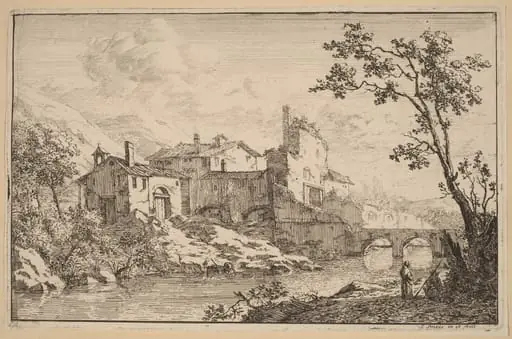 Houses at the Side of a River
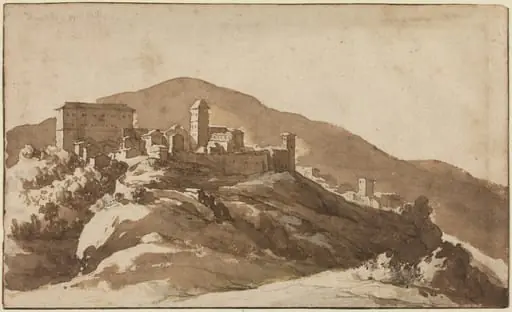 A View of Savelli near Albano
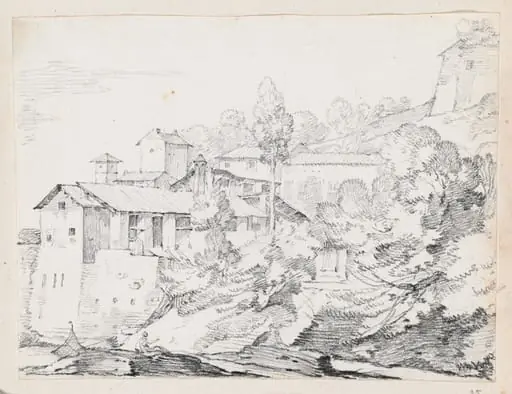 Italian Buildings on a Hillside
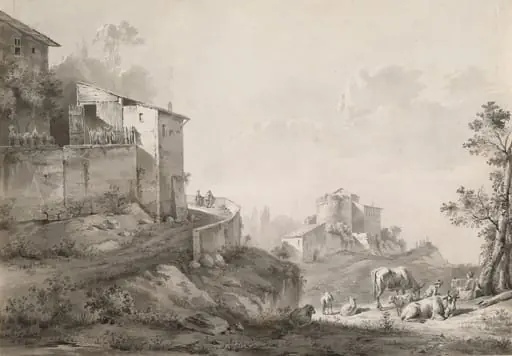 A Sunlit Landscape with Hilltop Houses
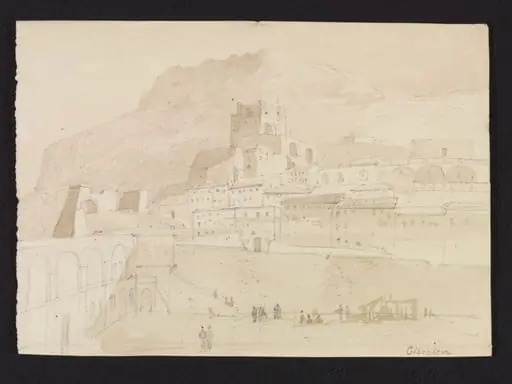 Gibralter
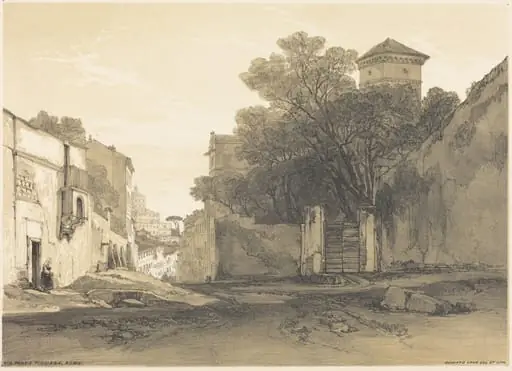 Via Porta Pinciana, Rome
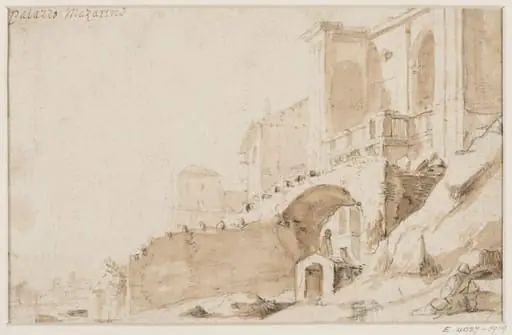 Palazzo Mazzarini, Rome
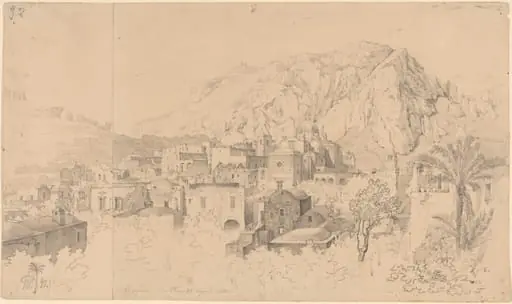 View of Capri
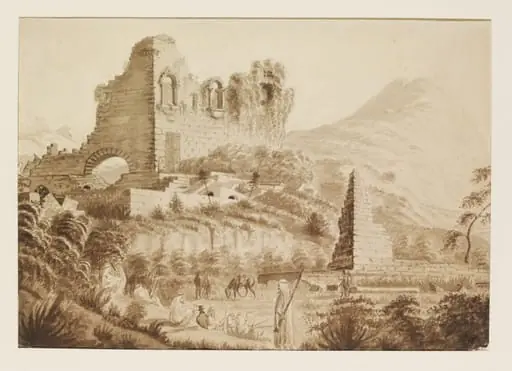 Villa Sevillana on the Road from Bona to Constantine
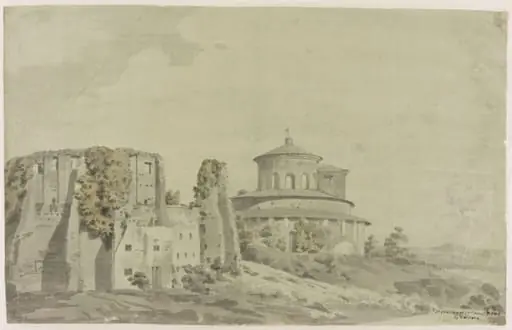 Santa Constanza, Rome
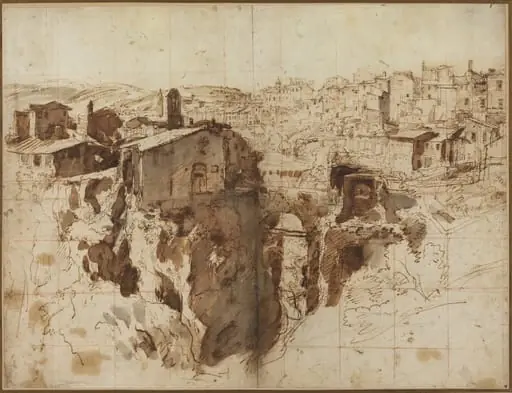 The Waterfall and Town of Tivoli
 Dobozi