Artwork
Terracina
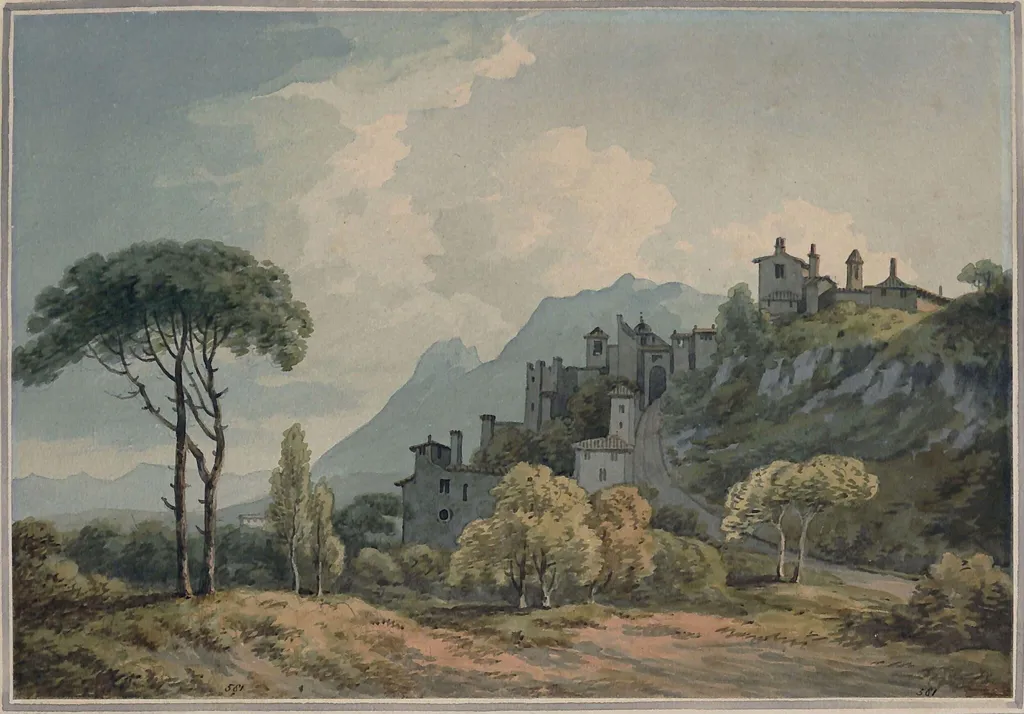
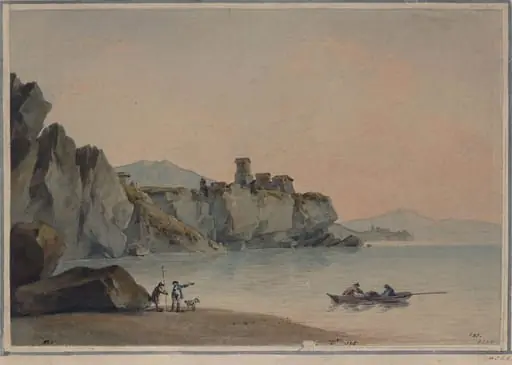
Terracina is a watercolor work on paper by the Romanticist artist John 'Warwick' Smith. It dates from 1800 and is held in the collection of the Victoria and Albert Museum.
About this work
Overview
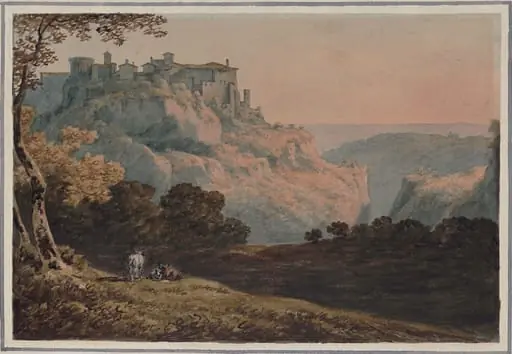
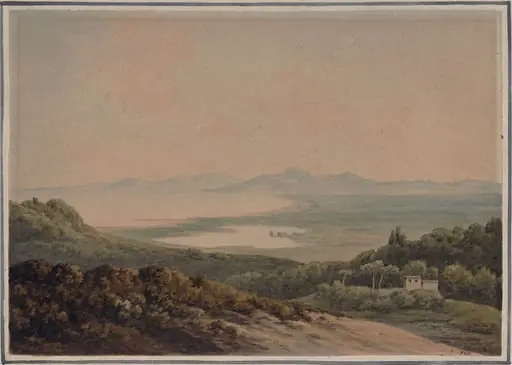
Painted in 1800 by John 'Warwick' Smith, this watercolour depicts the Italian town of Terracina in the Latina province. Rendered in delicate washes, the work captures the town nestled against a wooded hillside, with rolling mountains receding into the distance. The composition balances natural terrain with human settlement, emphasizing quiet observation over dramatic effect.
Subject & Meaning
Terracina appears as a modest, inhabited landscape rather than a grand monument. The dirt path winding through foreground trees suggests quiet travel or daily life, while clustered buildings on the hill imply a settled, centuries-old community. The painting conveys a sense of place rooted in observation, not idealization, reflecting an interest in the ordinary topography of southern Italy.
Technique & Style
Smith employed transparent watercolour washes to build subtle tonal gradations, particularly in the sky and distant hills.
Smith employed transparent watercolour washes to build subtle tonal gradations, particularly in the sky and distant hills. Greens and browns dominate, evoking earth and foliage without saturation. Delicate linework defines tree forms and architectural details, while the soft blending of hues creates atmospheric depth, characteristic of early 19th-century British topographical watercolour practice.
History & Provenance
The work originates from Smith’s travels in Italy during the late 18th and early 19th centuries, a period when British artists frequently documented the Italian countryside. While specific ownership history is not documented, the piece aligns with a broader trend of amateur and professional watercolourists producing topographical records for private collections and scholarly interest.
Context
Created during the rise of Romanticism, the painting avoids theatricality in favor of restrained realism. Unlike grand historical or mythological scenes, it reflects a growing cultural interest in local landscapes and vernacular architecture. Smith’s approach mirrors contemporary British travel literature and topographical surveys that valued accuracy over embellishment.
Legacy
Smith’s watercolours, including this view of Terracina, contributed to the documentation of Italian scenery for British audiences. Though not widely exhibited in his lifetime, his works remain part of institutional collections as examples of early 19th-century topographical art, valued for their quiet precision and historical record of place.
Own this work as a print
Artist & collection

 Mountainous landscape with ruined building
 River Landscape with Castles and Fishermen
 Strada di Aquila
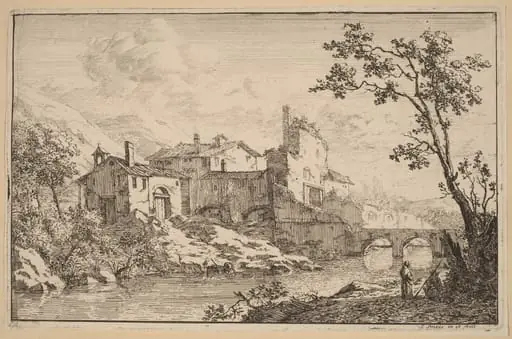 Houses at the Side of a River
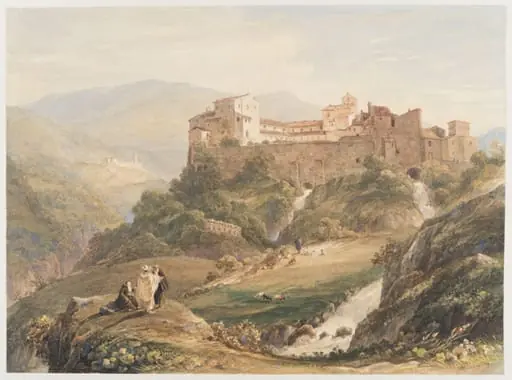 Italian landscape
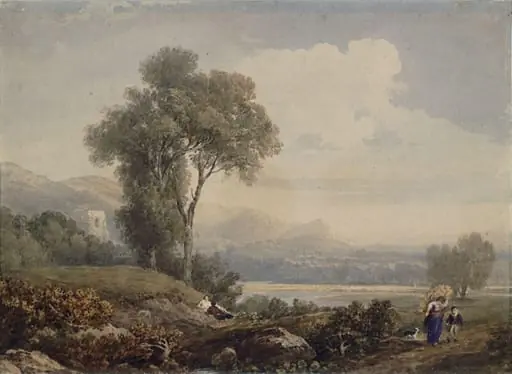 Landscape
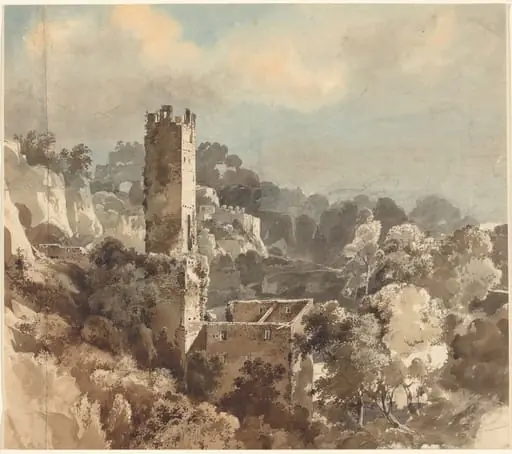 Ruins of a Fortified Tower among Wooded Hills
 Study of Butterbur (Petasites vulgaris, Desf.) the largest leaf of any English plant
 View near Rome
 A Sunlit Landscape with Hilltop Houses
 View of the Castle Gnandstein