Artwork
Milton's Dream of his Deceased Wife
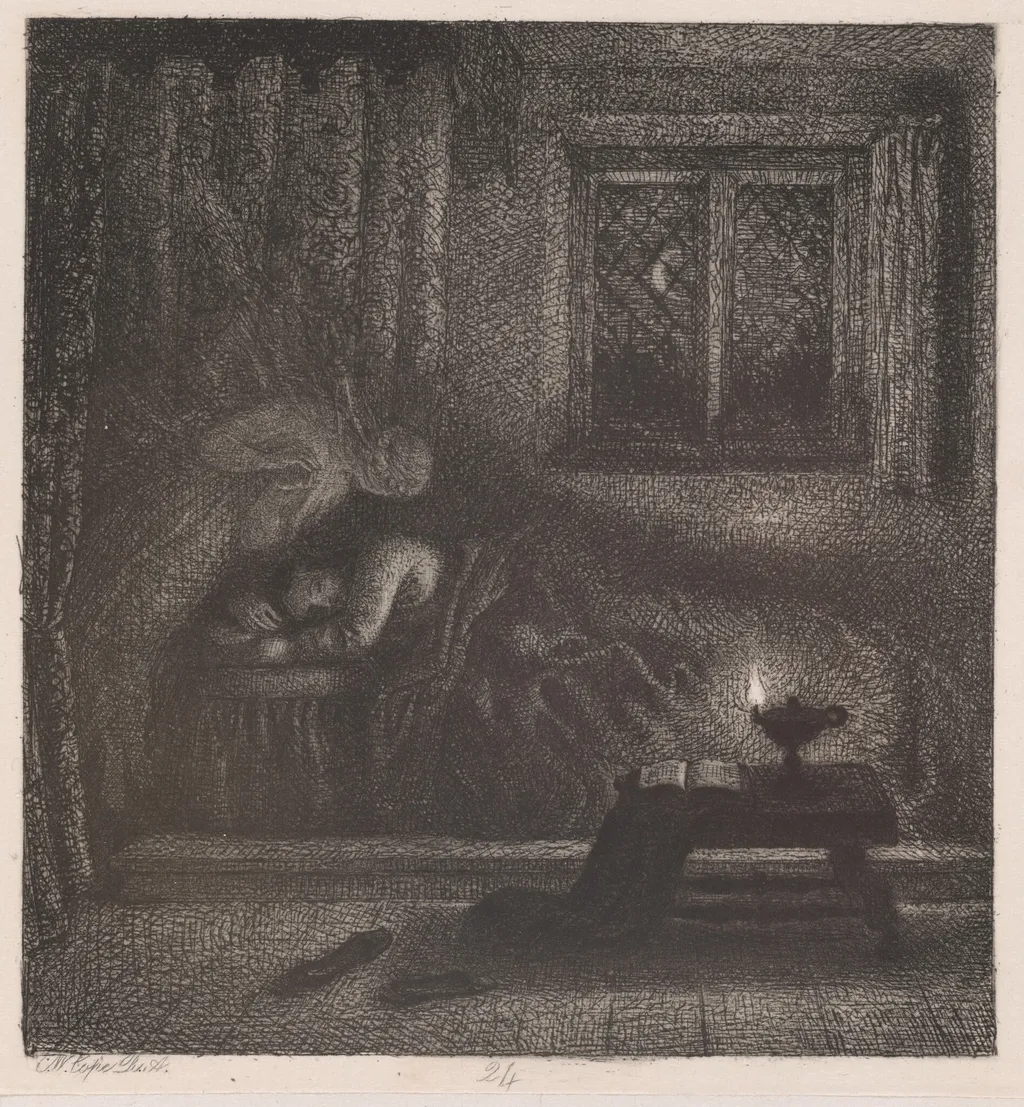
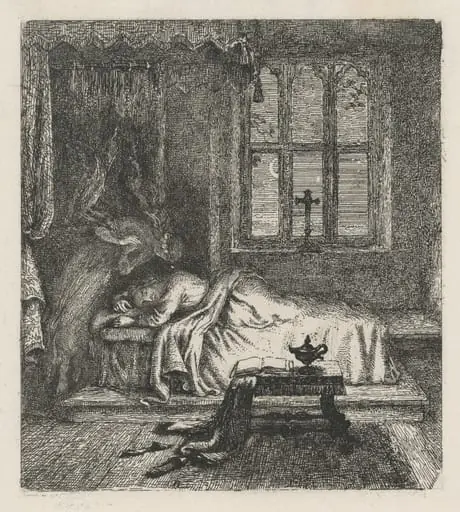
Milton's Dream of his Deceased Wife is an ink print by the Impressionist artist Charles West Cope. It dates from 1854 and is held in the collection of the National Gallery of Art.
About this work
Overview
The monochrome work presents a nocturnal interior where a sleeping woman lies in a modest bed, illuminated by the gentle glow of a solitary candle.
Charles West Cope’s 1854 print titled Milton’s Dream of his Deceased Wife is an etching executed on chine collé. The monochrome work presents a nocturnal interior where a sleeping woman lies in a modest bed, illuminated by the gentle glow of a solitary candle. A nearby open book, a chair, and a partially lit adjoining room are rendered with restrained detail, creating a quiet, contemplative atmosphere.
Subject & Meaning
The scene suggests a dreamlike visitation, echoing the title’s reference to the poet John Milton’s imagined encounter with his late spouse. The reclining figure, the candle’s soft light, and the open volume of the book evoke themes of memory, loss, and the lingering presence of the departed within a domestic setting. The composition invites viewers to consider the intimacy of personal grief.
Technique & Style
Cope employed fine, closely spaced lines to model the textures of fabric, curtains, and the candle’s flame, achieving a near‑tactile realism within the limits of printmaking. The chiaroscuro effect arises from the contrast between deep shadows and the warm, localized illumination, a hallmark of mid‑nineteenth‑century etching that emphasizes atmospheric depth without resorting to color.
History & Provenance
Created in 1854, the etching was produced during Cope’s mature period, when he frequently explored literary and historical subjects. While specific ownership records are limited, the work has appeared in several nineteenth‑century print collections and remains cited in studies of Victorian visual interpretations of Milton’s poetry.
Artist & collection
Artist
English painter Charles West Cope made quiet, tender scenes of family life and scenes from John Milton’s poems in the 1840s.


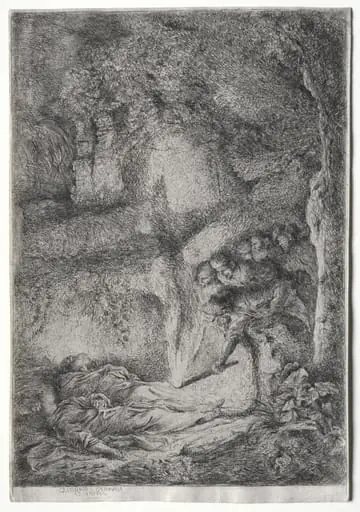 The Discovery of the Bodies of Saints Peter and Paul
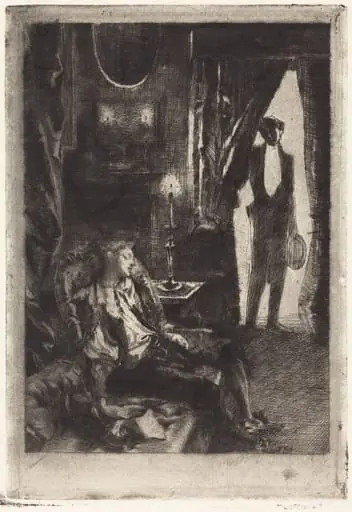 Iza Sleeping (Le Sommeil d'Iza)
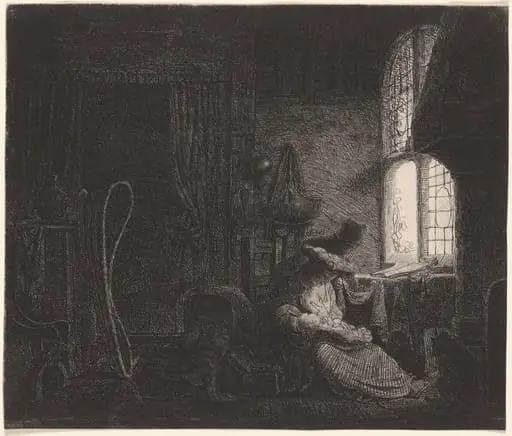 The Holy Family in an Interior
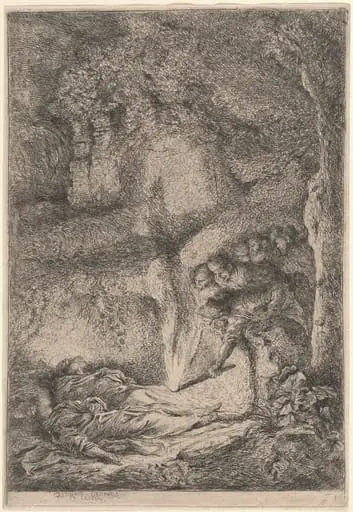 The Bodies of Saints Peter and Paul Hidden in the Catacombs
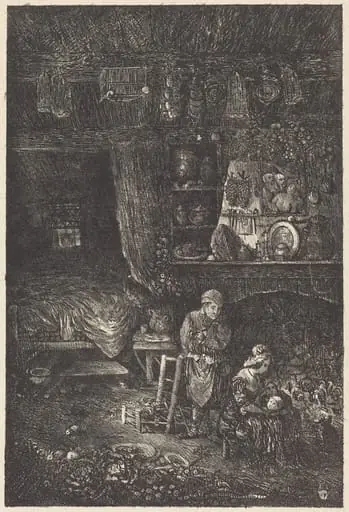 Flemish Interior
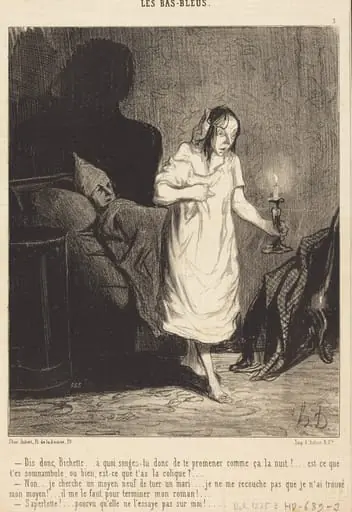 Dis donc, Bichette... a quoi songes-tu donc...
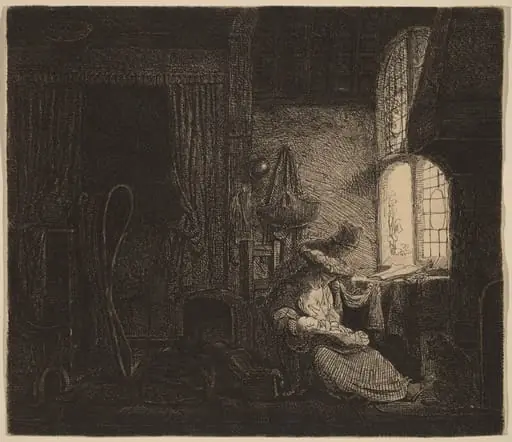 The Family in the Room
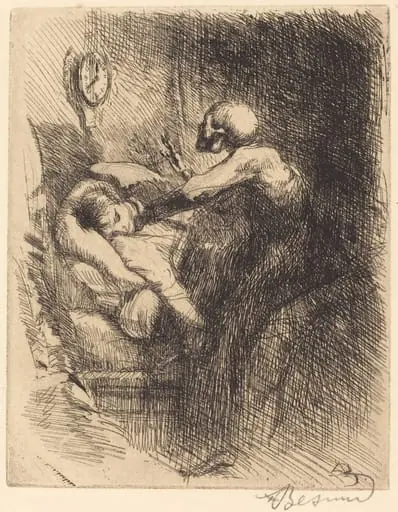 Punctual (Ponctuelle)
 Saint Jerome in a Dark Chamber
 Le Liseur (The reader)
 Canto V, Verse 43