Artwork
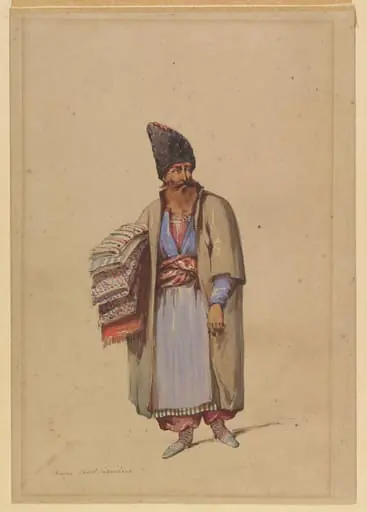
Baltadgi
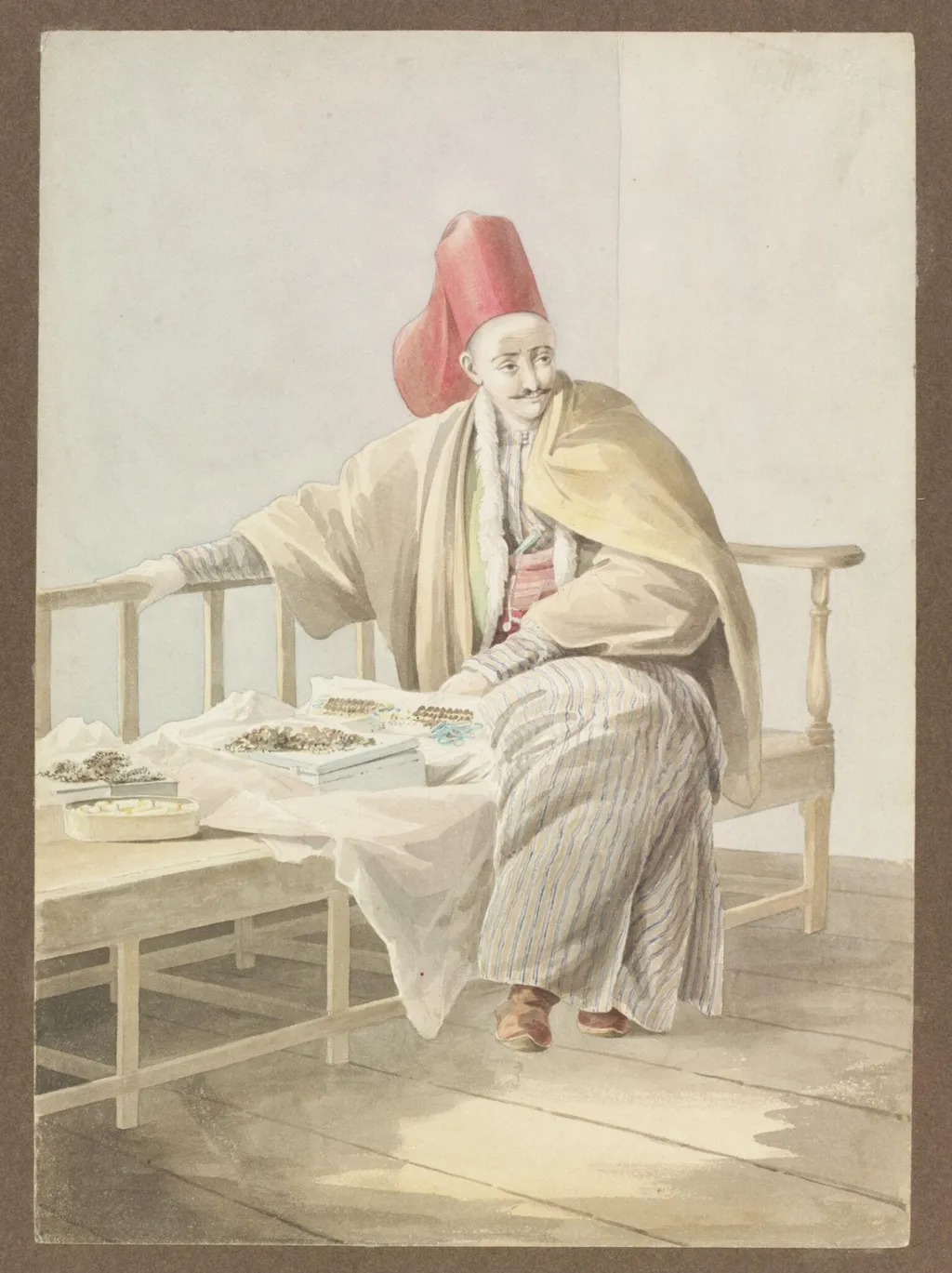
Baltadgi is a watercolor work on paper by the American Folk Art artist William Page. It dates from 1820 and is held in the collection of the Victoria and Albert Museum.
About this work
Overview
Its intimate scale and quiet composition reflect Page’s initial phase of ethnographic study before his style became more formalized in later years.
William Page’s 1820 watercolour *Baltadgi* is a portrait of an Ottoman court attendant, possibly a confectioner, executed during the artist’s early travels in the Near East. Rendered in delicate washes, the work belongs to a series combining direct observation with reference to prior imagery. Its intimate scale and quiet composition reflect Page’s initial phase of ethnographic study before his style became more formalized in later years.
Subject & Meaning
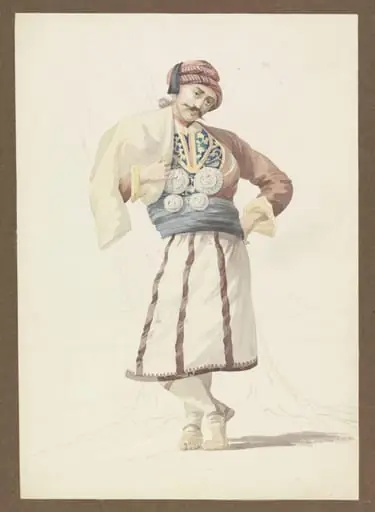
The figure, seated with ease, wears a red fez and striped garments, barefoot and draped with a cloth over one shoulder. Objects before him—beads, coins, books—suggest his role in managing small courtly goods or rituals. His expression, subtly amused, implies a moment of unguarded presence rather than ceremonial formality. The image captures a specific occupational identity within palace life, avoiding idealization in favor of observed detail.
Technique & Style
Page employs transparent watercolour washes to build soft tonal gradations, with minimal line work defining form. The red hat is the only strong chromatic accent, contrasting with muted earth tones in the clothing and background. The figure’s posture and the sparse setting are rendered with restrained precision, reflecting an early Romantic interest in authenticity over theatricality. The medium’s fluidity suits the informal, intimate nature of the subject.
History & Provenance
Created in 1820 during Page’s formative years in the Eastern Mediterranean, the work was later acquired by the collection in 1967 from the London dealers Maggs Brothers. It is one of several studies from this period, distinct from his later, more polished works of the 1830s. Its survival as part of a coherent group offers insight into Page’s evolving documentation of Ottoman society during his travels.
Context
In the early 1820s, European artists increasingly turned to the Ottoman Empire for subject matter, driven by Romantic curiosity about non-Western cultures. Page’s approach aligned with this trend but emphasized quiet observation over exoticism. Unlike contemporaries who dramatized Eastern figures, he focused on ordinary moments of daily service, reflecting a more anthropological impulse within Romantic visual culture.
Legacy
Though not widely exhibited, *Baltadgi* remains a representative example of early 19th-century European ethnographic drawing. It illustrates how artists like Page moved beyond stereotype by recording individual presence and occupational nuance. The work contributes to a broader archive of visual records from the period, offering a modest but valuable window into Ottoman court life as seen through a foreign observer’s eye.
Artist & collection

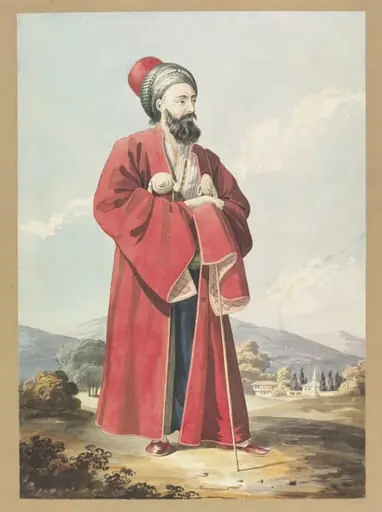
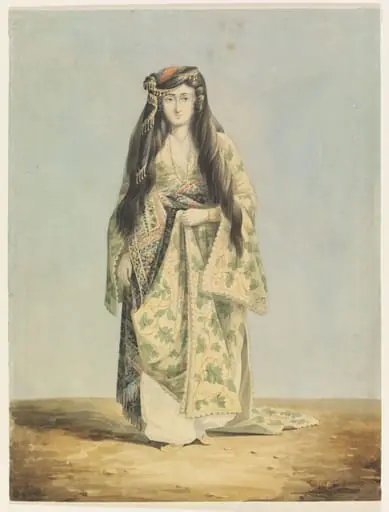
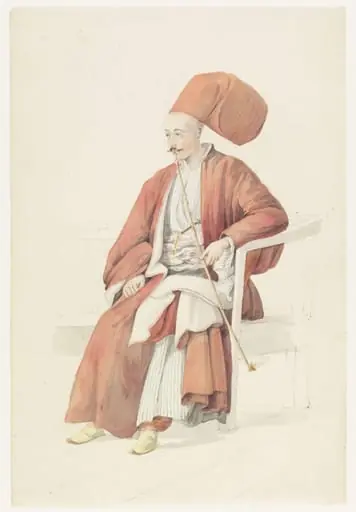 A Bostanci at the Court of the Sultan, seated on a bench, smoking
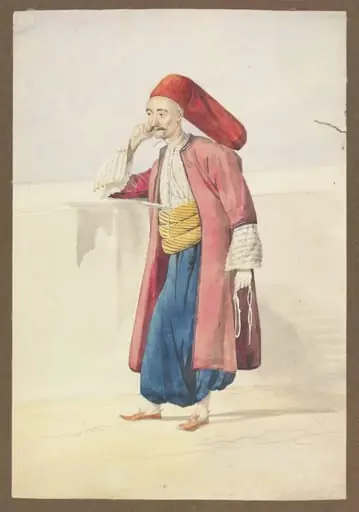 An Official at the Court of the Sultan
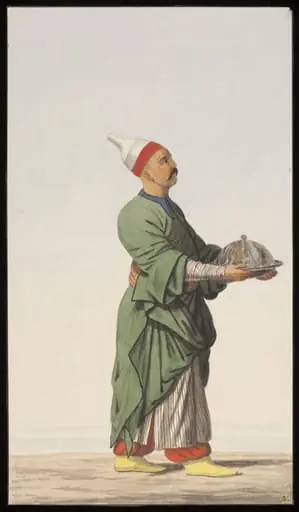 Saray Ekmekcisi, or Palace confectioner
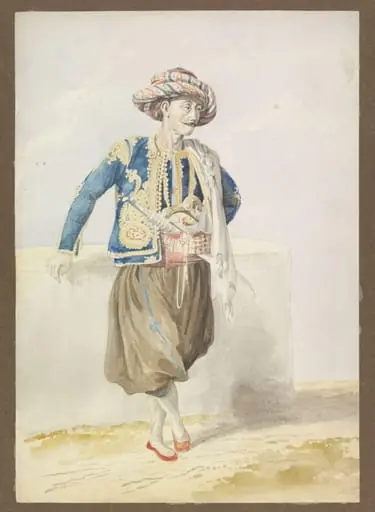 Kalyoncu, or Sea Captain
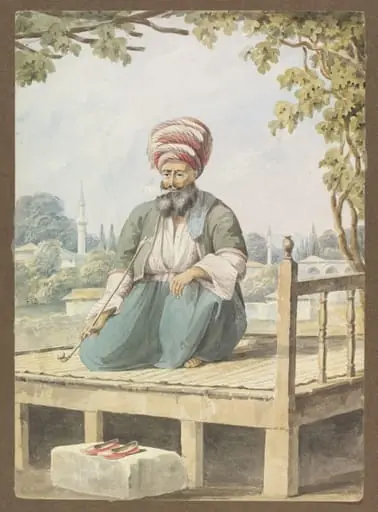 A Turkish man, seated, smoking a pipe
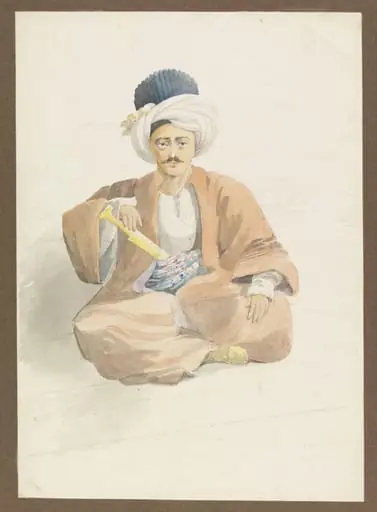 Jafer Beck Affendi
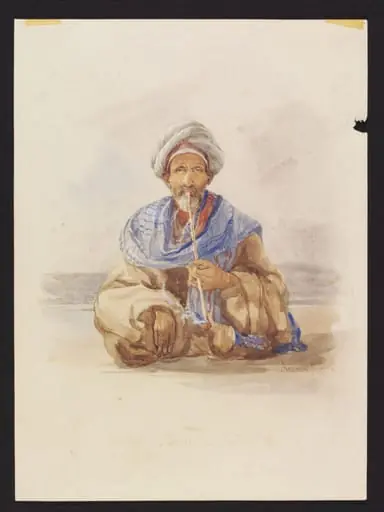 Achmet Girgeh
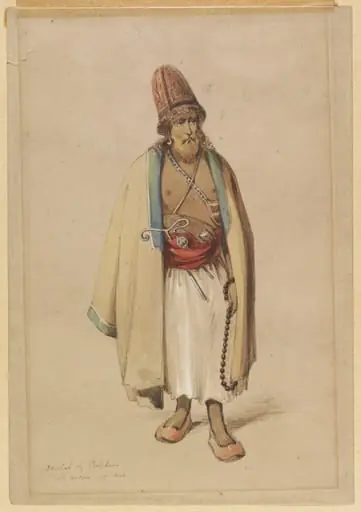 Dervish of Bokhara with Inkhorn and Diak
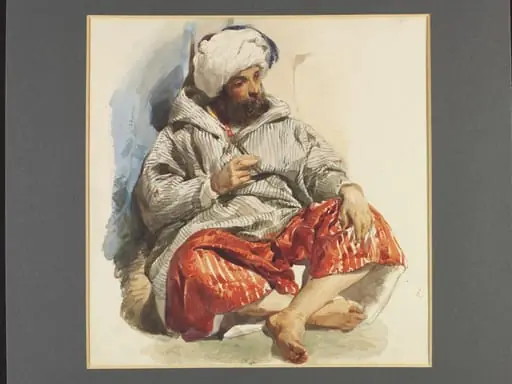 A European in Oriental dress, seated cross legged
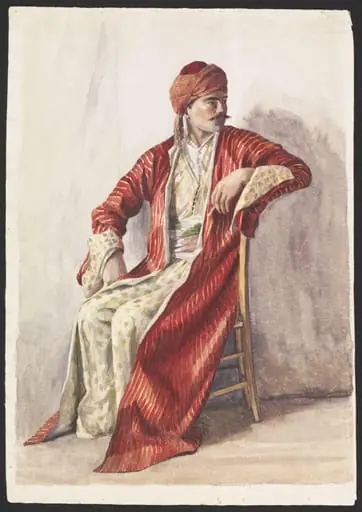 Portrait, full-length, facing right, of a Man in Arab dress, possibly smoking a cheroot
 Persian Shawl-Merchant