Artwork
Becquet
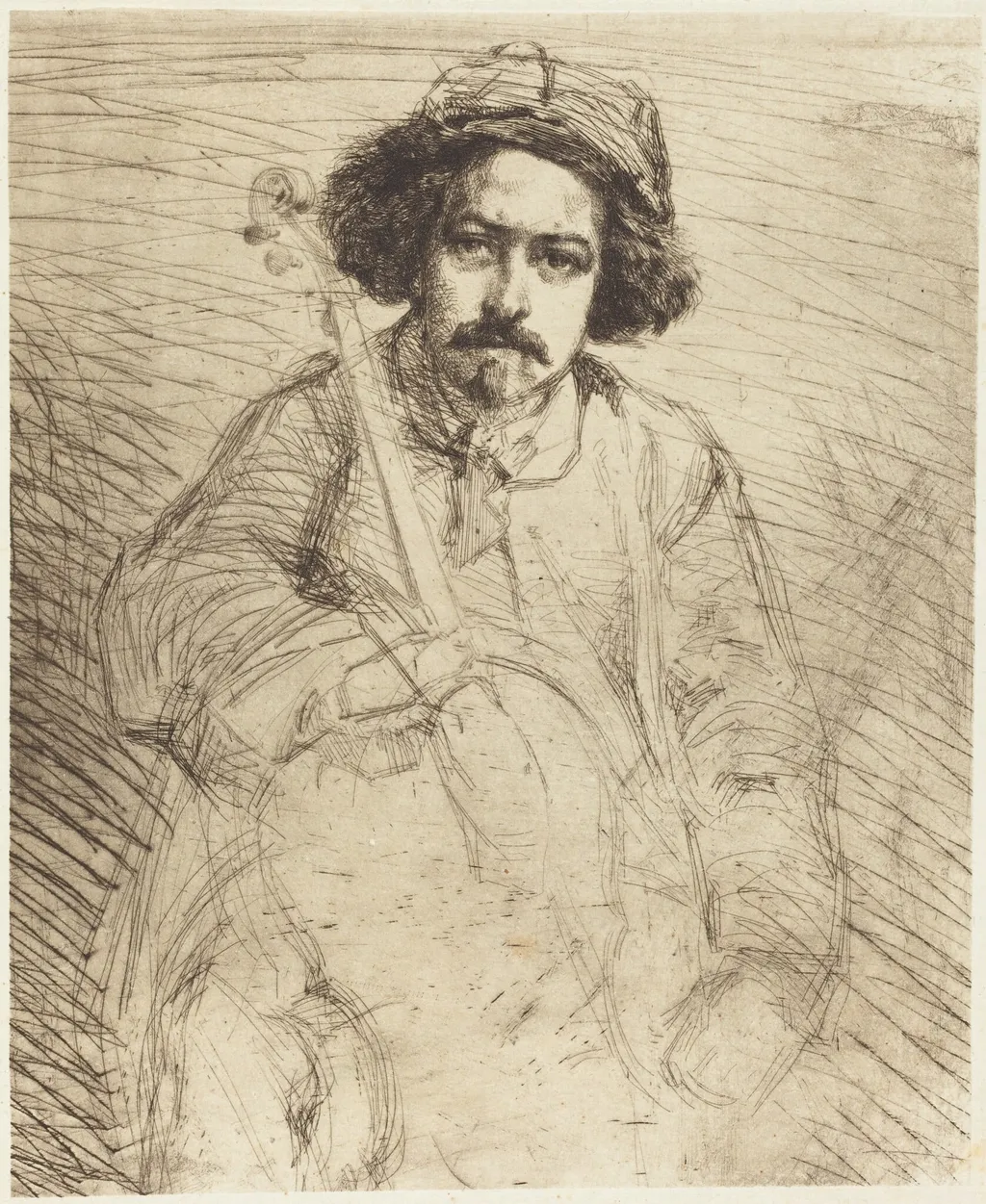
Becquet is an ink print by the Impressionist artist James McNeill Whistler. It dates from 1859 and is held in the collection of the National Gallery of Art.
About this work
Overview
His use of etching allowed for fine control and subtle gradations, distinguishing his approach from more illustrative traditions of the time.
Created in 1859, *Becquet* is an etching on laid paper by James McNeill Whistler, made during his formative years in London. It belongs to a series of early graphic works in which he explored the expressive potential of line and tone. The print captures a solitary male figure with quiet intensity, reflecting Whistler’s growing interest in composition over narrative. His use of etching allowed for fine control and subtle gradations, distinguishing his approach from more illustrative traditions of the time.
Subject & Meaning
The subject is a man with dark hair, a mustache, and a hat, gazing directly forward with a composed, unemotional expression. His attire and posture suggest a working-class or middle-class individual, rendered without overt symbolism or storytelling. Whistler avoids sentimentality, focusing instead on presence and form. The figure’s stillness contrasts with the dynamic lines surrounding him, suggesting an internal focus rather than external narrative—a hallmark of his aesthetic philosophy.
Technique & Style
Whistler employed etching to achieve precise, fluid lines that define texture in the man’s coat and hair while leaving the background loosely worked. The laid paper’s subtle grain enhances the tonal richness of the ink. The surrounding lines are not descriptive but atmospheric, creating a sense of spatial ambiguity and movement without literal context. This restrained yet expressive handling reflects his move toward abstraction and formal balance, anticipating his later tonal paintings.
History & Provenance
The print emerged from Whistler’s early period in London, when he was developing his identity as an artist separate from academic conventions. It was likely made for personal or small-circulation distribution, not public exhibition. No major institutional acquisition or documented ownership chain is recorded from this period, but it remains part of the broader corpus of his graphic work studied for its technical innovation and stylistic evolution.
Context
In the late 1850s, British printmaking was dominated by illustrative and narrative traditions. Whistler, as an American expatriate, distanced himself from these norms, aligning instead with emerging ideas of aesthetic autonomy. His focus on arrangement, tone, and line over storytelling mirrored broader European shifts toward modernism. *Becquet* exemplifies this transition, positioning him as a quiet radical in the printmaking scene of his time.
Legacy
Though not widely exhibited in his lifetime, *Becquet* contributes to the understanding of Whistler’s graphic development. Its disciplined use of line and rejection of sentiment influenced later printmakers and artists aligned with aestheticism. The work stands as a quiet precursor to his mature compositions, demonstrating how his early experiments in etching laid the groundwork for his enduring emphasis on formal harmony over narrative content.
Artist & collection
Artist
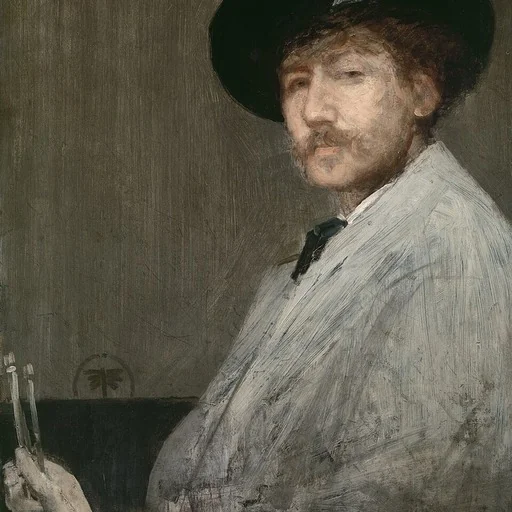
James Abbott McNeill Whistler was an American painter in oils and watercolor, and printmaker, active during the American Gilded Age and based primarily in the United Kingdom.

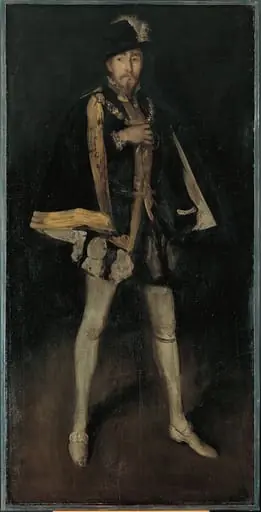 Arrangement in Black, No. 3: Sir Henry Irving as Philip II of Spain
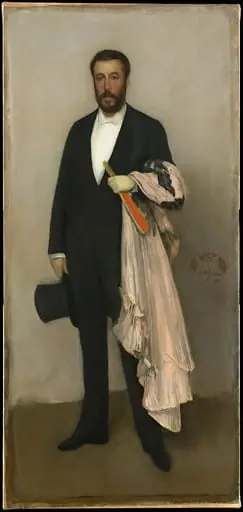 Arrangement in Flesh Colour and Black: Portrait of Theodore Duret
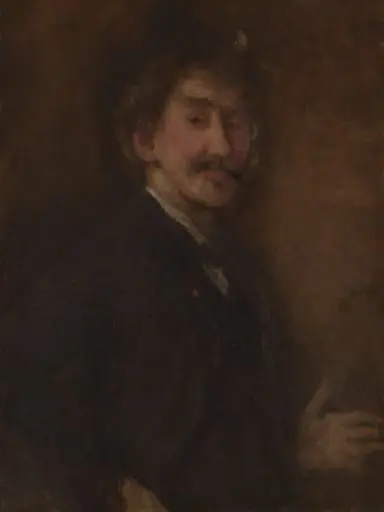 Gold and Brown: Self-Portrait
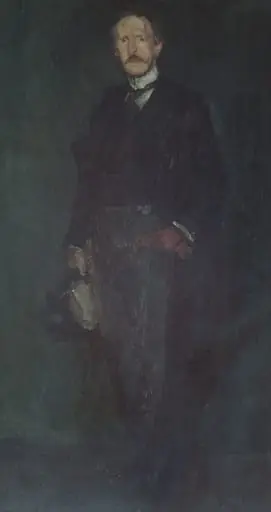 Edward Guthrie Kennedy
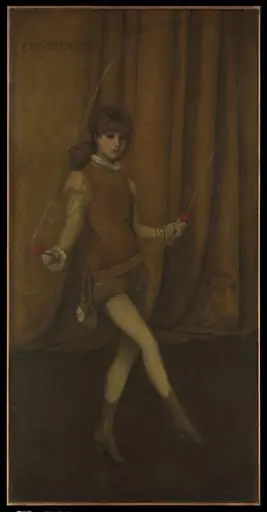 Harmony in Yellow and Gold: The Gold Girl—Connie Gilchrist
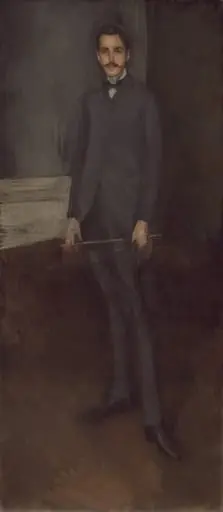 George W. Vanderbilt
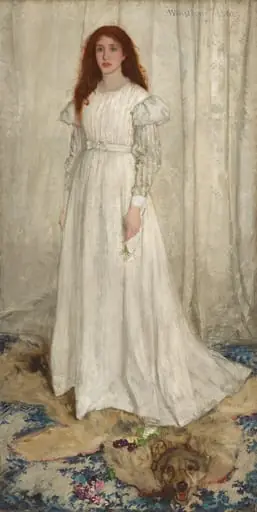 Symphony in White, No. 1: The White Girl
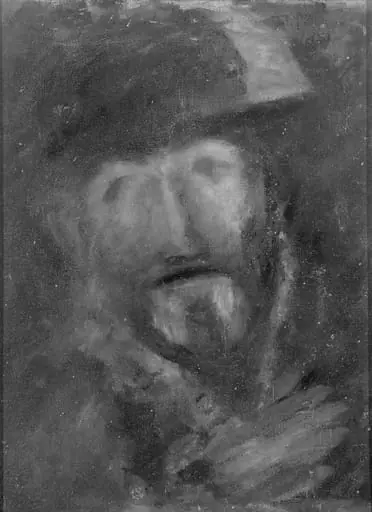 Henry Irving as Philip II of Spain
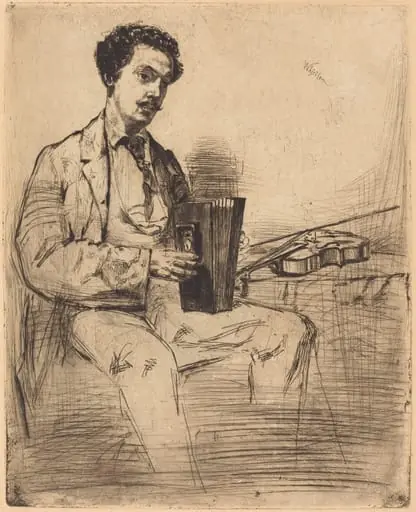 Ross Winans
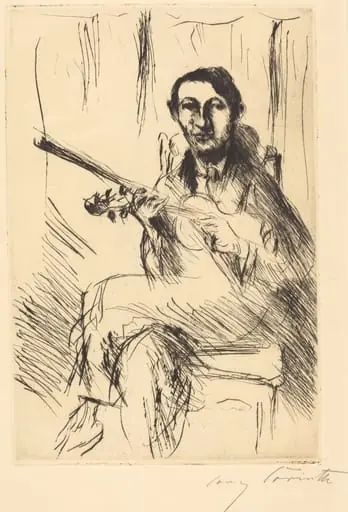 Bildnis Andreas Weissgaerber (Portrait of Andreas Weissgaerber)
 The Bass Player (Le joueur de contre-basse)
 The Bass Player (Le Jouer de Contre-Basse)
 The Guitar Player
 Self-Portrait in a Cap and Scarf with the Face Dark
 Head of a Young Man in Profile with a Gun over His Shoulder
 The Engraver Joseph Tourny (Le graveur Joseph Tourny)