Artwork
Christus am Kreuz (The Crucifixion)
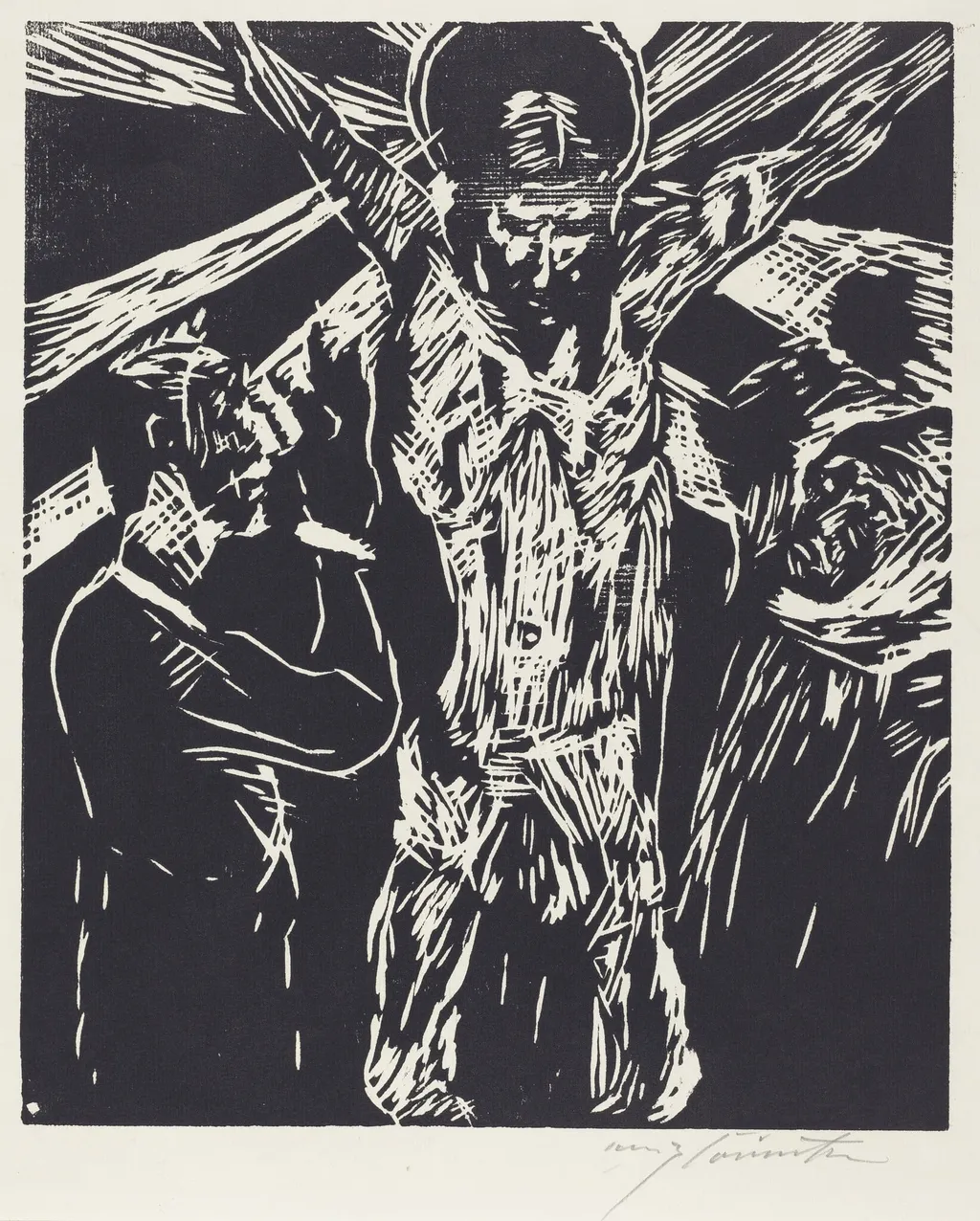
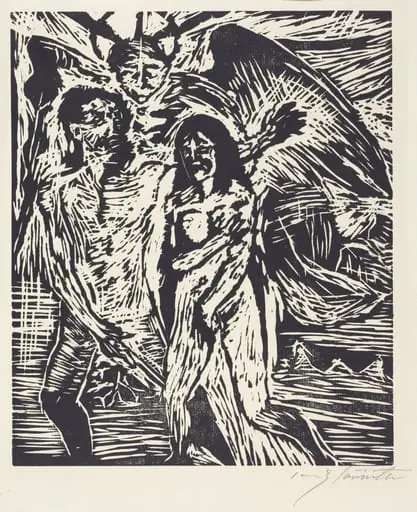
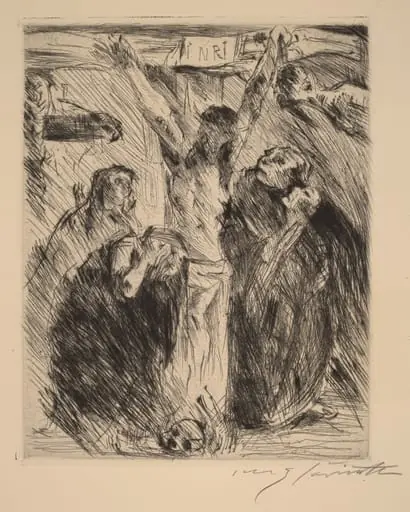
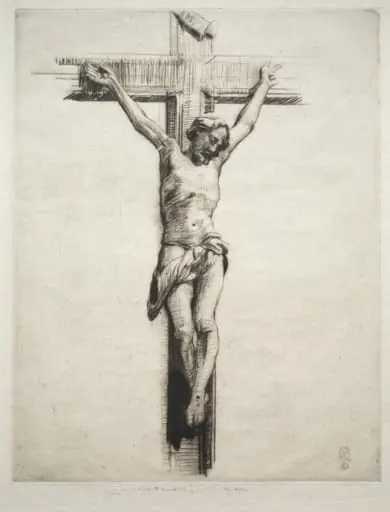
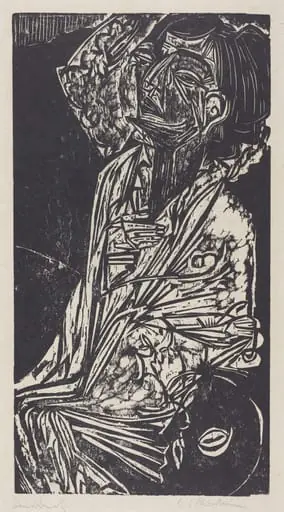
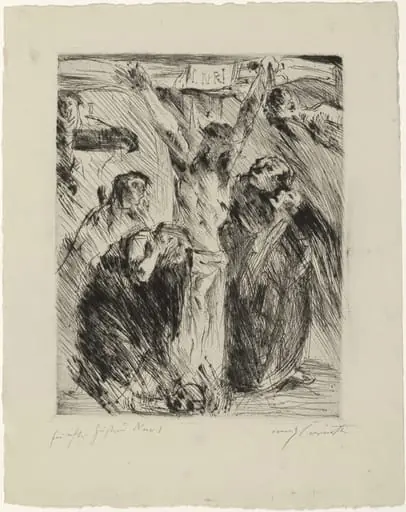
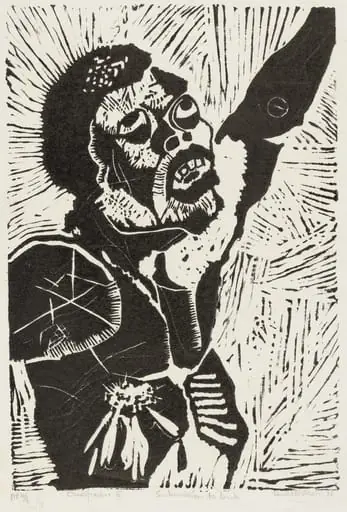
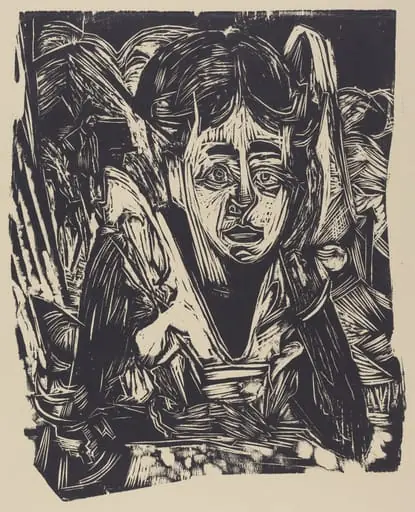
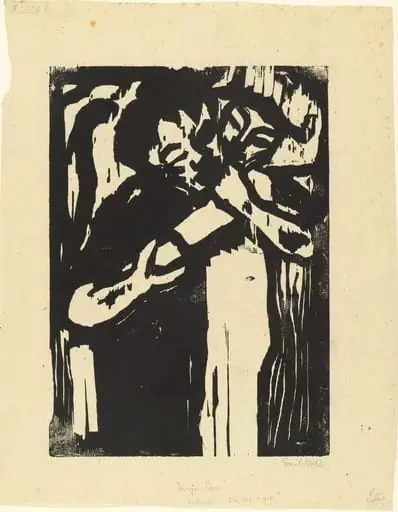
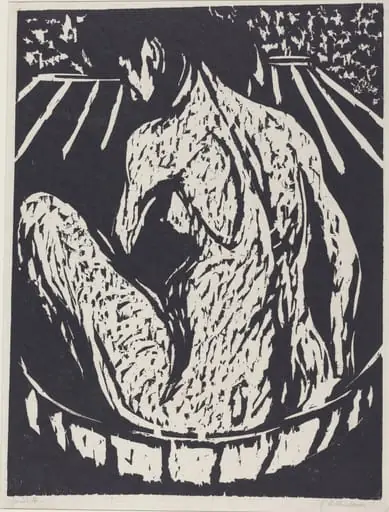
Christus am Kreuz (The Crucifixion) is an ink print by Lovis Corinth. It dates from 1919 and is held in the collection of the National Gallery of Art.
About this work
Overview
Lovis Corinth produced this black woodcut in 1919, titled *Christus am Kreuz*, during a period of profound artistic transformation.
Lovis Corinth produced this black woodcut in 1919, titled *Christus am Kreuz*, during a period of profound artistic transformation. Following a stroke in 1911, his earlier naturalistic style gave way to a more visceral, emotionally charged approach. The work belongs to his later output, where religious themes were reinterpreted through expressive forms and heightened contrasts, reflecting both personal struggle and broader cultural anxieties in postwar Germany.
Subject & Meaning
The composition centers on Christ nailed to the cross, his body rendered with angular tension and crowned by a simple halo. To the left, a figure raises arms in a gesture of anguish or prayer, amplifying the scene’s emotional weight. Corinth avoids idealized serenity, instead emphasizing physical suffering and human vulnerability. The subject, drawn from Christian tradition, becomes a vehicle for confronting mortality and spiritual crisis, resonating with the trauma of the era.
Technique & Style
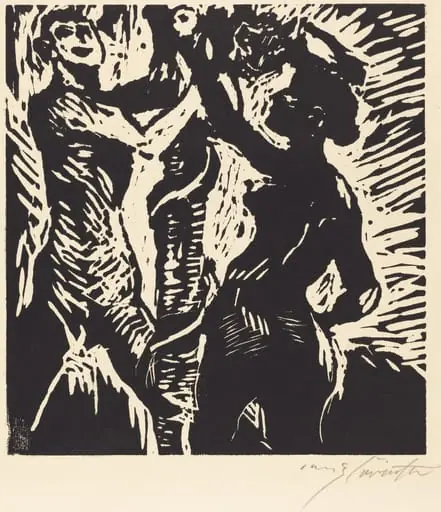
Executed as a bold black woodcut, the image relies on stark contrasts and rhythmic, incised lines to convey movement and emotion. The background is not detailed landscape but a dynamic field of energetic strokes, suggesting chaos or divine presence. Corinth’s brushwork in earlier paintings informs his carving, merging the spontaneity of expressionism with the graphic force of printmaking. Form is distilled to essential contours, heightening psychological intensity.
History & Provenance
Created in 1919, the woodcut emerged from Corinth’s Berlin studio amid the political and social upheaval following World War I. It was part of a series of religious prints he produced during this time, reflecting his renewed engagement with spiritual imagery. The work entered public collections in the decades after his death, recognized for its role in bridging late 19th-century German art with early 20th-century modernist expression.
Context
In the aftermath of the war, many German artists turned to religious themes as a means of processing collective grief and moral uncertainty. Corinth’s *Christus am Kreuz* aligns with this trend, yet resists didacticism. His approach diverges from traditional iconography by prioritizing emotional immediacy over doctrinal clarity, situating the crucifixion not as a distant sacred event but as a raw, human experience.
Legacy
This woodcut stands as a significant example of Corinth’s mature style, illustrating how personal adversity and historical crisis reshaped his artistic vision. It influenced later German expressionist printmakers who sought to infuse traditional subjects with psychological depth. Though not widely exhibited during his lifetime, it is now acknowledged as a pivotal work in the evolution of modern religious imagery in print.
Artist & collection

Artist
Lovis Corinth was a German artist and writer whose mature work as a painter and printmaker realized a synthesis of impressionism and expressionism.