Artwork
Das Gastmahl des Trimalchio: pl. II (The Banquet of Trimalchio: pl. II)
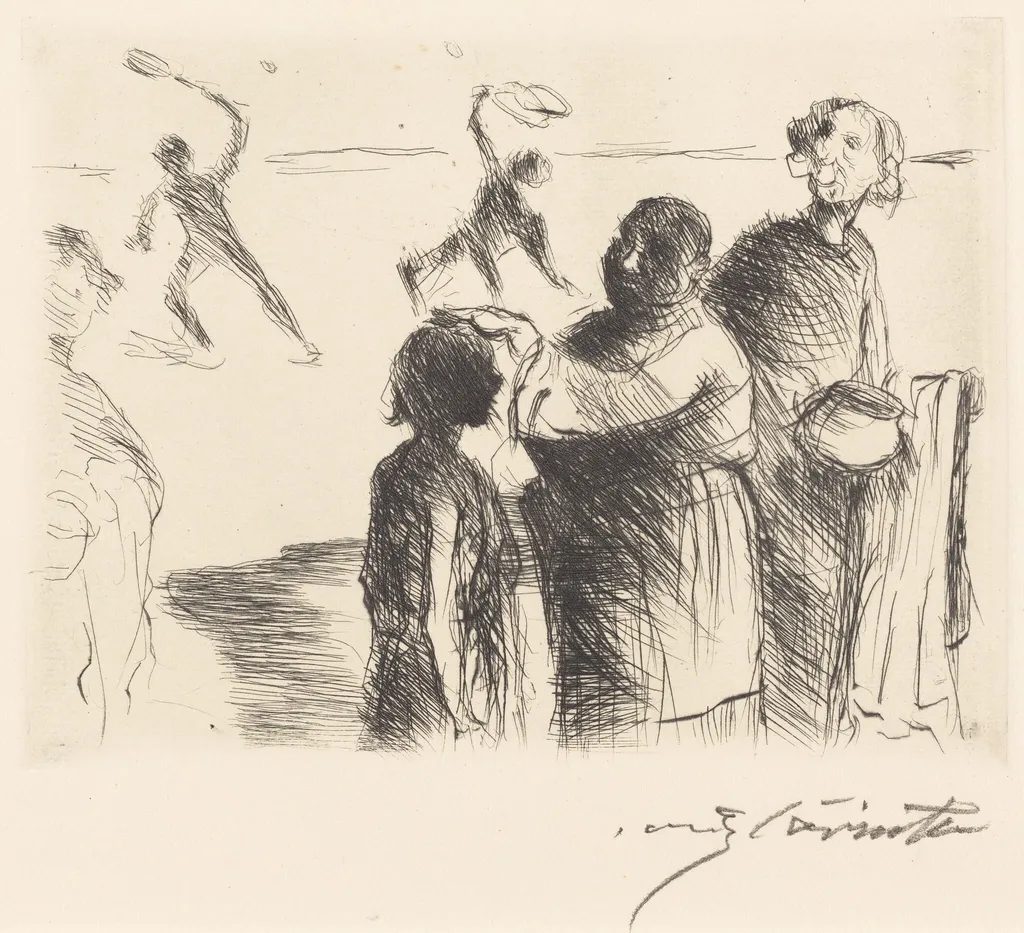
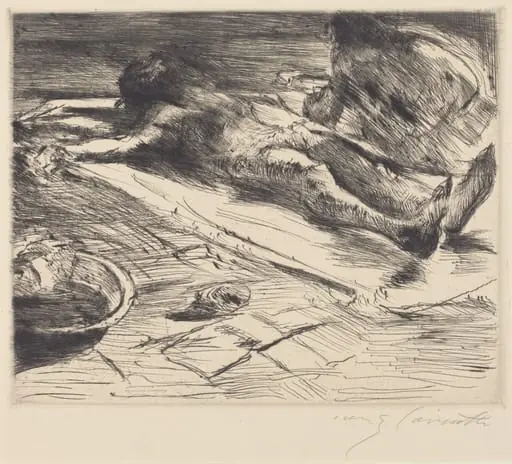
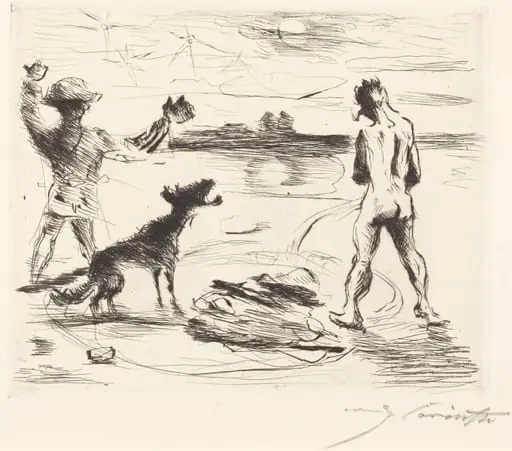
Das Gastmahl des Trimalchio: pl. II (The Banquet of Trimalchio: pl. II) is an ink print by Lovis Corinth. It dates from 1919 and is held in the collection of the National Gallery of Art.
About this work
Overview
The technique, using a needle to scratch directly into the surface, produces dense, irregular lines that prioritize gesture over refinement.
Created in 1919, this drypoint print by Lovis Corinth is part of a series inspired by Petronius’s *Satyricon*. Executed in black ink on wove paper, it reflects Corinth’s post-stroke artistic evolution—marked by urgency and physicality. The technique, using a needle to scratch directly into the surface, produces dense, irregular lines that prioritize gesture over refinement. The work belongs to a body of prints where Corinth translated literary scenes into visceral, immediate compositions.
Subject & Meaning
The scene illustrates Trimalchio’s extravagant Roman banquet, a satirical depiction of excess from ancient literature. Corinth captures a moment of chaotic interaction: figures gesture wildly, their postures suggesting drunken revelry or theatrical performance. The lack of precise detail shifts focus from narrative clarity to emotional intensity, aligning the ancient text with early 20th-century anxieties about social decay and human folly.
Technique & Style
Corinth employed drypoint to etch thick, jagged lines directly into the paper, creating a tactile, almost violent texture. The strokes are unpolished and spontaneous, resembling hurried sketches rather than finished engravings. Background elements are reduced to minimal, smudged shapes, isolating the figures in a sparse, stage-like space. This raw approach reflects his post-1911 expressionist tendencies, where emotional force outweighed formal precision.
History & Provenance
Produced in 1919, the print emerged during a period of personal and national upheaval in Germany. Corinth, recovering from a debilitating stroke in 1911, increasingly turned to printmaking as a means of rapid expression. This work was likely part of a private or limited circulation series, not widely exhibited at the time. Its survival reflects Corinth’s sustained engagement with literary themes in his later years.
Context
Corinth’s engagement with classical literature coincided with broader German cultural interest in antiquity as a mirror for contemporary disorder. His depiction of Trimalchio’s feast resonated with postwar disillusionment, echoing critiques of bourgeois excess. The print’s immediacy aligns with Expressionist tendencies in Weimar-era art, where inner turmoil was rendered through fragmented forms and energetic mark-making.
Legacy
This print exemplifies Corinth’s late style—unrefined, emotionally charged, and deeply personal. While not widely reproduced during his lifetime, it has since contributed to scholarly understanding of how Expressionist artists reinterpreted classical sources. Its rawness influenced later generations interested in the expressive potential of printmaking beyond traditional techniques.
Artist & collection

Artist
Lovis Corinth was a German artist and writer whose mature work as a painter and printmaker realized a synthesis of impressionism and expressionism.

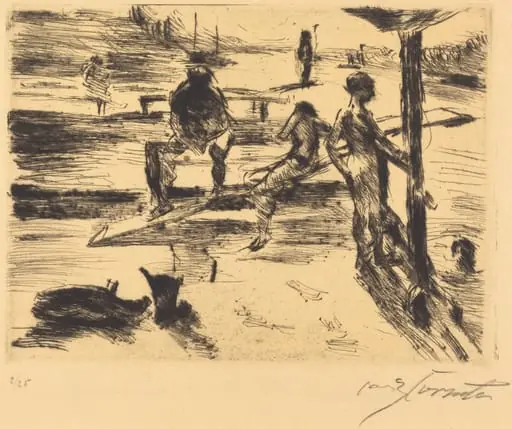 Badeanstalt (Bathing Place)
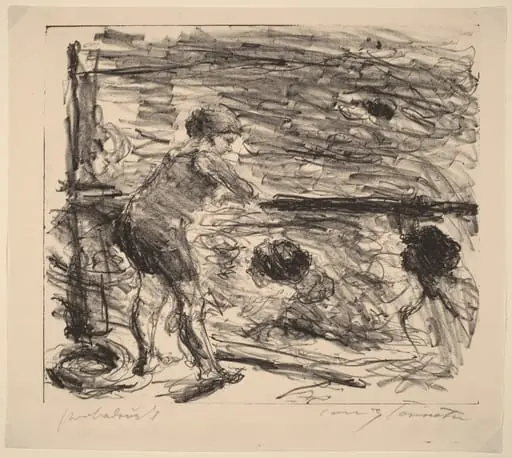 Badeanstalt (The Bath House)
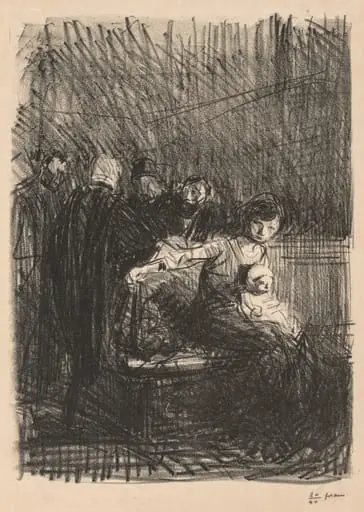 Court Recess
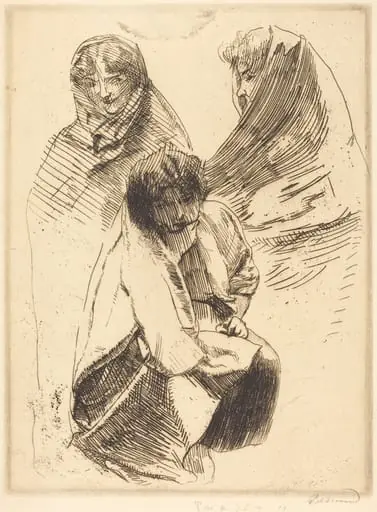 Three Veiled Women (Trois femmes voilées)
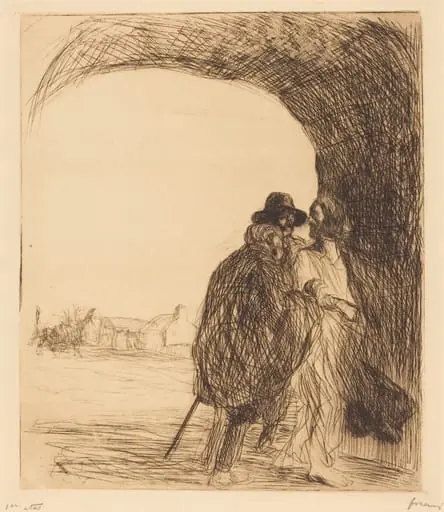 La rencontre sous la voute (3e planche) (The Meeting under the Arch) (third plate)
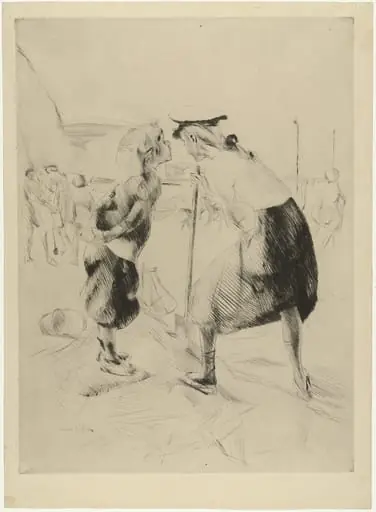 Untitled
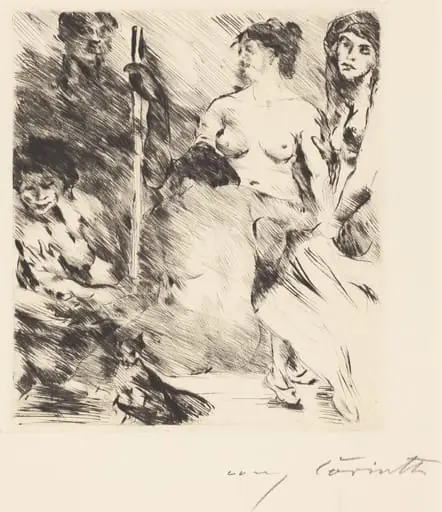 Der Harem (The Harem)
 Pietà
Pietà Bretonnes sur le quai
 La sortie de l'audience (1ère planche) (Coming Out of the Hearing) (first plate)
 Sortie de l'Audience
 Das Gastmahl des Trimalchio: pl. VII (The Banquet of Trimalchio: pl. VII)