Artwork
Peasant Boy with a Jug
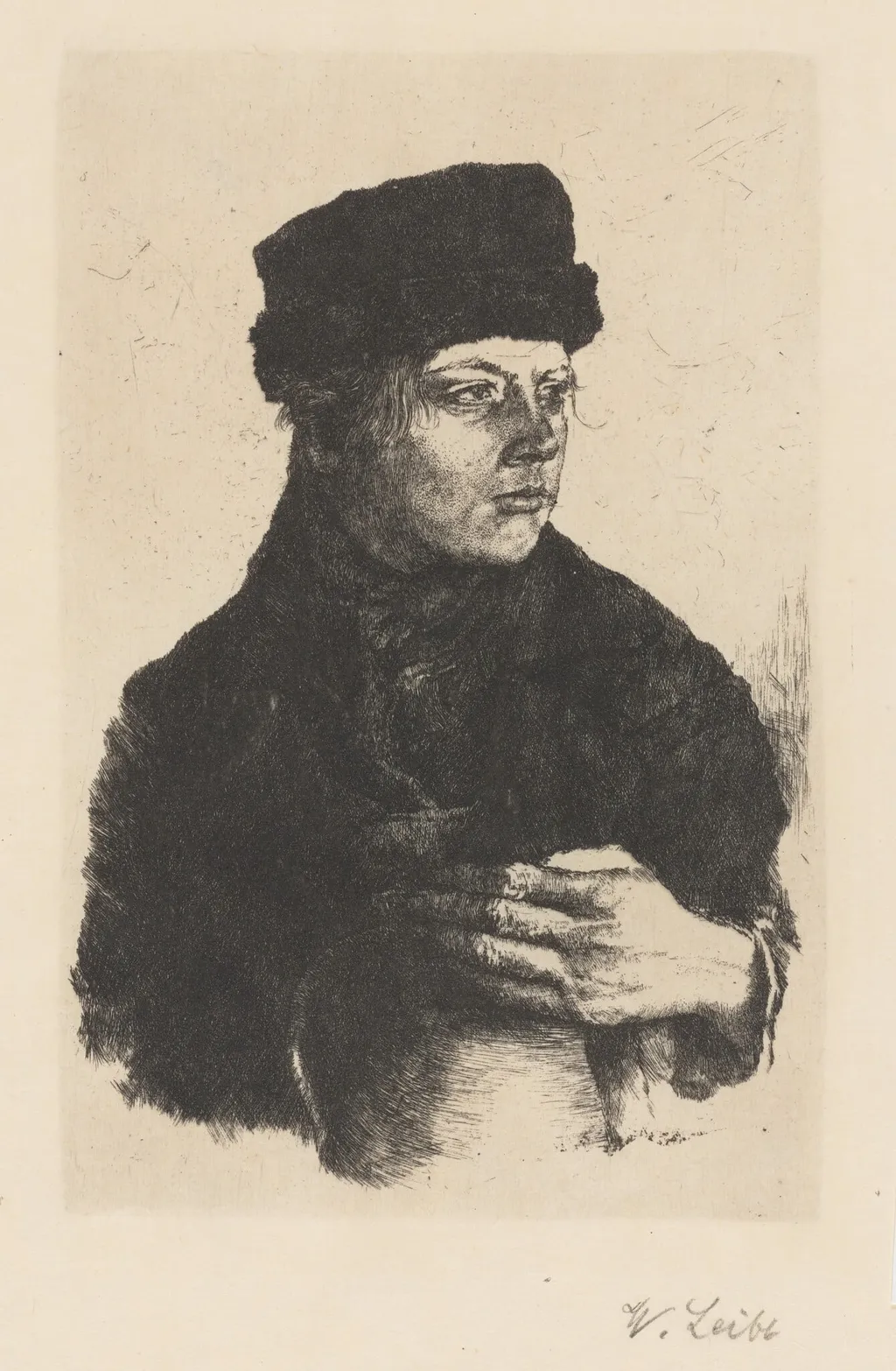
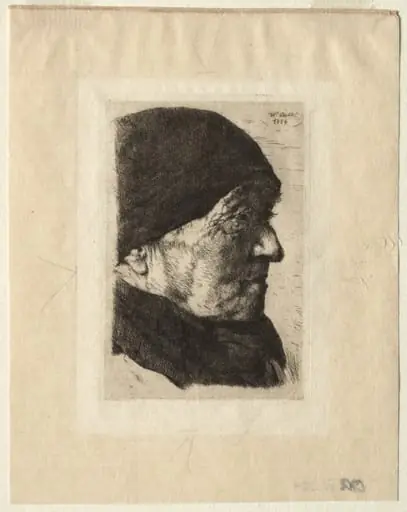
Peasant Boy with a Jug is an ink print by the Impressionist artist Wilhelm Leibl. It dates from 1876 and is held in the collection of the National Gallery of Art.
About this work
Overview
Wilhelm Leibl’s Peasant Boy with a Jug is an etching on wove paper dating from around 1876. The work measures roughly the size of a standard sheet and is part of the National Gallery of Art’s collection in Washington, D.C. It presents a solitary figure in a stark, monochrome composition that emphasizes texture and expression over narrative detail.
Subject & Meaning
The image depicts a young peasant, dressed in a fur‑lined coat and a dark hat, clutching a round jug. The boy’s face bears a sober, slightly weary expression, suggesting the hardships of rural life. The plain background isolates the figure, directing attention to his attire and the weight of the jug as symbols of daily labor.
Technique & Style
Leibl employed the traditional intaglio process, incising lines into a copper plate before printing onto wove paper. The resulting marks are deliberately rough and textured, especially in the rendering of fur and fabric, which convey a tactile realism. The limited tonal range of the black‑and‑white medium heightens the contrast between light and shadow.
History & Provenance
Created in the mid‑1870s, the etching entered the National Gallery of Art’s holdings through acquisition in the twentieth century, though the exact path of ownership prior to its museum entry is not extensively documented. Its presence in the gallery reflects Leibl’s reputation as a key figure in German realism and his interest in depicting ordinary subjects.
Artist & collection


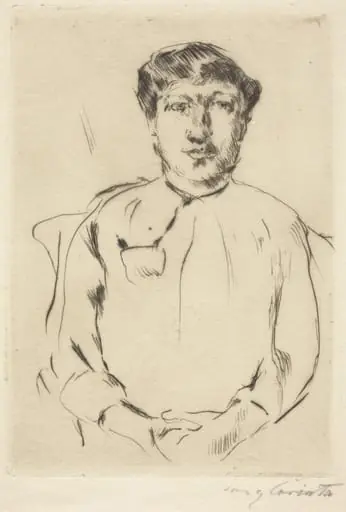 Frauenbildnis (Portrait of a Woman)
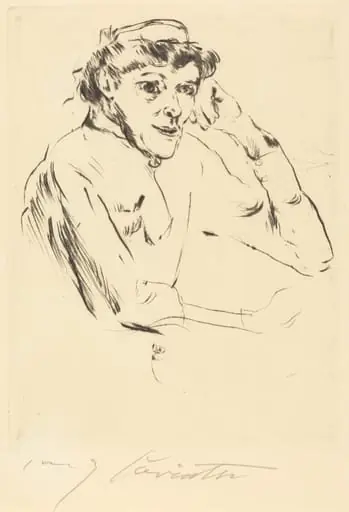 Pflegerin (Nurse)
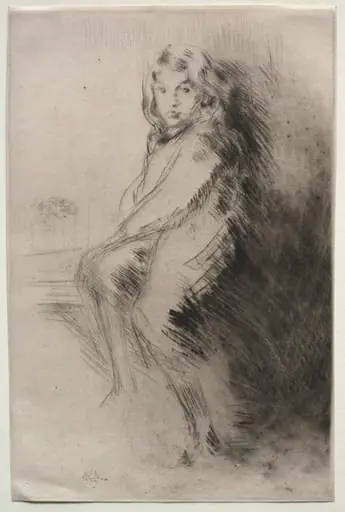 The Boy
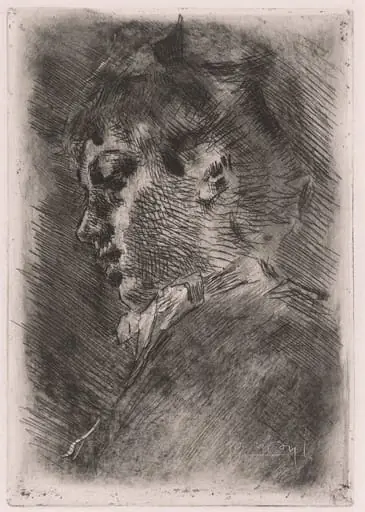 Portrait of a Young Woman in Profile
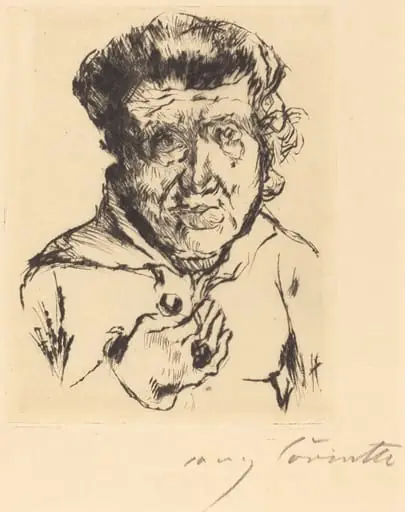 Des Künstlers Schwiegermutter (The Artist's Mother-in-Law)
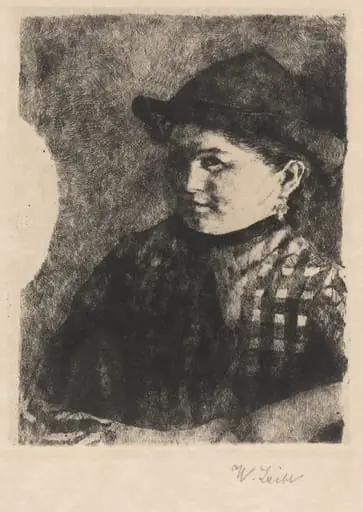 Bust of a Young Peasant Girl in a Plaid Jacket
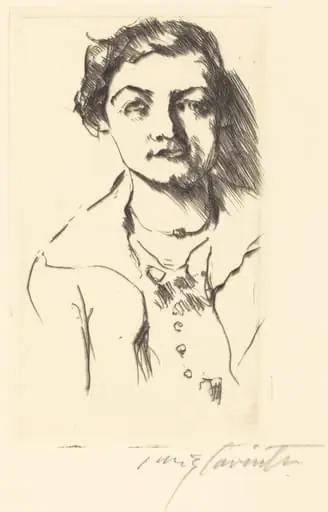 Bildnis einer Jungen Dame—Anneliese Halbe (Portrait of a Young Woman—Anneliese Halbe)
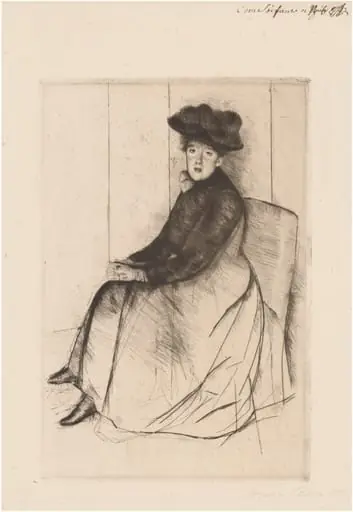 Reflection
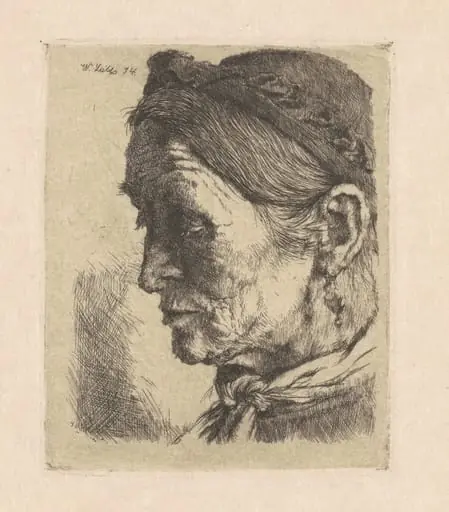 Peasant Woman with Closed Eyes
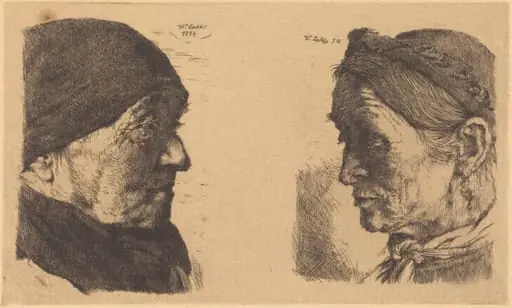
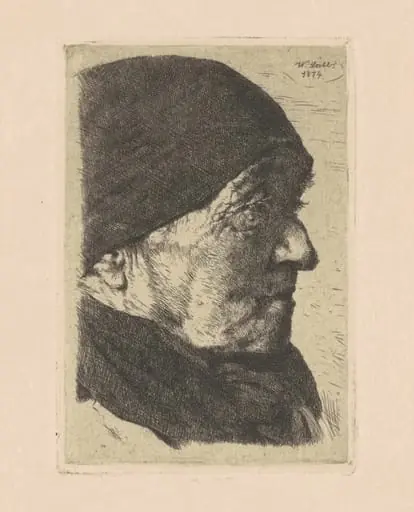 Portrait of an Old Peasant Woman, in Profile to the Right
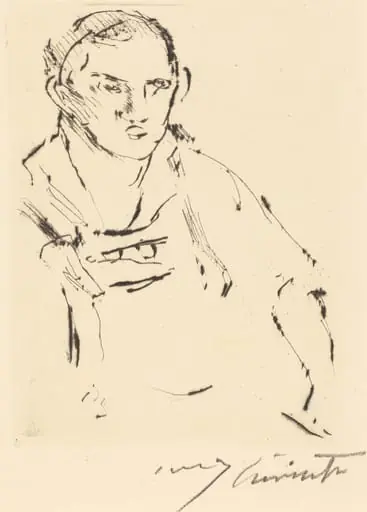 Thomas Corinth
 Head of a Peasant