Artwork
Joseph und Potiphars Weib II (Joseph and Potiphar's Wife II)
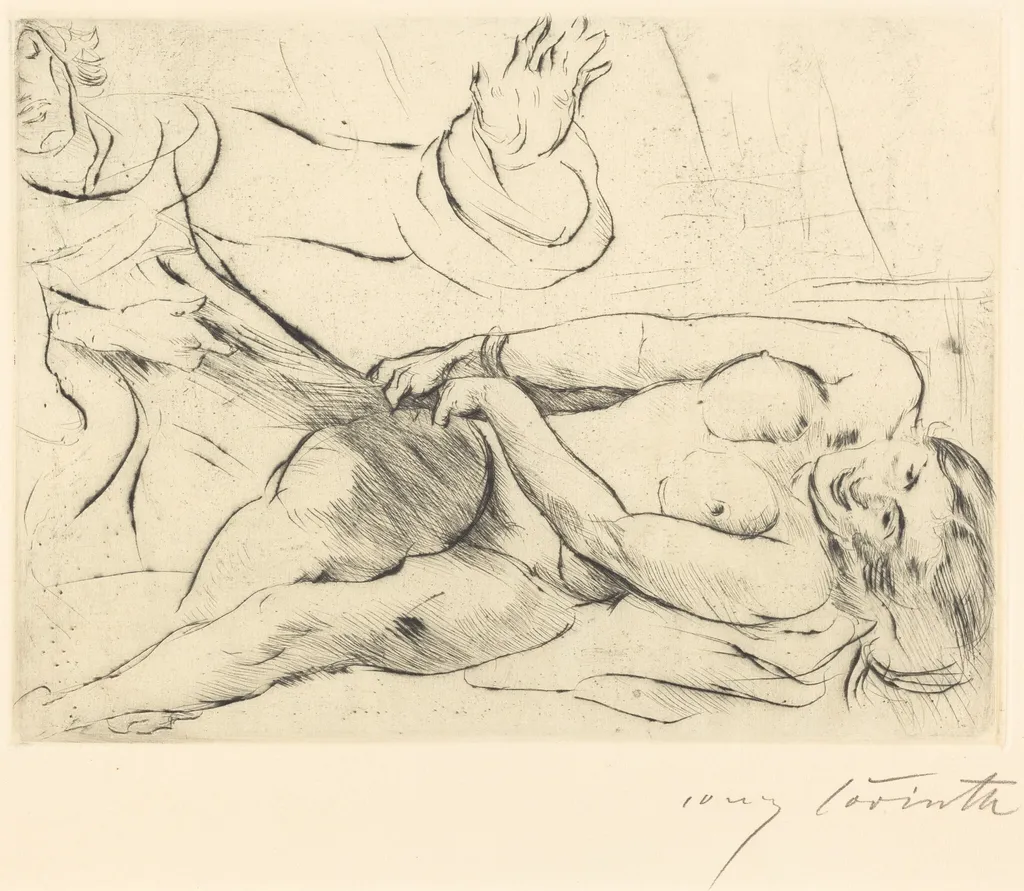
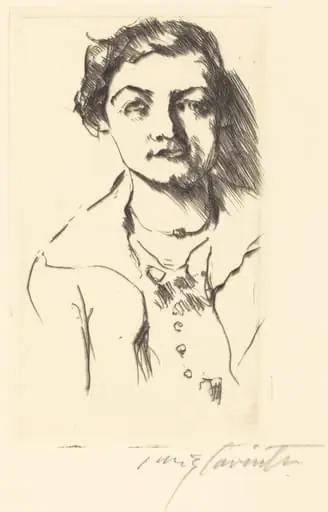
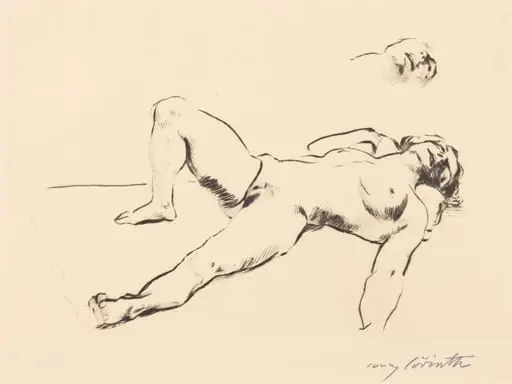
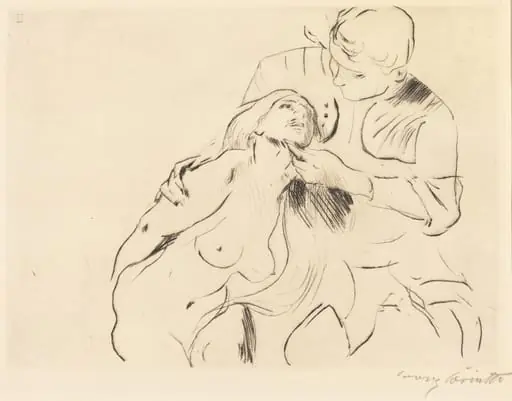
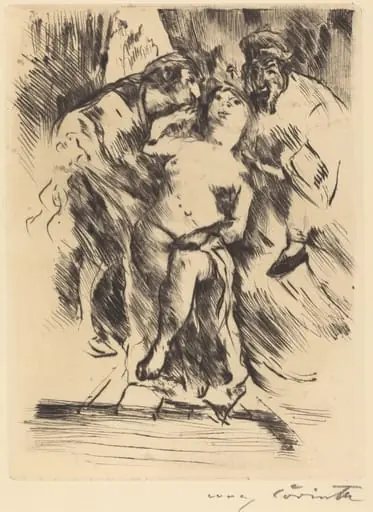
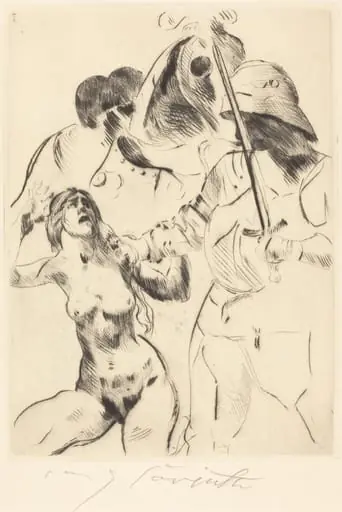
Joseph und Potiphars Weib II (Joseph and Potiphar's Wife II) is an ink print by Lovis Corinth. It dates from 1915 and is held in the collection of the National Gallery of Art.
About this work
Overview
The work belongs to a series exploring the biblical story of Joseph and Potiphar’s wife, rendered in a stark, monochromatic style.
Created in 1915, *Joseph und Potiphars Weib II* is a drypoint print by Lovis Corinth on laid paper. The work belongs to a series exploring the biblical story of Joseph and Potiphar’s wife, rendered in a stark, monochromatic style. Corinth, who had transitioned from academic naturalism to a more visceral expressionism after his 1911 stroke, used the drypoint technique to emphasize texture and emotional intensity over detail.
Subject & Meaning
The print illustrates the moment Potiphar’s wife confronts Joseph, attempting to seduce him as recounted in Genesis. Joseph, clad in a plain robe, remains still and composed, while the woman, dressed in ornate garments, leans forward with urgent gesture. The psychological tension between restraint and desire is central, reflecting Corinth’s interest in moral conflict and human vulnerability rather than literal narrative.
Technique & Style
Corinth employed drypoint to create dense, scratchy lines that build form through texture rather than outline. The black ink on pale paper heightens contrast, with deep shadows anchoring the figures against a near-abstract background. The roughness of the etched lines conveys agitation, particularly in the woman’s drapery and posture, while Joseph’s stillness emerges through smoother, controlled contours.
History & Provenance
The print was made during a period of intense personal and artistic transformation for Corinth, following a stroke that altered his motor control and artistic approach. Though he continued to draw from classical and biblical themes, his post-1911 works became more emotionally direct. *Joseph und Potiphars Weib II* was likely produced in Berlin, where Corinth lived and worked, and entered private collections in Germany before being acquired by public institutions.
Context
In 1915, Germany was immersed in the early years of World War I, a time of social upheaval and cultural reevaluation. Corinth’s return to biblical subjects reflected a broader European turn toward myth and moral allegory amid crisis. His expressive style, influenced by both Impressionist color and Expressionist distortion, aligned with contemporaries like Kollwitz and Munch, who used art to probe psychological and ethical tensions.
Legacy
The print exemplifies Corinth’s mature phase, where technical experimentation served psychological depth. It influenced later German printmakers interested in the expressive potential of line and shadow. While not widely exhibited during his lifetime, the work is now recognized as a key example of early 20th-century German printmaking, valued for its raw emotional clarity and formal innovation.
Artist & collection

Artist
Lovis Corinth was a German artist and writer whose mature work as a painter and printmaker realized a synthesis of impressionism and expressionism.