Artwork
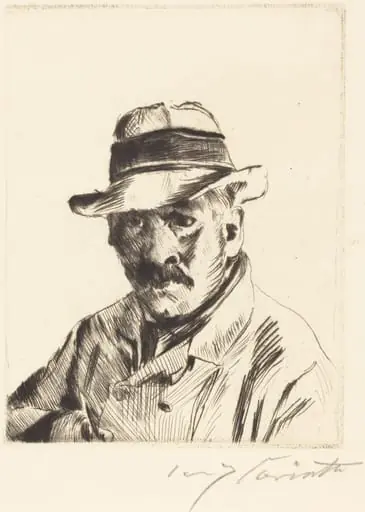
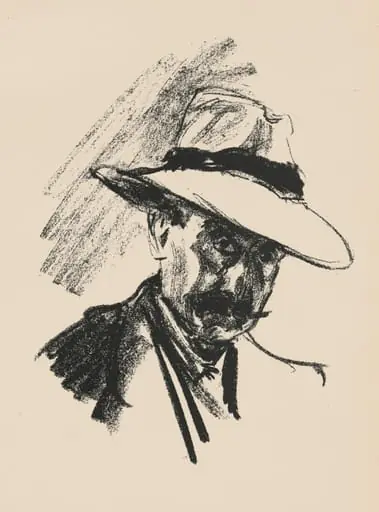
Selbstbildnis im Strohhut, als Brustbild (Self-Portrait in a Straw Hat, Bust Length)
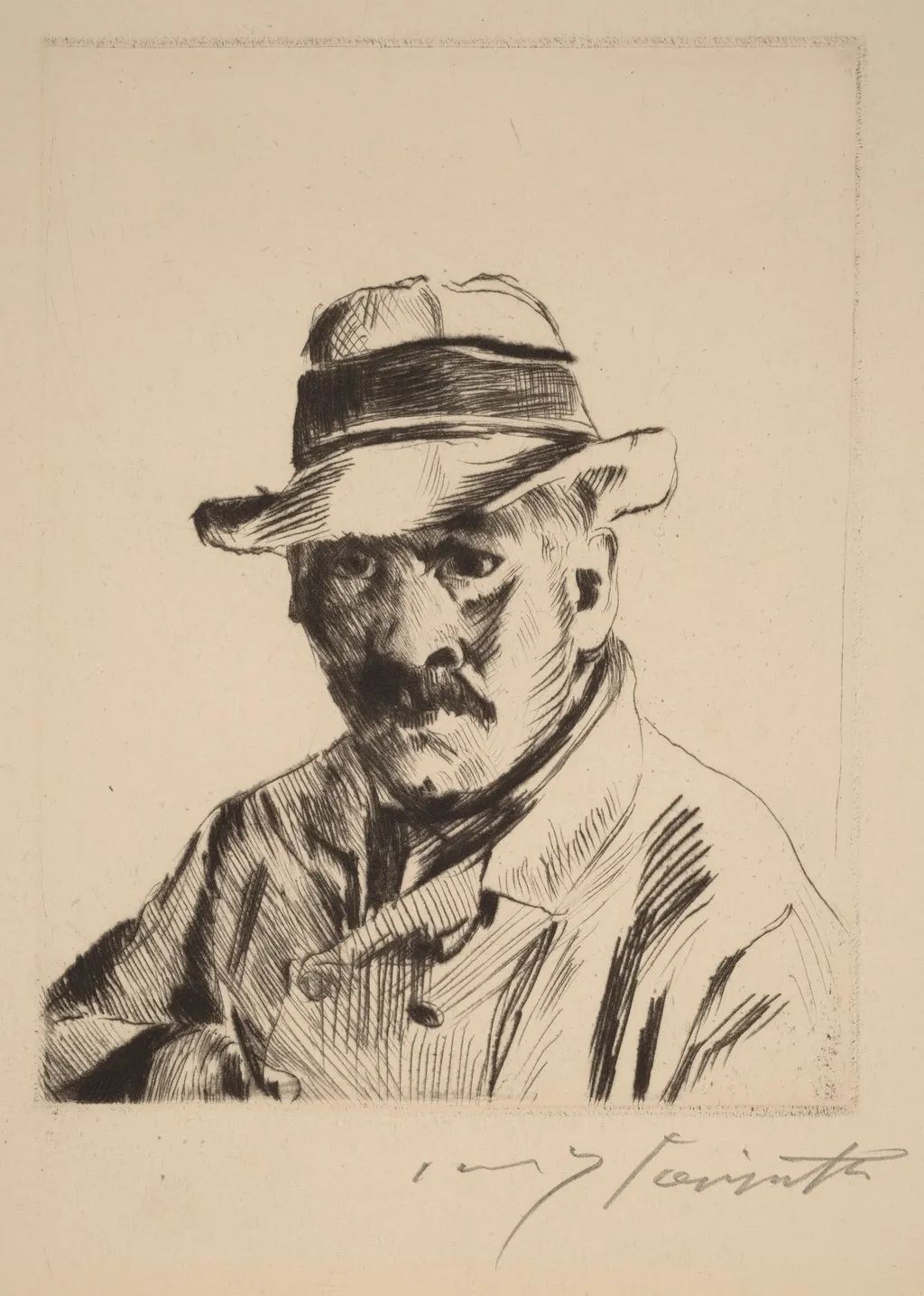
Selbstbildnis im Strohhut, als Brustbild (Self-Portrait in a Straw Hat, Bust Length) is an ink print by Lovis Corinth. It dates from 1913 and is held in the collection of the National Gallery of Art.
About this work
Overview
Lovis Corinth’s 1913 drypoint self-portrait captures him in bust length, wearing a wide-brimmed straw hat.
Lovis Corinth’s 1913 drypoint self-portrait captures him in bust length, wearing a wide-brimmed straw hat. Executed in black ink on J. W. Zanders wove paper, the work reflects a shift in his artistic approach following a stroke in 1911. The medium’s immediacy suits the informal, rapid execution, emphasizing gesture over finish. Corinth’s signature, loosely inscribed in the lower right, reinforces the sense of spontaneity. This print belongs to a productive phase during his presidency of the Berlin Secession.
Subject & Meaning
The portrait presents Corinth not as an idealized figure but as a working artist, engaged and unguarded. The straw hat, a casual accessory, suggests an outdoor setting or moment of respite. His thick mustache and direct gaze convey personal presence without theatricality. The work avoids grandeur, instead offering a quiet, unembellished self-observation. It reflects a post-recovery introspection, where identity is rendered through physicality rather than symbolism.
Technique & Style
Corinth employed drypoint to create dense, scratchy lines that exploit the paper’s texture, leaving visible grain between strokes. The jacket’s form is suggested with loose, uneven marks rather than defined contours. The hat’s flat crown and rough edges imply speed and physicality in execution. Unlike polished engravings, this work embraces imperfection—lines falter, overlap, and thin out, mirroring the tactile urgency of his post-stroke style, which favored expressive energy over precision.
History & Provenance
Created in 1913, the print emerged during Corinth’s tenure as president of the Berlin Secession, a position he assumed after years of engagement with avant-garde circles in Paris and Munich. His artistic evolution accelerated after his 1911 stroke, which loosened his formal discipline and deepened his emotional expressiveness. This drypoint is part of a broader body of self-portraits from this period, reflecting both personal resilience and a redefined artistic voice within German modernism.
Context
Corinth’s work in the early 1910s intersected with broader shifts in German art, where traditional representation gave way to more subjective modes. His integration of Impressionist light and Expressionist vigor aligned him with contemporaries exploring inner experience through form. The choice of printmaking—often associated with intimacy and repetition—allowed him to test ideas quickly. This self-portrait stands as a quiet counterpoint to the monumental canvases of his peers.
Legacy
The print exemplifies Corinth’s late style: raw, immediate, and emotionally resonant. It influenced later generations of German artists who valued authenticity over polish. While less celebrated than his oil paintings, this drypoint remains a key document of his personal and artistic transformation after illness. Its unvarnished quality continues to offer insight into the artist’s evolving relationship with self-representation in modern printmaking.
Artist & collection

Artist
Lovis Corinth was a German artist and writer whose mature work as a painter and printmaker realized a synthesis of impressionism and expressionism.

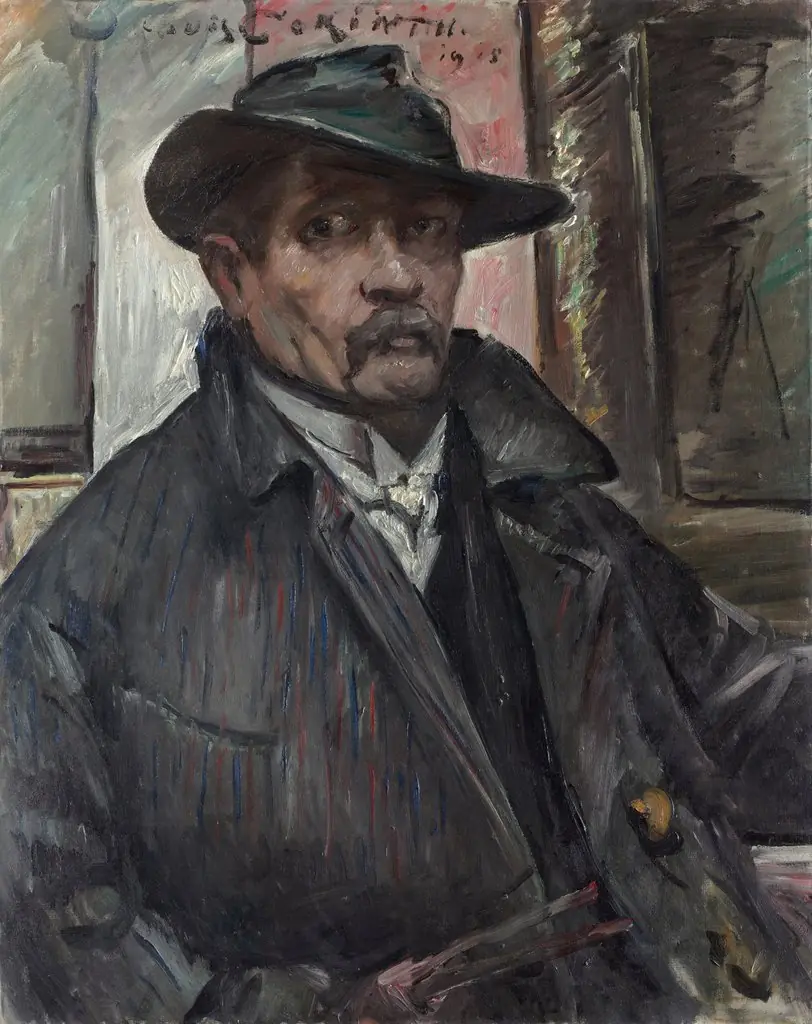
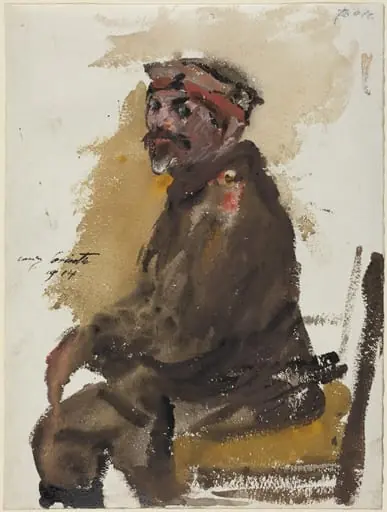
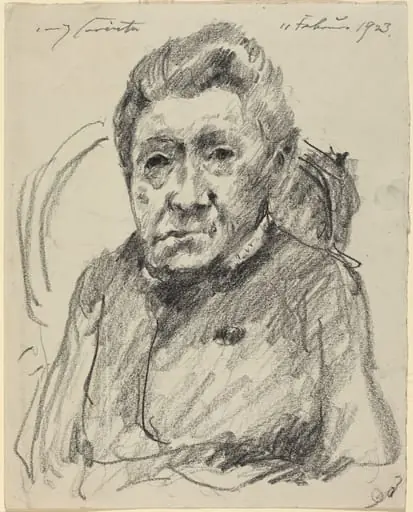
 Selbstbildnis im Strohhut (Self-Portrait in a Straw Hat)
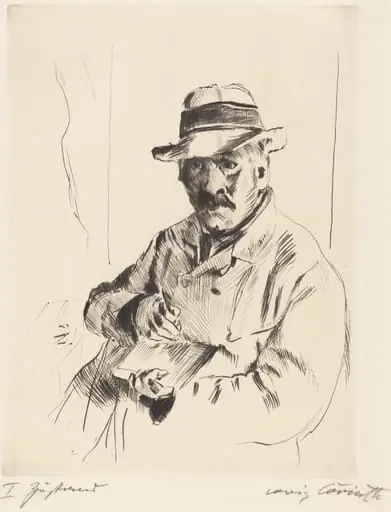 Selbstbildnis im Strohhut (Self-Portrait in a Straw Hat)
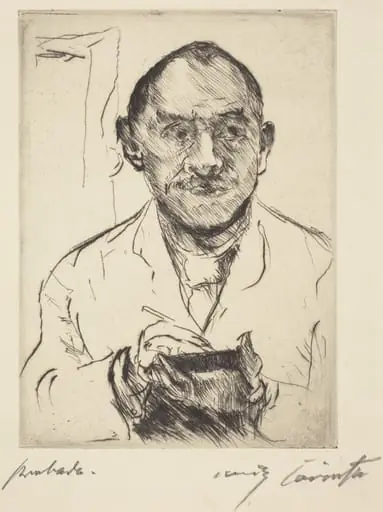 Selbstbildnis (Self-Portrait)
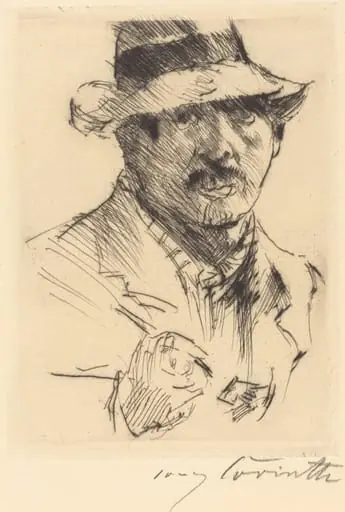 Selbstbildnis (Self-Portrait)
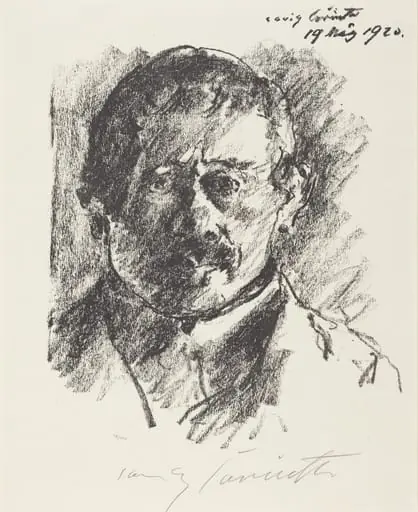 Selbstbildnis (Self-Portrait)
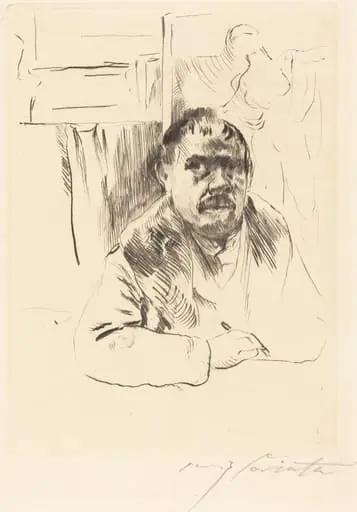 Selbstbildnis im Pelz (Self-Portrait in a Fur Coat)
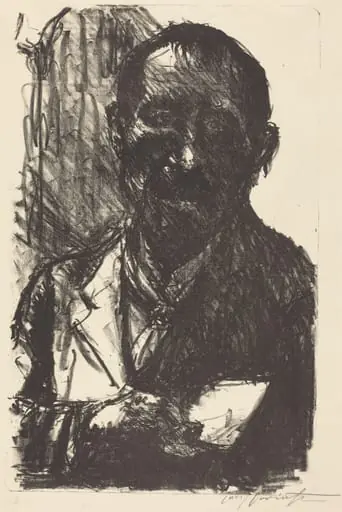 Selbstbildnis 1919 (Self-Portrait 1919)
 Selbstbildnis (Self-Portrait) from Deutsche Graphiker der Gegenwart (German Printmakers of Our Time)
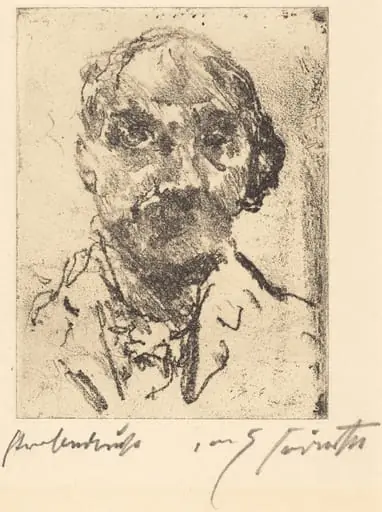 Selbstbildnis (Self-Portrait)
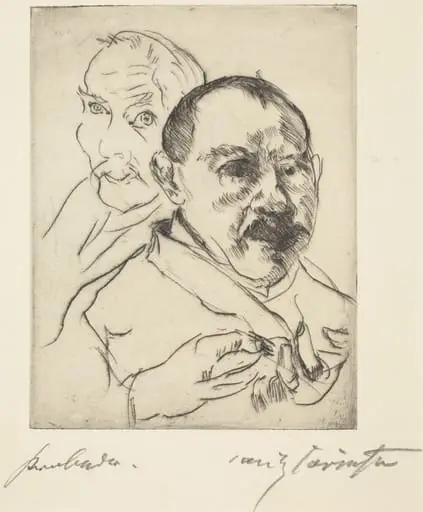 Zwei Männliche Studienköpfe—Selbstbildnisse (Sketch of Two Male Heads—Self-Portraits)