Artwork
Strasse in Königsberg (Street in Königsberg)
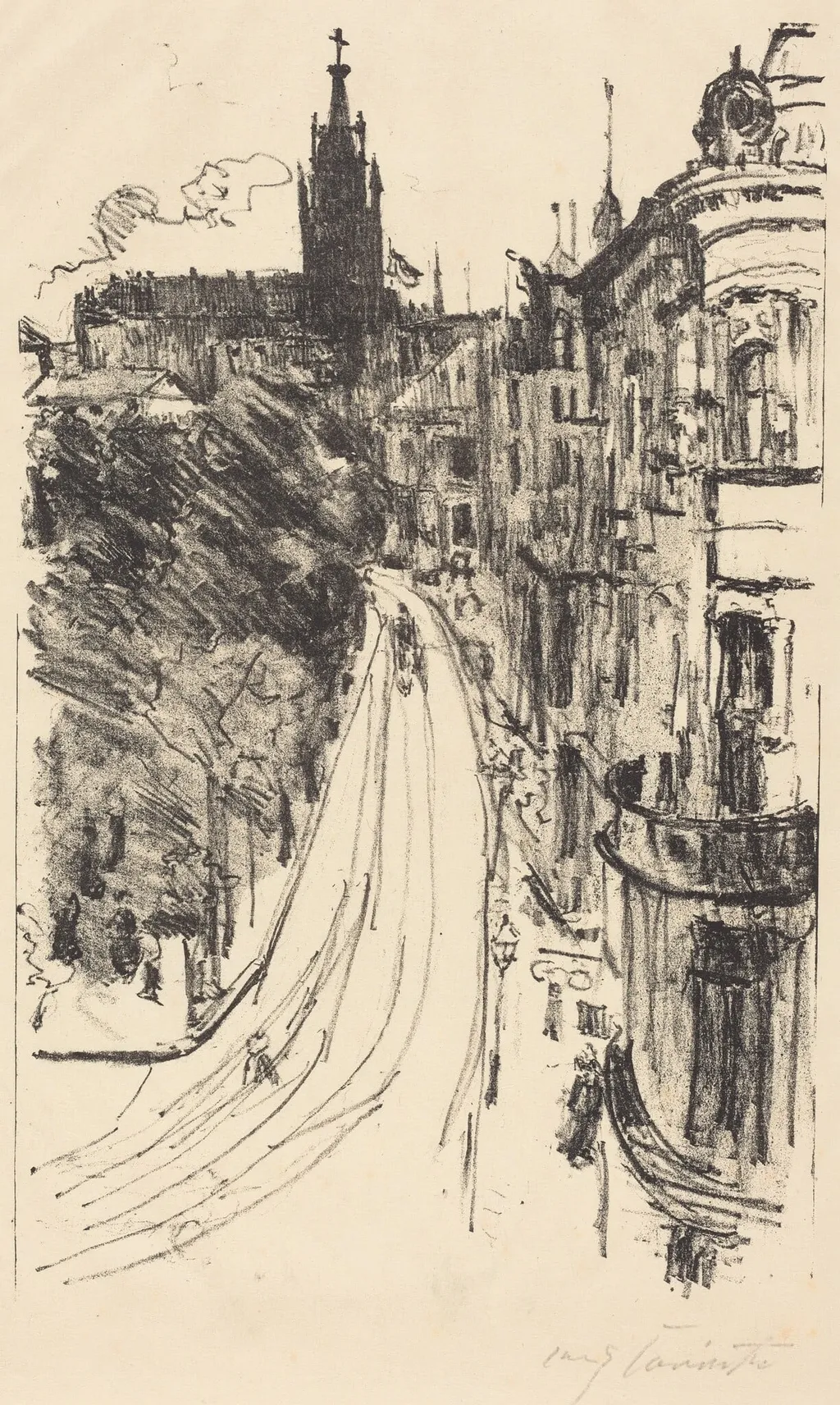
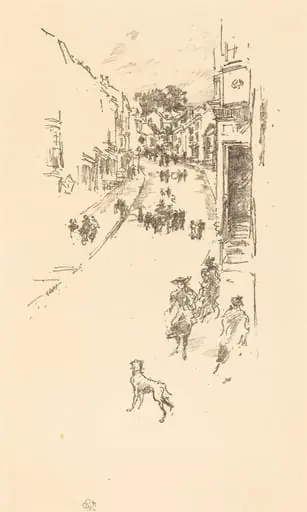
Strasse in Königsberg (Street in Königsberg) is an ink print by Lovis Corinth. It dates from 1918 and is held in the collection of the National Gallery of Art.
About this work
Overview
Strasse in Königsberg (Street in Königsberg) is a 1918 lithograph by Lovis Corinth, a prominent German artist known for his transition from naturalism to a more expressive style, especially after a 1911 stroke.
Subject & Meaning
The print captures a serene, wintry urban scene in Königsberg, characterized by curved cobblestones, a few buildings, and a solitary bare tree, evoking a sense of quietness and flatness, akin to a spontaneous snapshot.
Technique & Style
Unconventionally, Corinth employed a greasy crayon dragged across the lithographic stone, resulting in rough, almost clumsy marks that paradoxically yield surprising depth, reflecting his post-stroke expressive and loose technique.
History & Provenance
Created in 1918, the work reflects Corinth's later style, influenced by expressionism, following his involvement with the Berlin Secession and a transformative stroke in 1911.
Context
Strasse in Königsberg sits within the broader context of early 20th-century European printmaking and the evolution of expressionist techniques, distinguishing itself through Corinth's innovative lithographic method.
Legacy
While specific legacy details of *Strasse in Königsberg* are not highlighted, it contributes to Corinth's overall legacy as a bridge between naturalist and expressionist movements in early 20th-century German art.
Artist & collection

Artist
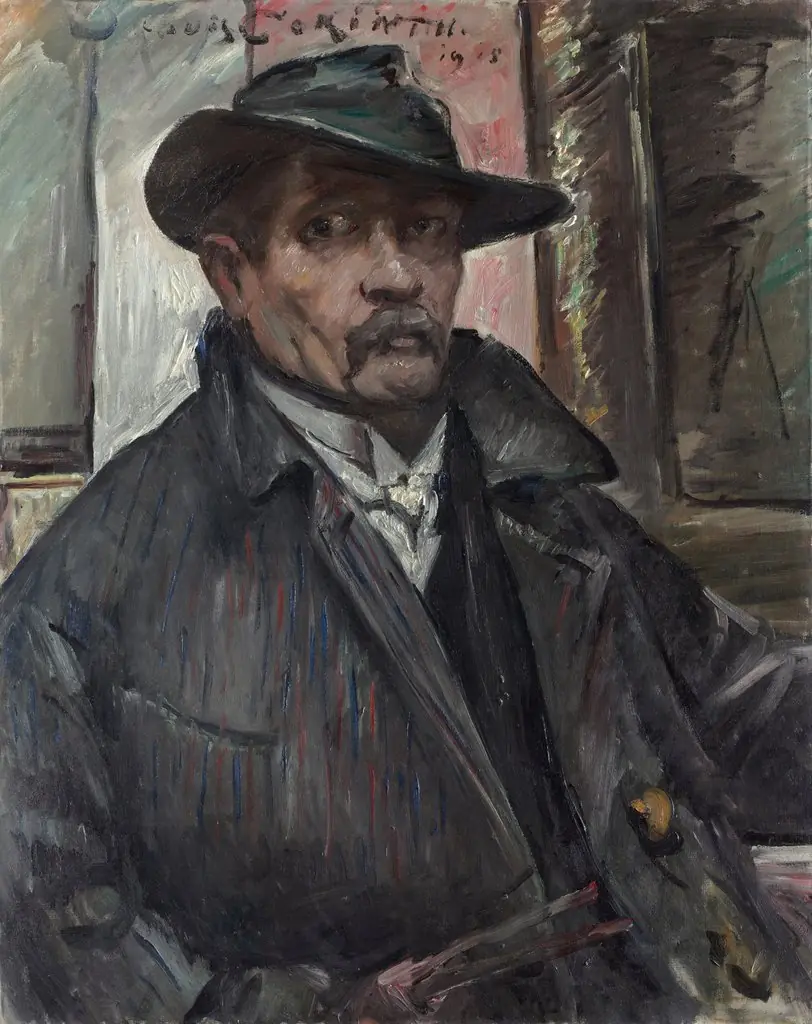
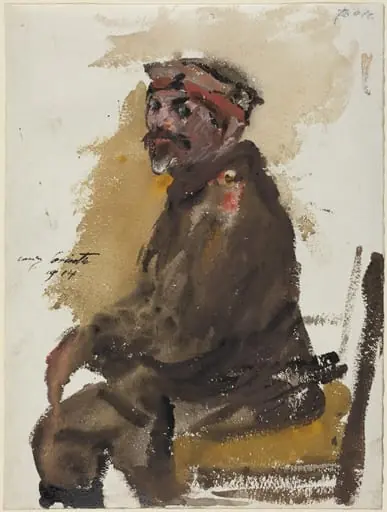
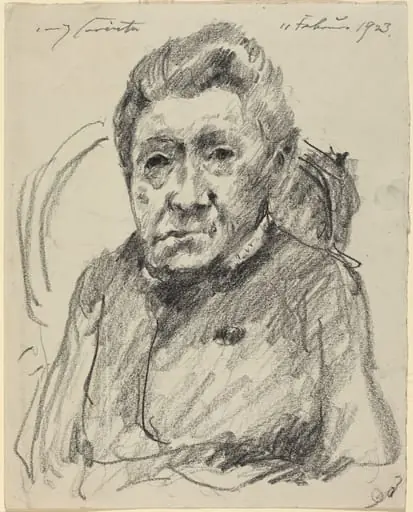
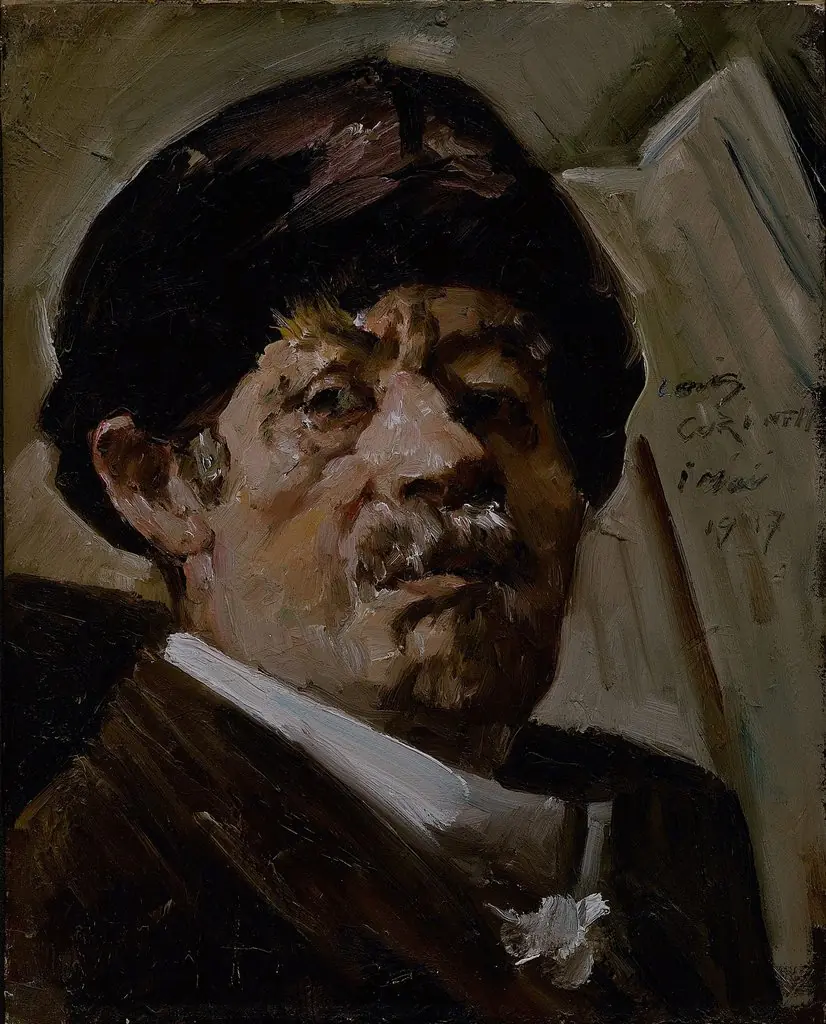
Lovis Corinth was a German artist and writer whose mature work as a painter and printmaker realized a synthesis of impressionism and expressionism.