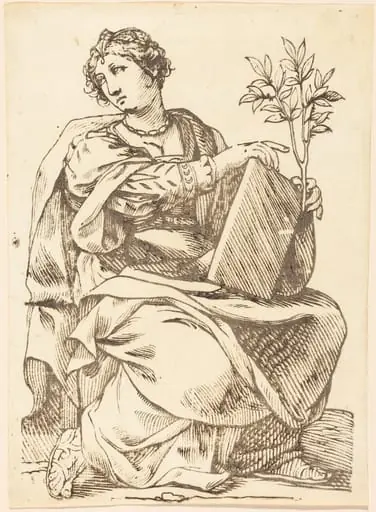
Artwork
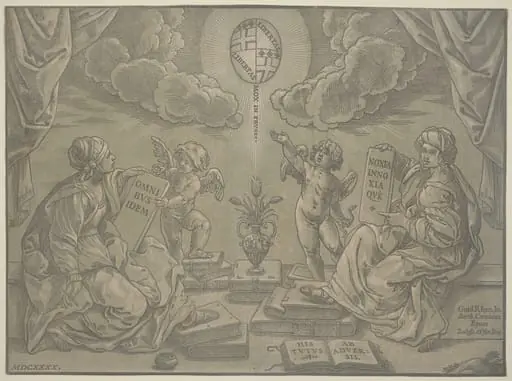
Sibyl with a Book and Winged Putto to the Left
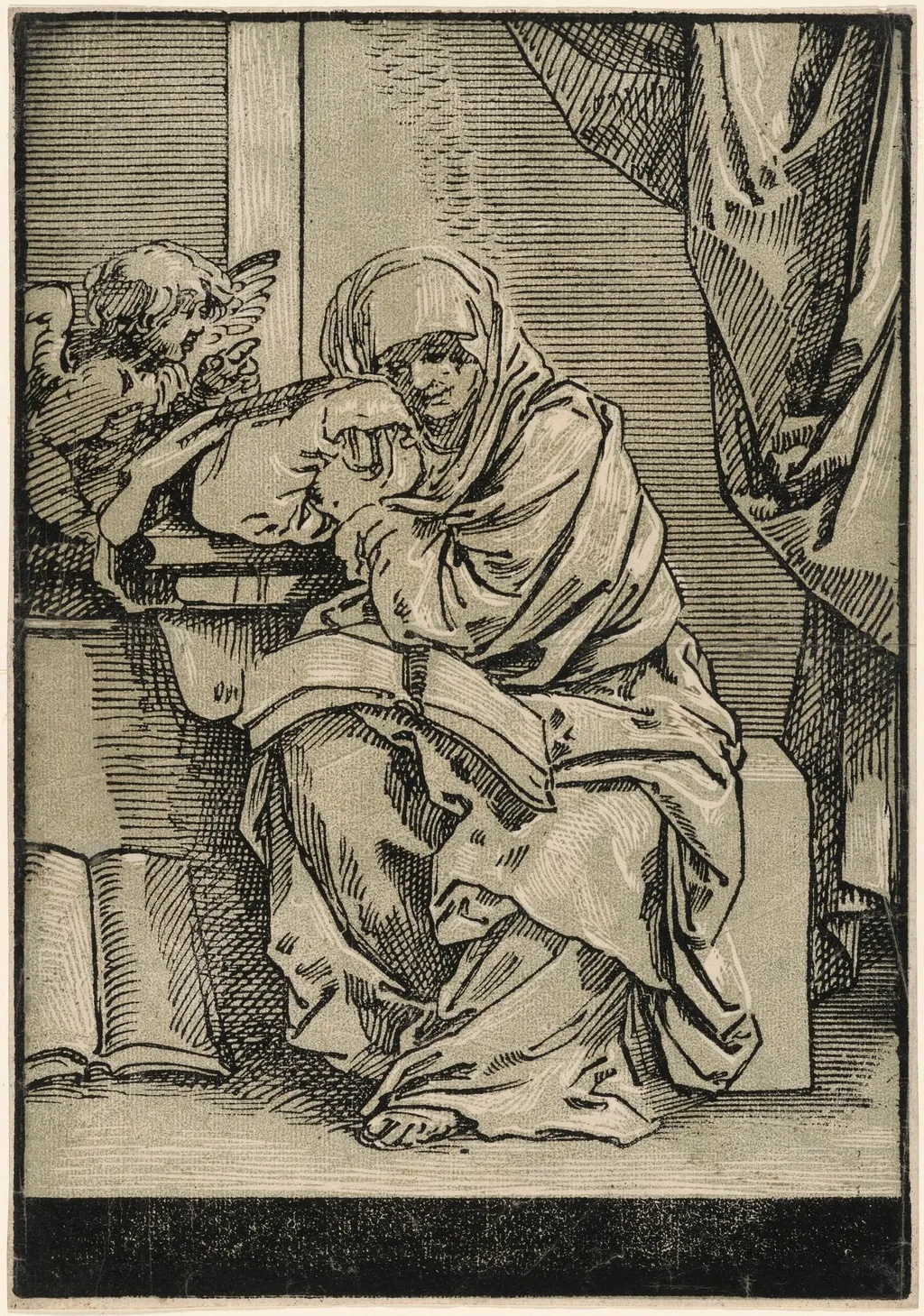
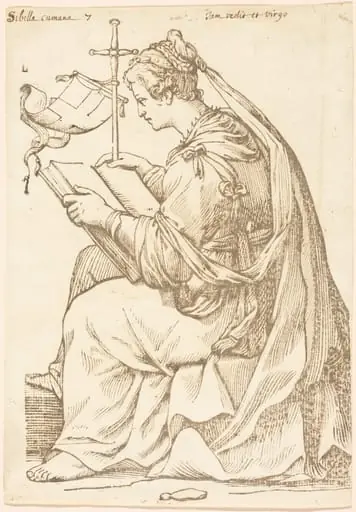
Sibyl with a Book and Winged Putto to the Left is an ink print by the Baroque artist Bartolomeo Coriolano. It dates from 1725 and is held in the collection of the National Gallery of Art.
About this work
Overview
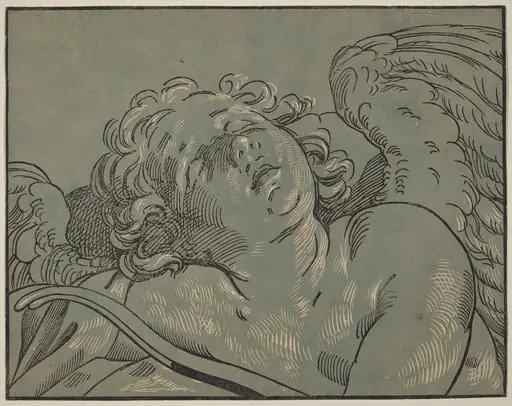
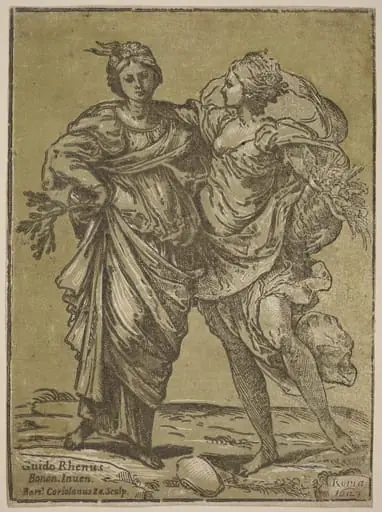
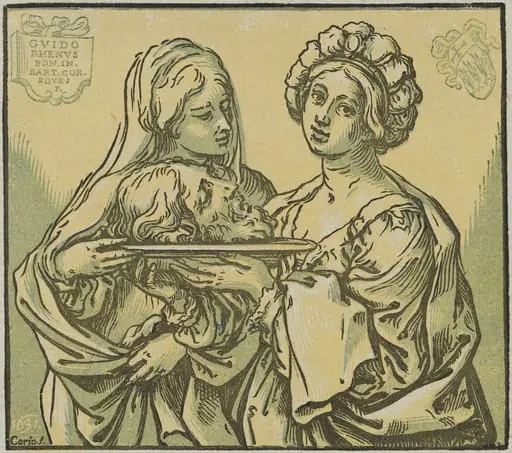
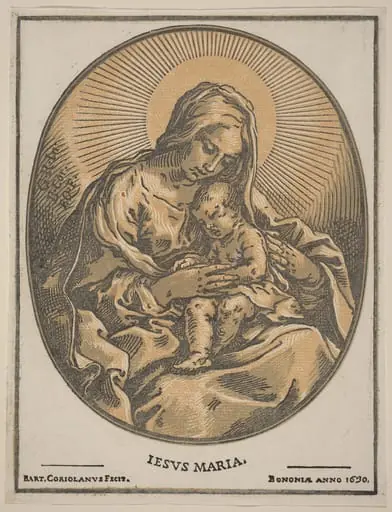
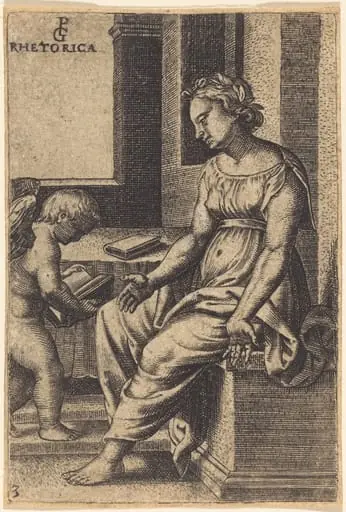
Created in 1725 by Bartolomeo Coriolano, this chiaroscuro woodcut depicts a seated sibyl with a winged putto beside her. Printed using two separate woodblocks—one for black ink and one for green—it achieves tonal depth through layered hues. The work is held in the National Gallery of Art, Washington, and exemplifies the late Baroque interest in dramatic light and shadow within printmaking.
Subject & Meaning
The figure is traditionally identified as a sibyl, a prophetic woman from classical antiquity, shown in contemplation with an open book. The winged putto, pointing toward the text, may symbolize divine inspiration or the revelation of hidden knowledge. Together, they suggest a moment of spiritual or intellectual awakening, aligning with Renaissance and Baroque themes of prophecy and wisdom.
Technique & Style
Coriolano employed two carved woodblocks to print black and green inks in succession, creating a subtle interplay of tone.
Coriolano employed two carved woodblocks to print black and green inks in succession, creating a subtle interplay of tone. The contrast between deep shadows and pale highlights models the sibyl’s drapery and the putto’s form, giving them volume. The faint window light and hanging curtain enhance spatial depth, while the restrained palette focuses attention on the figures’ interaction and the play of light.
History & Provenance
The print was made in the early 18th century in Italy, during a period when chiaroscuro woodcuts were revived as a refined print medium. It entered the collection of the National Gallery of Art in Washington, D.C., where it remains part of their holdings of European prints. Its survival and preservation reflect continued scholarly interest in Baroque print techniques.
Context
This work emerged in a time when Italian artists were revisiting the chiaroscuro woodcut tradition pioneered in the 16th century. While painting dominated the era, prints like this offered accessible, intimate expressions of religious and mythological themes. Coriolano’s use of color and light aligns with broader Baroque aesthetics, emphasizing emotion and atmosphere over linear clarity.
Legacy
Coriolano’s print stands as a late example of a technique that had largely declined by the 18th century. Its careful layering of ink and attention to tonal nuance demonstrate the technical skill still possible in woodcut, even as newer methods like etching gained favor. It remains a quiet testament to the endurance of traditional printmaking in an evolving artistic landscape.
Artist & collection