Artwork
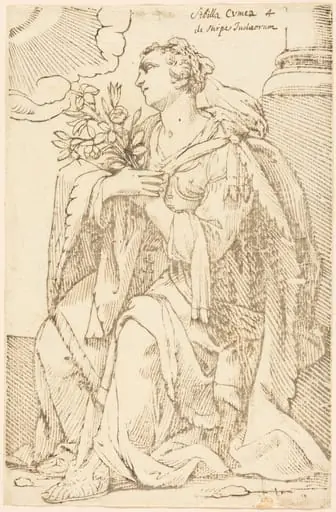
Sibylla Cumana
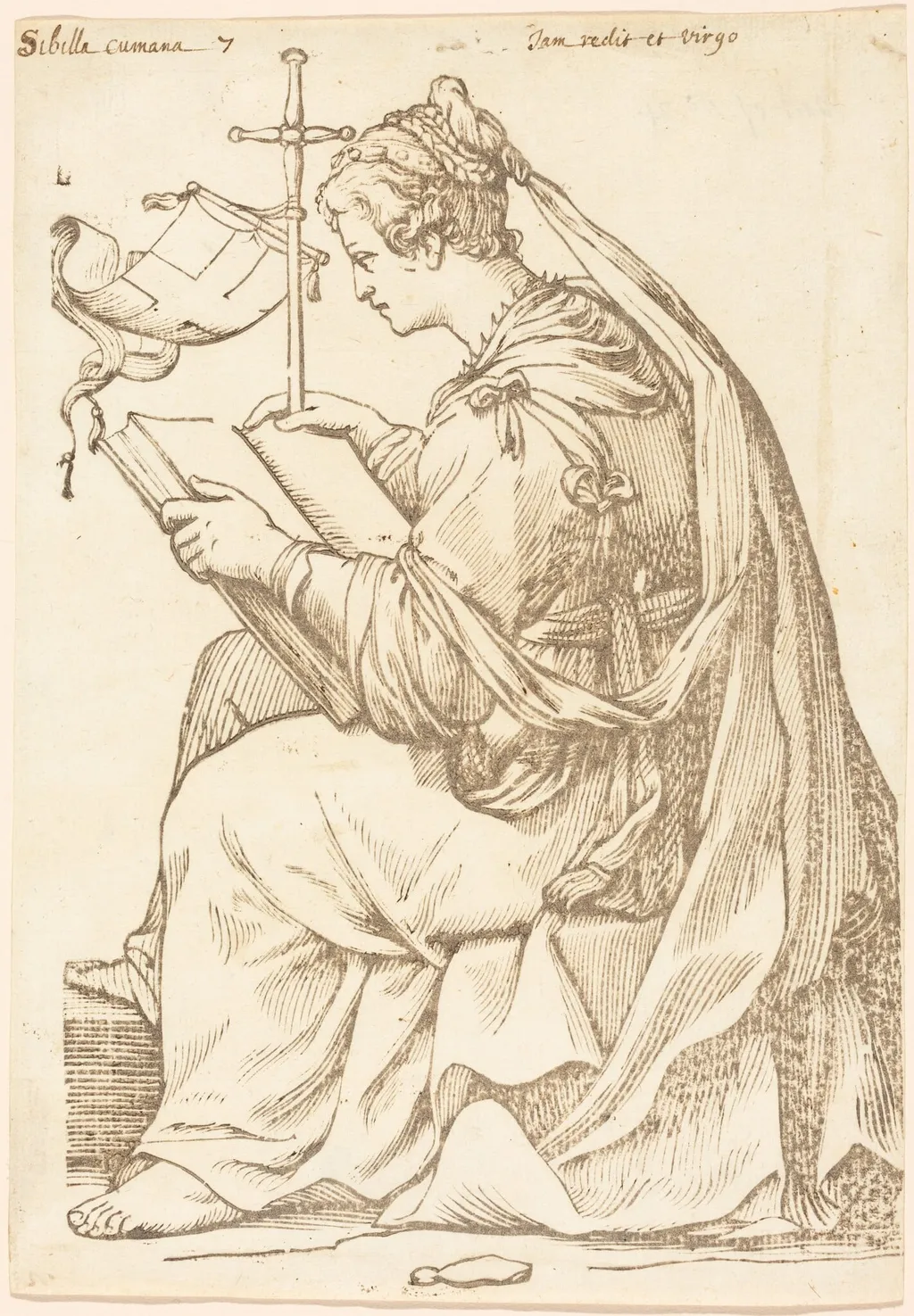
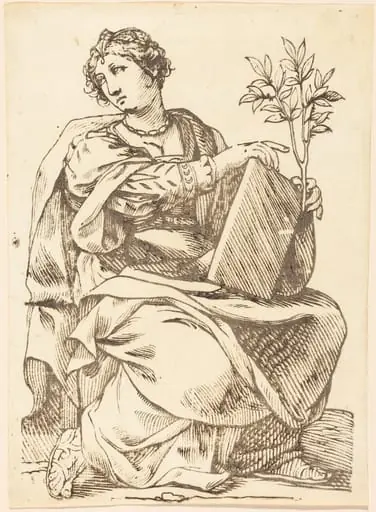
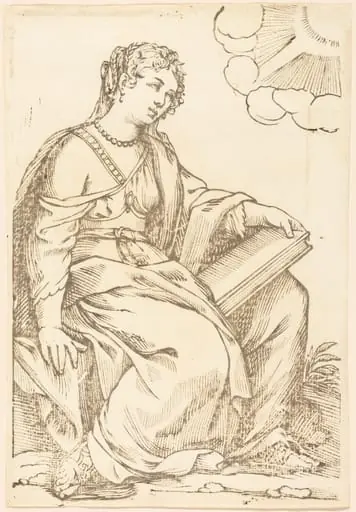
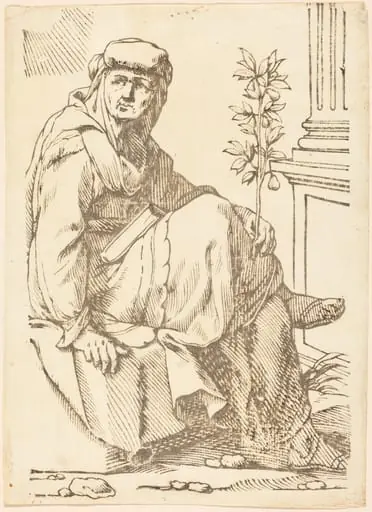
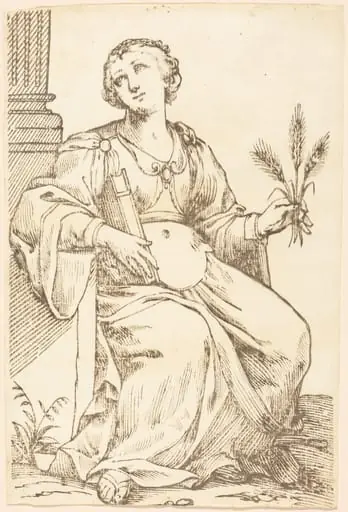
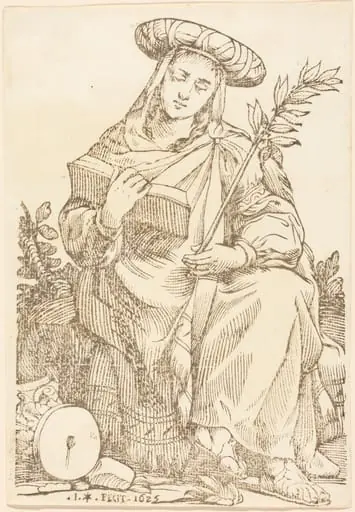
Sibylla Cumana is an ink print by the Baroque artist Paul Maupin. It dates from 1625 and is held in the collection of the National Gallery of Art.
About this work
Overview
The composition isolates the subject against a neutral background, emphasizing her posture and the symbolic objects she holds.
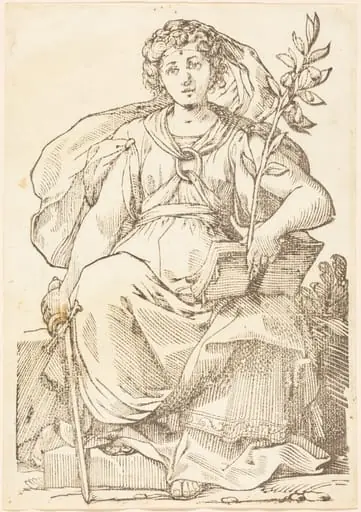
Sibylla Cumana is a woodcut print produced around 1625 by Paul Maupin on laid paper. The image presents a solitary female figure in profile, rendered with strong linear contrasts typical of the medium. The composition isolates the subject against a neutral background, emphasizing her posture and the symbolic objects she holds. The print’s clarity and restraint reflect the quiet intensity common in early 17th-century Northern European graphic art.
Subject & Meaning
The figure represents the Cumaean Sibyl, a prophetic woman from classical antiquity often associated with divine revelation. Her crossed legs and seated posture suggest contemplation, while the book and sword imply wisdom and authority. The helmet and cross-shaped object behind her may reference spiritual protection or the fusion of pagan prophecy with Christian symbolism. Her veiled hair and calm expression reinforce an aura of solemn foresight.
Technique & Style
Executed as a woodcut, the image relies on incised lines and tonal contrasts to define form. Bold outlines structure the figure and objects, while subtle hatching suggests volume and texture in fabric and metal. The plain background enhances focus on the subject, a deliberate compositional choice common in prints of the period. The medium’s inherent sharpness lends precision to the details, from the folds of the robe to the edge of the sword.
History & Provenance
The print is attributed to Paul Maupin, a lesser-known artist active in the early 17th century, likely in the Low Countries or Germany. Few signed works by him survive, and this piece is among the few documented examples of his graphic output. Its preservation on laid paper suggests it was produced in a limited run, possibly for scholarly or devotional circulation rather than mass distribution.
Context
During the early 1600s, images of sibyls were frequently included in religious and humanist publications, bridging classical tradition with Christian theology. The Cumaean Sibyl, in particular, was cited by early Church writers as a pagan prophet who foretold Christ’s coming. Maupin’s depiction aligns with this intellectual current, reflecting the continued fascination with ancient oracles in post-Reformation Europe.
Legacy
Though not widely reproduced or celebrated in its time, Sibylla Cumana remains a representative example of early modern printmaking’s capacity to convey complex symbolism through minimal means. Its survival offers insight into the visual language of prophecy and gendered authority in a period when religious and classical imagery often overlapped in private and academic collections.
Artist & collection