Artwork
Coat of Arms of St. Michael's Abbey
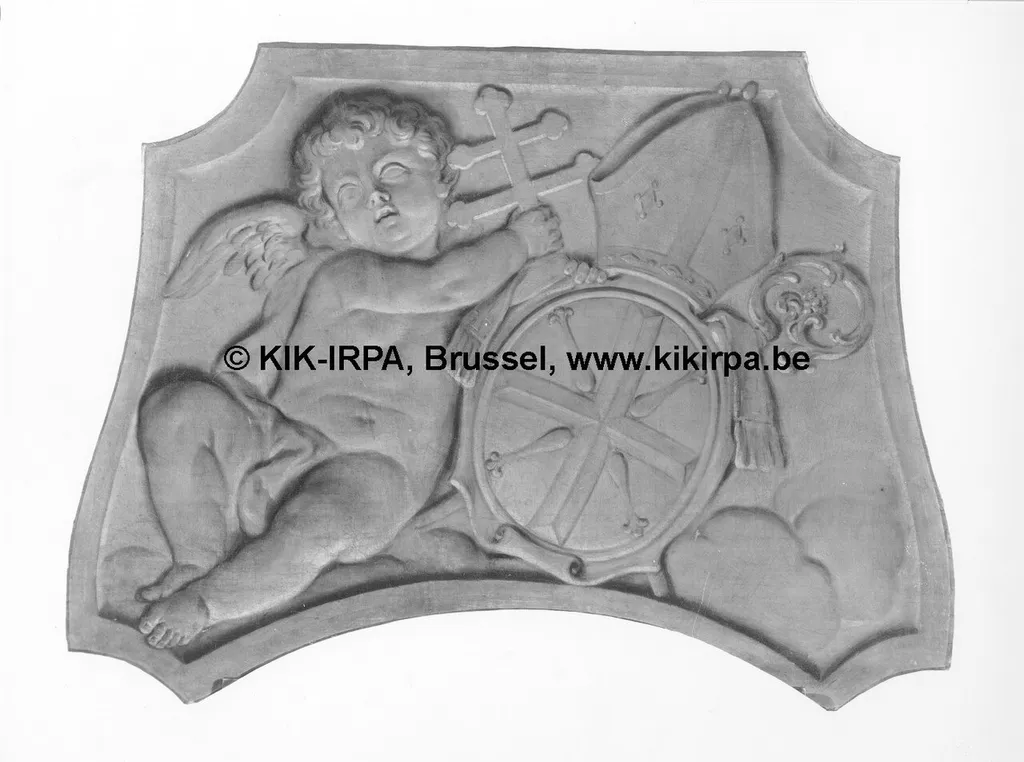
Coat of Arms of St. Michael's Abbey is an oil painting by the Rococo painting artist Cornelis Joseph d'Heur. It dates from 1750 and is held in the collection of the Royal Museum of Fine Arts Antwerp. This oil painting, dated around 1750, presents the heraldic emblem of St.
About this work
Overview
This oil painting, dated around 1750, presents the heraldic emblem of St. Michael's Abbey. Executed by Cornelis Joseph d'Heur, it functions as a formal representation of ecclesiastical identity rather than a narrative scene. The composition is deliberately restrained, with a uniform background isolating the emblem to emphasize its symbolic weight and craftsmanship.
Subject & Meaning
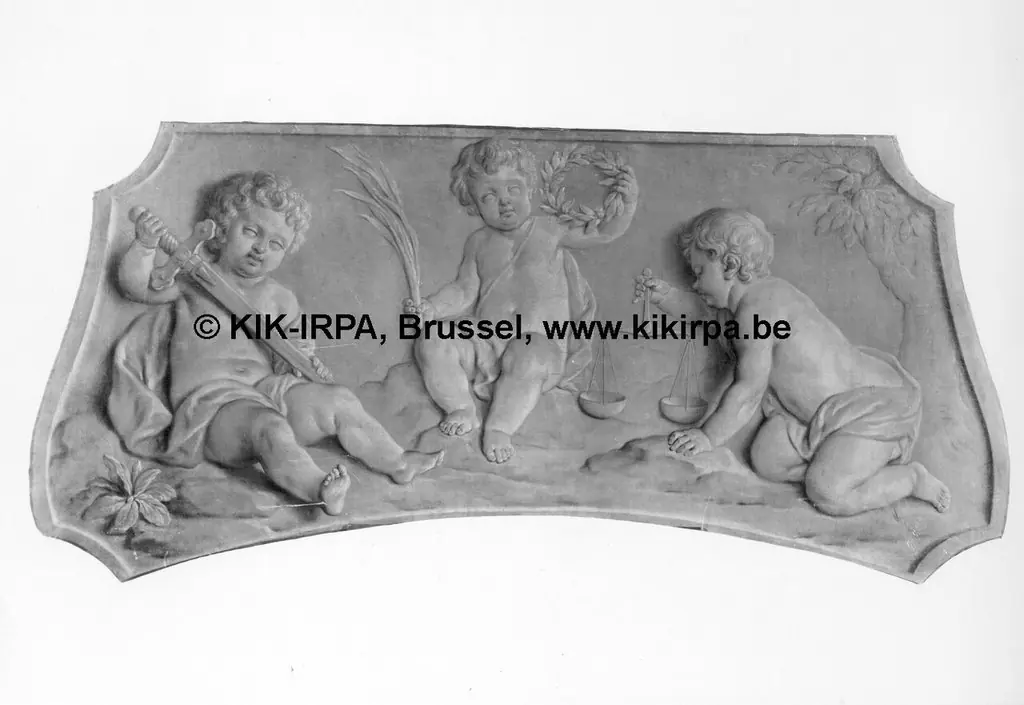
The central motif is a heraldic shield accompanied by a cherub wielding a sword. The cherub, traditionally associated with divine protection, holds the weapon as a sign of spiritual defense. The shield bears intricate heraldic patterns, likely denoting the abbey’s lineage, privileges, or patronage. Together, the elements convey authority, sacred guardianship, and institutional continuity.
Technique & Style
D'Heur rendered the coat of arms with precise brushwork, highlighting fine details in the shield’s engraving and the sword’s metallic sheen. The cherub’s features are softly modeled, its expression tranquil to reinforce solemnity. The absence of landscape or architectural context focuses attention on the emblem’s formal structure, reflecting a tradition of heraldic portraiture in Flemish art.
History & Provenance
The painting was likely commissioned to commemorate or display the abbey’s status, possibly for internal use or official presentation. It entered the collection of the Royal Museum of Fine Arts Antwerp, where it remains today. Its preservation suggests continued recognition of its historical and artistic value within the region’s ecclesiastical heritage.
Context
In mid-18th-century Flanders, religious institutions frequently commissioned heraldic artworks to assert their legitimacy and prestige. D'Heur, active in Antwerp, was known for religious and decorative works. This painting aligns with a broader practice of using visual symbolism to reinforce institutional identity during a period of ecclesiastical consolidation.
Legacy
Though not widely exhibited, the painting endures as a documented example of Flemish ecclesiastical heraldry. It contributes to scholarly understanding of how monastic communities employed visual art to communicate authority. Its presence in a major public museum ensures its accessibility for ongoing historical and artistic study.
Artist & collection