Artwork
Instruction in Perspective
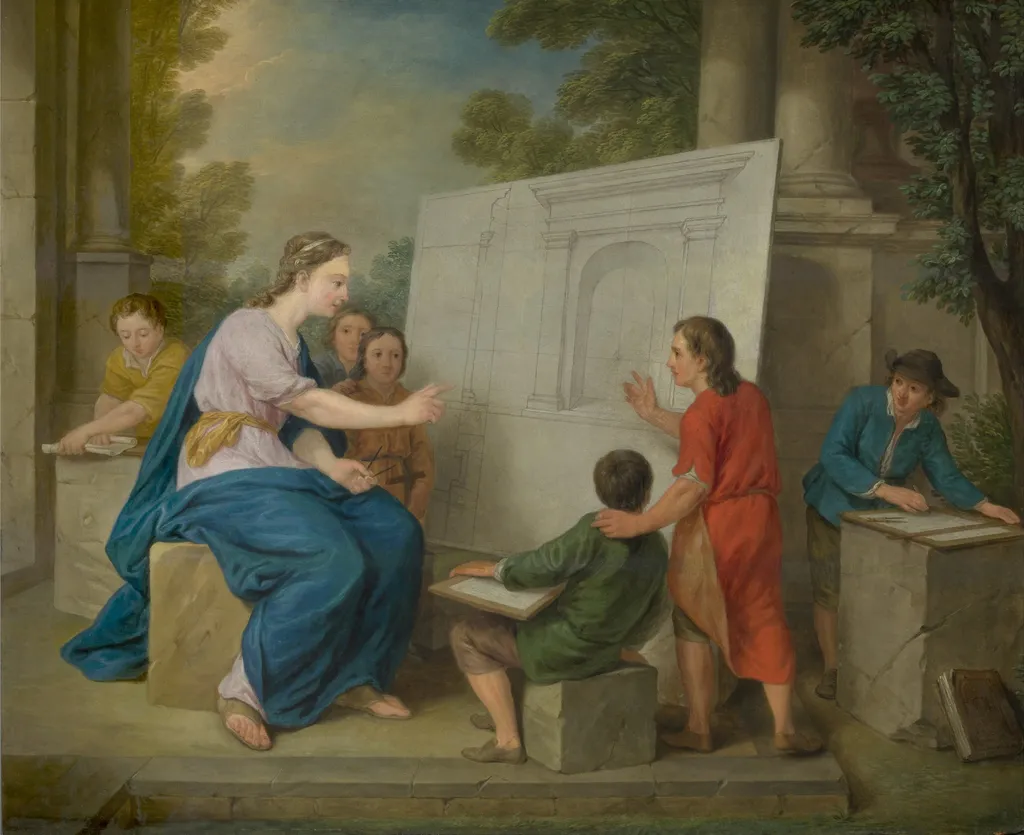
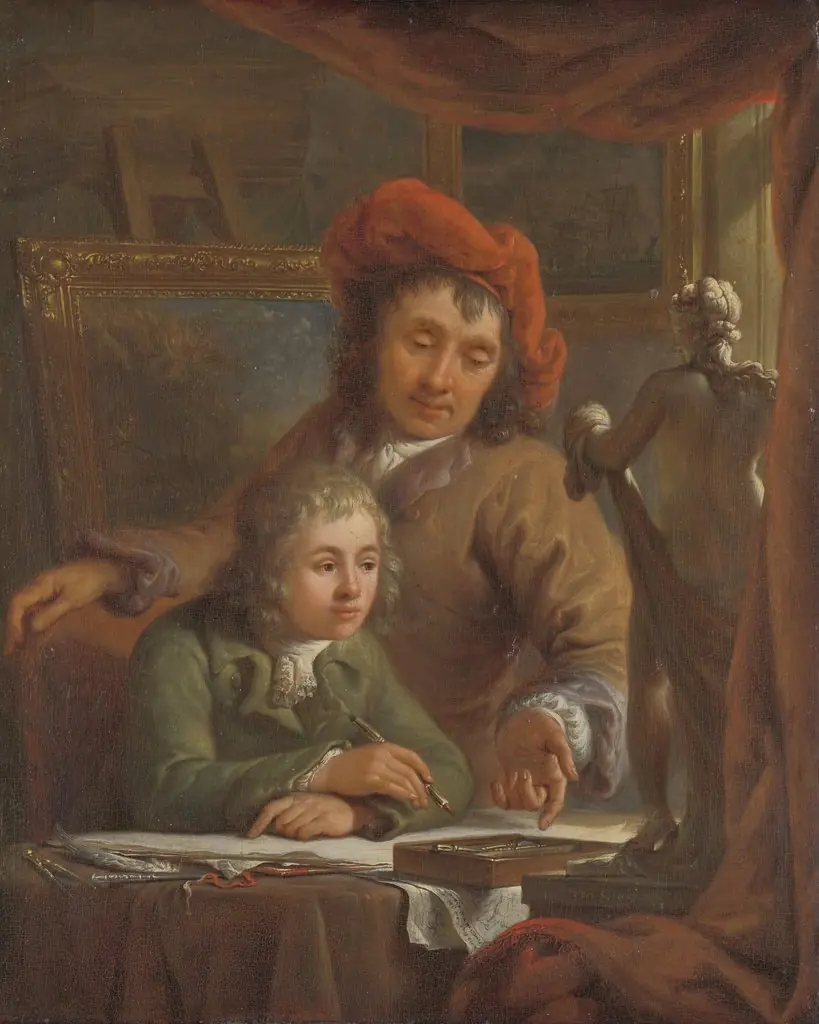
Instruction in Perspective is an oil painting by the Rococo painting artist Cornelis Joseph d'Heur. It dates from 1761 and is held in the collection of the Royal Museum of Fine Arts Antwerp.
About this work
Overview
Painted in 1761 by Cornelis Joseph d'Heur, this oil work captures a moment of artistic instruction outdoors. The scene centers on a woman guiding six boys in the study of perspective through a large drawing on canvas. The setting, framed by trees and a soft sky, suggests an open-air atelier rather than a formal studio, emphasizing a naturalistic approach to pedagogy.
Subject & Meaning
The woman, dressed in blue with a yellow sash, acts as a teacher, directing attention to a rendered archway that demonstrates linear perspective. The boys, dressed simply, respond with varied engagement—some sketching, others observing. The composition reflects Enlightenment ideals of accessible education, portraying learning as an active, communal practice rather than passive reception.
Technique & Style
D'Heur employs subtle glazing to achieve depth in the figures and landscape, particularly in the folds of fabric and the atmospheric sky. The brushwork is precise yet unobtrusive, favoring clarity over dramatic contrast. Light falls evenly across the scene, enhancing the instructional tone and allowing each figure’s action to be clearly read without theatrical emphasis.
History & Provenance
The painting has remained in the collection of the Royal Museum of Fine Arts Antwerp since at least the 19th century. Its presence there suggests early institutional recognition of its educational theme. No significant changes in ownership are documented, and it has been consistently exhibited as an example of 18th-century Flemish genre painting.
Context
In mid-18th-century Flanders, artistic training often occurred through apprenticeships or private academies. This painting reflects a shift toward more public, visual methods of teaching art theory. The outdoor setting aligns with contemporary interest in natural observation, while the focus on perspective underscores the growing importance of mathematical precision in artistic practice.
Legacy
Though not widely reproduced, the painting stands as a quiet testament to the transmission of artistic knowledge in pre-industrial Europe. It documents how technical skills like perspective were taught through direct observation and dialogue, offering insight into the social dynamics of art education before the rise of formal academies.
Own this work as a print
Artist & collection

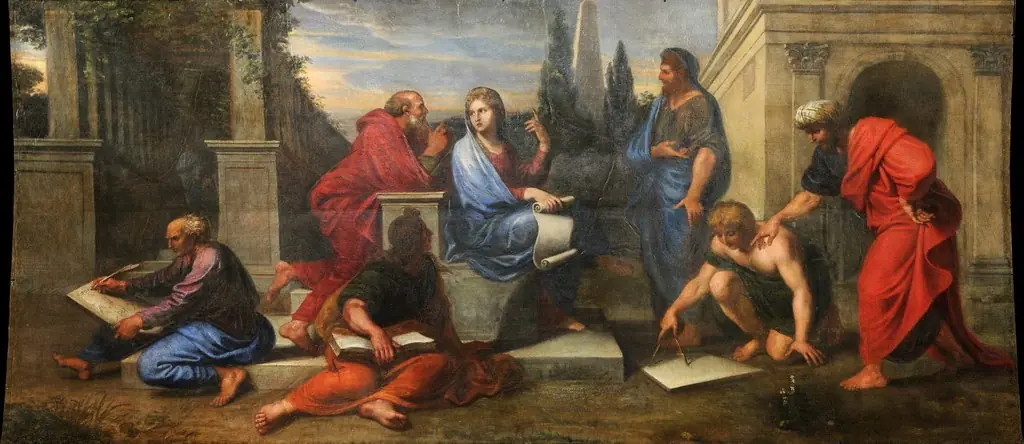 Aspasia surrounded by Greek philosophers
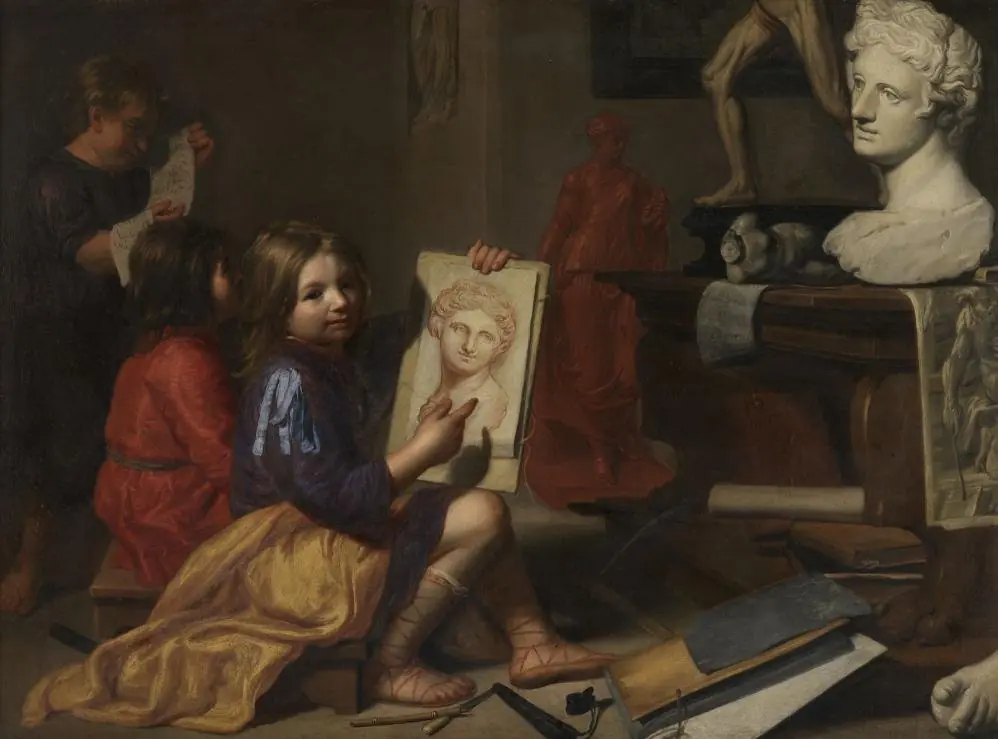 The artist's Studio
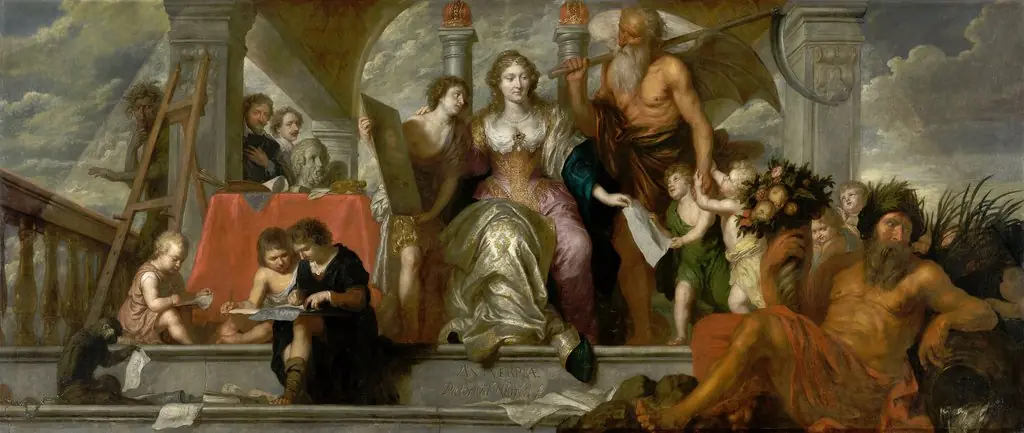 Antwerp, Nourishing the Painters
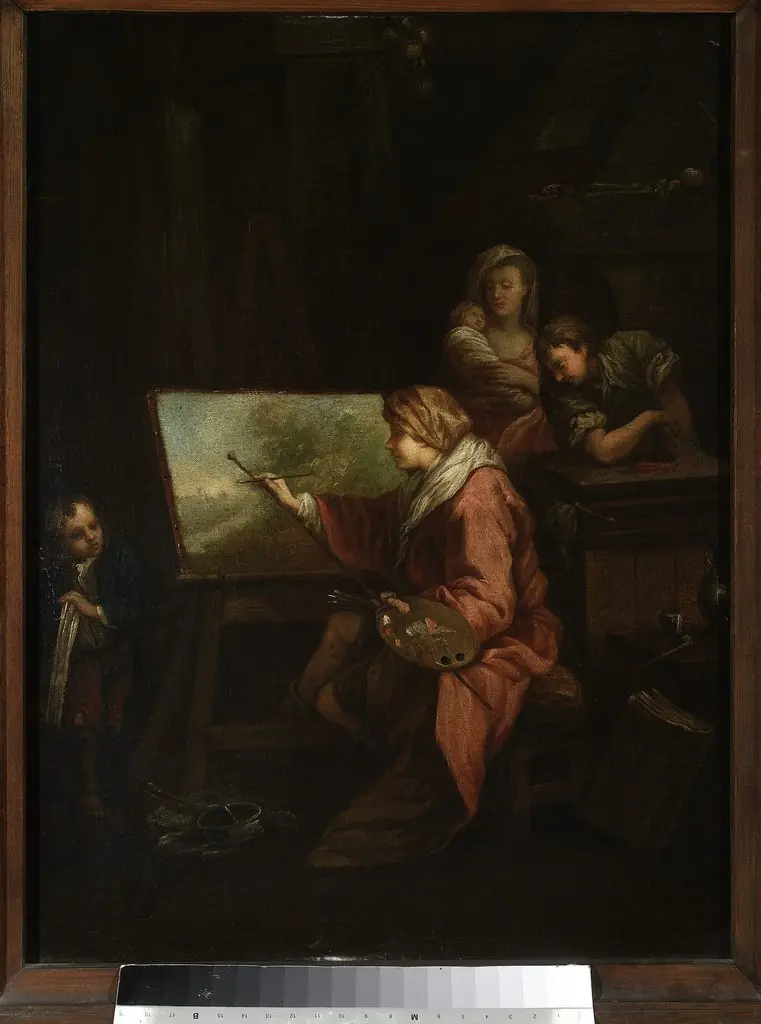 In the painter's studio (“Le peintre de paysage” or “Le peintre a son chevalet”)
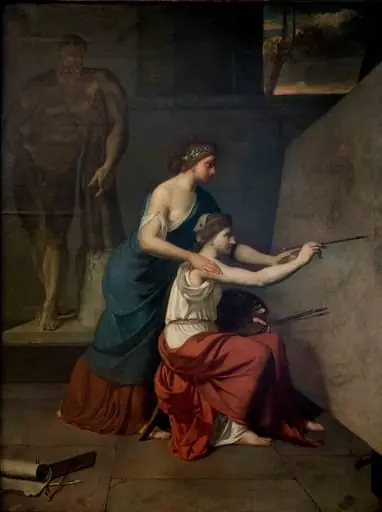 Lecția de pictură
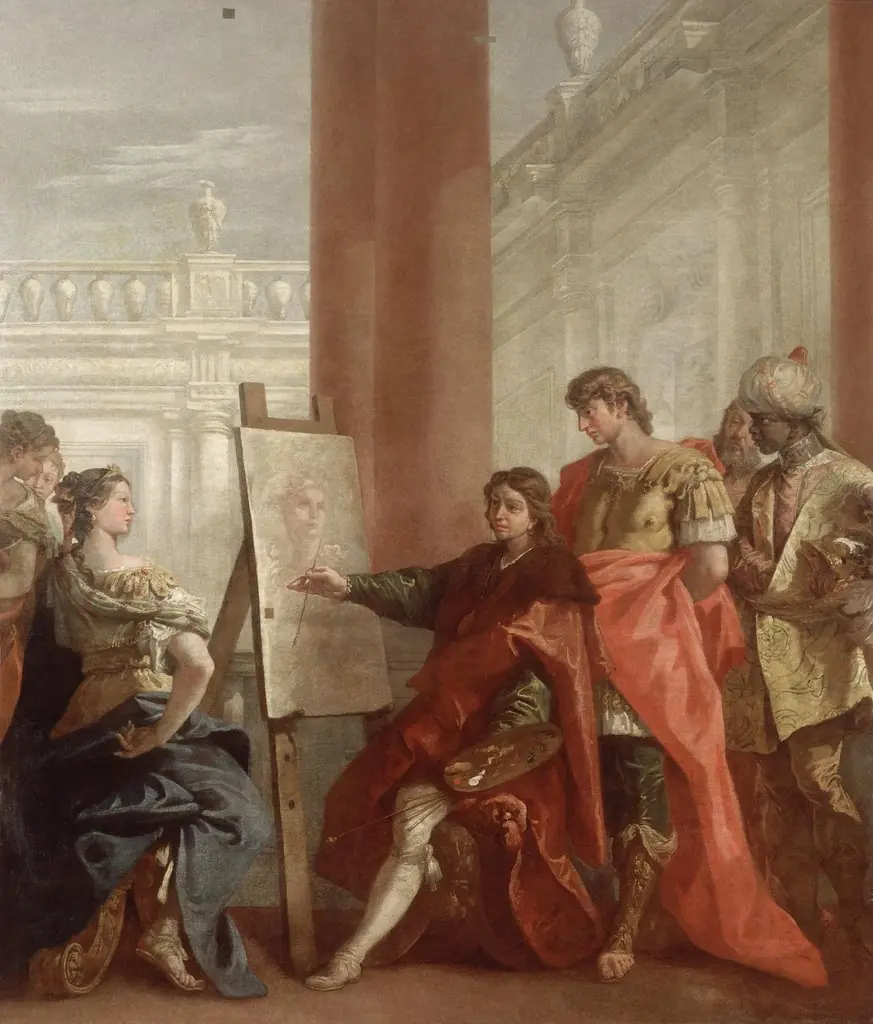 Apelles Paints Campaspa
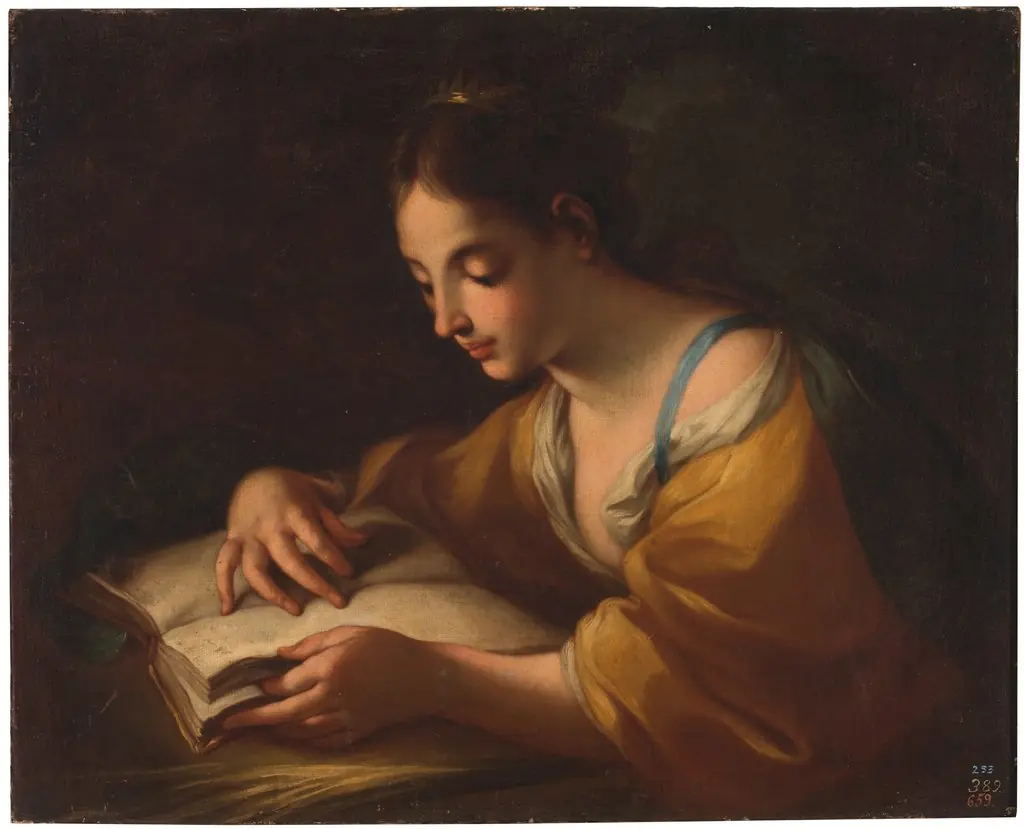 Saint Catherine
 Allegory of Arithmetic
 A Painter's Studio
 Allegory of Painting
 Pygmalion and Galatea
 The Drawing Lesson