Artwork
Justice
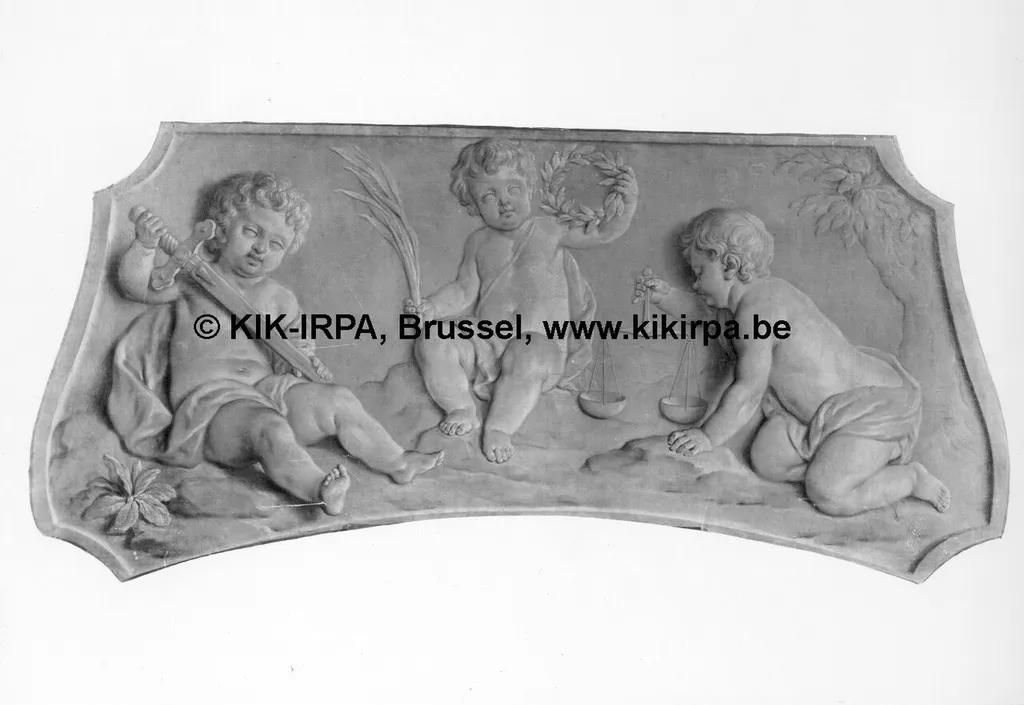
Justice is an oil painting by the Rococo painting artist Cornelis Joseph d'Heur. It dates from 1750 and is held in the collection of the Royal Museum of Fine Arts Antwerp.
About this work
Overview
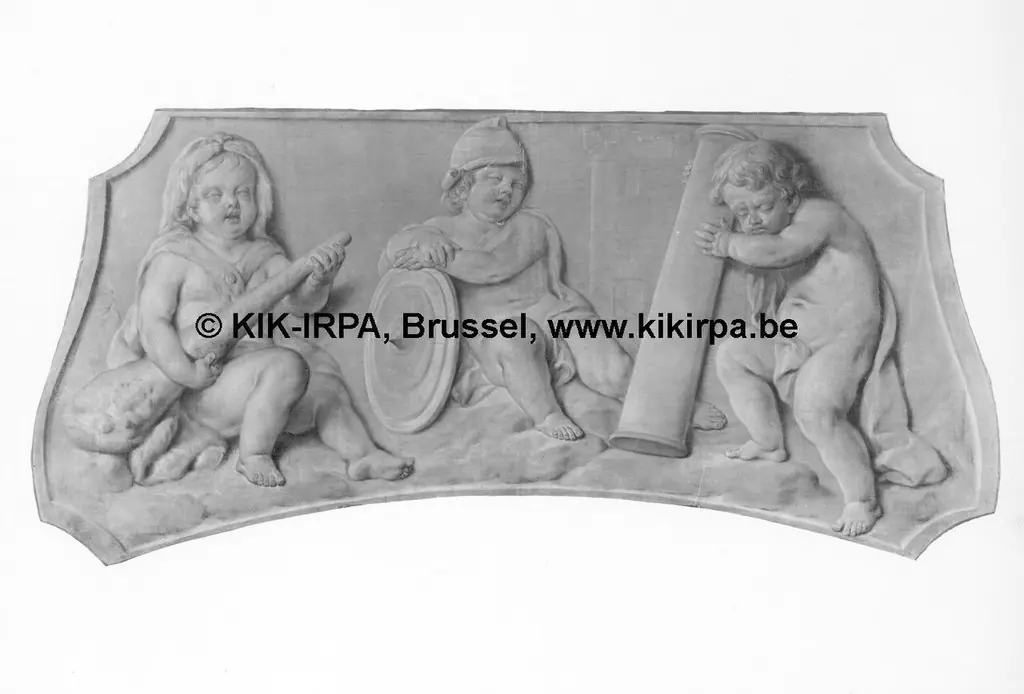
Each figure holds symbolic objects associated with legal and moral order, rendered with quiet precision against a neutral background.
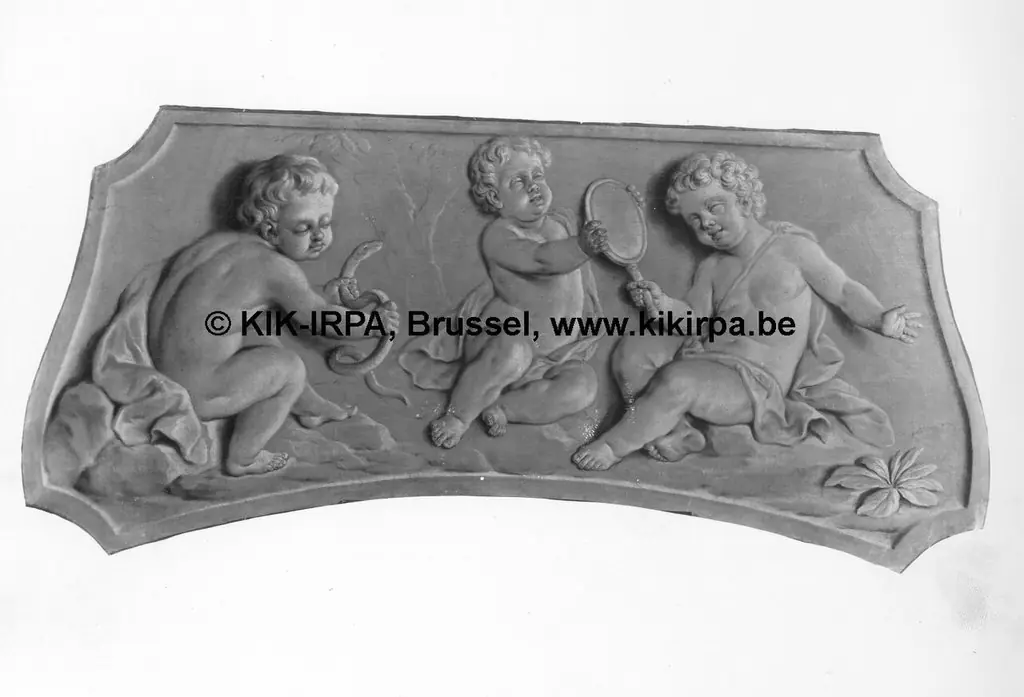
Justice is an oil painting attributed to Cornelis Joseph d'Heur, dated around 1750. It is part of the collection at the Royal Museum of Fine Arts Antwerp. The work presents a sculptural relief rendered in paint, depicting three cherubs arranged in a horizontal composition. Each figure holds symbolic objects associated with legal and moral order, rendered with quiet precision against a neutral background.
Subject & Meaning
The three cherubs represent allegorical elements of justice: the left figure holds a sword, symbolizing enforcement; the central one cradles a wreath and plant, suggesting reward and growth; the right figure bears a scale, emblematic of balance and impartiality. Their gentle expressions and composed postures convey a sense of tranquil authority, avoiding aggression in favor of serene moral clarity.
Technique & Style
D'Heur mimics the appearance of a carved relief through subtle tonal gradations and restrained modeling in oil paint. The figures are rendered with soft contours and minimal shadow, enhancing the illusion of stone. The background is uniformly muted, directing focus to the symbolic trio. The style reflects 18th-century Flemish interest in classical allegory, executed with quiet restraint rather than dramatic flair.
History & Provenance
The painting entered the Royal Museum of Fine Arts Antwerp’s collection in the 19th century, though its earlier ownership is undocumented. It was likely commissioned for a civic or judicial space, given its thematic content. No records of exhibition or private ownership prior to its museum acquisition have been preserved, leaving its original context partially obscure.
Context
Created during a period when allegorical imagery remained central to public and institutional art in the Southern Netherlands, the painting reflects enduring visual traditions tied to legal authority. While grander works by contemporaries emphasized power and grandeur, d'Heur’s approach favors understated symbolism, aligning with local tastes for refined, contemplative moral representation.
Legacy
Though not widely reproduced or studied, the painting exemplifies a quiet strand of 18th-century Flemish allegory that prioritized calm authority over spectacle. It contributes to the understanding of how justice was visually conceptualized beyond overtly monumental forms, offering a more intimate, humanized interpretation of legal ideals in the pre-revolutionary era.
Artist & collection