Artwork
Merry-making in a tavern
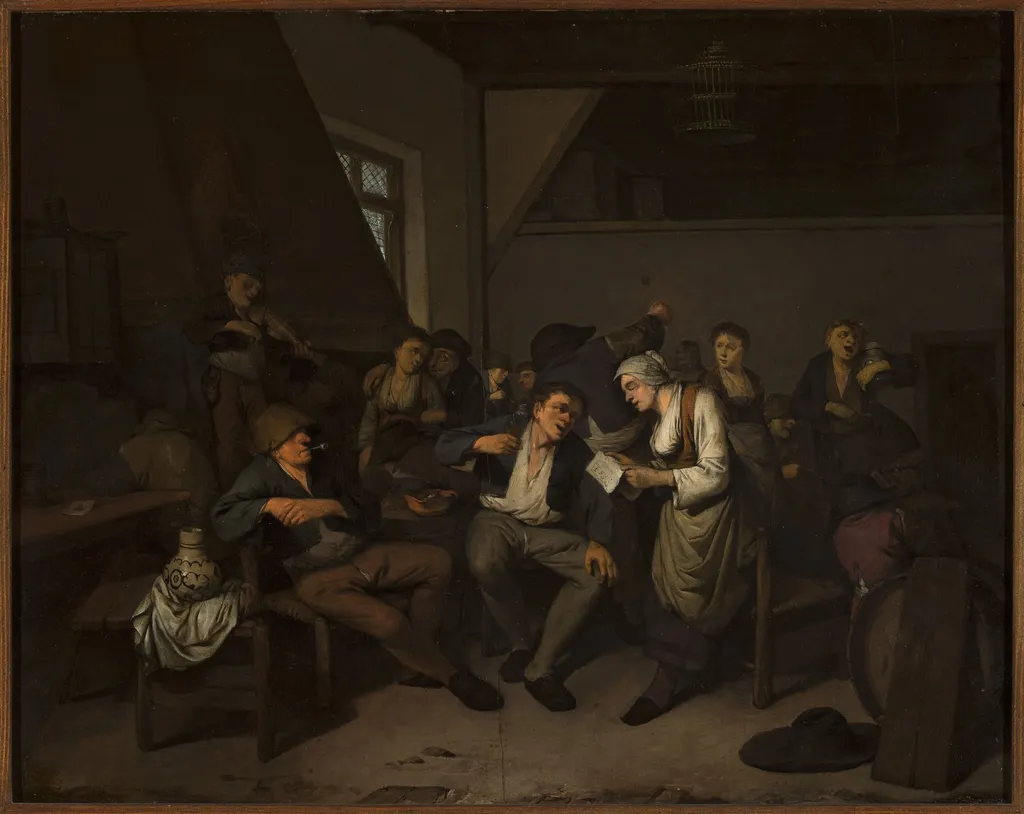
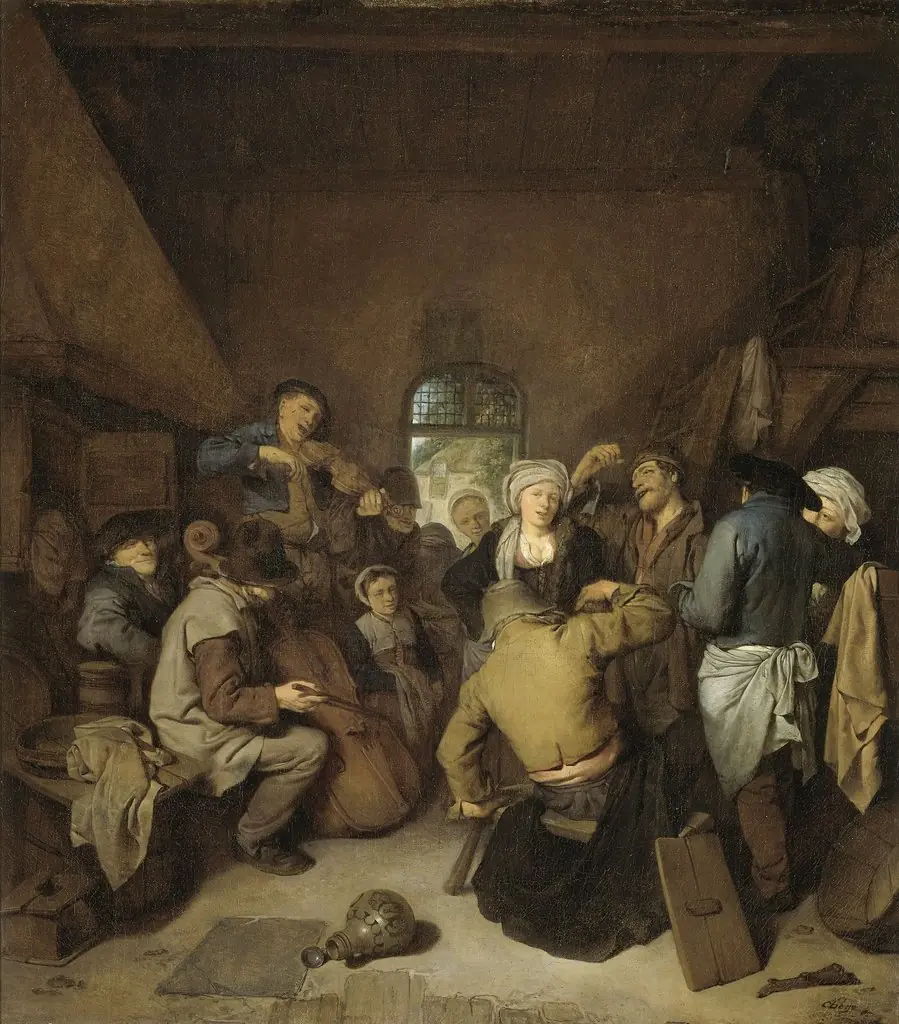
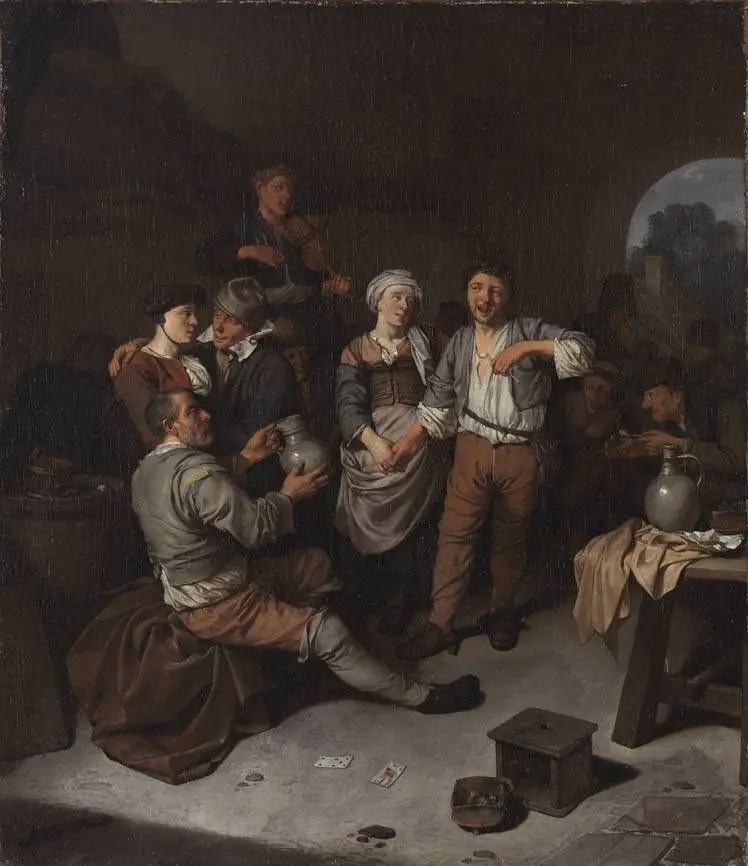
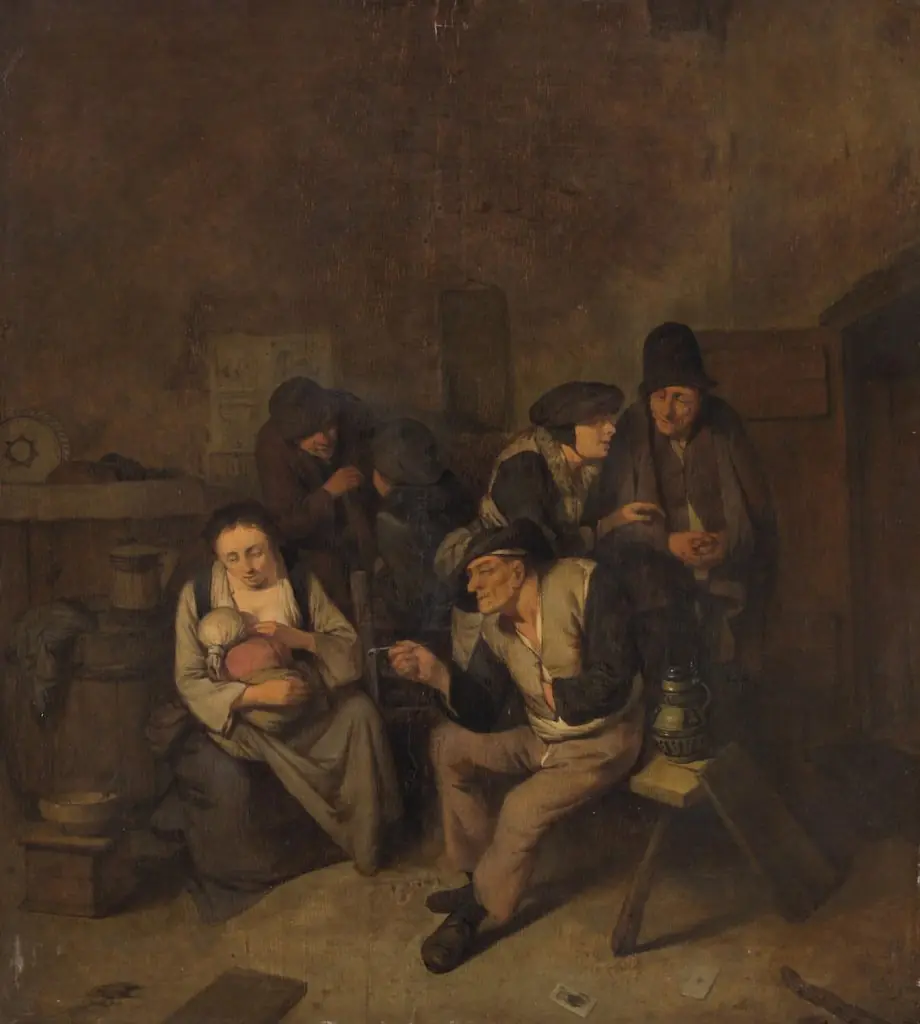
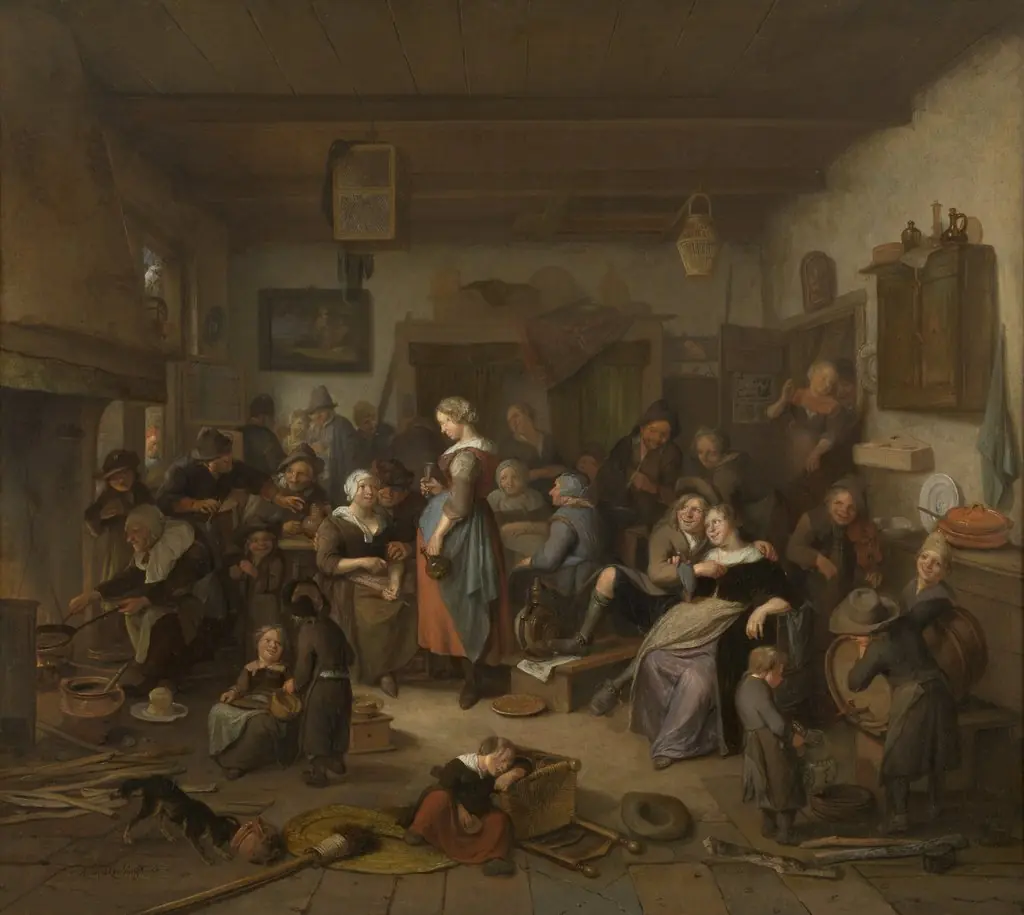
Merry-making in a tavern is an unspecified painting by the Dutch Golden Age artist Cornelis Pietersz Bega. It dates from 1657 and is held in the collection of the National Museum in Warsaw.
About this work
Overview
Painted around 1657 by Cornelis Pietersz Bega, this work captures a moment of informal social interaction in a dimly lit tavern. Bega, trained under Adriaen van Ostade, focused on intimate interior scenes of everyday life. The painting reflects the Dutch Golden Age’s interest in ordinary human behavior, rendered with quiet attention to gesture and atmosphere rather than grand narrative.
Subject & Meaning
A woman in the foreground reads aloud from a sheet of paper, while a man beside her listens intently. Around them, other patrons drink, play instruments, and converse, suggesting a moment of shared amusement. The scene avoids moralizing; instead, it presents leisure as a natural, unembellished part of daily life, emphasizing connection over spectacle.
Technique & Style
Bega employs subtle chiaroscuro to model forms and direct attention toward the central figures. Light falls selectively on faces and hands, contrasting with the surrounding shadows that soften the background. Brushwork is restrained, favoring texture and tone over detail, enhancing the sense of intimacy and quiet realism characteristic of his genre scenes.
History & Provenance
Created in Haarlem during Bega’s mature period, the painting entered the National Museum in Warsaw’s collection in the 20th century. Its journey from the Netherlands to Poland remains undocumented, but its preservation reflects broader European efforts to safeguard Dutch Golden Age works during periods of political upheaval.
Context
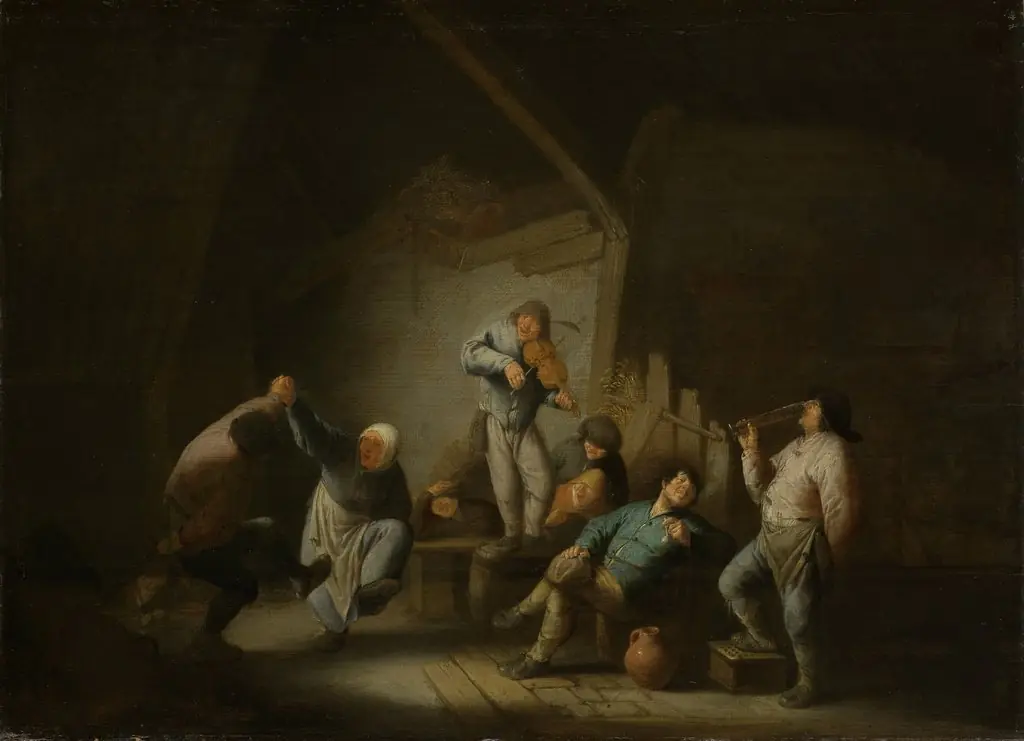
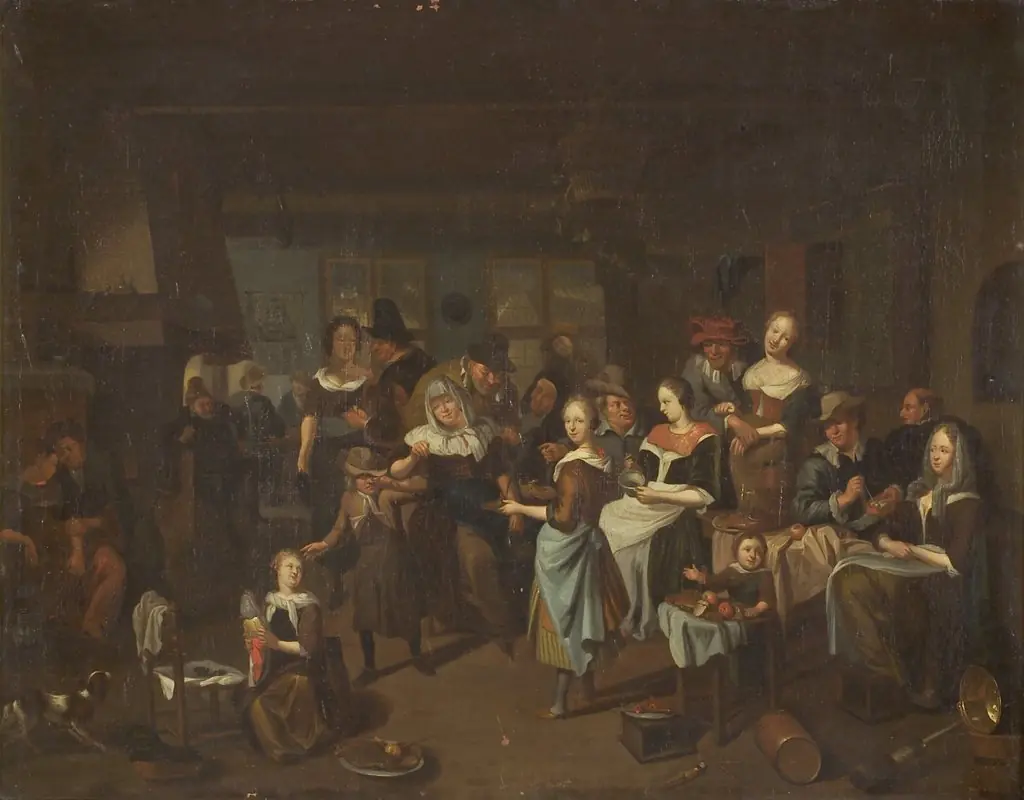
In mid-17th-century Holland, tavern scenes were common in genre painting, reflecting urban life and the rise of a middle-class culture that valued social gatherings. Unlike moralizing depictions of drunkenness, Bega’s work avoids judgment, aligning with a broader trend of neutral observation in Dutch art of the period.
Legacy
Bega’s quiet, observant style influenced later genre painters who favored psychological nuance over theatricality. While less widely known than contemporaries like Rembrandt, his focus on subtle human interaction helped define a quieter strand of Dutch realism, valued for its restraint and emotional sincerity.
Artist & collection
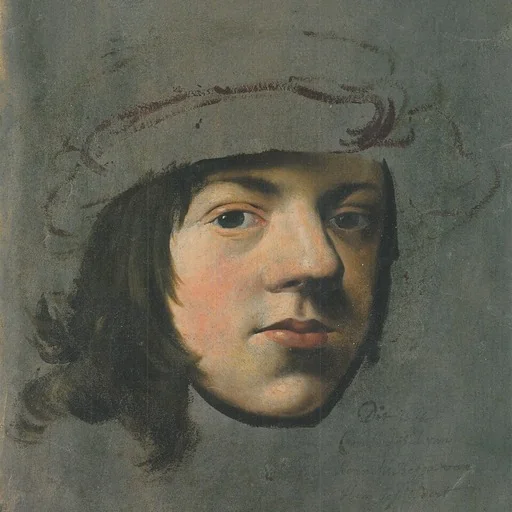
Artist
Cornelis Pietersz Bega, or Cornelis Pietersz Begijn (1631/32 – 27 August 1664) was a Dutch Golden Age painter and engraver.