Artwork
A Draped Female Figure (possibly an Amazon) and Architectural Studies (verso)
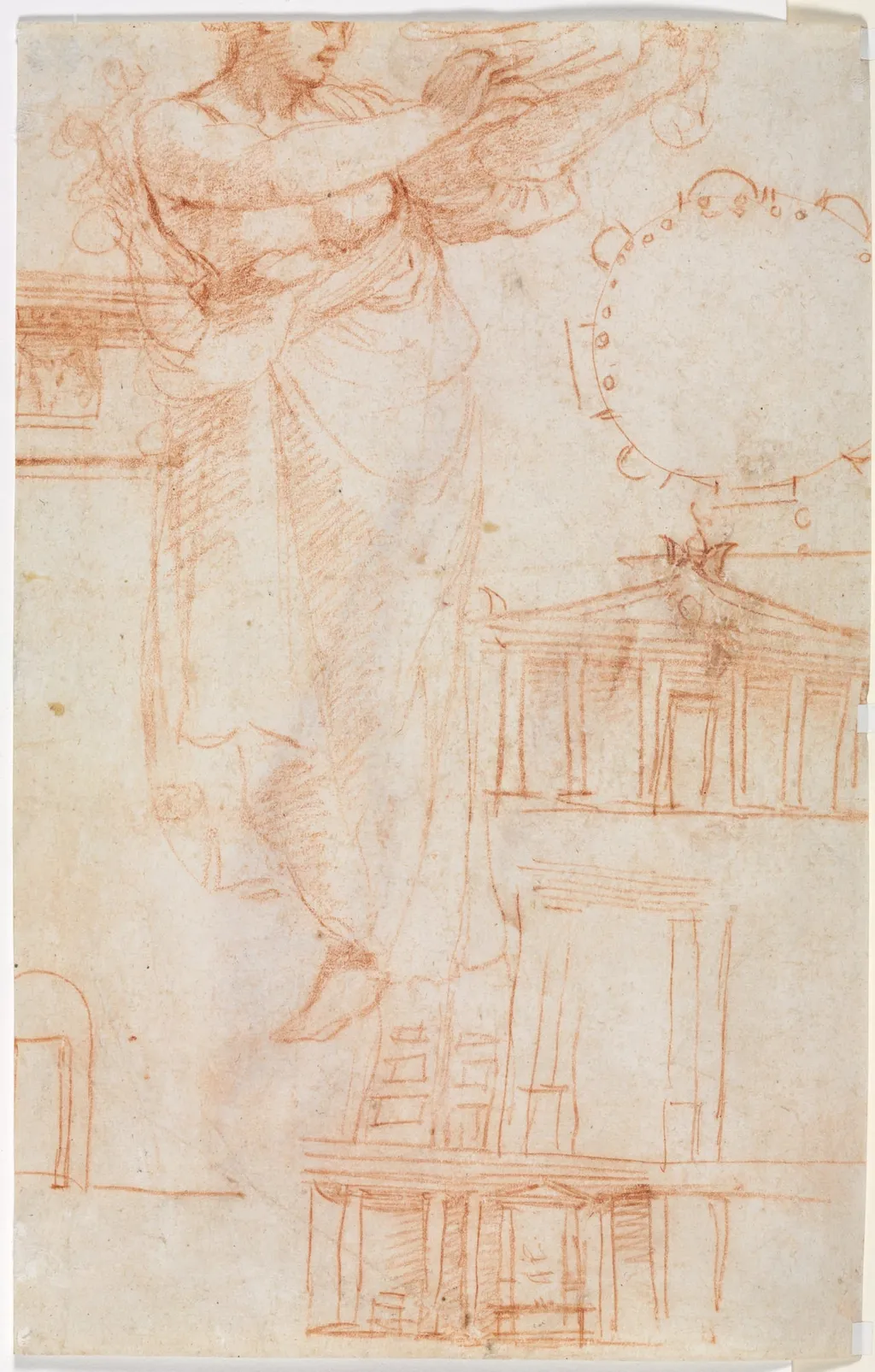
A Draped Female Figure (possibly an Amazon) and Architectural Studies (verso) is a drawing by the Renaissance artist Correggio. It dates from 1525 and is held in the collection of the Cleveland Museum of Art.
About this work
Overview
This drawing on paper features a reclining female figure on the recto, rendered in soft chalk with selective detail, while the verso holds rapid architectural sketches and a second figure bearing a quiver. Once attributed to Raphael due to its classical subject, stylistic analysis now confirms it as the work of Correggio, distinguished by its fluid, suggestive lines and emphasis on tactile form over complete definition.
Subject & Meaning
The ambiguous narrative invites interpretation, balancing physical grace with symbolic resonance, without overtly illustrating a specific mythological moment.
The central figure may represent an Amazon, a mythological warrior woman, or Diana, goddess of the hunt, both associated with archery and strength. Her reclining posture suggests vulnerability or defeat, contrasting with her implied martial identity. The ambiguous narrative invites interpretation, balancing physical grace with symbolic resonance, without overtly illustrating a specific mythological moment.
Technique & Style
Correggio employs chalk with a restrained hand, concentrating tonal modeling on the curve of the leg and foot while leaving other areas lightly sketched or left bare. This selective rendering, akin to sfumato in painting, creates depth through suggestion rather than detail. The loose, flowing contours reflect a focus on organic form and tactile presence, characteristic of his mature drawing practice.
History & Provenance
The drawing was long believed to be by Raphael, likely due to its classical subject and refined line. Later scholarship, comparing its handling to Correggio’s known drawings, identified the distinctive softness and selective emphasis as his hallmark. The attribution shift reflects evolving connoisseurship and a deeper understanding of Correggio’s unique approach to figure study and anatomical suggestion.
Context
Created during the early 16th century, this drawing reflects the Renaissance fascination with classical antiquity and the human form. Correggio, working in northern Italy, engaged with mythological themes common among artists studying ancient sculpture and literature. His focus on partial forms and implied movement aligns with contemporary explorations of anatomy and expressive gesture beyond rigid idealism.
Legacy
The drawing exemplifies how Renaissance draftsmen used study sheets to explore form, myth, and architecture in tandem. Correggio’s method of implying volume through minimal means influenced later artists seeking emotional resonance over literal description. Its dual-sided composition also illustrates the practical, iterative nature of artistic preparation in this period.
Artist & collection

Artist
Antonio Allegri da Correggio (August 1489 – 5 March 1534), usually known as just Correggio (, also UK: , US: , Italian: ), was an Italian Renaissance painter who was the foremost painter of the Parma school of the High…

 St. Jerome in His Study
![Woman in Toga [verso], by Hubert Robert](https://artifactworldgallery.com/img/hubert-robert--woman-in-toga-verso--1c4b04982206f60e-w320.webp) Woman in Toga [verso]
Woman in Toga [verso] A Baldachin with a Painting of the Annunciation
 A Decorative Sculpture with a Woman Seen from Behind
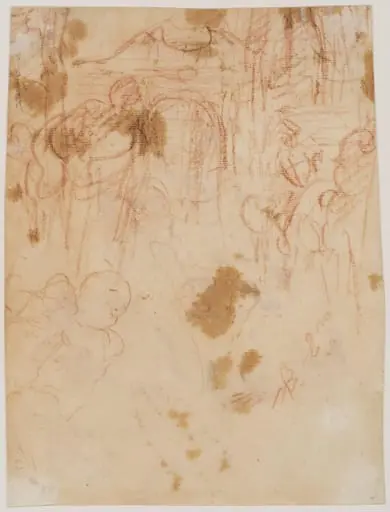 Recto: Rinaldo and Armida; verso: Study for a gateway
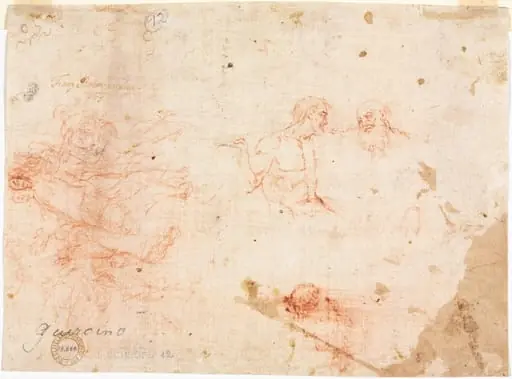 Sketch of Two Men and Other Various Figures (verso)
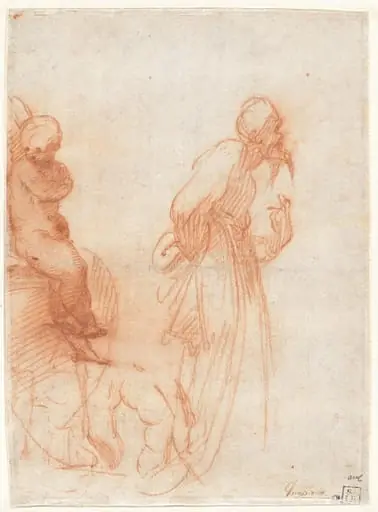 a) Studies of Figures and a Hand (recto); b) Studies of a Bull (verso)
![Palatial Mantelpiece with a Scene of Ancient Sacrifice [recto], by Austrian 16th Century](https://artifactworldgallery.com/img/austrian-16th-century--palatial-mantelpiece-with-a-scene-of-ancient-sacrifice-recto--6818e7e0eb258b13-w320.webp) Palatial Mantelpiece with a Scene of Ancient Sacrifice [recto]
Palatial Mantelpiece with a Scene of Ancient Sacrifice [recto]![Study of Two Putti and a Draped Arm [verso], by Giovanni Battista Cipriani](https://artifactworldgallery.com/img/giovanni-battista-cipriani--study-of-two-putti-and-a-draped-arm-verso--47f39e682d8c982d-w320.webp) Study of Two Putti and a Draped Arm [verso]
Study of Two Putti and a Draped Arm [verso]![Prudence [verso], by Giovanni Alberti](https://artifactworldgallery.com/img/giovanni-alberti--prudence-verso--8518f1793a33df97-w320.webp) Prudence [verso]
Prudence [verso]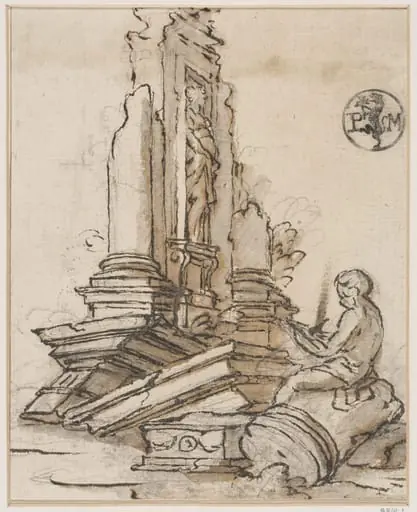 A boy writing or drawing, seated on a fallen column before a ruined niche containing a sculptured figure of a woman
 A Standing Male Figure, Facing Left