Artwork
Easeby Abbey, Yorkshire
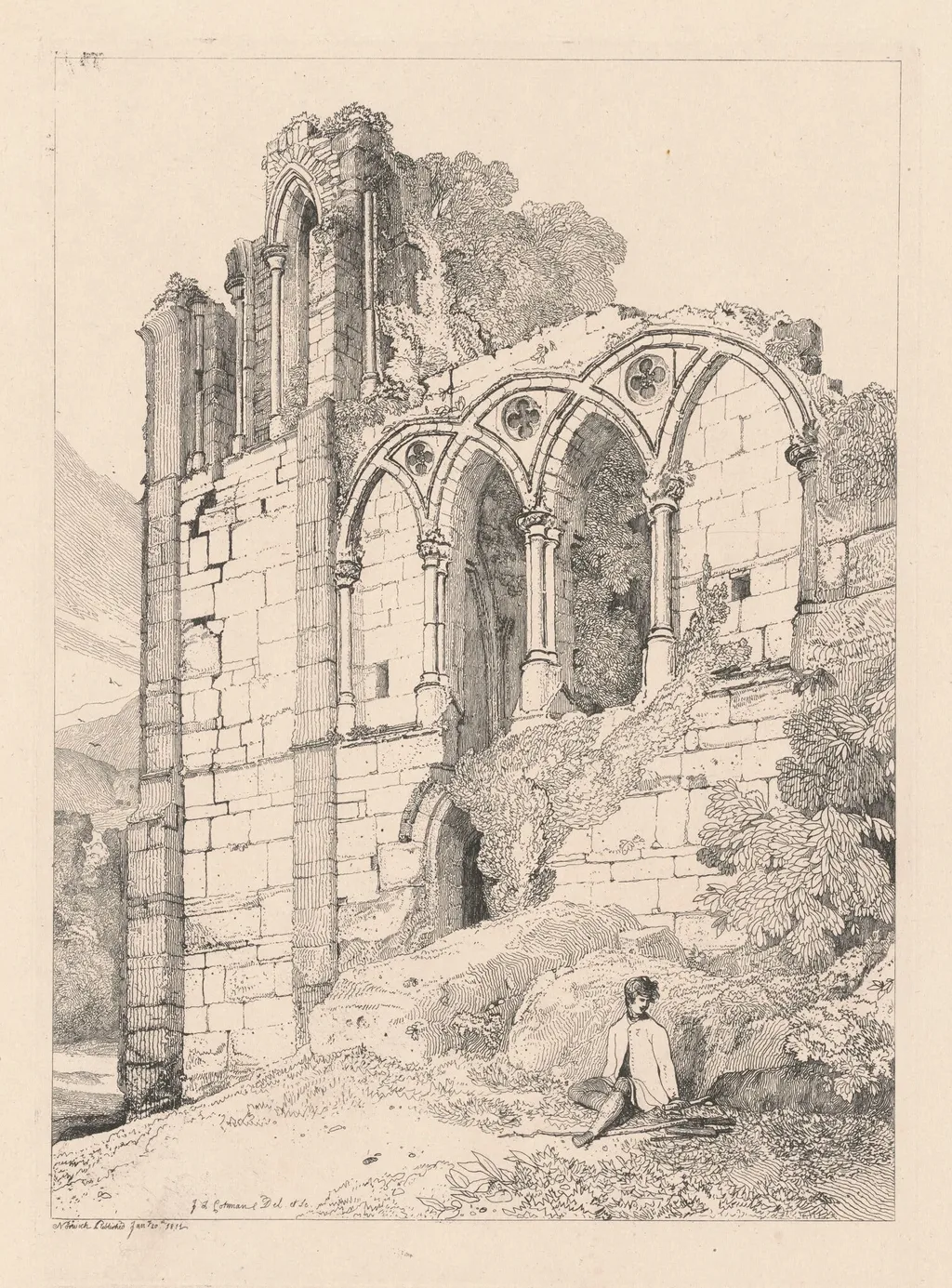
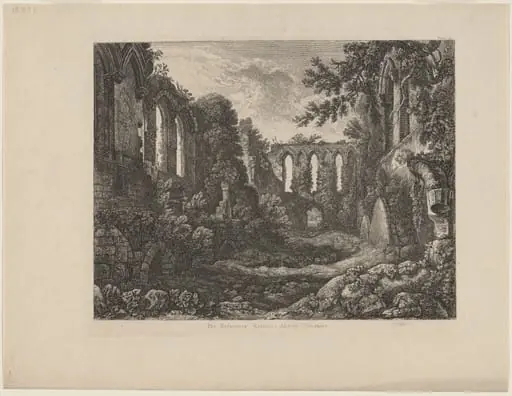
Easeby Abbey, Yorkshire is an ink print by the Romanticist artist John Sell Cotman. It dates from 1811 and is held in the collection of the National Gallery of Art.
About this work
The drawing is mostly black and white, with careful lines showing every crack and shadow.
This sketch shows a crumbling stone building with tall arches and broken walls. A lone figure sits on the ground in the foreground, looking small next to the ruins. The drawing is mostly black and white, with careful lines showing every crack and shadow.
The artist focused on how nature is slowly taking over the old stones. This was made in 1811, when artists often drew ruins to show history fading away.
Next, look up etching to see how this technique works.
Overview
Easeby Abbey, Yorkshire is an etching created by John Sell Cotman in 1811. It is a print that showcases the artist's skill in capturing the textures and details of a crumbling landscape.
Subject & Meaning
The etching depicts the ruins of Easeby Abbey, with a lone figure in the foreground. The work highlights the contrast between nature's reclamation and the remnants of human construction, a theme common in Cotman's architectural and landscape subjects.
Technique & Style
The print is characterized by careful, detailed lines that convey the cracks and shadows on the abbey's stones. Executed in black and white, the etching demonstrates Cotman's proficiency in the medium, which involves etching a design onto a metal plate with acid.
Context
Created in 1811, Easeby Abbey, Yorkshire reflects a period when artists often used ruins as subjects to evoke a sense of history and its passage. Cotman's work fits within this tradition, while also showcasing his individual focus on landscape and architecture.
Artist & collection
Artist
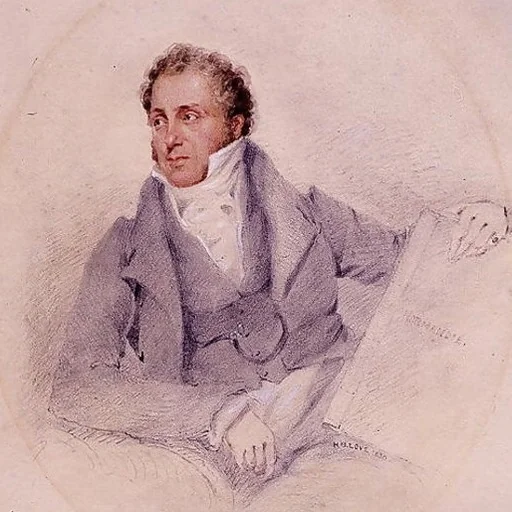
John Sell Cotman (16 May 1782 – 24 July 1842) was an English marine and landscape painter, etcher, illustrator, and a leading member of the Norwich School of painters.