Artwork
Croyland Abbey
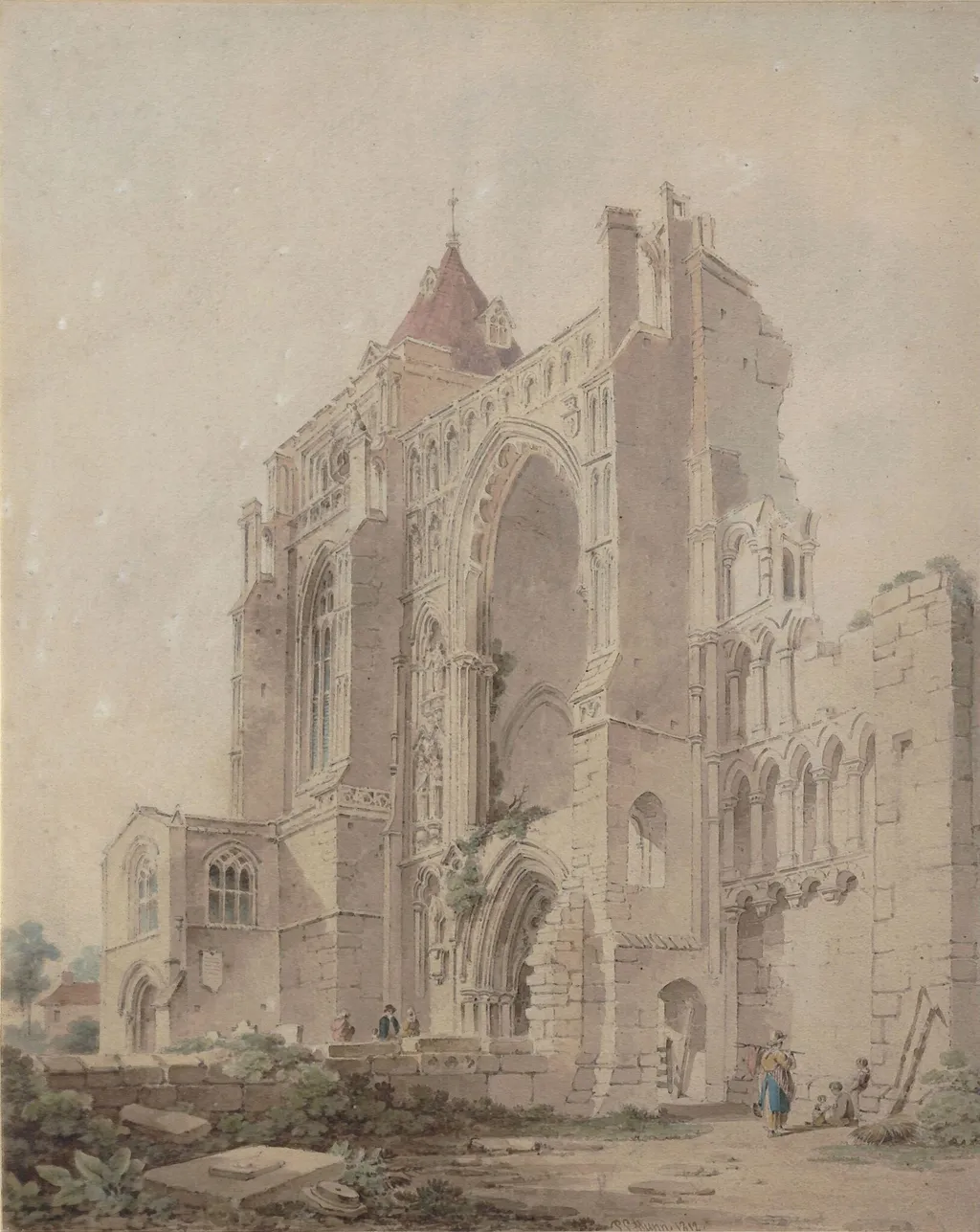
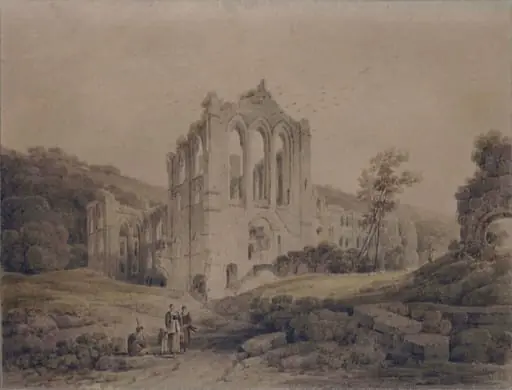
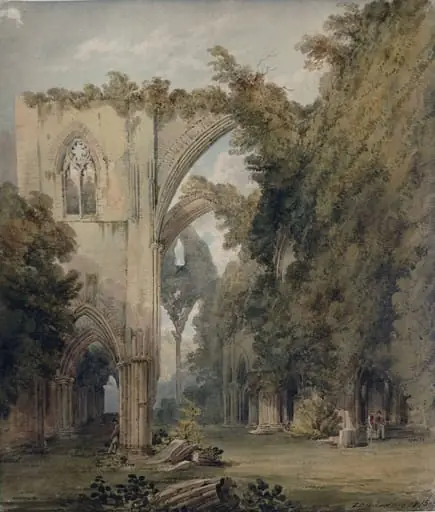
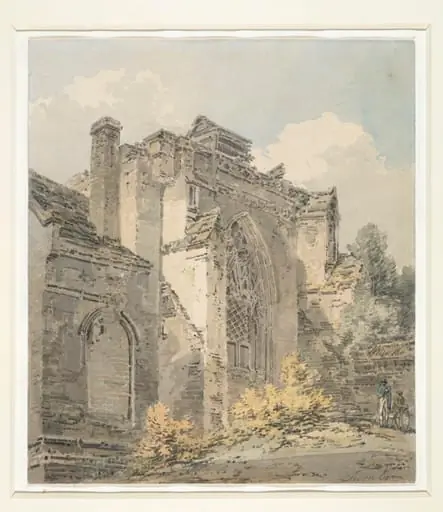
Croyland Abbey is a watercolor work on paper by the British Romanticist artist Paul Sandby Munn. It dates from 1812 and is held in the collection of the Victoria and Albert Museum.
About this work
Overview
Its subdued palette and attention to atmospheric detail reflect a growing interest in historical landscapes during the period.
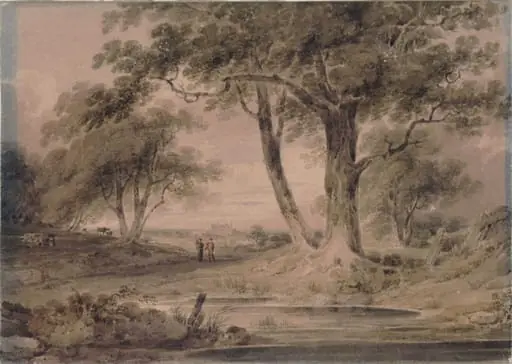
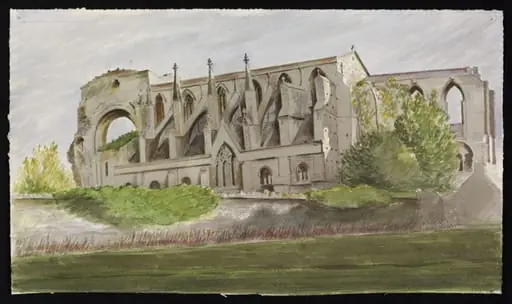
Paul Sandby Munn’s 1812 watercolor depicts the ruins of Croyland Abbey, a medieval religious site in Lincolnshire. Rendered in delicate washes, the work captures the quiet decay of the structure against a soft, pale sky. The painting belongs to the collection of the Victoria and Albert Museum, where it is preserved as an example of early 19th-century topographical watercolor practice. Its subdued palette and attention to atmospheric detail reflect a growing interest in historical landscapes during the period.
Subject & Meaning
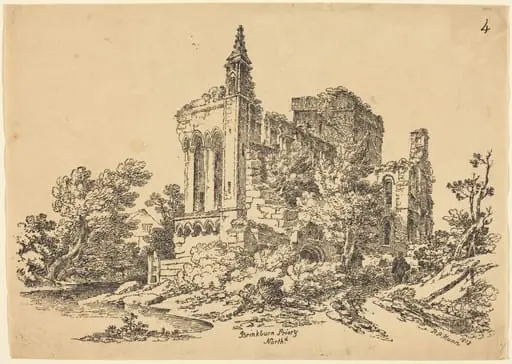
The painting presents Croyland Abbey not as a functioning church but as a relic of the past. Crumbling walls, overgrown ivy, and fragmented arches suggest the passage of time and the decline of monastic life after the Dissolution. Figures scattered near the entrance and along the ground imply quiet contemplation rather than activity, reinforcing a mood of stillness and reverence for what remains. The scene invites reflection on impermanence and the weight of history.
Technique & Style
Munn employed transparent watercolor washes to model the weathered stone surfaces, using subtle gradations to suggest light falling across uneven textures. The delicate rendering of glass in the windows and the fine lines of climbing ivy demonstrate precision without ornamentation. The composition avoids dramatic contrast, favoring a muted tonality that enhances the sense of quiet decay. This restrained approach aligns with contemporary British watercolor traditions focused on observational accuracy and atmospheric nuance.
History & Provenance
Croyland Abbey, founded in the 8th century, fell into ruin after its dissolution under Henry VIII. By the early 1800s, it had become a subject for antiquarian artists drawn to its historical resonance. Sandby Munn painted it in 1812, likely during a tour of English ecclesiastical ruins. The work entered the Victoria and Albert Museum’s collection through its long-standing acquisition of British watercolors, preserving it as a record of both architectural heritage and artistic practice of the era.
Context
In the early 19th century, British artists increasingly turned to ruins as subjects, influenced by Romantic ideals that valued emotion, history, and nature’s reclamation of human works. Croyland Abbey fits within this trend, where decay was not merely documented but imbued with quiet dignity. Unlike grand historical narratives, this work emphasizes solitude and the passage of time, reflecting a cultural shift toward introspective engagement with the past.
Legacy
Sandby Munn’s watercolor contributes to a broader body of work that shaped how British audiences perceived medieval heritage. Its unembellished realism helped establish watercolor as a serious medium for historical documentation, distinct from idealized oil paintings. Though not widely exhibited today, it remains a representative example of how artists of the period used landscape to meditate on time, loss, and the enduring presence of the past.
Artist & collection