Artwork
Vivary Park, Taunton
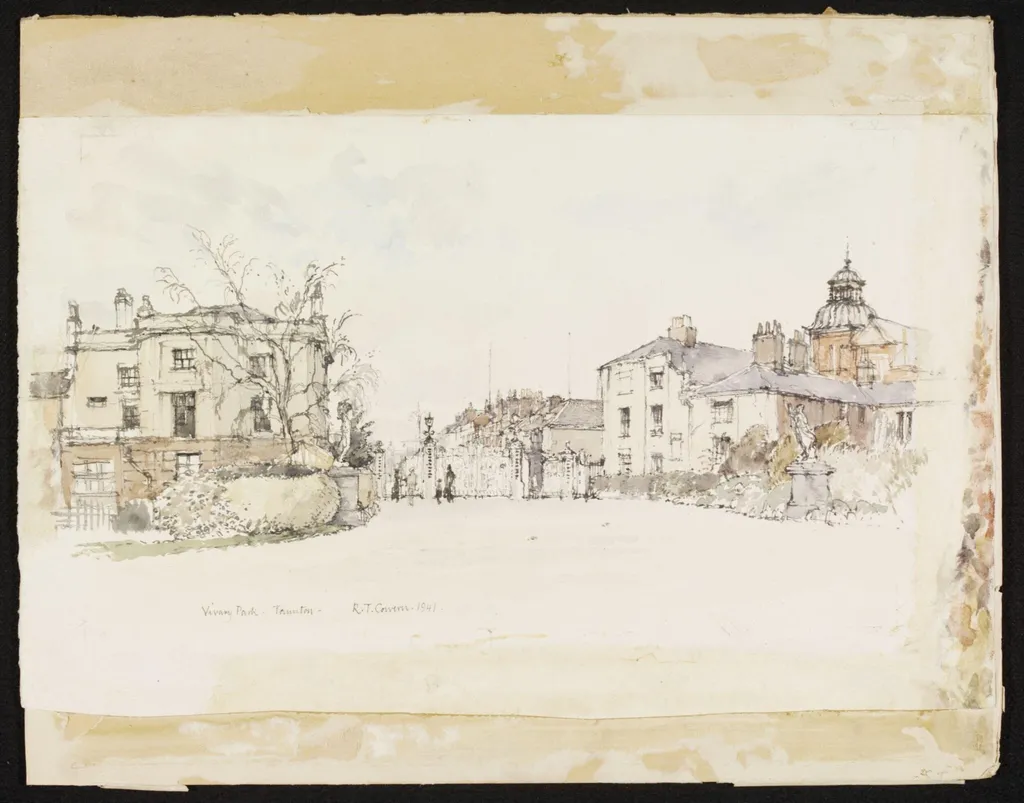
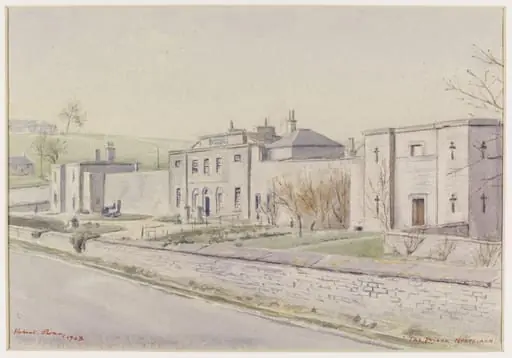
Vivary Park, Taunton is a watercolor work on paper by Raymond Teague Cowern. It dates from 1941 and is held in the collection of the Victoria and Albert Museum.
About this work
A few people walk down the middle, and the colors are mostly soft browns, grays, and pale blues.
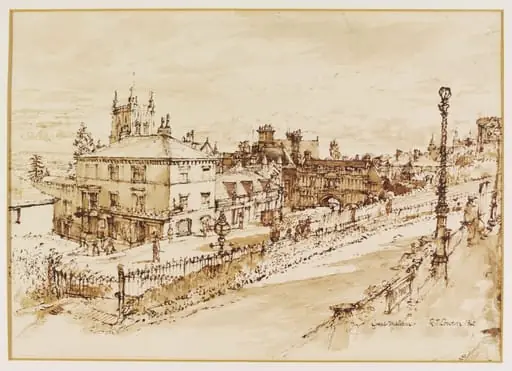
This sketch shows a quiet street with two big houses and a church tower in the distance. The buildings have simple shapes—flat roofs, small windows, and bare trees in front. A few people walk down the middle, and the colors are mostly soft browns, grays, and pale blues.
The artist signed it "R.T. Cowern, 1941," so it’s a quick watercolor, not a polished painting. The loose lines make it feel like a snapshot of a moment, not a finished scene.
If you like this style, check out the Victoria and Albert Museum for more sketches like this.
Overview
Created in 1941, this watercolour by Raymond Teague Cowern captures a quiet corner of Vivary Park in Taunton. It was produced as part of the 'Recording Britain' project, a government-backed effort to preserve visual records of the English landscape during wartime. The work reflects a deliberate focus on ordinary, unremarkable scenes, valuing everyday topography over grandeur. Cowern’s signature and date confirm its origin as a direct, on-site observation.
Subject & Meaning
The scene shows the park’s entrance with two modest houses and a distant church tower, framed by bare winter trees. The presence of a few pedestrians suggests routine daily life, unaltered by the war’s disruptions. The composition avoids drama, instead emphasizing quiet continuity. This understated view of a local landmark was intended to affirm cultural identity through familiar, unassuming places at risk of being lost to change or conflict.
Technique & Style
Cowern employed loose, fluid watercolour techniques, using soft washes of gray, brown, and pale blue to suggest form without detail. The buildings are rendered with minimal outlines, their flat roofs and small windows rendered as geometric shapes. Bare branches and distant structures are hinted at rather than defined, creating a sense of immediacy. The sketch-like quality reflects a focus on rapid documentation over finish, characteristic of the project’s observational goals.
History & Provenance
The work was produced between 1940 and 1943 as part of the 'Recording Britain' initiative, which commissioned 97 artists to document regional landscapes threatened by modernization or war. Over 1,500 works were collected, many later acquired by the Victoria and Albert Museum. Cowern’s watercolour entered this national archive as a representative example of provincial English life, preserved for its historical rather than aesthetic value.
Context
During the early 1940s, Britain faced widespread disruption, and cultural institutions sought to safeguard visual records of the nation’s character. The 'Recording Britain' project responded to fears of loss—of architecture, rural life, and local identity. Artists like Cowern were sent to towns and villages, often working quickly under difficult conditions. Their collective output formed a visual archive meant to endure beyond the war’s uncertainties.
Legacy
Cowern’s watercolour remains part of a larger archive held by the Victoria and Albert Museum, where it contributes to ongoing studies of wartime British culture. Its unpolished, observational nature has influenced later documentary practices in art and photography. Rather than celebrated for technical brilliance, it endures as a quiet testament to the value of recording the ordinary during times of upheaval.
Artist & collection
Artist
Raymond Teague Cowern painted quiet watercolors of mid-century Worcestershire life during the Second World War.

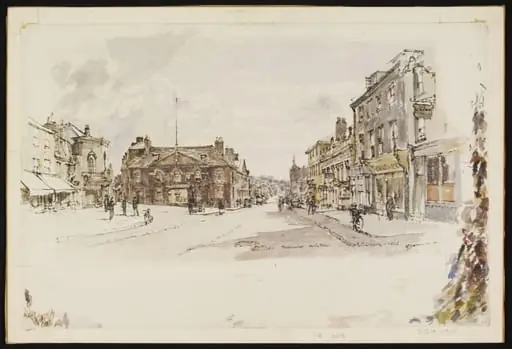 High Street and Rutland Arms, Newmarket
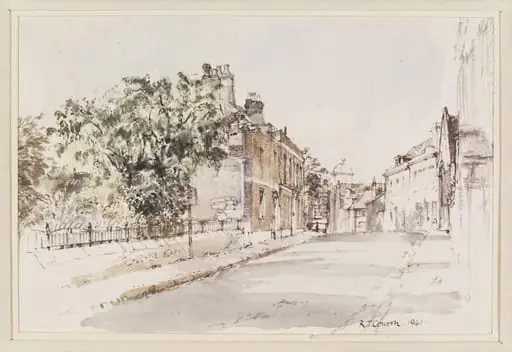 St. Thomas Street, Winchester
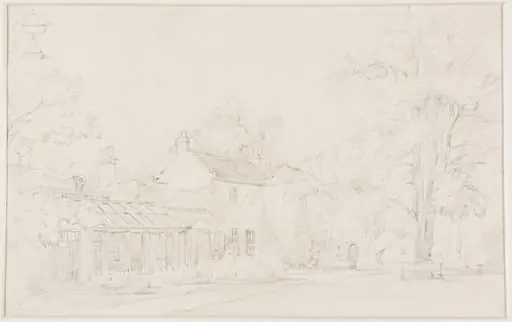 A house, with trees
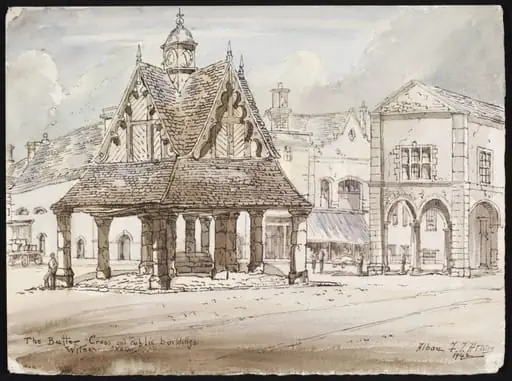 The Butter Cross and Public Buildings, Witney
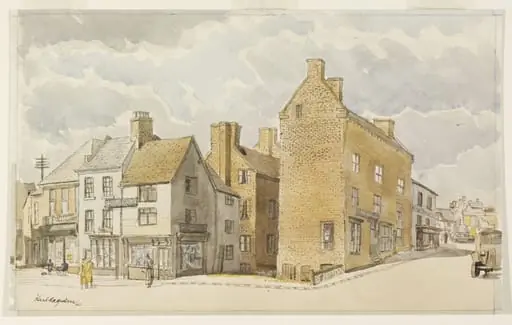 Ashbourne
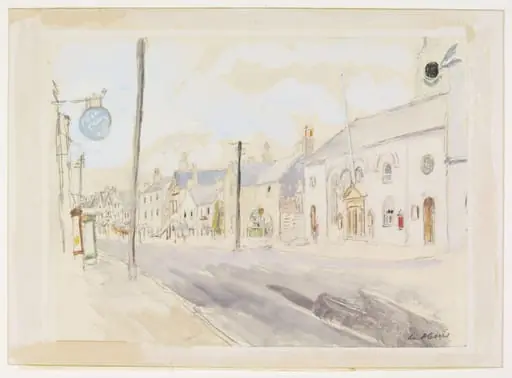 Cowbridge, Glamorganshire
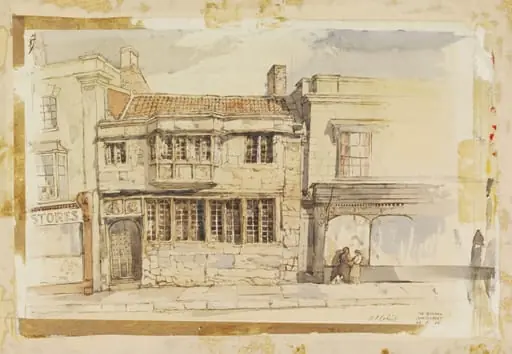 The Tribunal, Glastonbury
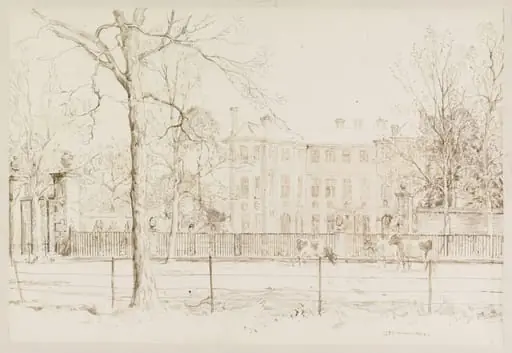 Ham House
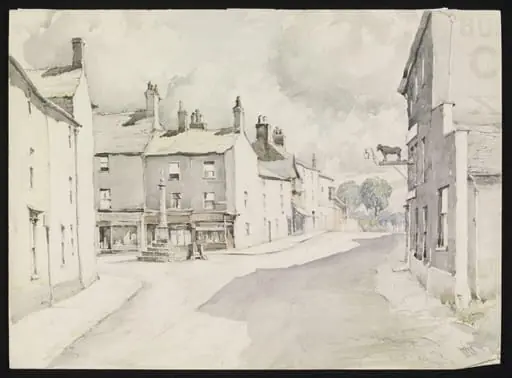 Market Place, Poulton-le-fylde, near Blackpool
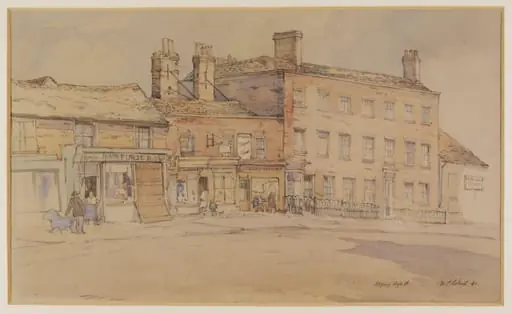 Epping High Street
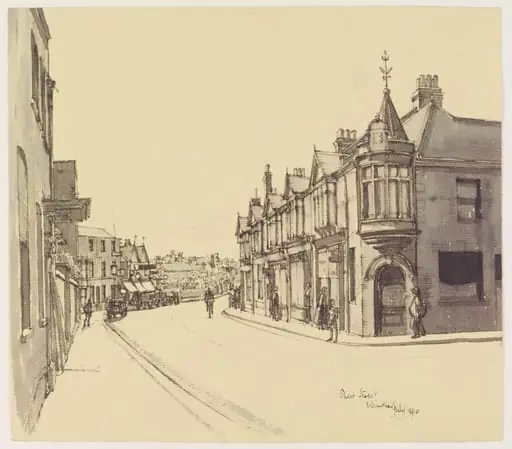 Sheet Street, Windsor
 The Old Prison, Northleach