Artwork
Ye Old Talbot Hotel, Ledbury
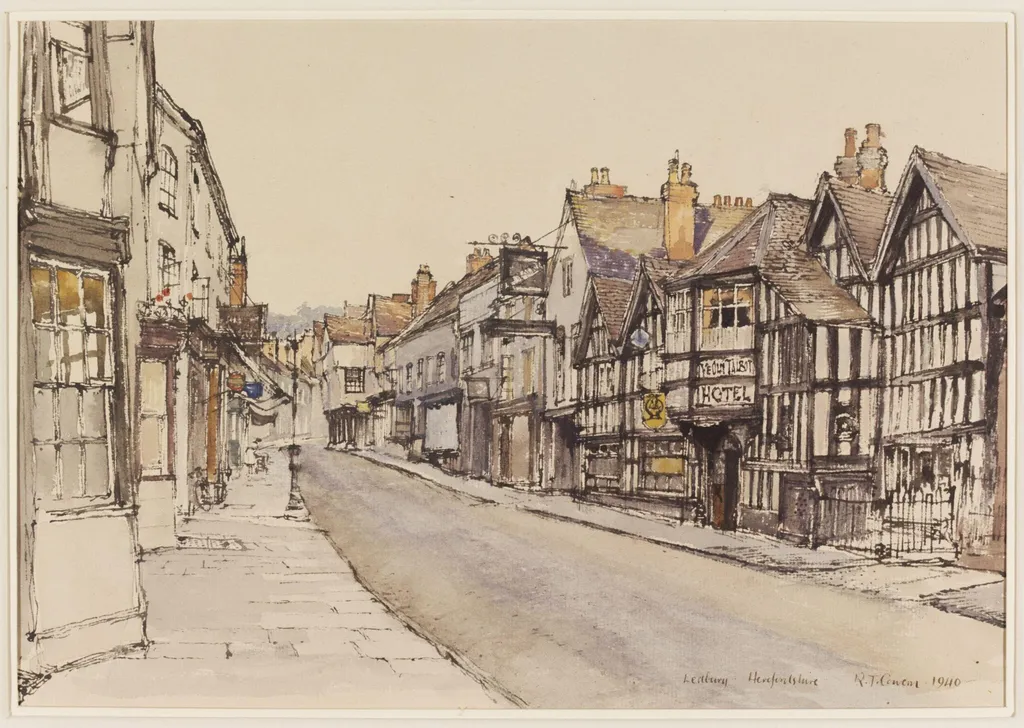
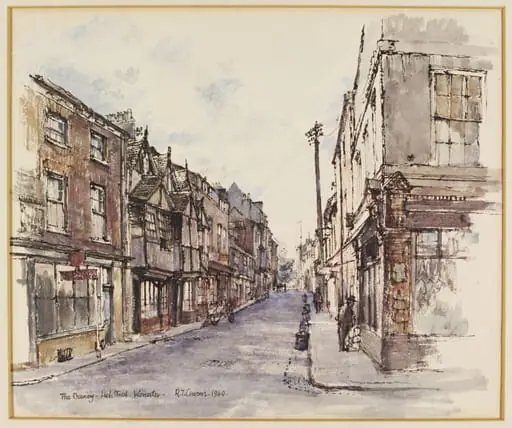
Ye Old Talbot Hotel, Ledbury is a watercolor work on paper by Raymond Teague Cowern. It dates from 1940 and is held in the collection of the Victoria and Albert Museum.
About this work
The artist painted this in 1940, capturing a small town that still looks like it’s from a different time.
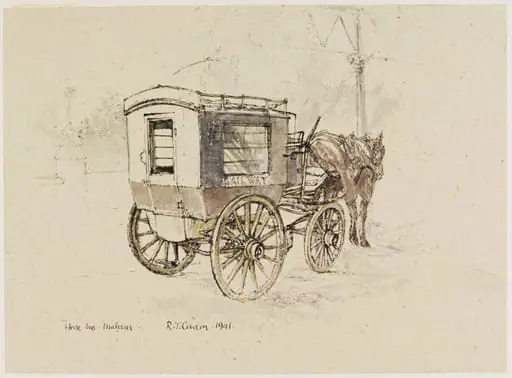
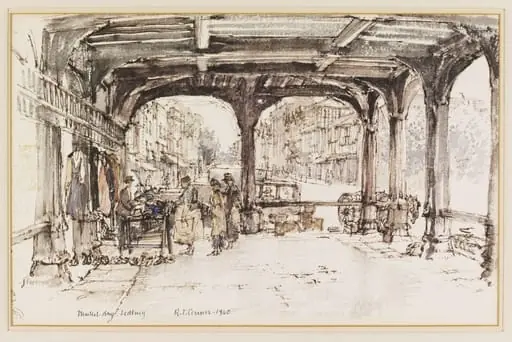
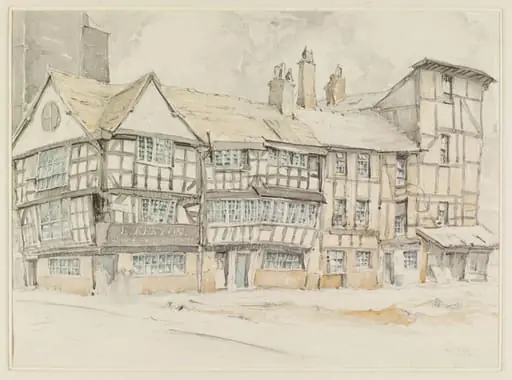
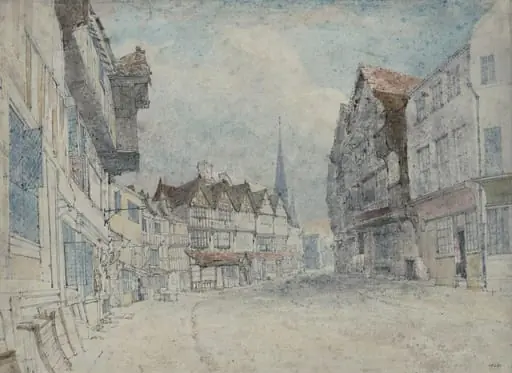
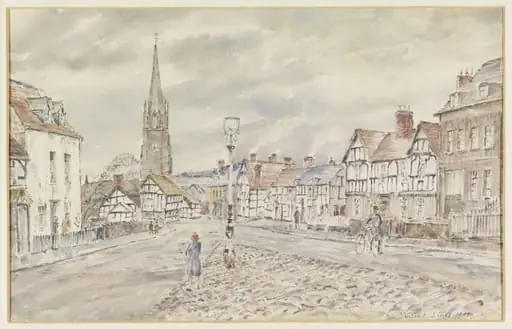
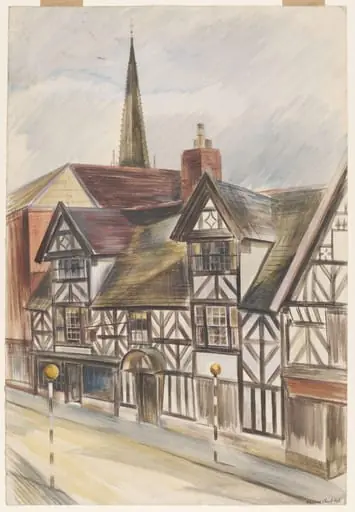
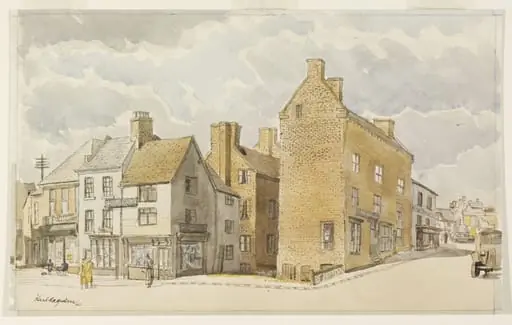
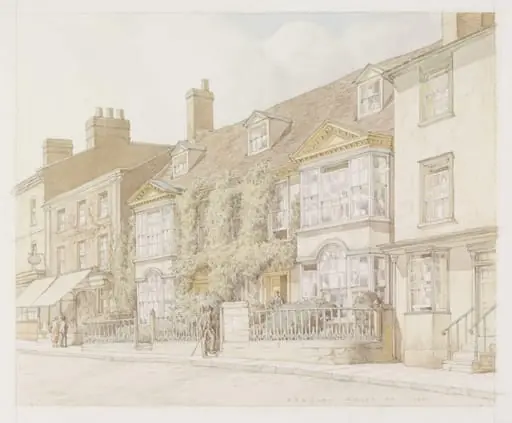
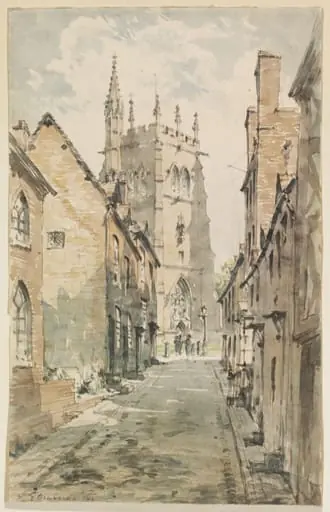
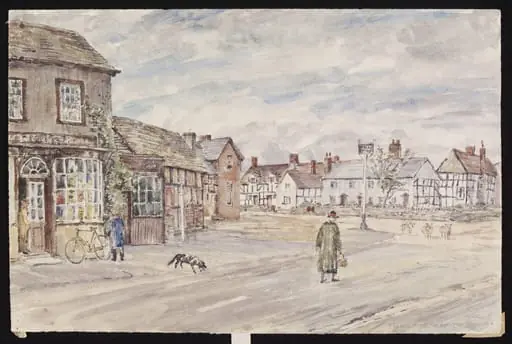
This painting shows a quiet street lined with old, half-timbered buildings. The wood frames are dark against light walls, and the roofs slope steeply. A sign on one building reads "Ye Old Talbot Hotel," and a few flags hang above the doorways. The street curves gently, with cobblestones underfoot and a few shadows stretching across the pavement.
The artist painted this in 1940, capturing a small town that still looks like it’s from a different time. The loose, sketchy style makes it feel quick and alive, like a snapshot rather than a polished scene.
Check out the Victoria and Albert Museum to see more works like this in person.
Overview
Raymond Teague Cowern painted this watercolour in 1940 as part of the Recording Britain project, a government-backed initiative to preserve visual records of vernacular architecture before wartime destruction or modernization altered them. The work captures a quiet street in Ledbury, Herefordshire, with attention to the textures and rhythms of historic buildings. Its modest scale and unembellished realism reflect the project’s documentary purpose rather than aesthetic grandeur.
Subject & Meaning
The painting centers on the Ye Old Talbot Hotel, a timber-framed building with a projecting bay window and visible black-and-white patterning. Surrounding structures, similarly aged and irregular, suggest a streetscape unchanged for centuries. Flags above doorways and the handwritten sign reinforce the building’s identity as a longstanding local institution. The scene conveys a sense of continuity, quietly resisting the disruption of war through its steadfast, unaltered appearance.
Technique & Style
Cowern employed loose, fluid watercolour washes to suggest texture and light without rigid definition. Dark timber frames contrast with pale plaster walls, while soft shadows stretch across cobblestones, implying late afternoon sun. The brushwork is economical yet evocative—roofs slope with minimal strokes, windows are suggested rather than detailed. This sketch-like approach lends immediacy, as if the scene was observed and recorded in a single sitting.
History & Provenance
Created in 1940, the painting was commissioned by the Recording Britain project, overseen by Sir Kenneth Clark. It was acquired by the Victoria and Albert Museum as part of the project’s archive, which collected over 1,500 works by artists documenting at-risk sites. The painting remained in the museum’s collection, preserved as a record of pre-war English townscape rather than as a standalone artistic achievement.
Context
During the early years of the Second World War, Britain faced widespread threat of aerial bombardment and rapid urban change. The Recording Britain project emerged as a cultural safeguard, mobilizing artists to record vernacular architecture—market towns, inns, churches, and cottages—that might vanish. Ledbury, with its medieval street plan and timbered buildings, epitomized the quiet, enduring character the project sought to preserve.
Legacy
The painting endures as a quiet testament to a moment when Britain’s architectural heritage was perceived as vulnerable. Alongside hundreds of other works from the Recording Britain project, it provides a visual archive of pre-war townscape, valued for its historical accuracy rather than artistic innovation. Today, it remains accessible in the Victoria and Albert Museum’s collection, offering insight into a nation’s effort to document its own past under threat.
Artist & collection
Artist
Raymond Teague Cowern painted quiet watercolors of mid-century Worcestershire life during the Second World War.