Artwork
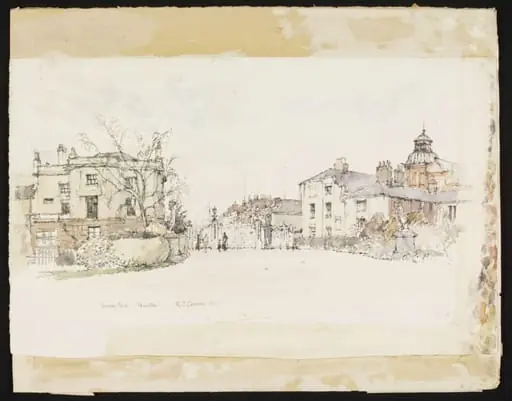
Priory Gateway, Great Malvern
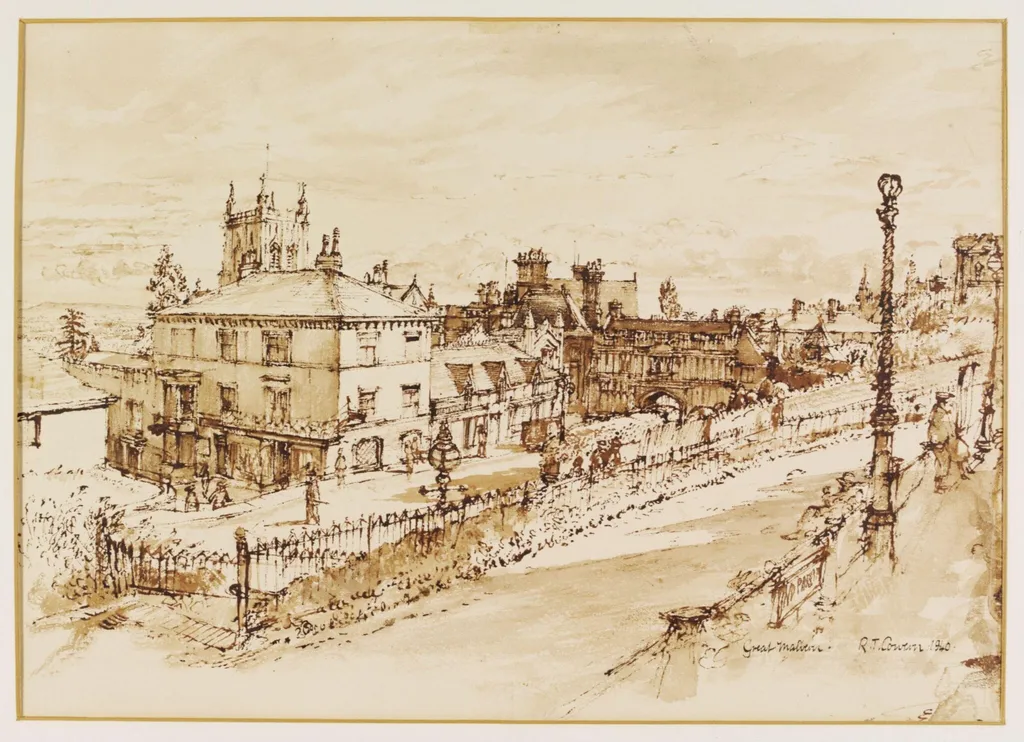
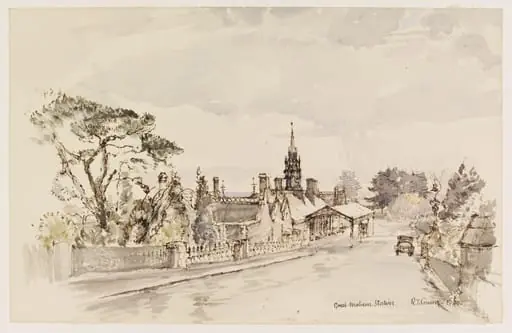
Priory Gateway, Great Malvern is a watercolor work on paper by Raymond Teague Cowern. It dates from 1940 and is held in the collection of the Victoria and Albert Museum.
About this work
Overview
Created in 1940, this watercolour by Raymond Teague Cowern is one of over 1,500 works produced for the Recording Britain project.
Created in 1940, this watercolour by Raymond Teague Cowern is one of over 1,500 works produced for the Recording Britain project. Commissioned during wartime to preserve visual records of England’s architectural heritage, the piece was funded by the Pilgrim Trust and coordinated by Sir Kenneth Clark. It captures a quiet corner of Great Malvern with quiet precision, reflecting the project’s mission to document vulnerable landscapes before they could be altered or lost.
Subject & Meaning
The scene depicts the gateway to Great Malvern Priory, framed by stone buildings and a low fence along a pedestrian path. Figures and horses move subtly through the space, suggesting everyday life amid historic architecture. The composition avoids drama, instead emphasizing quiet endurance. The gateway, a threshold between public street and sacred ground, becomes a quiet symbol of continuity during a time of national uncertainty.
Technique & Style
Cowern employed loose, light washes of brown and gray to suggest texture and form without heavy detail. The architecture—arched doorways, tower profiles, and weathered stonework—is rendered with suggestive brushwork rather than precise lines. The watercolour’s transparency allows the paper’s whiteness to suggest light, while the sketchy quality implies immediacy, as if drawn on-site during a brief observation.
History & Provenance
The work was produced under the Recording Britain initiative, launched in 1939 to record at-risk sites ahead of potential wartime destruction. It entered the Victoria and Albert Museum’s collection alongside other contributions from the project. The piece remained largely unseen in public until the 1990s, when the full archive was systematically catalogued and exhibited, reaffirming its role as a historical document rather than a decorative image.
Context
During the Second World War, Britain faced threats to its cultural and physical landscape from bombing and rapid modernization. Recording Britain emerged as a response to these fears, mobilizing artists to record vernacular architecture, rural scenes, and historic landmarks. Cowern’s work aligns with others in the project that favored understated realism over romanticism, prioritizing accuracy and quiet observation over emotional flourish.
Legacy
The Recording Britain collection endures as a vital archive of mid-20th-century English topography. Cowern’s watercolour contributes to a broader understanding of how artists responded to wartime anxiety through documentation rather than propaganda. Today, it remains a reference for historians and conservators studying pre-war architecture, valued for its unembellished record of a place at a moment of transition.
Artist & collection
Artist
Raymond Teague Cowern painted quiet watercolors of mid-century Worcestershire life during the Second World War.

 Untitled
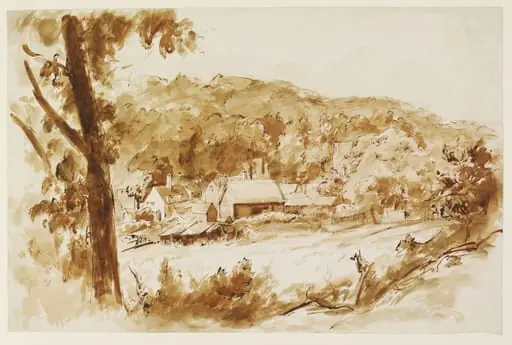 Turville Village
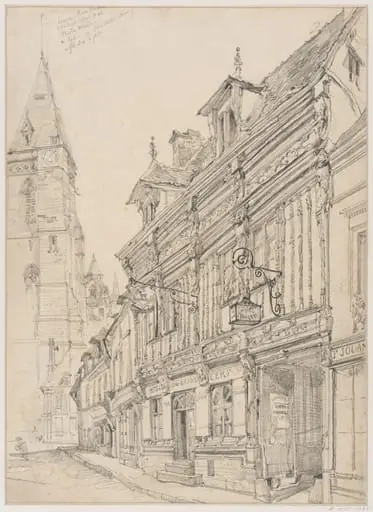 Hôtel du Grand Cerf, Les Andelys
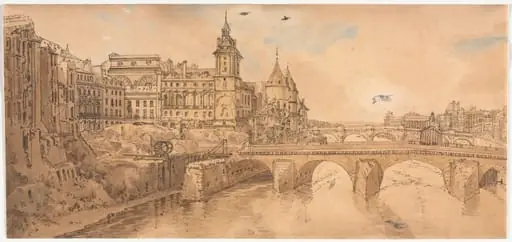 A Selection of Twenty of the Most Picturesque Views in Paris: View of Pont au Change, the City Theatre, Pont Neuf, Conciergerie Prison, and taken from Pont Notre Dame
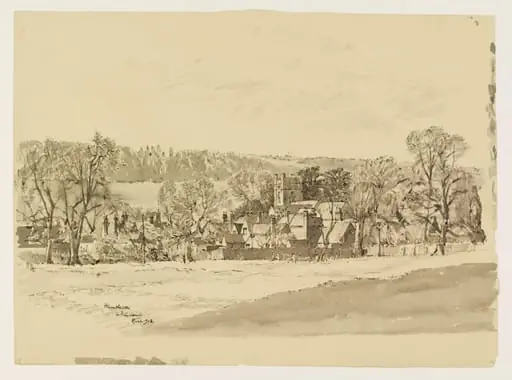 Hambledon
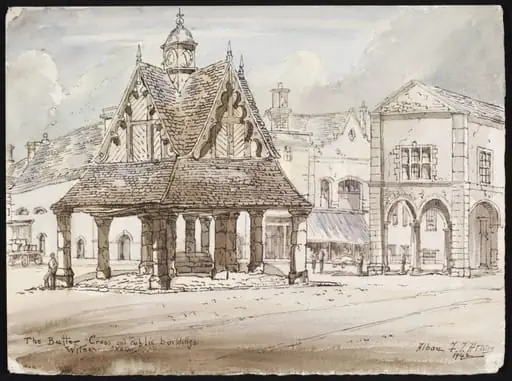 The Butter Cross and Public Buildings, Witney
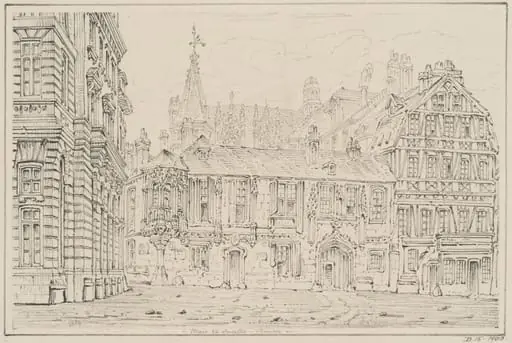 Place de la Pucelle in Rouen
 Vivary Park, Taunton
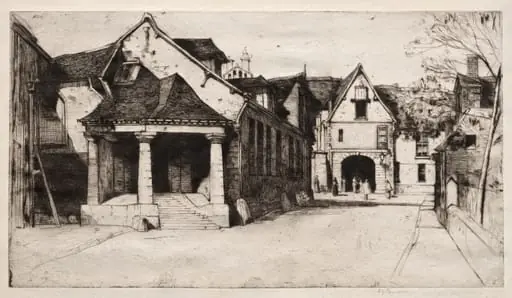 Old Museum, Beauvais
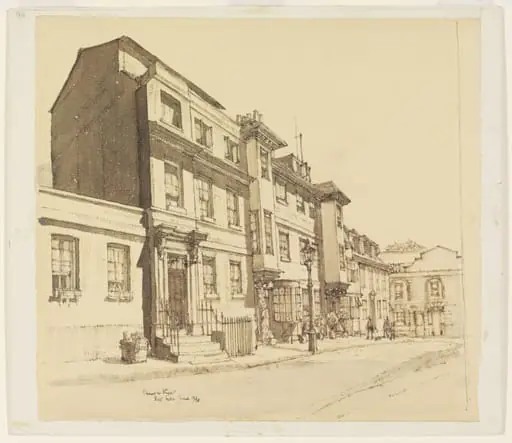 Church Street, (east side) Windsor