Artwork
In the Gardens of the Villa Pamfili, Rome
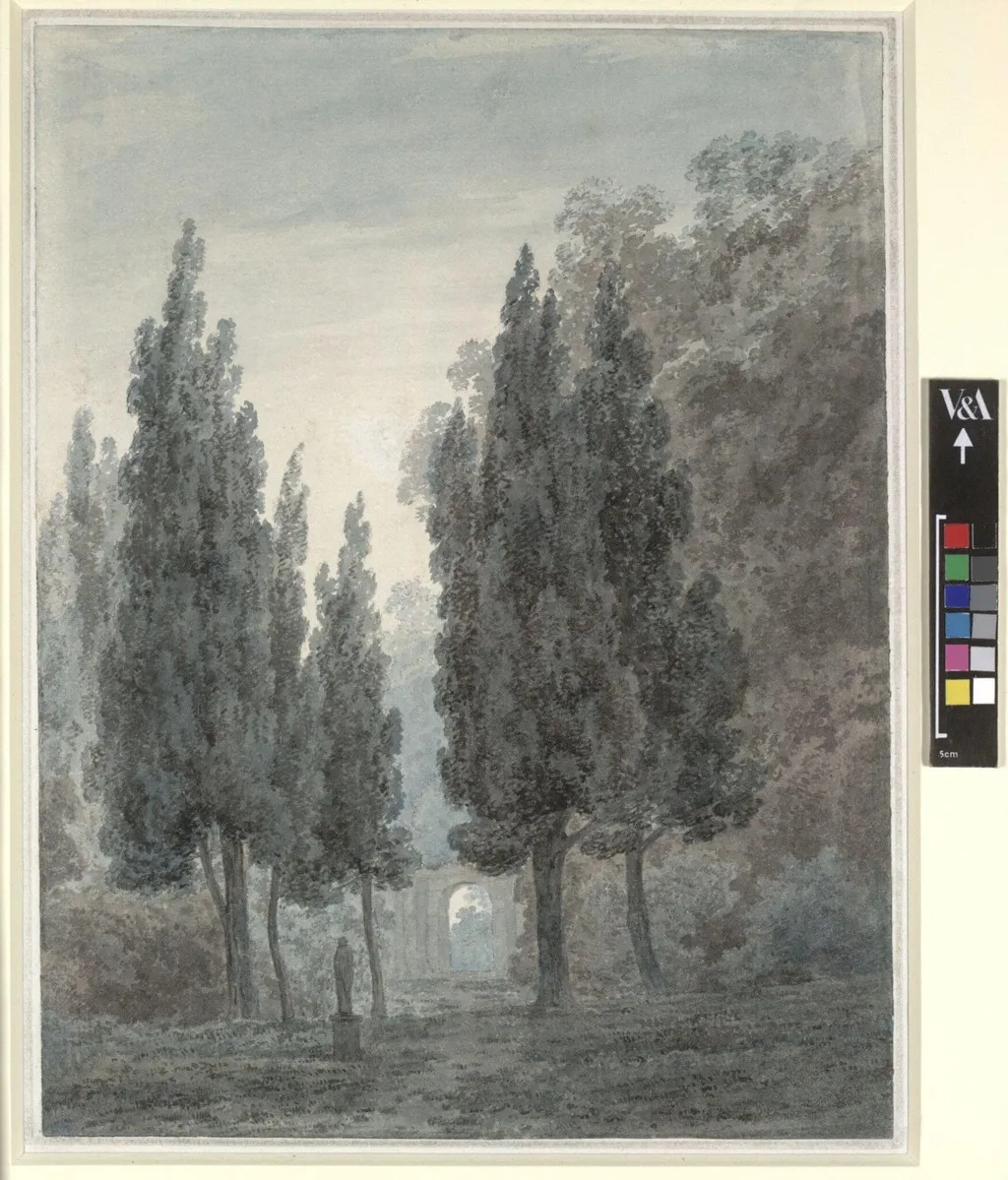
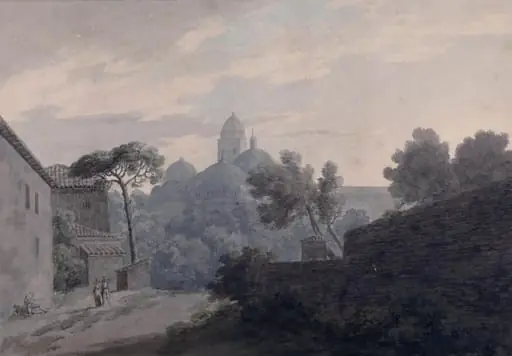
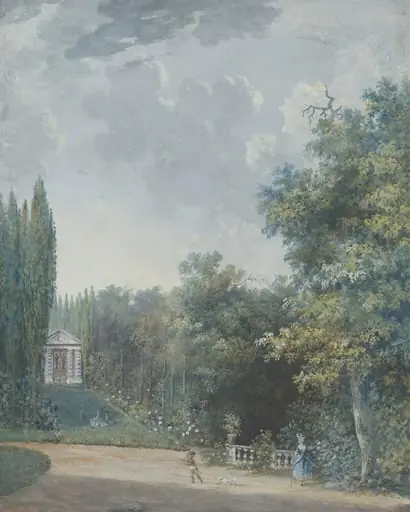
In the Gardens of the Villa Pamfili, Rome is a watercolor work on paper by the Rococo painting artist John Robert Cozens. It dates from 1782 and is held in the collection of the Victoria and Albert Museum. This vertical watercolour depicts a secluded path within the Villa Doria Pamphili gardens in Rome.
About this work
Overview
The scene is rendered in muted tones of gray and blue, with subtle atmospheric light suggesting early morning or late afternoon.
This vertical watercolour depicts a secluded path within the Villa Doria Pamphili gardens in Rome. The composition leads the eye along a winding route toward a distant archway, flanked by dense trees and a solitary statue. The scene is rendered in muted tones of gray and blue, with subtle atmospheric light suggesting early morning or late afternoon. The work is inscribed with its title, anchoring it to a specific location and moment.
Subject & Meaning
The painting captures a quiet, contemplative space rather than a grand spectacle. The path, framed by towering trees and ending in an archway, invites quiet reflection. The statue, placed off-center, adds a subtle human presence without narrative clarity. The emphasis on solitude and stillness reflects a shift toward introspective engagement with nature, characteristic of emerging Romantic sensibilities in the late 18th century.
Technique & Style
The artist employed diluted watercolor washes to soften edges and dissolve forms, creating a hazy, atmospheric effect. Brushwork is restrained, avoiding sharp detail in favor of tonal gradations that suggest depth through light rather than line. The pale sky and diffused illumination enhance the dreamlike quality, aligning with early Romantic tendencies to prioritize mood and emotional resonance over topographical precision.
History & Provenance
Created in the early 1780s, the work belongs to a period when British and continental artists increasingly traveled to Italy to sketch its landscapes. While the artist’s identity is not recorded, the subject and technique suggest ties to the tradition of Grand Tour watercolorists who documented Roman gardens as sites of poetic retreat. The inscription confirms its intended identification, likely for private circulation among collectors.
Context
During the 1780s, artistic interest shifted from formal classical ideals toward personal emotional responses to nature. The Villa Pamphili, a cultivated yet wild garden, became a favored subject for artists seeking tranquility and sublime quiet. This watercolour reflects broader trends in European art, where landscape was no longer merely a backdrop but a vessel for introspection and feeling.
Legacy
Though not widely exhibited, the work exemplifies a transitional phase in landscape art, bridging topographical record and emotional expression. Its quiet composition and atmospheric technique influenced later Romantic watercolorists who valued mood over detail. As such, it stands as a quiet but significant marker in the evolution of landscape as a medium for inner experience.
Own this work as a print
Artist & collection
Artist
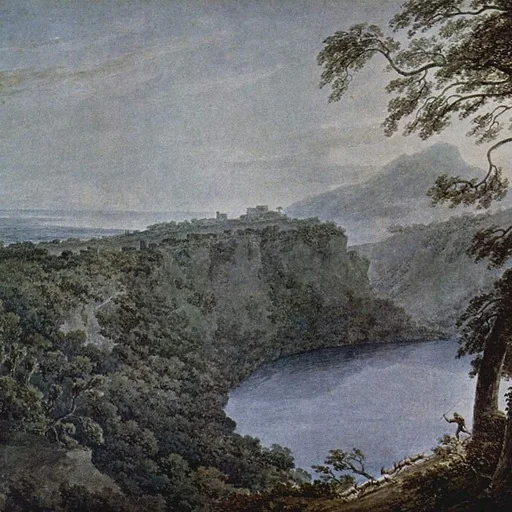
John Robert Cozens (1752 – 14 December 1797) was an English painter of romantic watercolour landscapes, nearly all of Continental scenes.

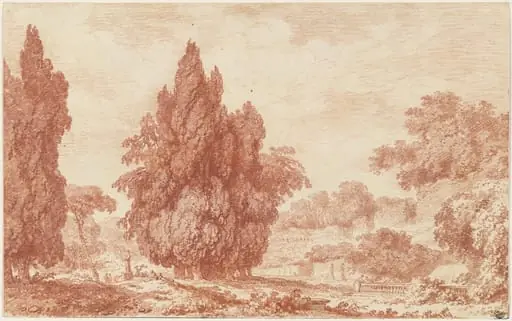 A Stand of Cypresses in an Italian Park
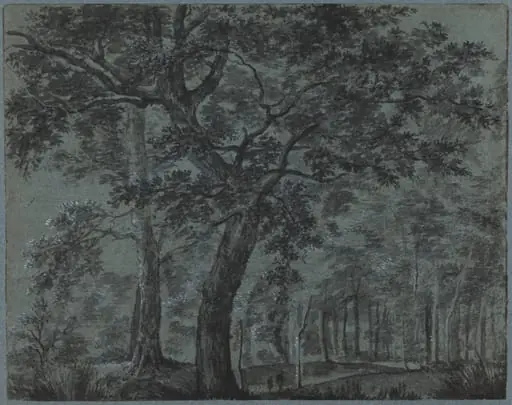 Woods at Night with Travelers
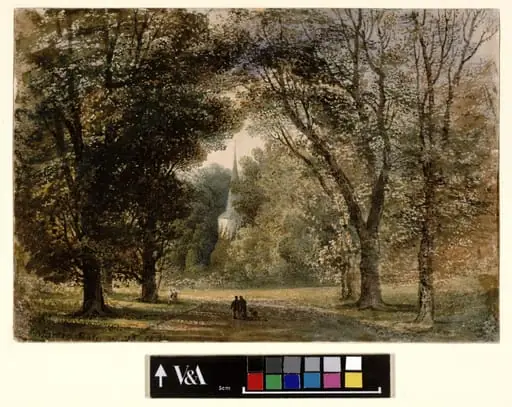 Stanmer Church, Sussex
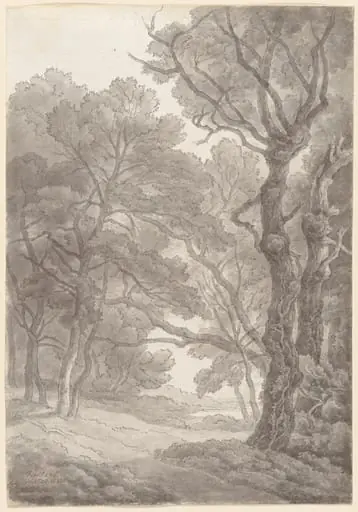 Trees at Fordland, Devon
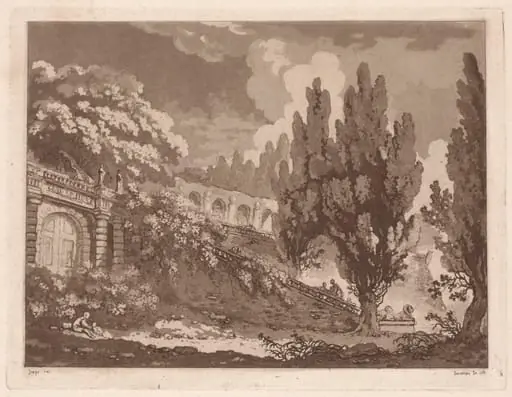 Stairs in an Italian Garden
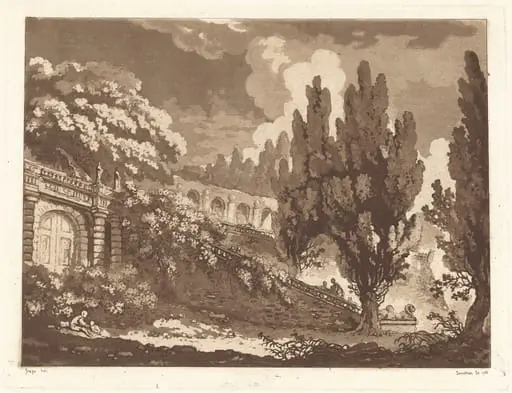 Stairway in an Italian Garden
 In the Hague Woods
 Landskab ved Fredensborg
 Oaks along the Appian Way near Albano
 The Avenue of Cypresses at Villa d'Este
 The Big Trees
 Park View