Artwork
Via Porta Pinciana, Rome
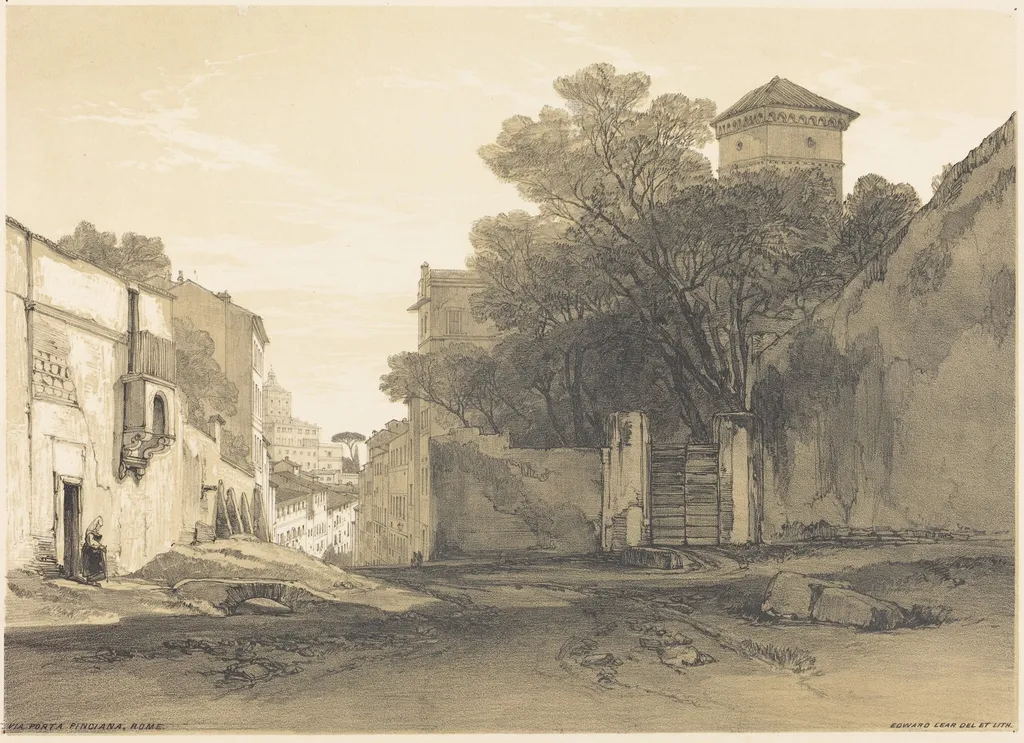
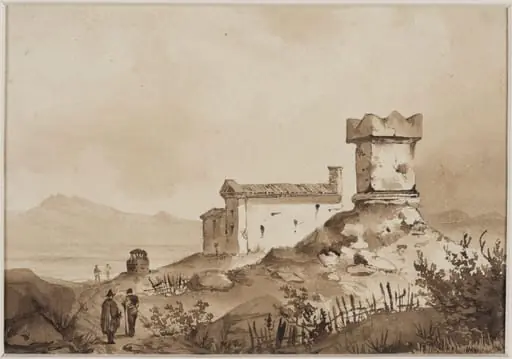
Via Porta Pinciana, Rome is an ink print by the Romanticist artist Edward Lear. It dates from 1850 and is held in the collection of the National Gallery of Art. Created in 1850, this color lithograph records a modest Roman thoroughfare near the Porta Pinciana.
About this work
Overview
Created in 1850, this color lithograph records a modest Roman thoroughfare near the Porta Pinciana. The composition balances a row of aged façades with visible ruins, a solitary figure, and a prominent tower framed by a mature tree, conveying a moment of everyday life amid historic surroundings.
Subject & Meaning
The image captures a quiet street scene where a lone woman pauses by a doorway while the ground, strewn with stones and uneven steps, leads toward a wooden gate. The juxtaposition of lived-in architecture and decaying walls suggests the coexistence of contemporary activity and the lingering presence of antiquity.
Technique & Style
Executed as a color lithograph, the work relies on delicate line work to model light and shadow, imparting both precision and a slightly atmospheric quality. The use of fine hatching conveys texture on the stone surfaces and foliage, while the limited palette enhances the sense of place without overwhelming detail.
History & Provenance
The print was produced by Edward Lear, an English illustrator noted for travel sketches and literary nonsense. While traveling in Italy, Lear made on‑site drawings that he later transformed into lithographs for his travel publications, and this piece reflects that practice of immediate observation followed by studio refinement.
Context
During the mid‑19th century, the Grand Tour inspired many artists to document Italian scenery. Lear’s work aligns with this tradition, offering a visual record of Rome’s urban fabric at a time when interest in antiquities and contemporary city life intersected in the eyes of foreign visitors.
Artist & collection
Artist
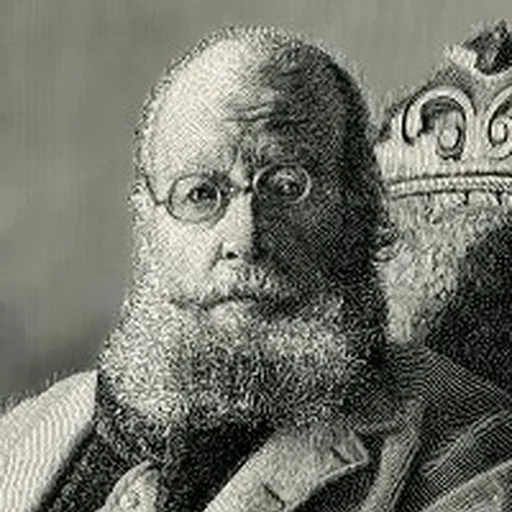
Edward Lear (12 May 1812 – 29 January 1888) was an English artist, illustrator, musician, author and poet, who is known mostly for his literary nonsense in poetry and prose and especially his limericks, a form he popularised but which term…

 A Sunlit Landscape with Hilltop Houses
 A Country Road across an Ancient Bridge
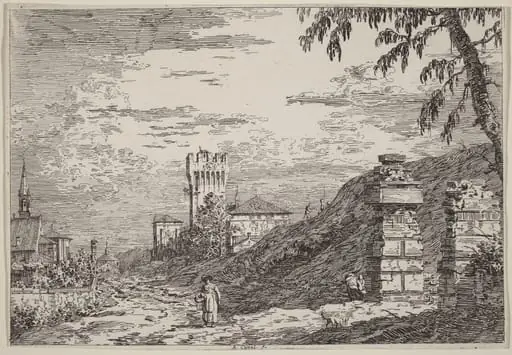 Landscape with Tower and Two Ruined Pillars
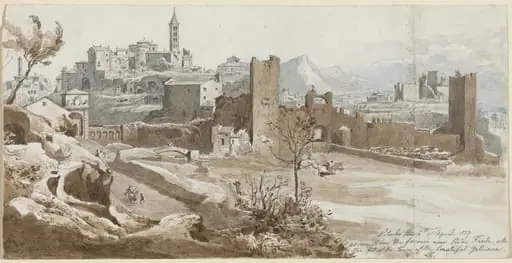 Viterbo
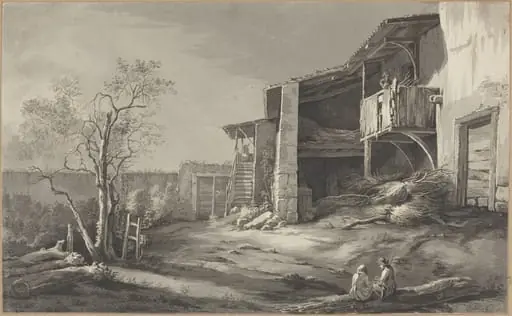 A Farmyard
![Landscape with Tower and Two Ruined Pillars [left], by Canaletto](https://artifactworldgallery.com/img/canaletto--landscape-with-tower-and-two-ruined-pillars-left--60d58ba162fec5aa-w320.webp) Landscape with Tower and Two Ruined Pillars [left]
Landscape with Tower and Two Ruined Pillars [left]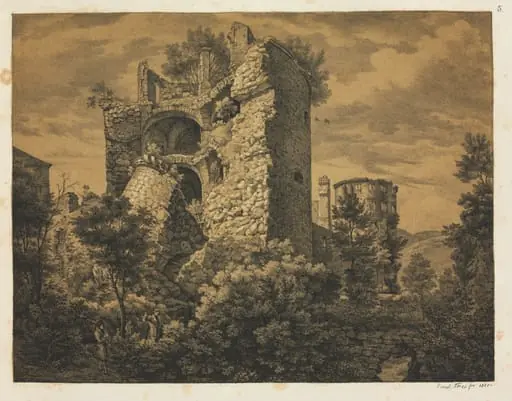 Six Views of Heidelberg Castle: Tower
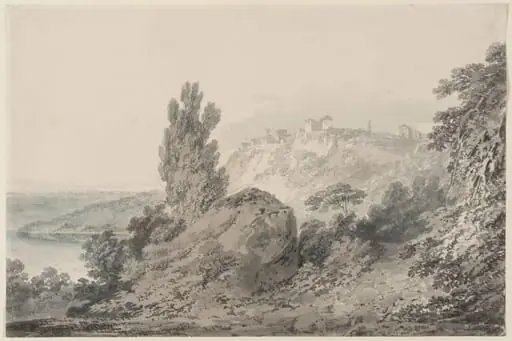 Lake and Town of Nemi
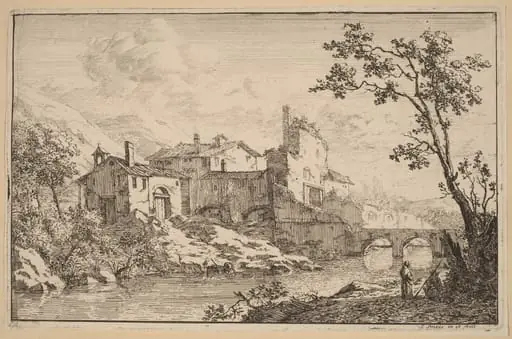 Houses at the Side of a River
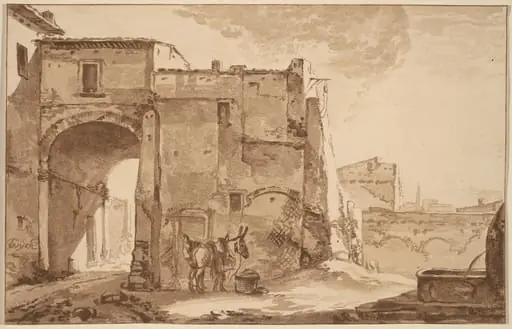 Gateway with Traveler and Mule
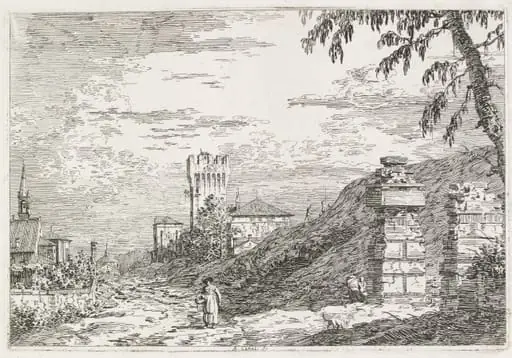 Views: Two Ruined Pillars
 Italian landscape, with an ancient Roman sarcophagus