Artwork
Drawing room at the Royal Pavilion, Brighton
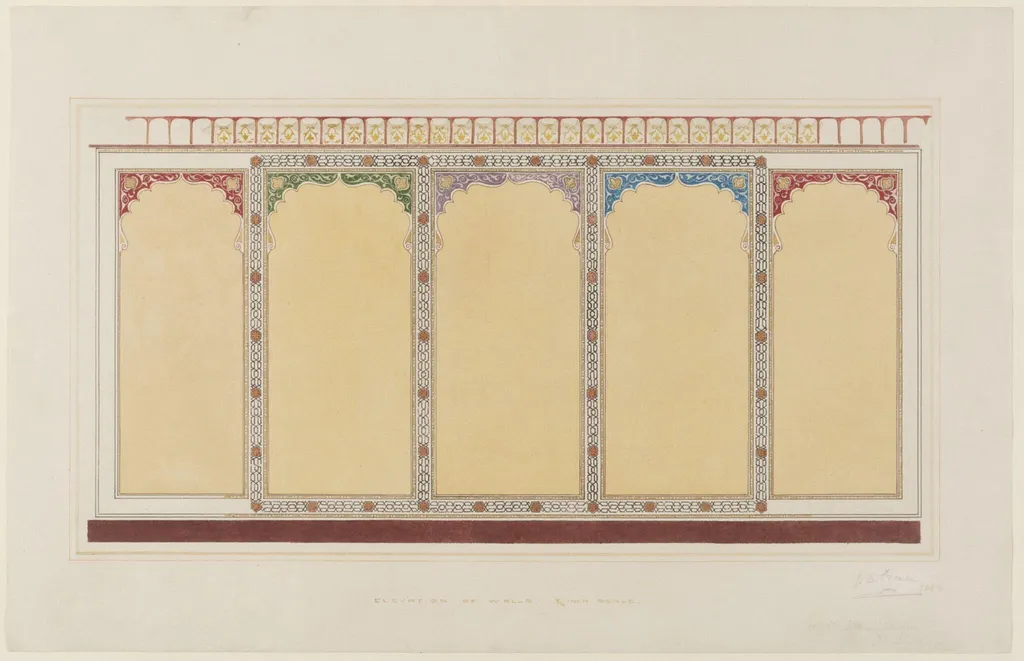
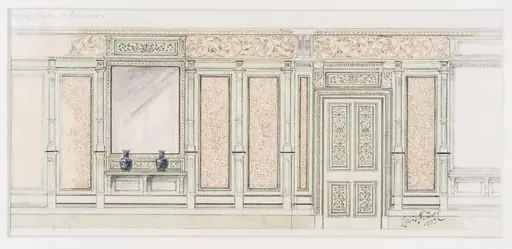
Drawing room at the Royal Pavilion, Brighton is a drawing by the Impressionist artist John Dibblee Crace. It dates from 1891 and is held in the collection of the Victoria and Albert Museum.
About this work
Overview
This drawing depicts an interior of the Royal Pavilion in Brighton, executed in a style blending Impressionist softness with Realist precision.
This drawing depicts an interior of the Royal Pavilion in Brighton, executed in a style blending Impressionist softness with Realist precision. Created by John Dibblee Crace, a prominent figure in 19th-century British interior design, the work reflects the opulent aesthetic favored by royalty and aristocracy. Crace’s firm, known for its influence across royal residences and public buildings, contributed significantly to the period’s decorative arts.
Subject & Meaning
The drawing captures a lavish drawing room within the Royal Pavilion, a structure synonymous with Regency excess and Orientalist fantasy. The space likely served as a setting for royal leisure or reception, embodying the era’s taste for theatrical grandeur. Through meticulous rendering, the image conveys both architectural detail and the intended atmosphere of refined extravagance, aligning with the Pavilion’s broader decorative program.
Technique & Style
Crace’s approach merges Impressionist brushwork with Realist draftsmanship, balancing diffuse light effects with crisp delineation of furnishings and ornament. The technique emphasizes texture and spatial depth, suggesting the interplay of natural and artificial illumination within the room. This hybrid style underscores the period’s transitional artistic sensibilities, where academic precision coexisted with emerging modernist tendencies.
History & Provenance
John Dibblee Crace and his family firm were instrumental in shaping 19th-century British interiors, working for monarchs from George III to Queen Victoria. Their commissions extended to Longleat for the Marquess of Bath and Cliveden for William Waldorf Astor, among other elite patrons. This drawing, likely produced as a record or proposal, reflects the firm’s role in documenting and executing high-profile decorative schemes.
Context
The Crace firm dominated British interior design during an era marked by eclecticism and revivalism. Their work for the Royal Pavilion aligned with the building’s fusion of Chinese, Indian, and Gothic motifs, a hallmark of early 19th-century decorative arts. The drawing’s style mirrors the broader shift toward expressive, light-focused rendering, even as it remained rooted in the practical demands of architectural documentation.
Legacy
Crace’s contributions endure in surviving interiors and design records, including those held by institutions like the Victoria and Albert Museum. His firm’s work exemplifies the intersection of craftsmanship and artistic innovation in Victorian design, influencing subsequent generations of decorators. This drawing, as both a functional and aesthetic artifact, offers insight into the period’s decorative ideals and the Crace family’s lasting impact.
Artist & collection
Artist
John Dibblee Crace specialized in detailed drawings of grand rooms, working in the late 1800s.

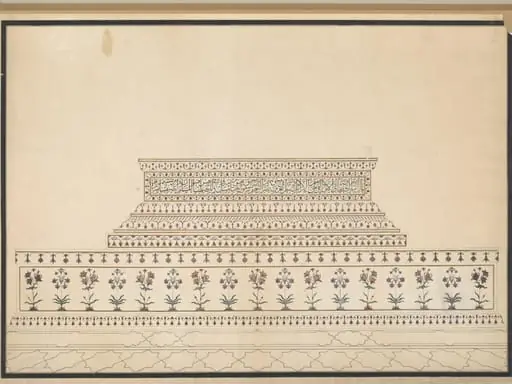 Cenotaph of Mumtaz Mahal, Taj Mahal, Agra
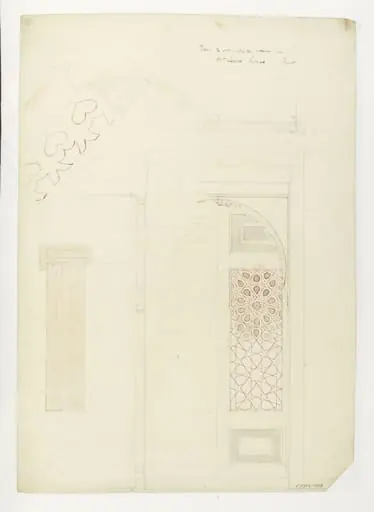 Drawing of a door, John Frederick Lewis house in Cairo
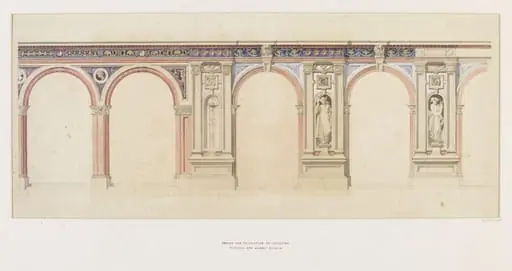 Arcade Decoration
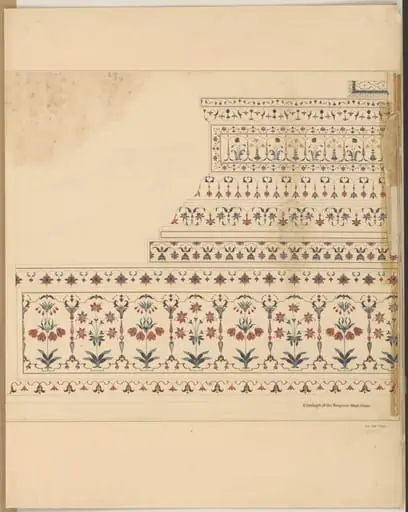 Pietra-dura inlay work on the side of the cenotaph of Shah Jahan, Taj Mahal, Agra.
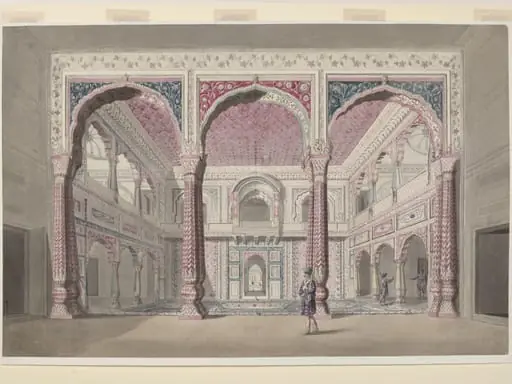 The Darya Daulat Bagh
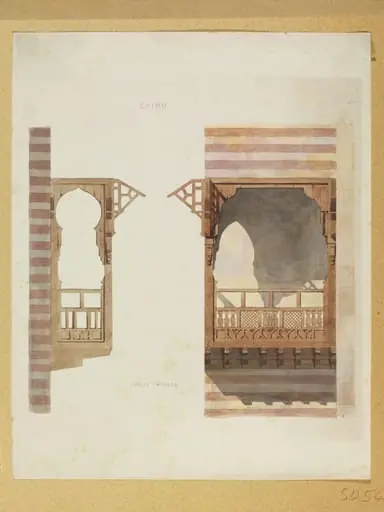 Cairo: Loggia in Wood
 Untitled
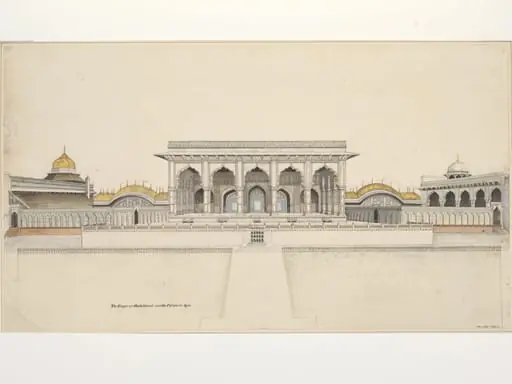 Elevation of the facade of the Khas Mahal, private apartments, Agra Fort, with the adjoining golden pavilions
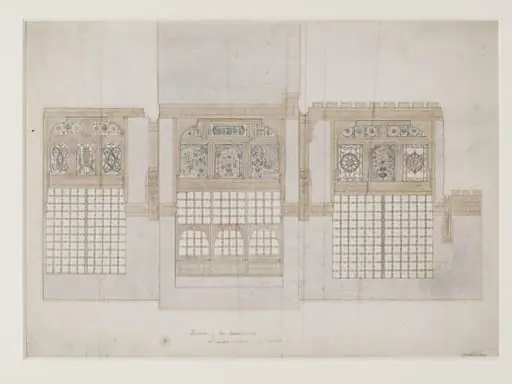 Drawing showing the interior decoration of houses in Cairo
![Design for a Wall of a Music Room [recto], by Italian 18th Century](https://artifactworldgallery.com/img/italian-18th-century--design-for-a-wall-of-a-music-room-recto--1582534309a804bd-w320.webp) Design for a Wall of a Music Room [recto]
Design for a Wall of a Music Room [recto]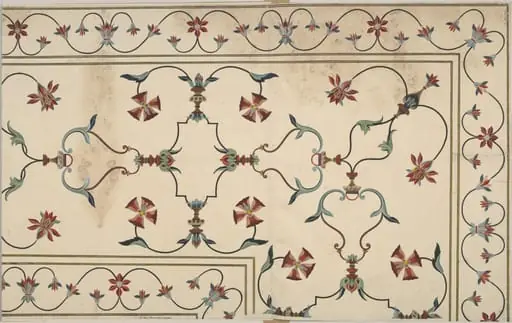 Pietra-dura work decoration on the top of the cenotaph of the Empress Arjumand Banu Begam, Taj Mahal, Agra
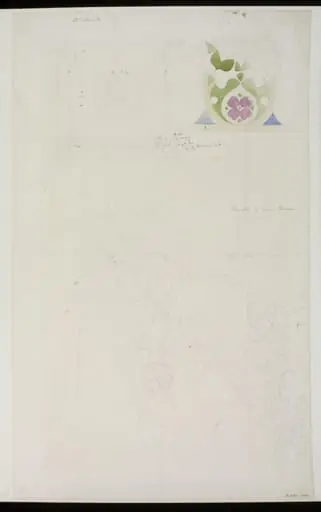 'Panells of Drawing room'