Artwork
The Darya Daulat Bagh
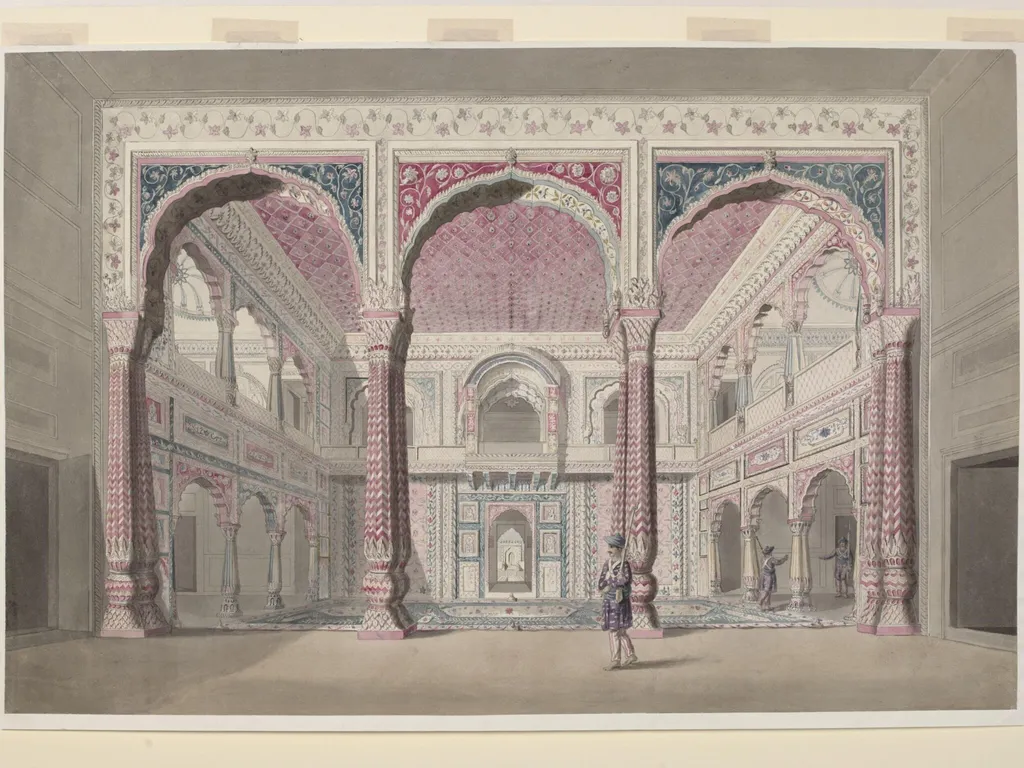
The Darya Daulat Bagh is a paint painting by the Patna School of Painting artist Unknown. It dates from 1795 and is held in the collection of the Victoria and Albert Museum.
About this work
Overview
This painting depicts the interior of Tipu Sultan’s summer palace, Darya Daulat Bagh, likely created for a British audience in late 18th-century India.
This painting depicts the interior of Tipu Sultan’s summer palace, Darya Daulat Bagh, likely created for a British audience in late 18th-century India. The scene captures an opulent space illuminated by daylight streaming through open windows, with soldiers in tiger-patterned uniforms standing vigil. Subtle visual cues suggest underlying political tension, hinting at resistance to colonial authority despite the grandeur of the setting.
Subject & Meaning
The painting centers on Tipu Sultan’s palace interior, a space saturated with his personal symbolism—tiger motifs adorn uniforms and decor, reinforcing his identity as the 'Tiger of Mysore.' The upside-down flag of Mysore, discreetly rendered, functions as a silent act of defiance against British dominance. This detail transforms the scene from mere documentation into a coded statement of sovereignty under threat.
Technique & Style
Executed in watercolor or gouache, the work employs bright, saturated hues to render the palace’s ornate walls and architectural details. Light is used to emphasize spatial depth and highlight the soldiers’ uniforms, while the composition balances grandeur with quiet stillness. The artist’s attention to pattern and texture reflects regional Indo-Persian traditions, adapted to appeal to colonial tastes without sacrificing local symbolism.
History & Provenance
Created during or shortly after Tipu Sultan’s reign, the painting likely originated in Mysore before entering British collections. Its survival suggests it was acquired by colonial officials or traders. The V&A’s possession of 'Tippoo’s Tiger,' a mechanical automaton also linked to the ruler, confirms the British fascination with his iconography, even as they sought to dismantle his rule.
Context
Tipu Sultan’s reign coincided with escalating British expansion in southern India. His use of the tiger as a state emblem was both cultural and political, resisting European symbolism. Paintings like this one, made for British patrons, reveal a complex cultural exchange—where colonial viewers admired exoticism, while local artists embedded subversive messages within the very imagery they were commissioned to produce.
Legacy
The painting endures as a quiet testament to resistance embedded within colonial art. Alongside artifacts like 'Tippoo’s Tiger,' it contributes to a broader understanding of how Indian rulers and artists navigated occupation—using aesthetics to preserve identity. Its subtle protest, overlooked by contemporaries, now offers insight into the unseen layers of power and dissent in colonial-era visual culture.
Artist & collection

 Domestic Scene
 Giacomo and Cardinal Marco, investing Andrea, Abbot of San Zeno, with his Benefice
 The Nymph of Fontainebleau
 Portrait of a Woman
 Madonna and Child with Saints in the Enclosed Garden
 Venus and Minerva
 Family Group of Four on Sofa
 Wall painting from Room H of the Villa of P. Fannius Synistor at Boscoreale
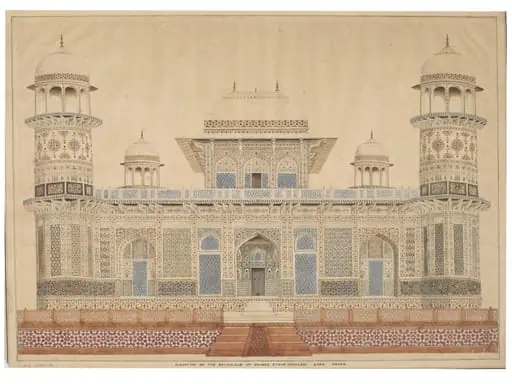 Mausoleum of Itimad ud-Daula.
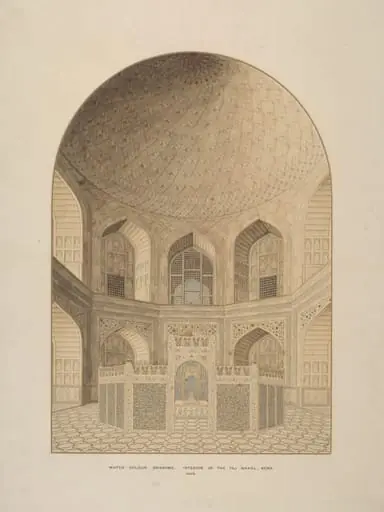 Interior of the Tomb Chamber, Taj Mahal, Agra
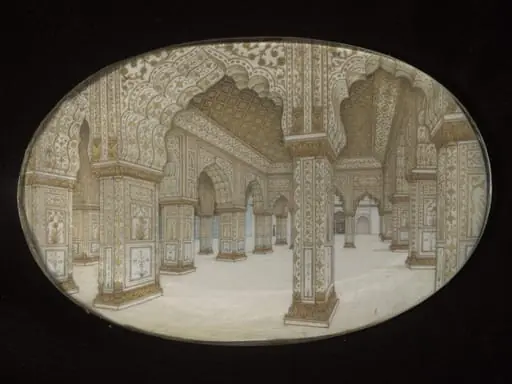 Interior of a Mughal Palace.
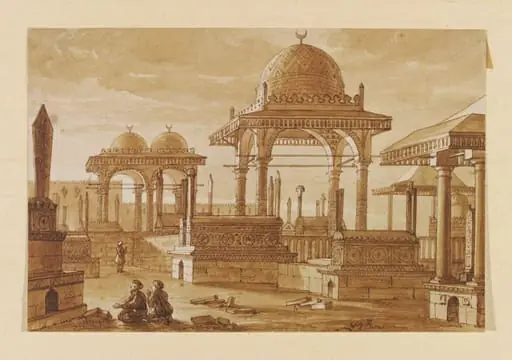 Part of the City of Tombs at Cairo
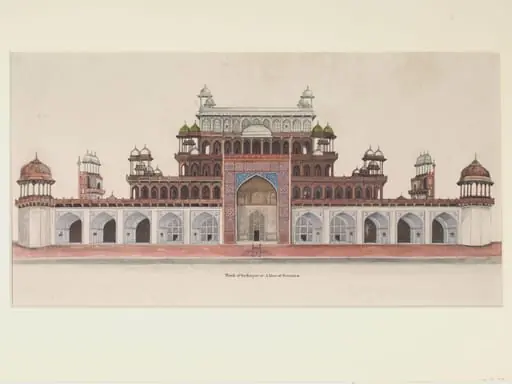 Elevation of the front of the mausoleum of the Emperor Akbar at Sikandra near Agra
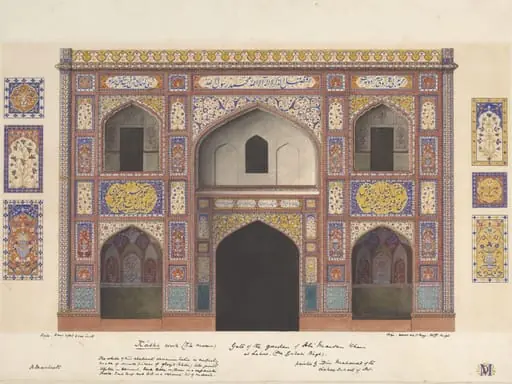 Gate of the garden of Ali Mardan Khan at Lahore
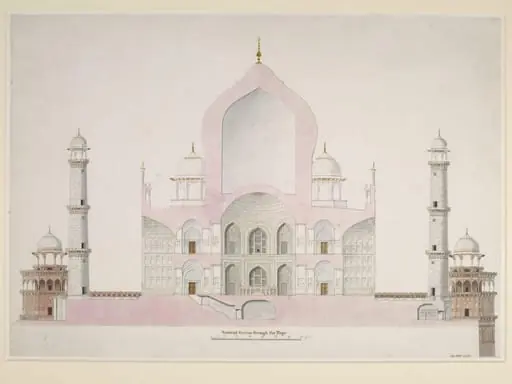 Vertical Section through the Tage
 Drawing room at the Royal Pavilion, Brighton
 Untitled