Artwork
Adam and Eve in Paradise
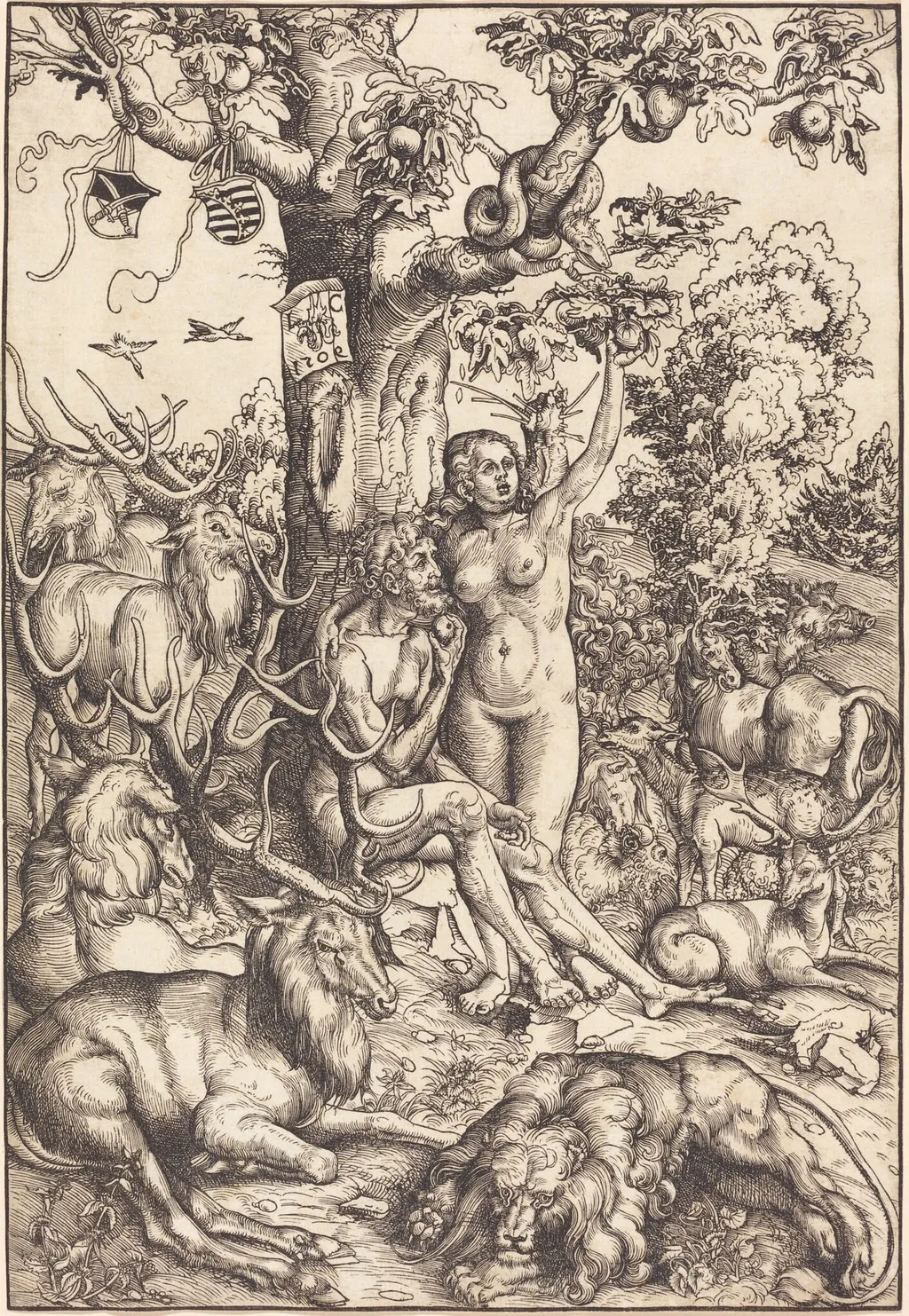
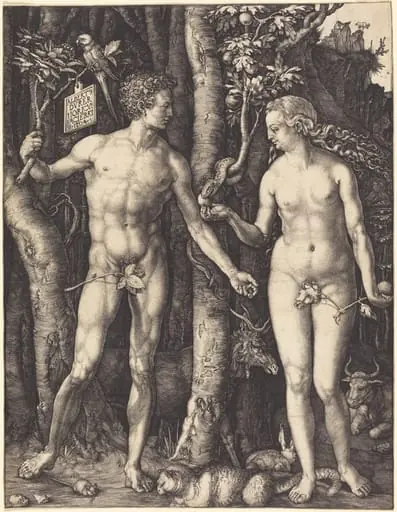
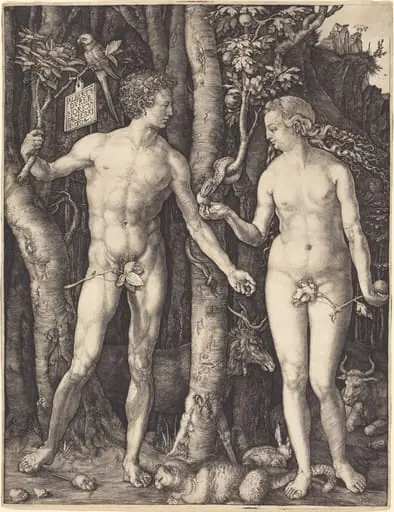
Adam and Eve in Paradise is an ink print by the Renaissance artist Lucas Cranach the Elder. It dates from 1509 and is held in the collection of the British Museum.
About this work
Overview
Adam and Eve in Paradise is a 1509 woodcut print by Lucas Cranach the Elder, depicting the biblical first humans in a lush, vibrant garden setting.
Subject & Meaning
The print portrays Adam and Eve in a state of innocence, symbolized by their nudity, amidst an abundant paradise filled with trees, animals, and fruit trees. This imagery conveys the purity and harmony of the pre-Fall state.
Technique & Style
Executed in woodcut, a technique characteristic of Cranach's printmaking, the work features detailed renderings of nature and figures, reflecting the artist's ability to convey depth and texture through this medium.
History & Provenance
Created in 1509 by Lucas Cranach the Elder, a prominent German Renaissance artist and court painter to the Electors of Saxony, the print exemplifies his recurring engagement with religious themes.
Context
The depiction of Adam and Eve aligns with traditional Renaissance artistic conventions for representing the pair's innocence. The work's religious subject matter also reflects Cranach's connections to both secular and religious spheres during the early 16th century.
Artist & collection
Artist
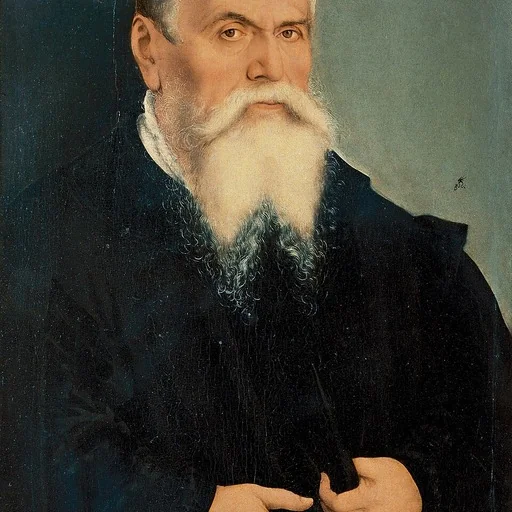
Lucas Cranach the Elder was a German Renaissance painter and printmaker in woodcut and engraving.