Artwork
Saint Bartholomew
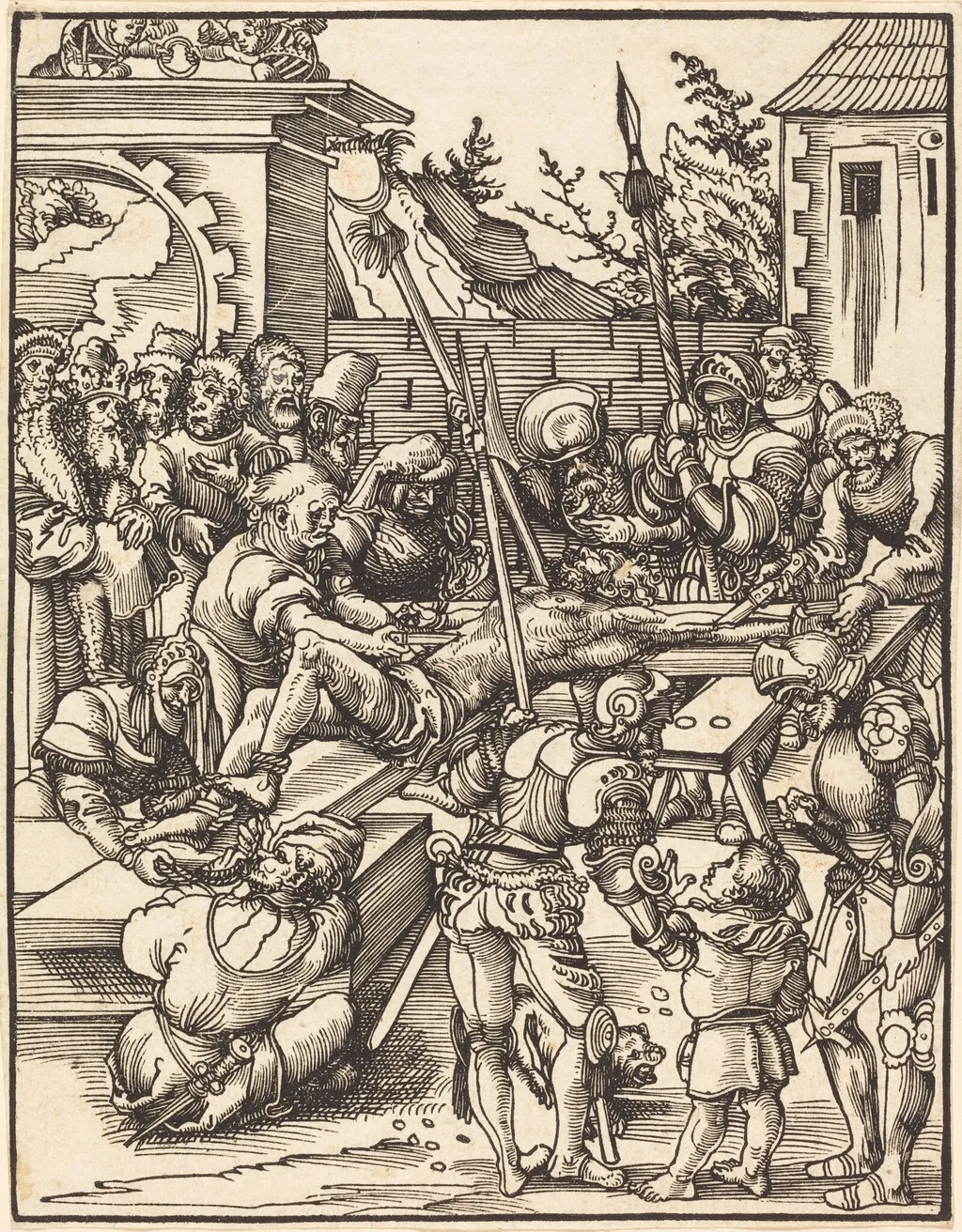
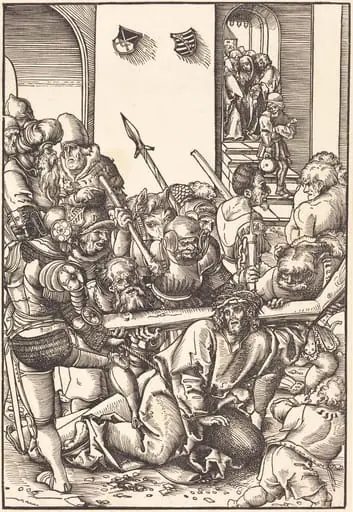
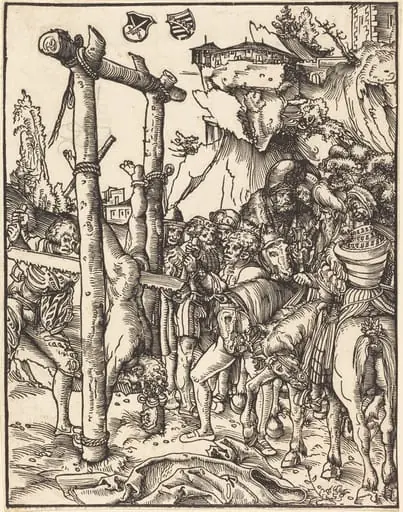
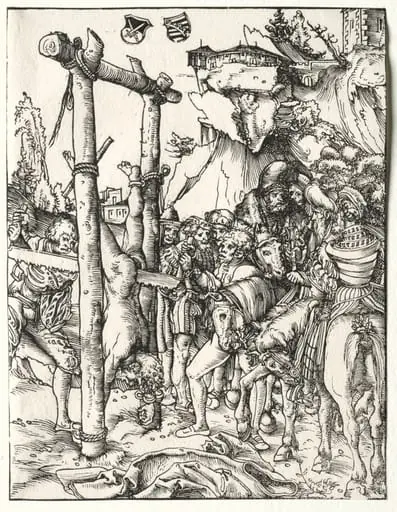
Saint Bartholomew is an ink print by the Renaissance artist Lucas Cranach the Elder. It dates from 1512 and is held in the collection of the National Gallery of Art.
About this work
Overview
The composition is dominated by a tumult of figures, some armed, others engaged in violent acts, set against a backdrop of distorted architecture and foliage.
Lucas Cranach the Elder’s woodcut *Saint Bartholomew*, executed in 1512, presents a densely populated scene rendered in stark black and white. The composition is dominated by a tumult of figures, some armed, others engaged in violent acts, set against a backdrop of distorted architecture and foliage. The image’s intense line work conveys a sense of chaos and dread, characteristic of early 16th‑century religious prints.
Subject & Meaning
The print illustrates the martyrdom of Saint Bartholomew, one of the twelve apostles traditionally associated with being flayed alive. Central to the composition is a figure whose skin is peeled back to expose musculature, a graphic reference to the saint’s legendary death. Surrounding characters, many bearing weapons, amplify the narrative of suffering and sacrifice that the work was intended to communicate to contemporary viewers.
Technique & Style
Cranach employed the woodcut process, carving the image into a wooden block and printing it with ink onto paper. The medium’s capacity for bold, high‑contrast lines is evident in the sharply delineated contours of bodies, weapons, and architectural elements. This approach allowed the artist to emphasize tension and movement, while the monochrome palette heightened the dramatic impact of the scene.
History & Provenance
Created during Cranach’s tenure as court painter to the Electors of Saxony, the print reflects his dual role as a portraitist of German nobility and a disseminator of Reformation imagery. While the original block is lost, surviving impressions are held in several European print collections, indicating the work’s circulation as a didactic tool in the early modern period.
Context
In the early 1500s, woodcuts served as a primary vehicle for spreading religious narratives, especially amid the burgeoning Protestant Reformation. Cranach, a close associate of Martin Luther, frequently produced prints that aligned with reformist themes. *Saint Bartholomew* thus functioned both as a visual sermon on martyrdom and as part of the broader visual culture that sought to educate a largely illiterate audience.
Artist & collection
Artist
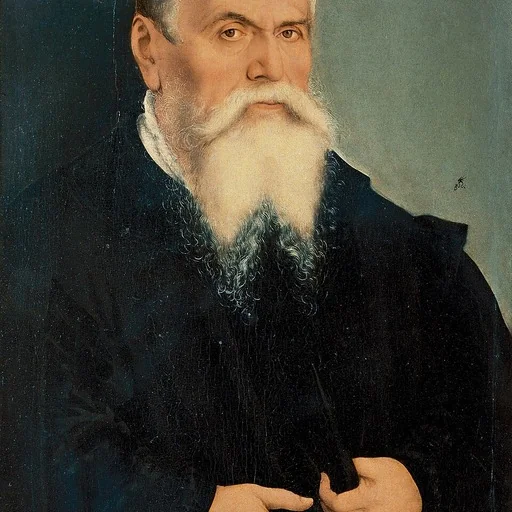
Lucas Cranach the Elder was a German Renaissance painter and printmaker in woodcut and engraving.