Artwork
Ecce Homo
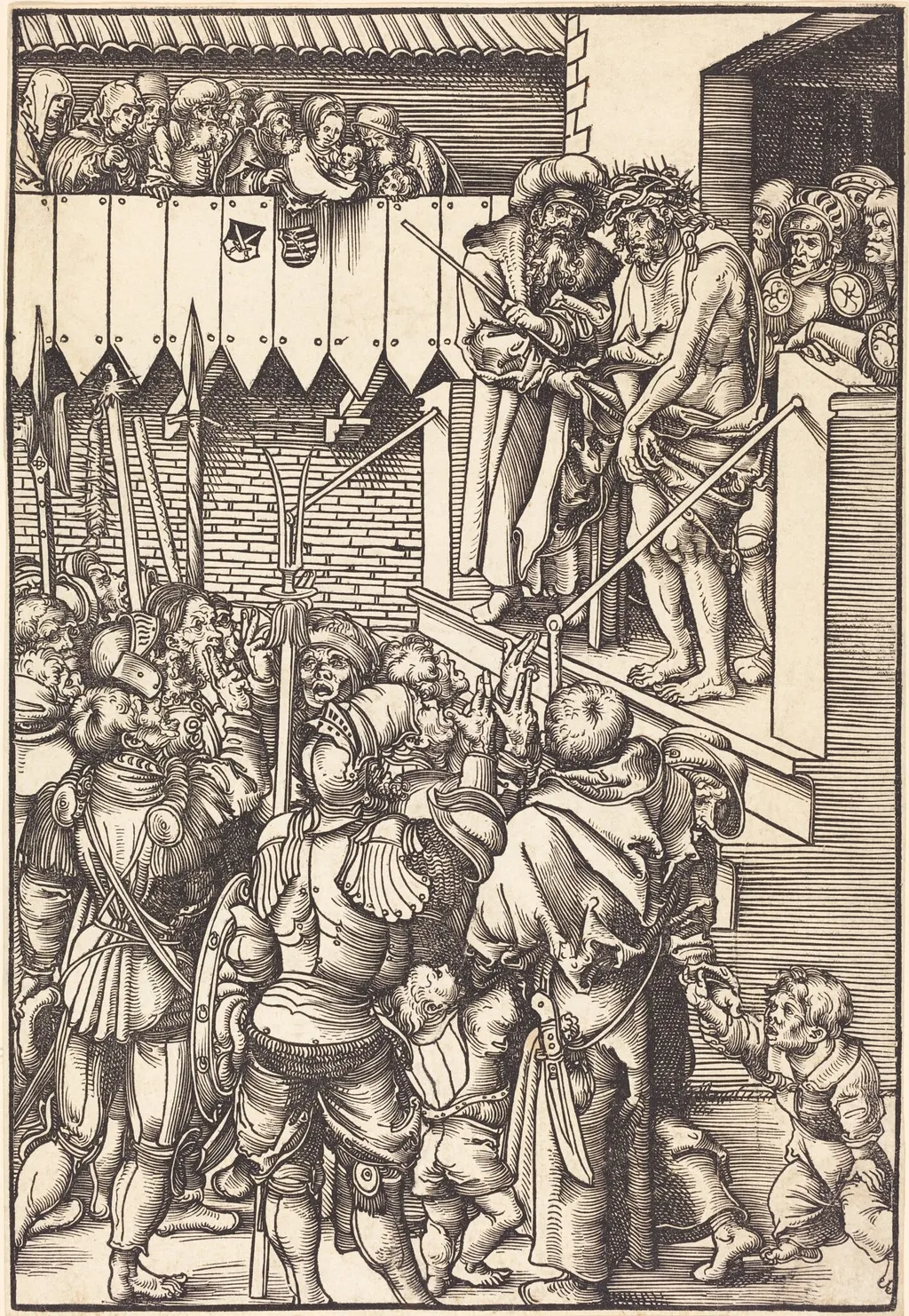
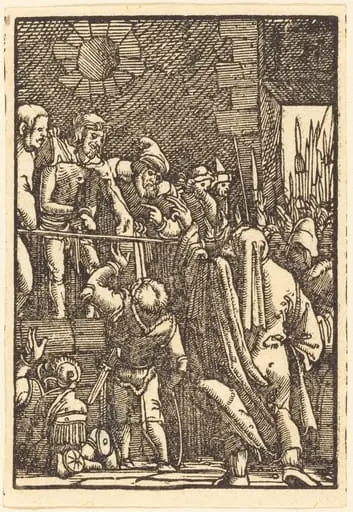
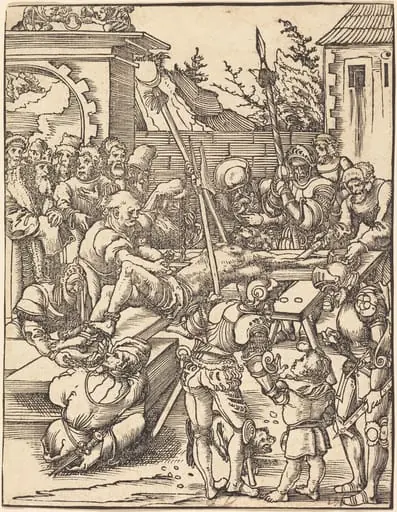
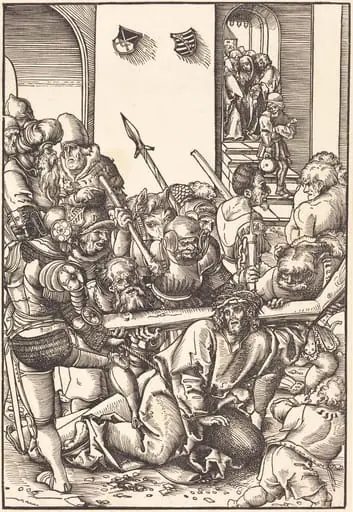
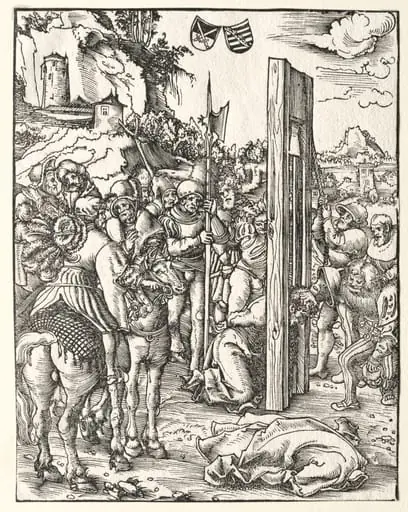
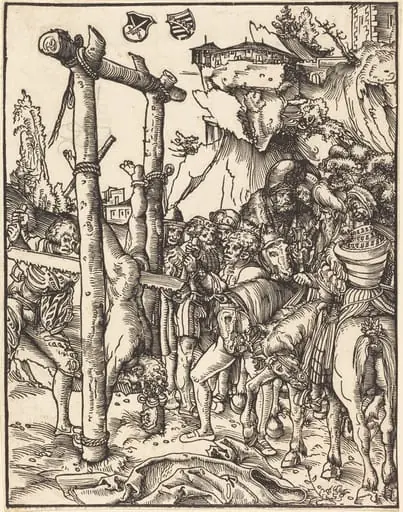
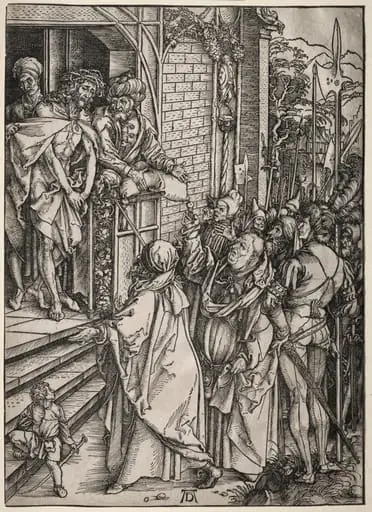
Ecce Homo is an ink print by the Renaissance artist Lucas Cranach the Elder. It dates from 1509 and is held in the collection of the National Gallery of Art.
About this work
Overview
Lucas Cranach the Elder produced this woodcut in 1509, during the early phase of his career when his religious imagery still aligned with Catholic iconography.
Lucas Cranach the Elder produced this woodcut in 1509, during the early phase of his career when his religious imagery still aligned with Catholic iconography. As court painter to the Saxon electors, he was already gaining recognition for his printmaking, though his later work would become closely associated with Protestant reform. This piece reflects his skill in translating narrative tension into the rigid constraints of the woodcut medium.
Subject & Meaning
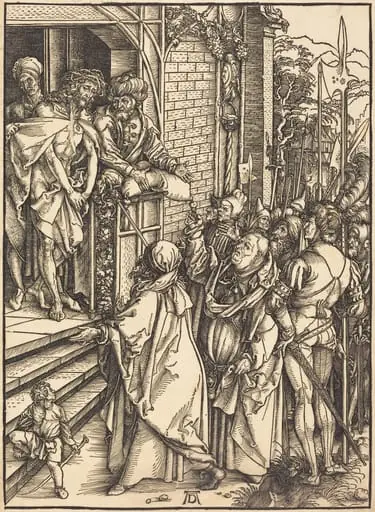
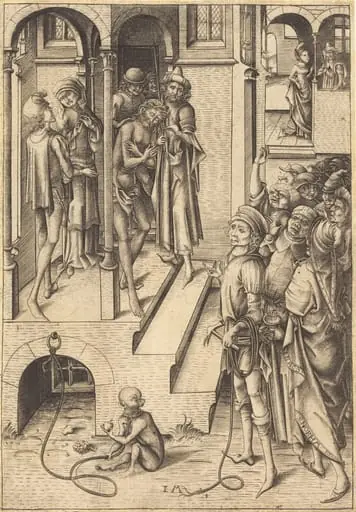
The scene depicts Christ presented to the crowd by Pontius Pilate, as described in the Gospel of John. Dressed in a white robe and crowned with thorns, Christ holds a reed staff, evoking both royal mockery and suffering. The surrounding figures—soldiers, officials, and onlookers—reveal varied reactions: some observe with curiosity, others with hostility, emphasizing the moment’s moral ambiguity and the weight of impending judgment.
Technique & Style
Cranach employed sharp, linear carving to define forms, using bold contrasts between inked figures and the white paper ground. The figures are arranged in layered planes, with detailed facial expressions and gestures conveying psychological nuance despite the medium’s limitations. The architectural backdrop of brickwork and tiled roofs is rendered with precise, rhythmic lines, grounding the sacred event in a tangible, contemporary urban setting.
History & Provenance
Created in Wittenberg during Cranach’s formative years, the print likely circulated among clerics and educated patrons before the Reformation reshaped religious imagery. Its survival in multiple impressions suggests early demand. Though no specific early ownership records are documented, its style aligns with other prints produced in Cranach’s workshop during the first decade of the 1500s.
Context
In 1509, Germany remained firmly within the Catholic Church, and religious prints like this served devotional and educational purposes. Cranach had not yet fully embraced Lutheran theology, but his humanist training and proximity to reform-minded circles influenced his focus on emotional immediacy. The work reflects a transitional moment in Northern art, where traditional subjects began to be rendered with greater psychological depth.
Legacy
Though overshadowed by Cranach’s later Reformation-era works, this woodcut demonstrates his early mastery of narrative compression and expressive figuration. It influenced contemporaries in printmaking and contributed to the broader trend of using accessible imagery to engage viewers with biblical drama. Its clarity and emotional restraint mark it as a significant precursor to the visual language of Protestant religious art.
Artist & collection
Artist
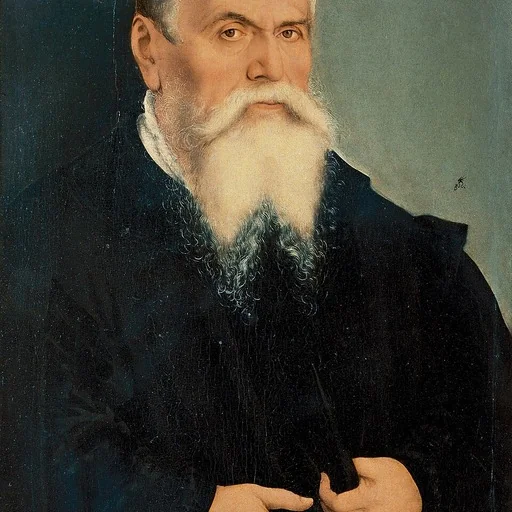
Lucas Cranach the Elder was a German Renaissance painter and printmaker in woodcut and engraving.