Artwork
The Archangel Michael Weighing a Soul
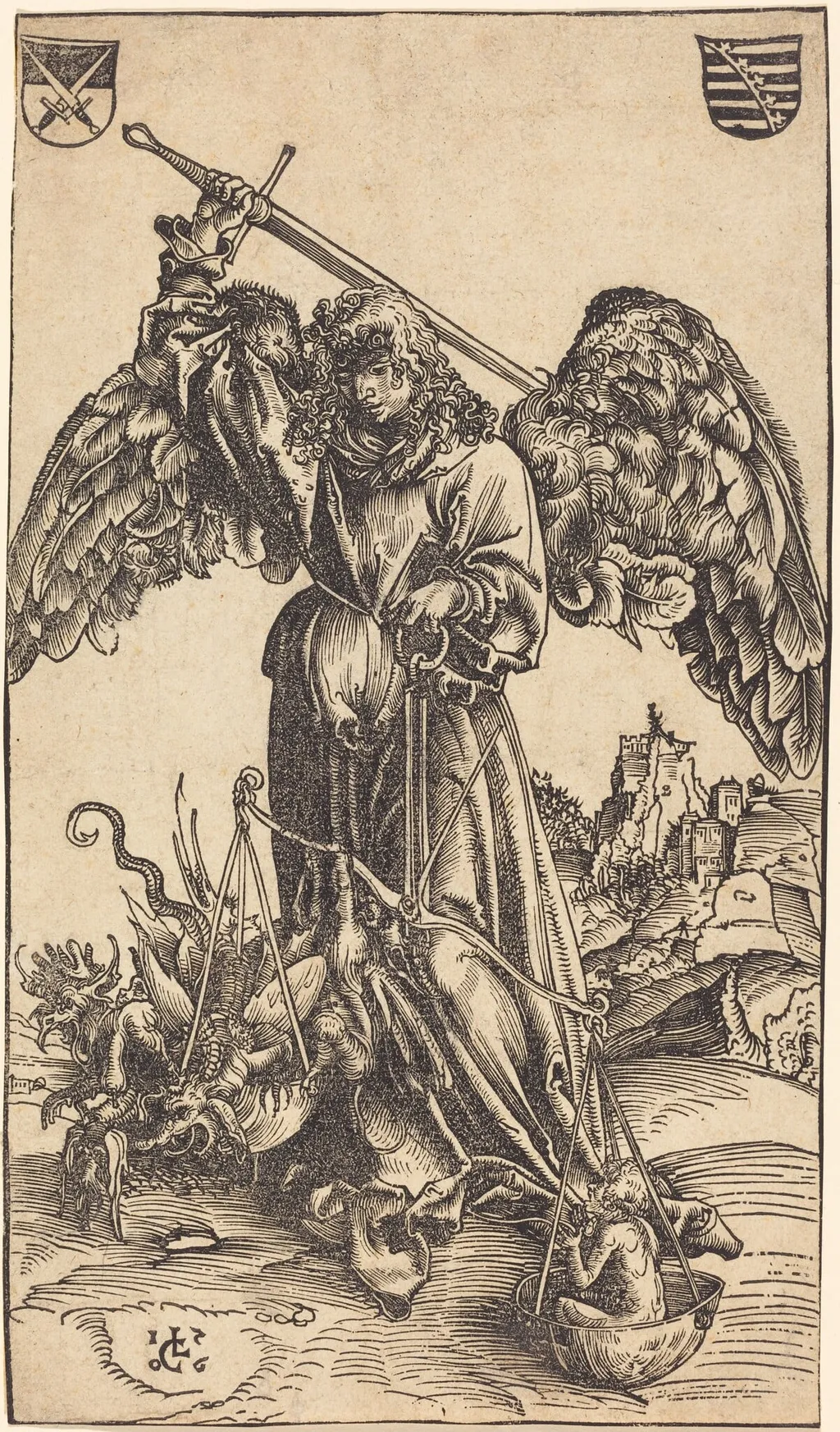
The Archangel Michael Weighing a Soul is an ink print by the Renaissance artist Lucas Cranach the Elder. It dates from 1506 and is held in the collection of the National Gallery of Art.
About this work
Overview
Cranach, then in his early career, produced this work before his full engagement with Protestant reform, retaining elements of late medieval visual tradition.
Created in 1506, this woodcut by Lucas Cranach the Elder depicts the Archangel Michael performing a divine judgment, weighing a human soul against the forces of salvation and damnation. As a print made from a carved wooden block, it reflects the growing accessibility of religious imagery in early 16th-century Germany. Cranach, then in his early career, produced this work before his full engagement with Protestant reform, retaining elements of late medieval visual tradition.
Subject & Meaning
The scene illustrates the Last Judgment, a common theme in medieval Christian thought, where Michael, armed with a sword and holding scales, determines the fate of a soul. The naked figure below represents the soul in its most vulnerable state, stripped of earthly identity. A dragon-like demon lurks nearby, symbolizing temptation and eternal punishment, while the distant castle may allude to the Heavenly City, reinforcing the spiritual stakes of the moment.
Technique & Style
Cranach employed the woodcut medium with precise, angular lines to create contrast and movement. The sharp contours define the archangel’s wings and armor, while the dragon’s form is rendered with jagged, menacing strokes. The composition is tightly framed, focusing attention on the scales and the soul’s precarious balance. The absence of shading and reliance on line work are characteristic of early German woodcuts, emphasizing clarity over naturalism.
History & Provenance
This print was made during Cranach’s early years as court artist to the Electors of Saxony, before his artistic style fully aligned with Lutheran theology. It likely circulated among religious audiences familiar with apocalyptic imagery. No specific early ownership records are documented, but its survival in multiple institutional collections suggests it was widely reproduced and preserved as a devotional or instructional image.
Context
In the early 1500s, Germany was a landscape of religious transition, where traditional Catholic iconography coexisted with emerging reformist ideas. Cranach’s work, though still rooted in medieval symbolism, would soon adapt to Protestant narratives. This print belongs to a transitional phase, where visual representations of judgment and salvation remained potent, even as theological interpretations began to shift.
Legacy
Though later works by Cranach would reflect Lutheran doctrine more explicitly, this early woodcut preserves a moment when religious imagery retained its medieval gravity. It exemplifies how printmaking extended theological concepts to broader audiences, bridging the gap between ecclesiastical tradition and the rising demand for accessible religious art in the decades before the Reformation fully took hold.
Artist & collection
Artist
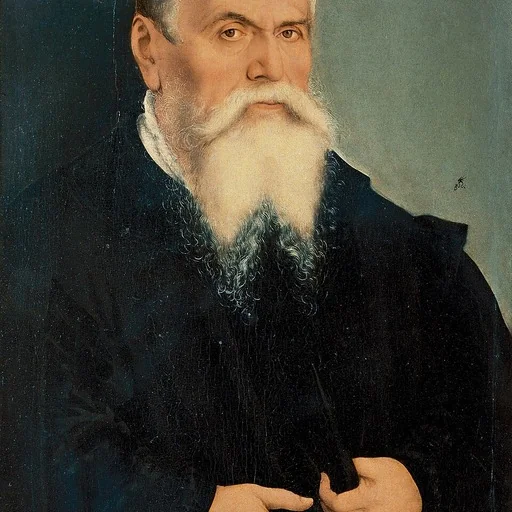
Lucas Cranach the Elder was a German Renaissance painter and printmaker in woodcut and engraving.

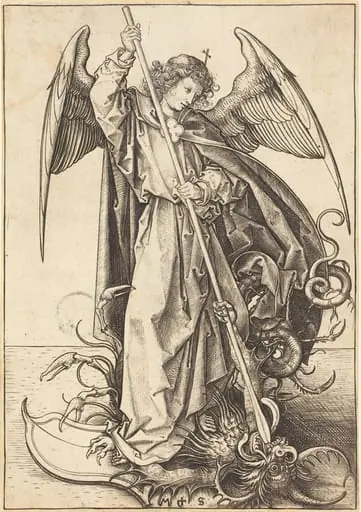 Saint Michael Slaying the Dragon
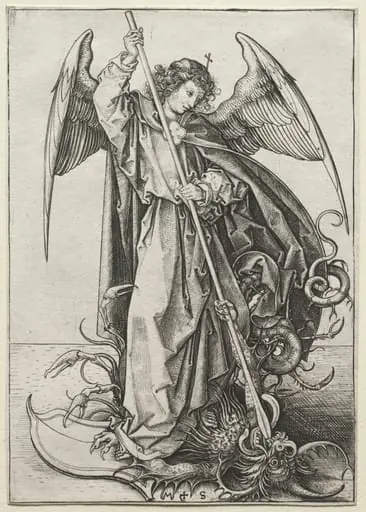 The Archangel Michael Piercing the Dragon
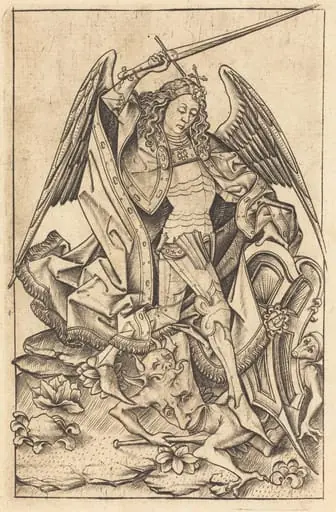 Saint Michael
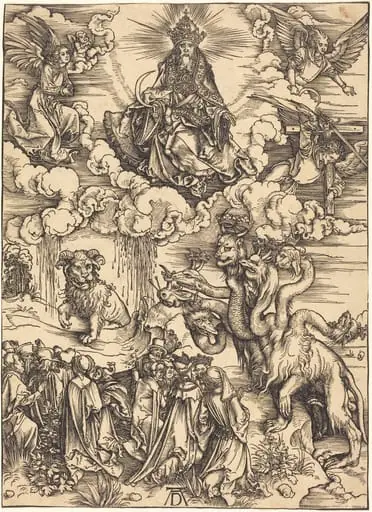 The Beast with Two Horns like a Lamb
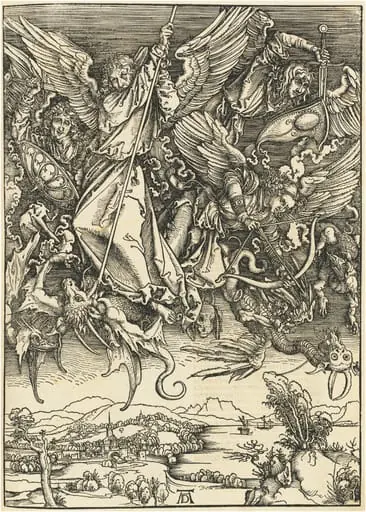 Saint Michael Fighting the Dragon
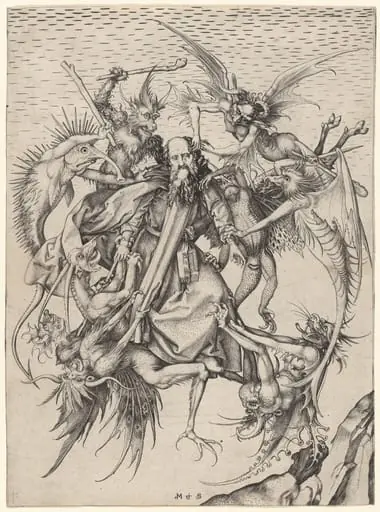 The Tribulations of Saint Anthony
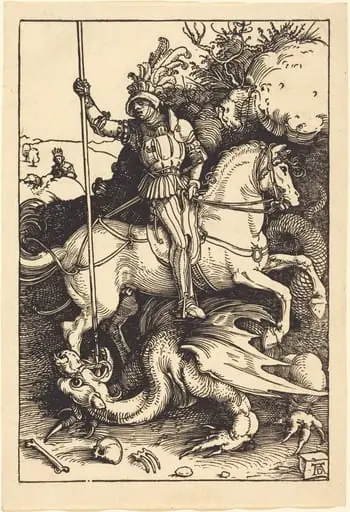 Saint George Killing the Dragon
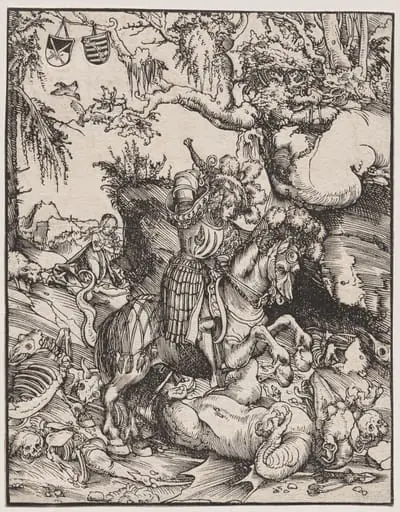 Saint George Slaying the Dragon
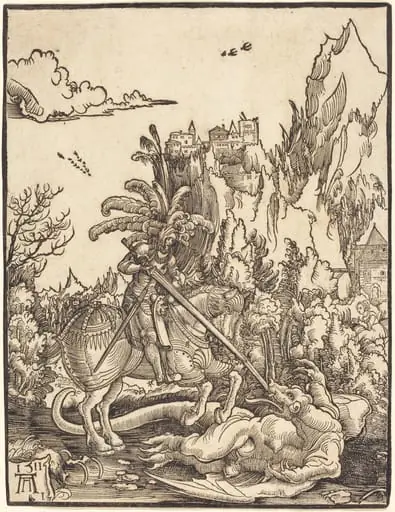 Saint George Slaying the Dragon
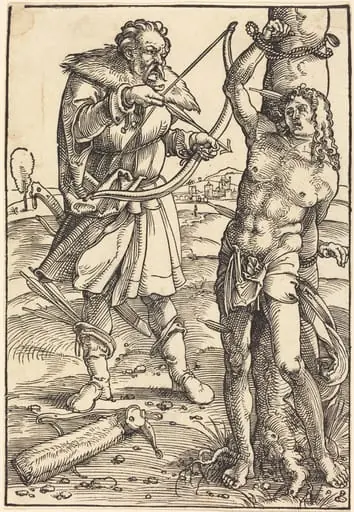 The Martyrdom of Saint Sebastian
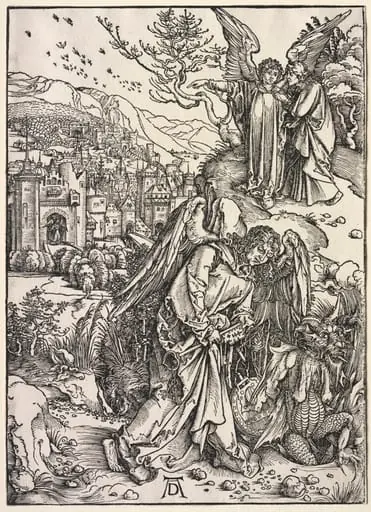 Revelation of St. John: Angel with the Key of the Bottomless Pit
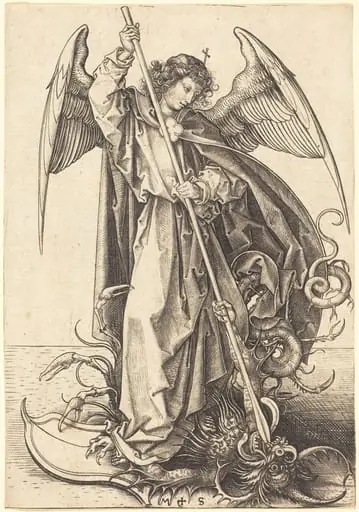 Saint Michael Slaying the Dragon