Artwork
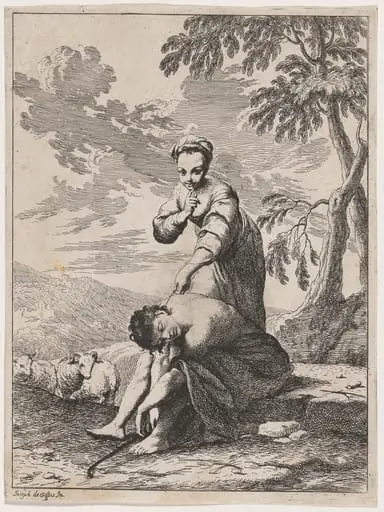
Menghina Quiets Cacasenno with a Chestnut Cake
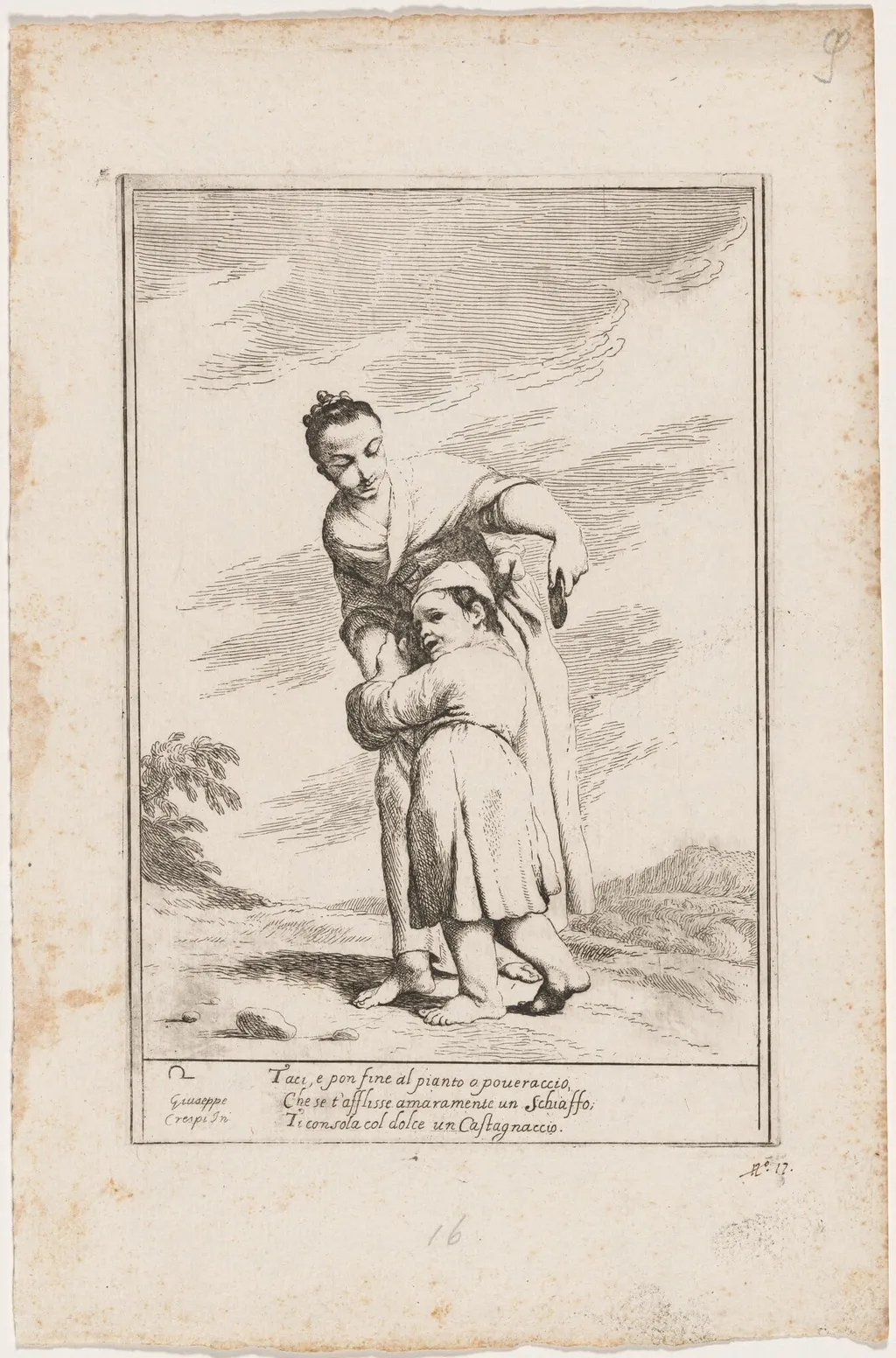
Menghina Quiets Cacasenno with a Chestnut Cake is an ink print by the Baroque artist Giuseppe Maria Crespi. It dates from 1712 and is held in the collection of the National Gallery of Art.
About this work
Overview
Menghina Quiets Cacasenno with a Chestnut Cake is an etching on laid paper created by Giuseppe Maria Crespi around 1712. It is a representative work of the Bolognese School and the late Baroque period.
Subject & Meaning
The etching depicts a humorous scene of a shirtless man comforting a boy, Cacasenno, with a chestnut cake. The simple background and focus on the figures suggest a narrative centered on their interaction.
Technique & Style
Crespi used etched lines to create texture, particularly in the figures' clothing and skin. The work showcases his skill in capturing everyday life and narrative detail through a relatively simple medium.
History & Provenance
The etching is now held in the collection of the National Gallery of Art in Washington. Crespi, known as Lo Spagnuolo, was a versatile artist who worked on various subjects, including genre scenes, for which he became particularly renowned.
Artist & collection

Artist
Giuseppe Maria Crespi (14 March 1665 – 16 July 1747), nicknamed Lo Spagnuolo ('The Spaniard'), was an Italian late Baroque painter of the Bolognese School.