Artwork
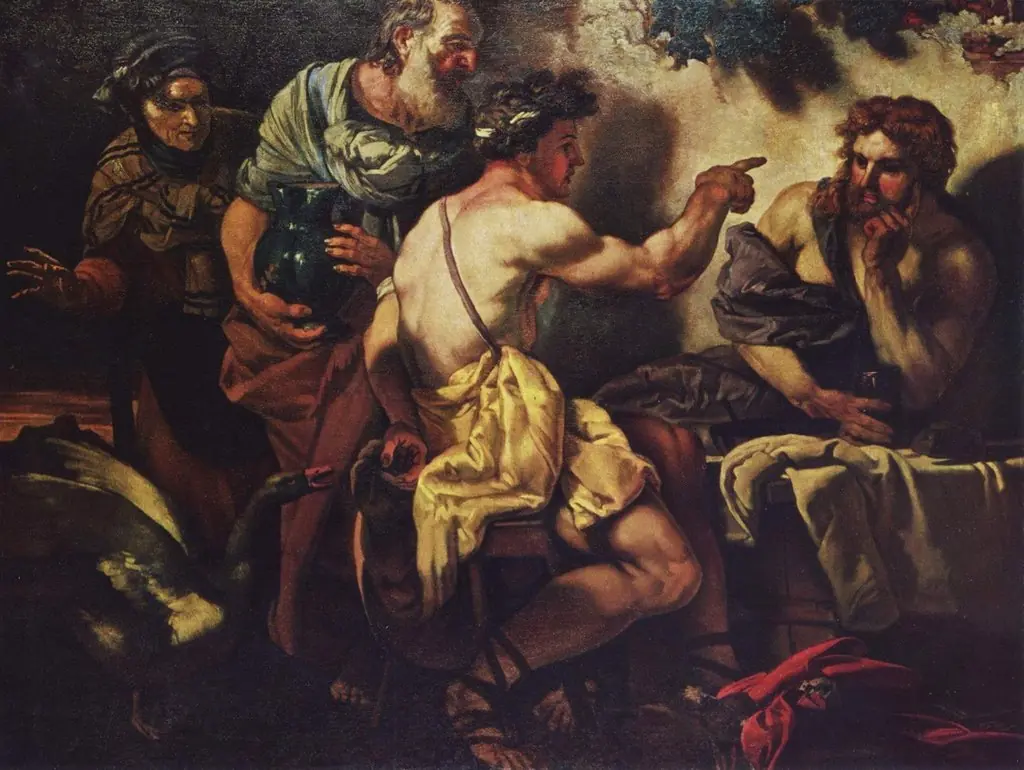
Jupiter und Merkur
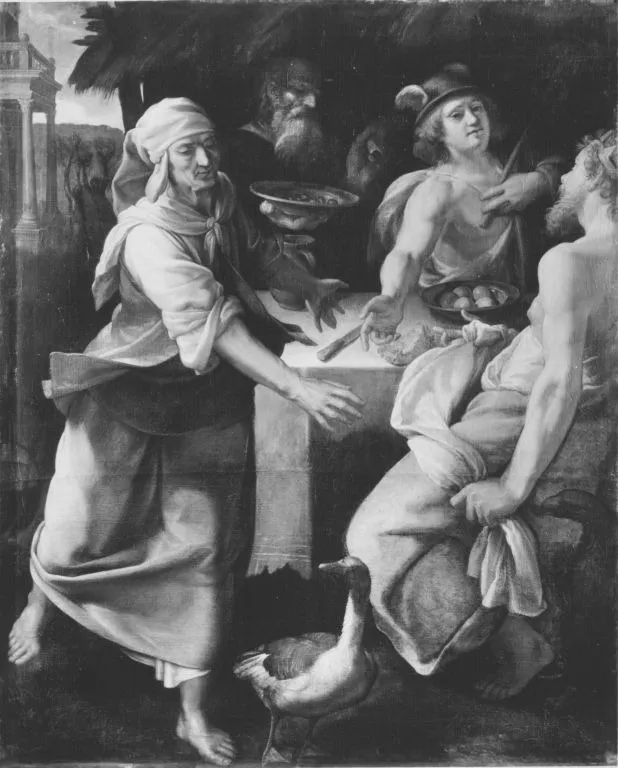
Jupiter und Merkur is an unspecified painting by the Early Baroque Italian artist Cristofano Allori. It dates from 1600 and is held in the collection of the Bavarian State Painting Collections.
About this work
Overview
The painting's German title reflects its home in a major German museum, even as its origins lie in the artistic circles of late Renaissance Florence.
*Jupiter und Merkur* is a 1600 painting by Cristofano Allori, a Florentine artist associated with late Mannerism and the early Baroque period. The work belongs to the Alte Pinakothek collection in Munich. Allori earned recognition primarily for portraiture and religious subjects, though this canvas extends his engagement into mythological narrative. The painting's German title reflects its home in a major German museum, even as its origins lie in the artistic circles of late Renaissance Florence.
Subject & Meaning
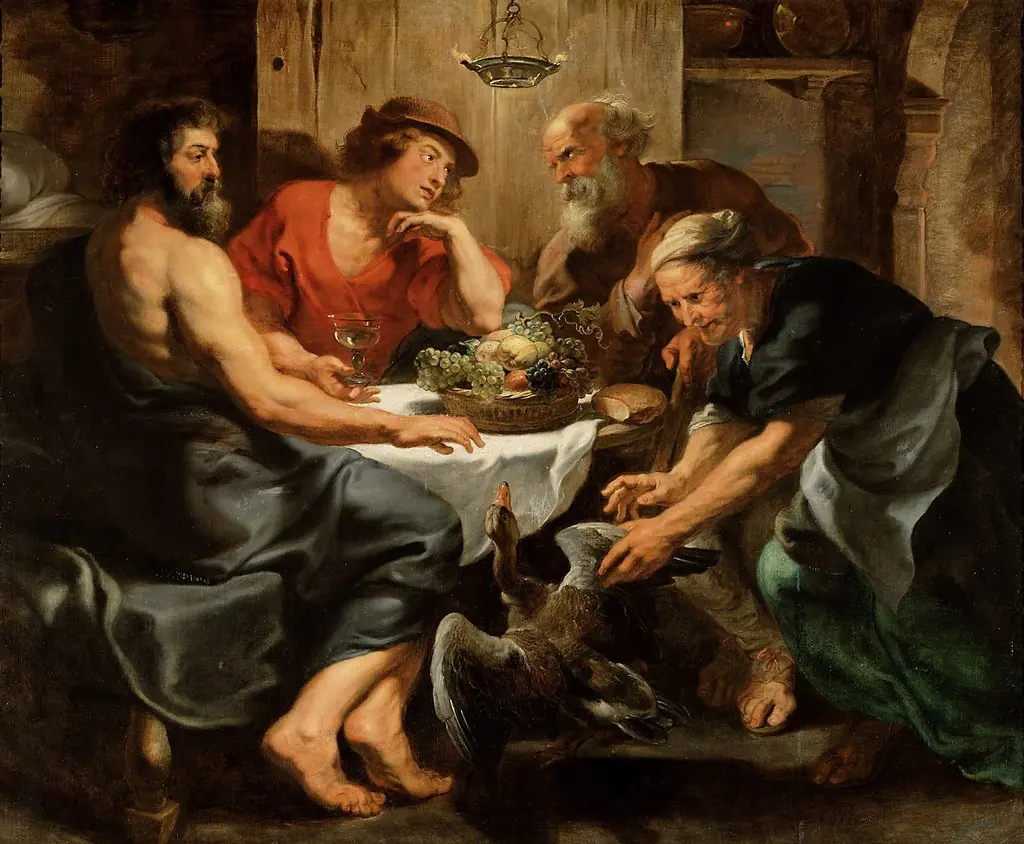
The painting draws on classical mythology, representing the gods Jupiter and Mercury. The visual evidence suggests a scene of care or intervention: a seated male figure with a bandaged arm receives attention from surrounding figures. A woman stands nearby with cloth, an older bearded man holds a bowl, and a younger man in a hat leans forward with an offering. A rooster on the floor adds a domestic or symbolic detail. The bandaged arm implies a narrative of healing, possibly alluding to Jupiter's wounds or a mythological episode of divine assistance.
Technique & Style
The composition employs pronounced chiaroscuro, the strong contrast between light and shadow that became a defining feature of early Baroque painting. Deep darkness envelops much of the interior, while selective illumination strikes faces, hands, and objects, directing the viewer's attention across the clustered group. This dramatic lighting modelled on Caravaggio's innovations creates spatial depth and emotional intensity. The figures are arranged in a shallow, compressed space typical of Mannerist-influenced Baroque composition, their bodies overlapping to form a tight narrative unit.
History & Provenance
Allori produced this work in 1600, a moment of transition when Florentine art was absorbing broader Italian developments toward naturalism and theatrical presentation. The painting later entered the Alte Pinakothek, where it remains as part of one of Germany's oldest and most significant public art collections. Its presence there testifies to the international circulation of Italian paintings during the seventeenth and eighteenth centuries, when Bavarian rulers and their agents actively acquired works from the peninsula.
Artist & collection
Artist
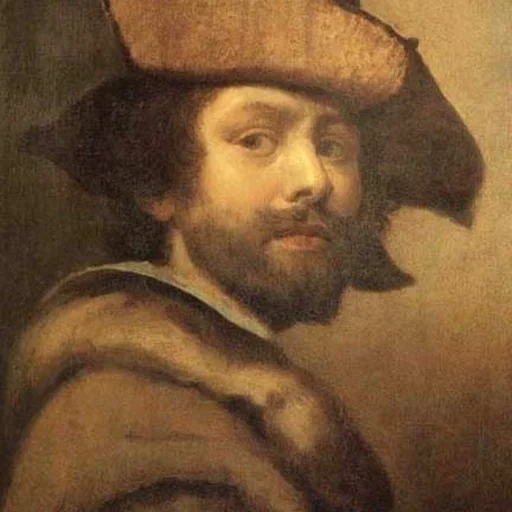
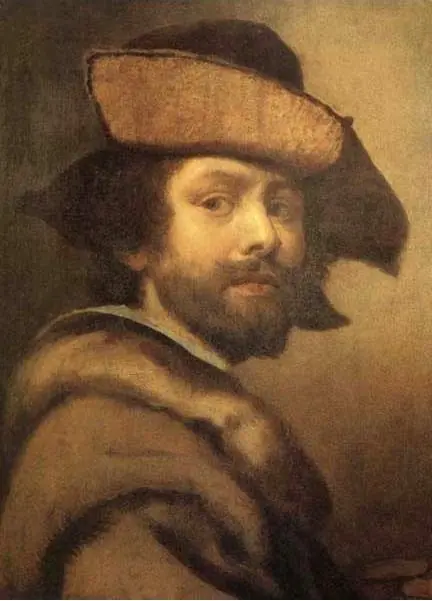
Cristofano Allori (17 October 1577 – 1 April 1621) was an Italian painter of the late Florentine Mannerist school, painting mostly portraits and religious subjects.

 Jupiter and Mercury at Philemon and Baucis
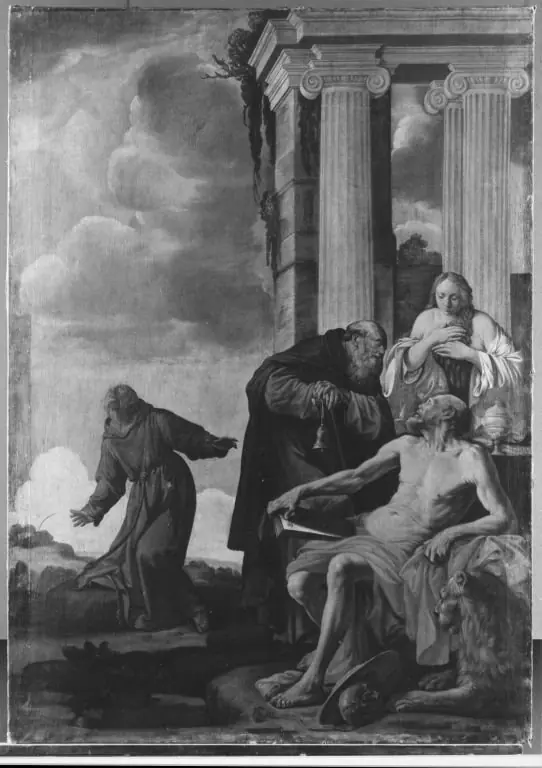 Die hll. Hieronymus, Maria Magdalena, Antonius und Franziskus (Kopie nach)
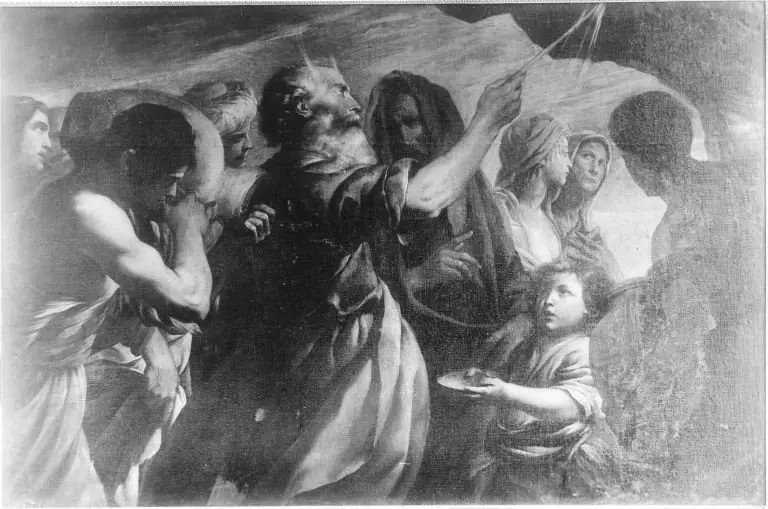 Moses schlägt Wasser aus dem Felsen
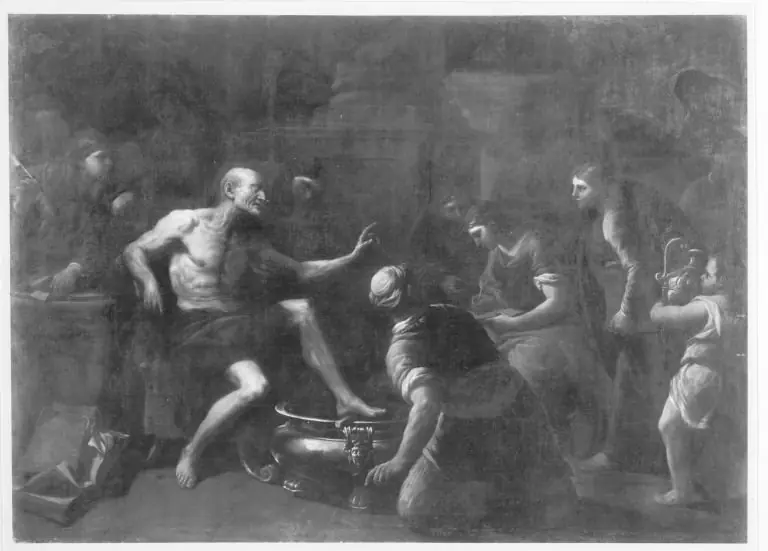 The dying Seneca
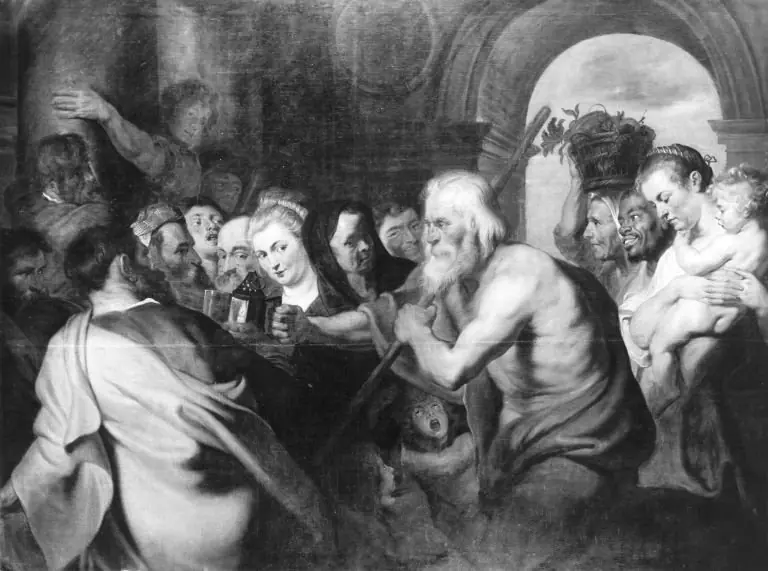 Diogenes seeking a True Man
 Erminia bei den Hirten
 Bauleute am Werk
 Jupiter and Mercury at Philemon and Baucis
 Feuerprobe (zugeschrieben)
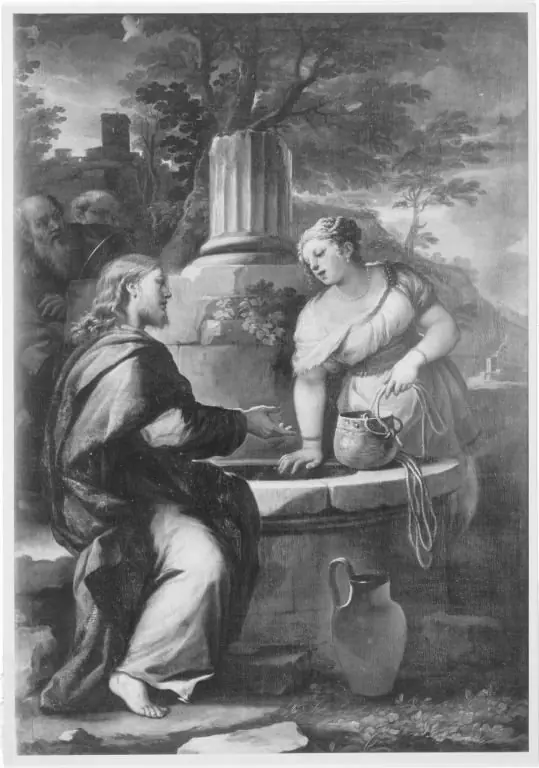 Christ and the Samaritan woman at the well