Artwork
Landscape with Two Deer
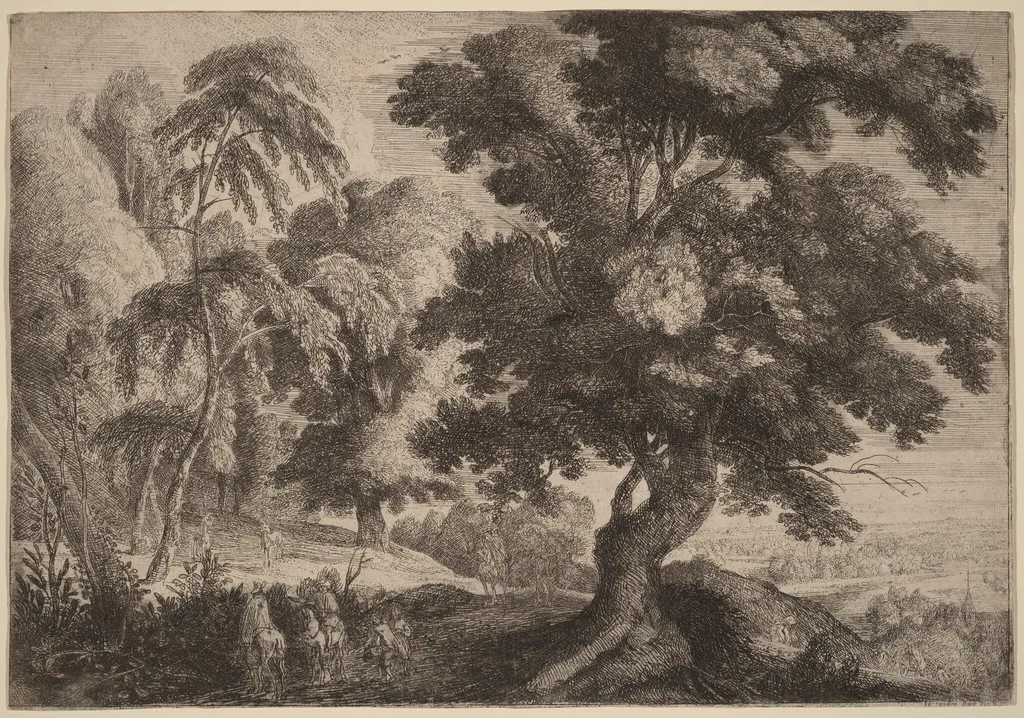
Landscape with Two Deer is an ink print by the Baroque artist Ignatius van der Stock. It is held in the collection of the National Gallery of Art.
About this work
Overview
Created in 1680 by Ignatius van der Stock, this etching on laid paper captures a quiet woodland scene in the region near Brussels. Van der Stock, active in the 1660s and 1670s, specialized in topographical landscapes of the Sonian Forest. The work exemplifies his restrained, observational approach to nature, rendered through fine linear etching rather than dramatic composition.
Subject & Meaning
Two deer stand calmly in the foreground, partially obscured by dense undergrowth, their presence suggesting the wildness of the forest without anthropomorphism.
Two deer stand calmly in the foreground, partially obscured by dense undergrowth, their presence suggesting the wildness of the forest without anthropomorphism. The scene holds no narrative or symbolic intent beyond the observation of wildlife within its natural habitat. The deer, neither hunted nor alarmed, embody a quiet coexistence with the environment, reinforcing the print’s emphasis on stillness and solitude.
Technique & Style
Van der Stock employed fine, controlled etching lines to model form and texture, using varying densities of cross-hatching to suggest depth in foliage and ground. The laid paper’s subtle texture enhances the tactile quality of the scene, while the absence of heavy shadows preserves a soft, diffused light. His technique favors precision over expression, aligning with the documentary impulse of 17th-century Flemish landscape printmaking.
History & Provenance
The print is one of several known works by van der Stock, all centered on the Sonian Forest and its environs. No documented early ownership records exist, but the work likely circulated among local collectors and civic patrons interested in regional topography. Its survival reflects the modest but persistent demand for landscape prints in the Southern Netherlands during the late 17th century.
Context
In the decades after the Peace of Münster, Flemish artists increasingly turned to local scenery as a subject worthy of representation, moving away from idealized Italianate views. Van der Stock’s etchings contributed to this regional shift, documenting the forests around Brussels with topographical accuracy. His work aligns with broader trends in Northern European print culture that valued observation over imagination.
Legacy
Van der Stock’s prints, including this one, remain rare but are recognized for their quiet fidelity to the Flemish landscape. They offer insight into how natural environments were recorded before the rise of Romanticism. Though not widely influential in the broader art world, his etchings serve as valuable historical records of woodland ecosystems in the Low Countries during the late 1600s.
Own this work as a print
Artist & collection
Artist
Ignatius van der Stock (fl 1660–1661 in Brussels) was a Flemish landscape painter, draughtsman and etcher. He is known mainly for his landscapes of views of the Sonian Forest and other sites near Brussels.

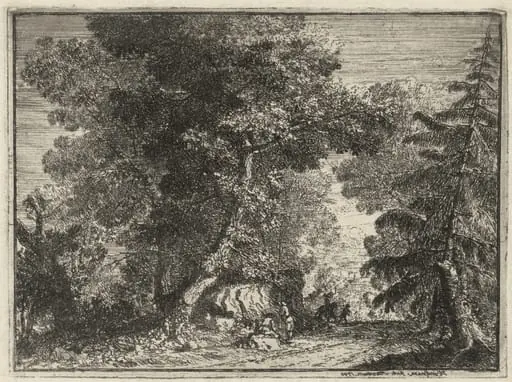 A Road through the Woods
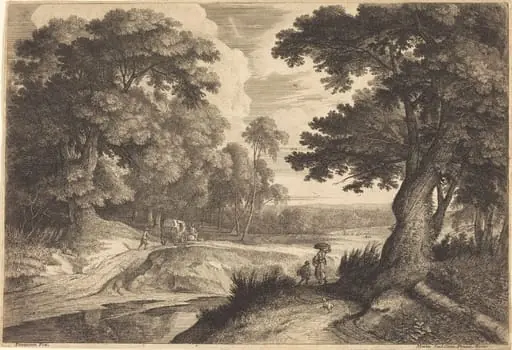 Edge of a Wood with Peasants Going to Market
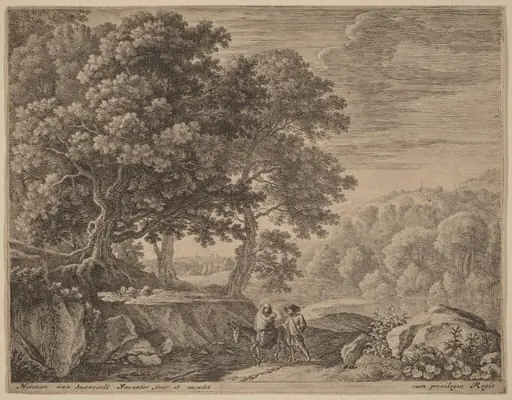 The Little Angels on the Hill
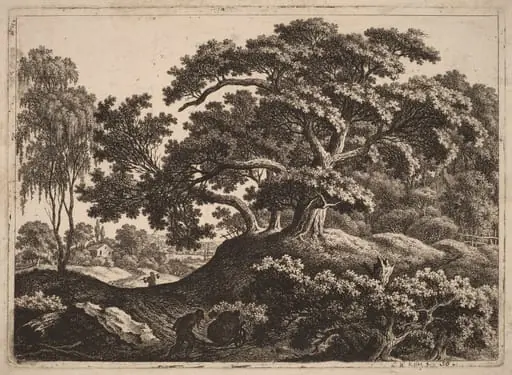 Landscape with Man Pushing a Cart
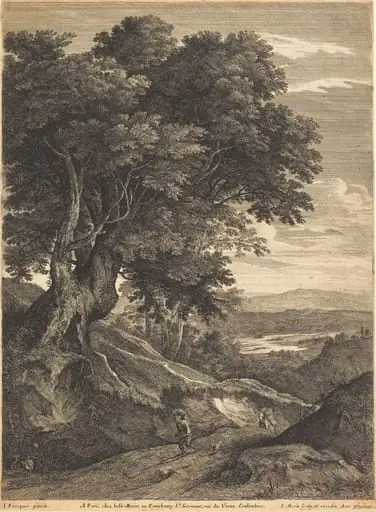 Hilly Landscape with Travelers on Foot
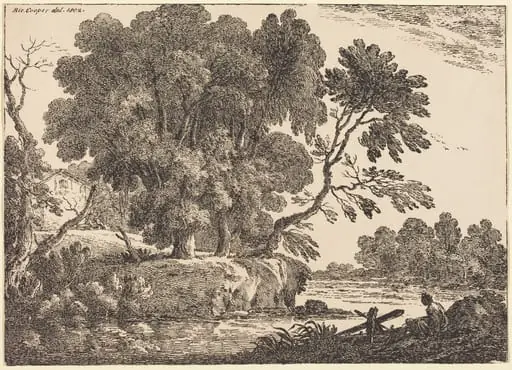 Landscape with Group of Trees Surrounded by Water
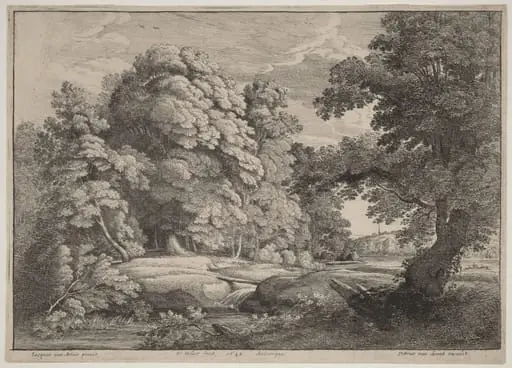 The Bridge over the Waterfall
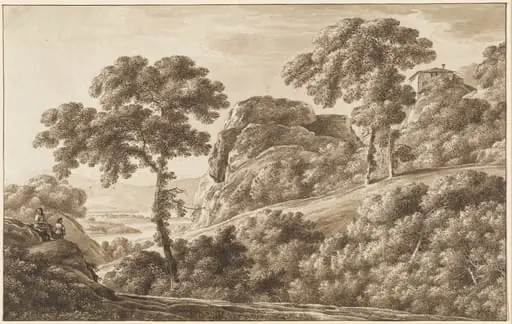 The Isar with Boulders on the Isarhohe
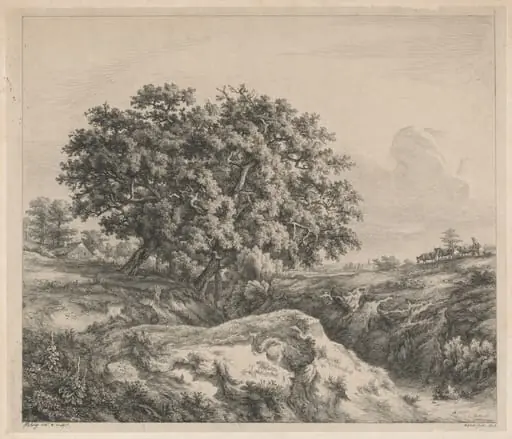 Le chêne au ravin (Oak Tree by a Ravine)
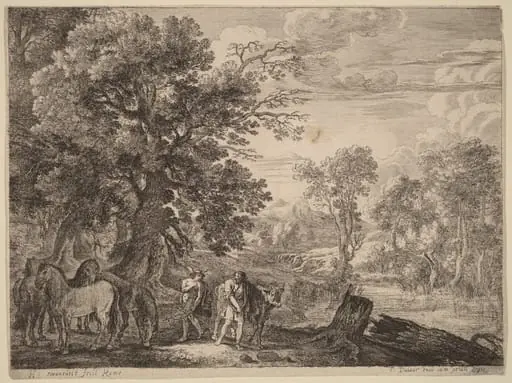 Mercury Silencing Battus
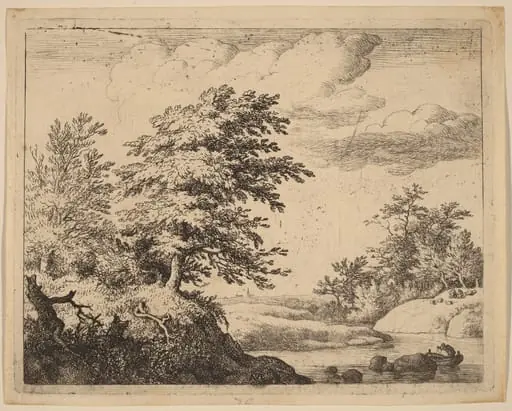 Winding River
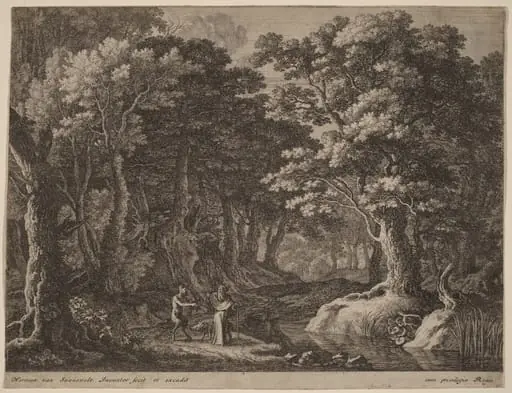 Devil Tempting St. Anthony