Artwork
Madona Neagră
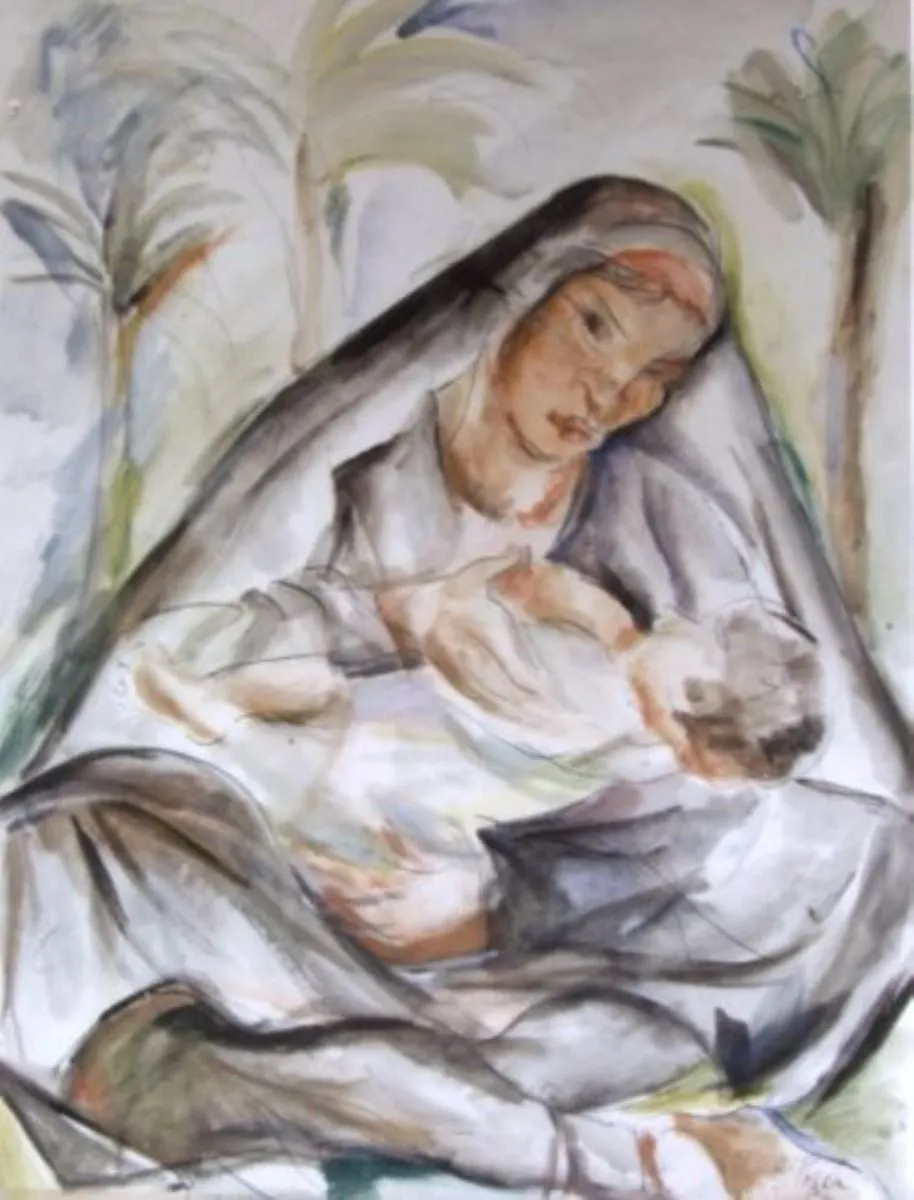
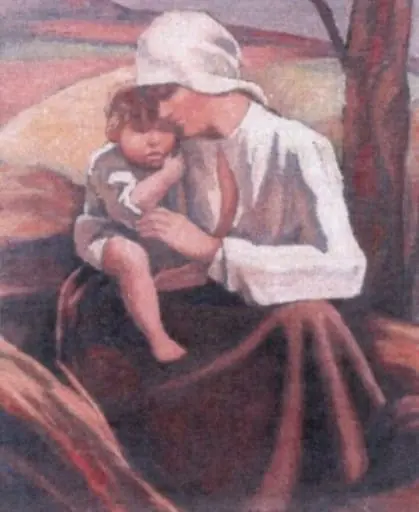
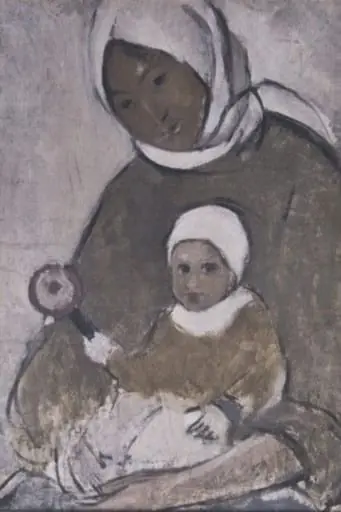
Madona Neagră is an unspecified painting by Elena Popea. It dates from 1937 and is held in the collection of the Colecție particulară - Cluj.
About this work
Overview
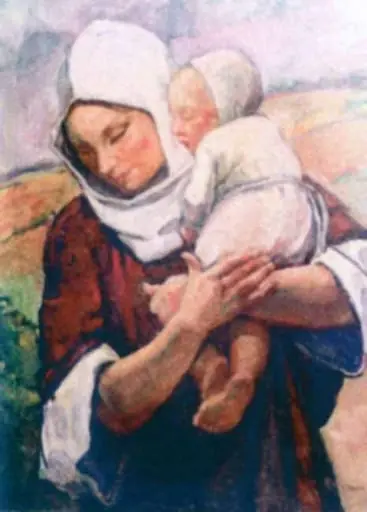
Created in 1937 by Elena Popea, a Romanian modernist who trained in the Austro‑Hungarian cultural sphere, *Madona Neagră* is an oil painting now part of the Museum of Ethnography’s collection. The work presents a quiet domestic scene rendered with a muted palette, emphasizing the relationship between a mother and her infant within a softly defined natural setting.
Subject & Meaning
The composition centers on a seated woman cradling a swaddled child. She wears a light dress covered by a dark shawl, her expression weary yet composed, while the infant’s face remains largely concealed, revealing only a glimpse of skin and a tiny hand. The intimate pose suggests themes of maternal care and quiet endurance.
Technique & Style
Popea employs a subdued chromatic range of greens and grays for the background, allowing the figures to emerge through delicate modeling of light and shadow. The handling of chiaroscuro creates a gentle atmospheric depth, while the brushwork balances impressionistic softness with a hint of expressionist contouring, characteristic of her eclectic modernist approach.
History & Provenance
After its completion in the late 1930s, the painting entered the holdings of the Museum of Ethnography, where it has remained on display. Its acquisition reflects the institution’s interest in documenting Romanian visual culture and the work of artists who navigated multiple European avant‑garde currents during the interwar period.
Artist & collection
Artist
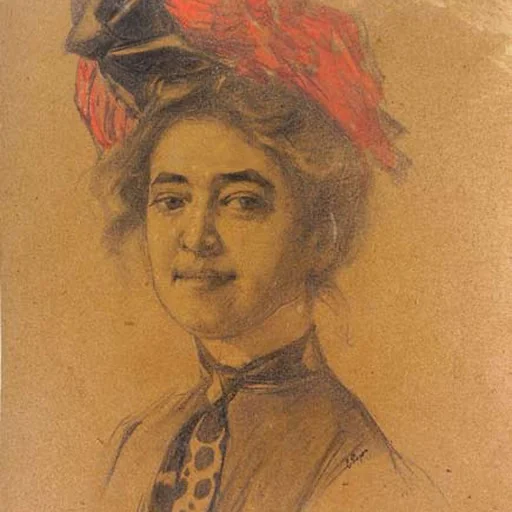
Elena Popea (15 April 1879, Brașov – 19 June 1941, Bucharest) was an Austro-Hungarian-born Romanian Modernist painter whose influences included Impressionism, Expressionism and Cubism.