Artwork
Street View
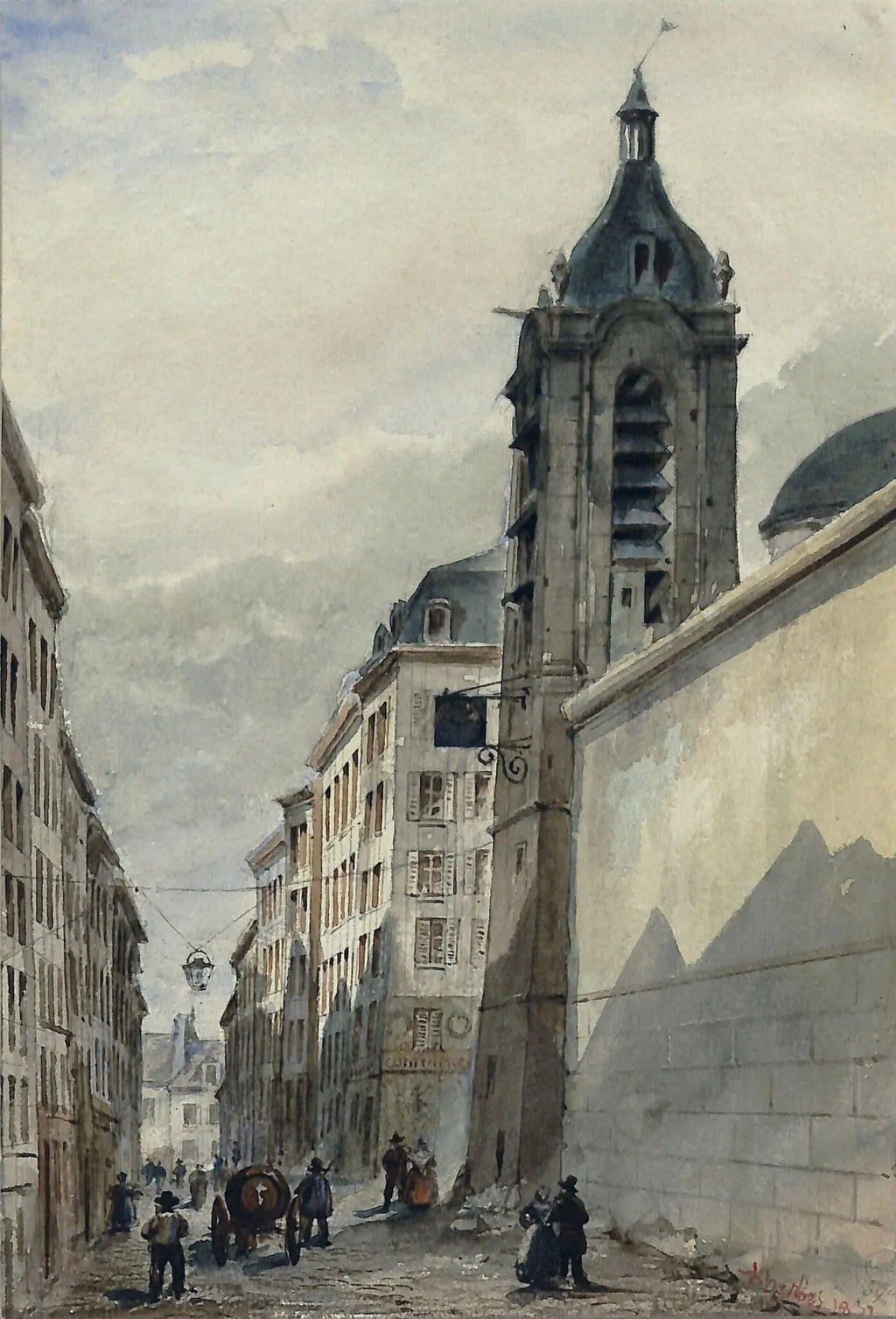
Street View is a watercolor work on paper by the Romanticist artist François D'Herbes. It dates from 1832 and is held in the collection of the Victoria and Albert Museum.
About this work
Overview
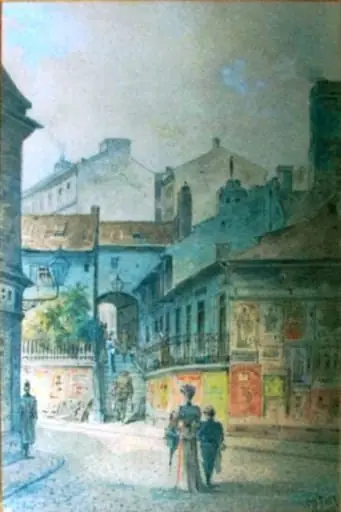
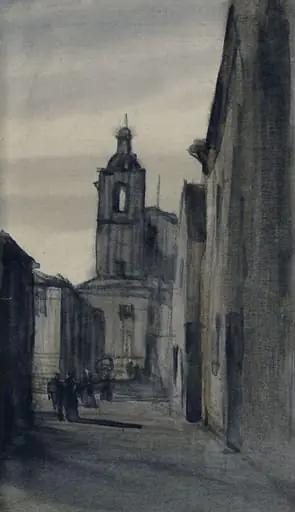
Painted in 1832 by François D'Herbes, Street View is a watercolor depicting a quiet urban alleyway. The work is part of the Victoria and Albert Museum’s collection and exemplifies 19th-century topographical watercolor practice. Its subdued palette and delicate brushwork convey a sense of stillness, focusing on the ordinary rhythms of daily life rather than dramatic events.
Subject & Meaning
The quietude suggests a meditation on urban life’s unremarkable moments, free from idealization or narrative climax.
The scene captures a narrow, sloping street lined with modest, weathered buildings and a prominent church tower. Figures in period attire move slowly along the cobbled path, accompanied by a lone horse-drawn carriage. The composition avoids spectacle, instead emphasizing solitude and routine. The quietude suggests a meditation on urban life’s unremarkable moments, free from idealization or narrative climax.
Technique & Style
D'Herbes employed translucent watercolor washes to render light and atmosphere with subtle gradations. Soft, fluid strokes define the buildings and sky, while minimal detail in the figures reinforces their anonymity. The hazy quality, achieved through diluted pigments and controlled wet-on-wet techniques, blurs edges and softens contrasts, evoking a moment suspended in time.
History & Provenance
Created in 1832, the painting entered the Victoria and Albert Museum’s collection as part of its broader acquisition of British and European watercolors from the early 19th century. Its provenance prior to museum acquisition remains undocumented, but its preservation suggests it was valued for its technical restraint and observational clarity rather than celebrity status.
Context
In the 1830s, watercolor was increasingly used for topographical and documentary purposes, particularly in Britain and France. Artists like D'Herbes documented everyday urban environments with precision and quiet empathy. This work aligns with a growing interest in the ordinary, contrasting with Romanticism’s emphasis on nature’s sublime or emotionally charged landscapes.
Legacy
Street View endures as a quiet example of pre-modern urban observation. It reflects a shift in artistic attention toward the mundane, influencing later realist traditions. Though not widely exhibited, its presence in a major museum underscores its role in documenting the texture of 19th-century city life through understated, deliberate technique.
Artist & collection
Artist
François D’Herbes painted quiet street scenes in watercolor in the 1830s. His 1832 Street View shows an everyday Parisian corner with soft light on shutters and cobblestones. This small sheet feels like a snapshot…

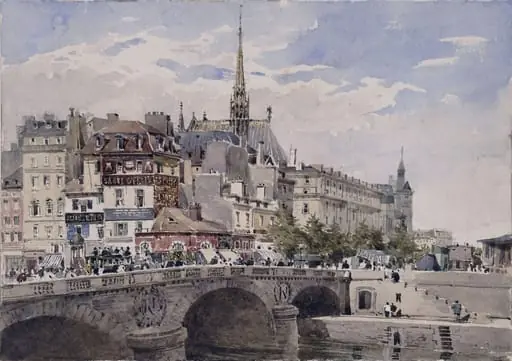 Sainte Chapelle, Palais de Juste, Paris,
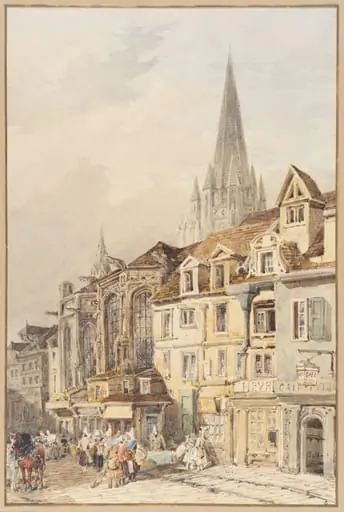 View at Caen, Normandy
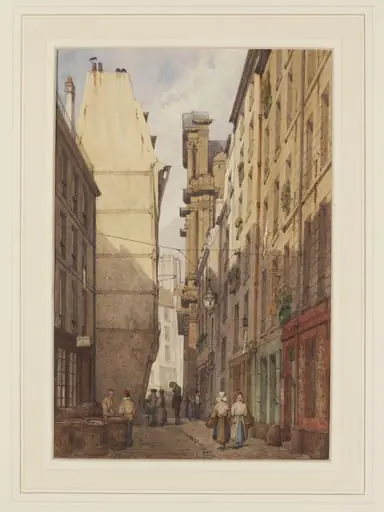 The Church of St Gervais, Paris
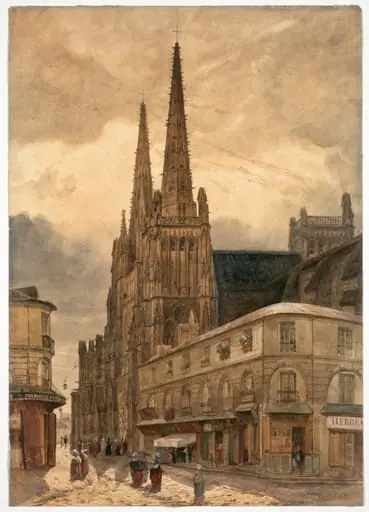 Cathédrale Sainte-André de Bordeaux
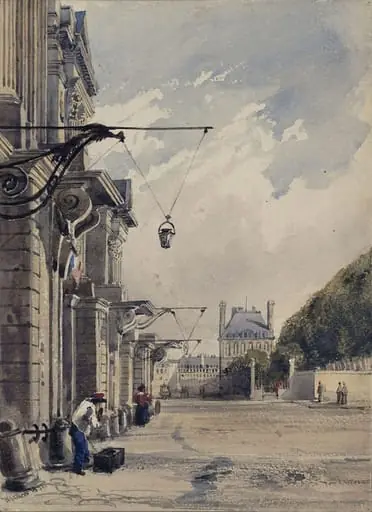 The Rue de Rivoli, near the Tuileries, Paris
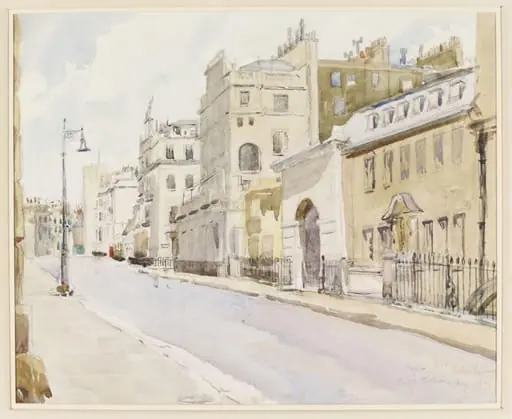 Lyall Street, Eaton Square
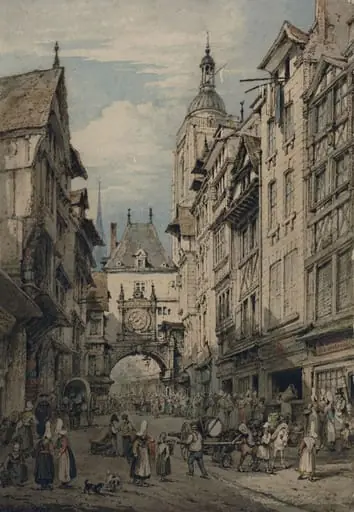 Rue de la Grosse Horloge
 Peisaj citadin cu figuri
 The Lantern, Chateau de Chambord
 Quay Montebello
 The Pont Neuf, Paris
 Street Scene